Diving in on Dairy’s Legislative Agenda

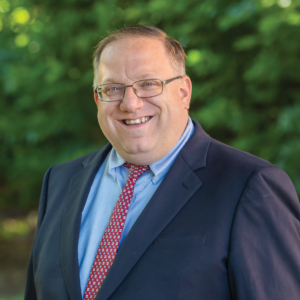
By Paul Bleiberg, Executive Vice President, Government Relations, National Milk Producers Federation
President Donald Trump and Vice President J.D. Vance have now taken their oaths of office, and the 119th Congress has been seated. While the opening weeks of a new Congress and presidency focus on nominations and organization, these important housekeeping processes will soon give way to a busy legislative session.

We know dairy is ready for an action-packed 2025. National Milk Producers Federation’s (NMPF) major legislative goals begins with passage of a five-year farm bill, but what makes up that bill for dairy is just as important.

First, enabling schools to offer whole and reduced-fat milk is paramount. Milk provides 13 essential nutrients and is the top source of calcium, potassium, phosphorus, and vitamin D for children ages 2 to 18. However, just last month, the Dietary Guidelines Advisory Committee’s Scientific Report reaffirmed that 88% of all Americans are under consuming dairy. The bipartisan Whole Milk for Healthy Kids Act, recently reintroduced in Congress, provides the solution. This bill would allow, but not require, schools to serve all varieties of milk, including whole and reduced-fat milk. A growing body of evidence demonstrates that dairy foods at all fat levels have a neutral or positive effect on health outcomes. NMPF strongly supports swift passage of this measure to solve a critical child nutrition problem.

This problem is made clearer by data. Accurate, transparent data drives strong public policymaking. And that brings up another NMPF policy priority: remedying the persistent lack of accurate data when it comes to the costs of manufacturing raw milk into processed dairy products, which denies stakeholders an essential tool for assessing how milk pricing formulas ought to be structured.

A fix lies in the Fair Milk Pricing for Farmers Act, a bipartisan bill to require USDA to conduct mandatory dairy manufacturing cost surveys every two years. This will equip all voices in the dairy industry with better data to help drive future dairy pricing conversations.

Ongoing discussions on dairy pricing are vital for an industry that continues to innovate and advance. But milk pricing isn’t the only area where innovation is necessary. On the farm, U.S. dairy farmers benefit from safe and effective feed ingredients that can boost productivity in their herds and support environmental stewardship. However, the Food and Drug Administration’s (FDA) current outdated review process for these ingredients hinders their timely approval and puts U.S. dairy farmers at a disadvantage with their global competitors. NMPF supports the bipartisan Innovative FEED Act, first introduced in 2023, to create a safe but expeditious process for FDA to review these products to help farmers make important gains and stay competitive.

These are just a handful of the major legislative efforts NMPF seeks to advance. Each of these bipartisan bills made headway last year as the House and Senate began their respective farm bill processes. With the new Congress getting ready to produce results, dairy stands ready to get these important priorities signed into law.

r of choice.


This column originally appeared in Hoard’s Dairyman Intel on Feb. 6, 2025.

NMPF’s Bleiberg Analyzes November Election Results

NMPF’s chief lobbyist Paul Bleiberg assesses for listeners of Dairy Radio Now how the election of former president Donald Trump, along with a Senate majority led by the GOP, will impact dairy policy and agricultural issues in Washington and in farm country going forward.


Much Good, Some Surprises in FMMO Plan, NMPF’s Cain Says

Stephen Cain, senior director of economic research and analysis for the National Milk Producers Federation, said NMPF is “very pleased with the recommendation that USDA has come up with” for Federal Milk Marketing Order Modernization. “Fundamentally, USDA agreed with our premise and methodology for all the changes we were asking for,” said Cain in an interview with the National Association of Farm Broadcasters.


NMPF Statement on USDA’s Recommended FMMO Modernization Plan

From NMPF President & CEO Gregg Doud:

“Based on our initial reading, NMPF is heartened that much of what we proposed after more than two years of policy development, and another year of testimony and explanation, is reflected in USDA’s recommended Federal Milk Marketing Order modernization plan.  

“Crafting an effective milk-pricing system for farmers is complex and requires a careful balance. USDA’s plan acknowledges that complexity and, while not matching our proposal in every detail, looks largely in keeping with the comprehensive approach painstakingly determined by the work of dairy farmers and their cooperatives over the past three years. We look forward to examining this proposal topic-by-topic, gathering input regarding the various needs of our members nationwide, and adding their insights as this process moves toward a vote of producers.”  


NMPF Awarded USDA Grants to Advance Dairy Industry Disease Preparedness

The National Milk Producers Federation (NMPF) today was awarded funding from the U.S. Department of Agriculture’s (USDA) Animal and Plant Health Inspection Service National Animal Disease Preparedness and Response Program (NADPRP) supporting two projects advancing dairy cattle disease preparedness.   

The first award will expand on USDA funding NMPF received in 2021 to build the National Dairy Farmers Assuring Responsible Management (FARM)Biosecurity Program. FARM Biosecurity provides dairy farmers with the tools to protect the health of their herds and employees from everyday and foreign animal diseases. Biosecurity resources developed from the initial 2021 USDA funding are currently being used to respond to the H5N1 animal health issue.  This new funding will expand educational resources and training opportunities for producers, cooperatives, state animal health officials and FARM Program evaluators; update the Secure Milk Supply Plan guidance and further develop the capabilities of the FARM Biosecurity database. 

The second award will bring together stakeholders including dairy cooperatives, milk haulers, milk testing labs, state and federal animal health officials and National Animal Health Laboratory Network (NAHLN) lab directors to conduct a gap analysis and create a report outlining current capabilities and guidance for industry and policymakers to implement a foot-and-mouth disease diagnostic assay using bulk tank milk samples to provide herd-level disease surveillance in the event of an outbreak. 

“USDA funding for continued enhancement of biosecurity on dairy farms for emerging and foreign animal diseases arrives at a time when the dairy industry is already using USDA-funded resources to address the challenges of H5N1,” Gregg Doud, president and CEO of NMPF, said. “This ongoing collaboration between USDA and NMPF is building resiliency for the U.S. dairy industry now and for the future.” 

The grants are funded by the 2018 Farm Bill as part of an overall strategy to help prevent animal pests and diseases from entering the United States and reduce the spread and impact of potential disease incursions through advance planning and preparedness. USDA has funded the NADPRP projects with the goal of individually and collectively addressing critical livestock biosecurity, large-scale depopulation and carcass disposal concerns in all major livestock industries across all U.S. regions. NMPF will apply the grant funding to advance biosecurity and diagnostic testing capabilities to support animal health on dairy farms by partnering with stakeholders and experts, including dairy farmers, veterinarians, dairy cooperatives and processors, NAHLN laboratories, Preventalytics LLC, and state and federal animal health officials. 

NMPF’s Yeiser Stepp Talks Biosecurity Best Practices

Emily Yeiser Stepp, Executive Director of the National Dairy Farmers Assuring Responsible Management (FARM) Program, discusses best practices in biosecurity as dairy farmers navigating a new federal order on testing and interstate animal movement in an interview with the National Association of Farm Broadcasters. “We still don’t know a lot about this virus and are taking action to limit that risk of virus spread, not only to protect our own dairy herds but also those poultry facilities that are being impacted, as well as protecting our dairy workers,” Yeiser Stepp said.

NMPF’S Hanselman Explains New USDA School Meal Dairy Regulations

NMPF’s Director of Regulatory Affairs, Miquela Hanselman, explains to Dairy Radio Now listeners the changes to the federal school lunch program meal requirements just announced by USDA.  The new rules will maintain a place at the table for flavored milk, while also making modest adjustments to sodium levels that won’t negatively impact cheese offerings in school meals.

USDA Decision Time Nears for FMMOs

By Peter Vitaliano, Vice President, Economic Policy & Market Research, NMPF

The April 1 deadline for interested parties to submit post-hearing briefs summing up their arguments for changes to the Federal Milk Marketing Orders (FMMO) has passed. Now that participants in USDA’s record-length FMMO hearing having had their final say, it’s time for USDA to review the complete hearing record and formulate its recommended decision, which should be reported around July 1.

The National Milk Producers Federation offered by far the most comprehensive and constructive set of proposals for effecting long-overdue updates to the federal order pricing formulas. Our brief reemphasized that updating formulas to reflect the dynamically changing structure of the U.S. dairy industry is critically important for the order program to achieve its basic purposes of ensuring an adequate supply of milk for fluid milk use, promoting orderly marketing, and providing adequate prices to dairy farmers for doing so. NMPF’s five specific proposals put farmers first, in keeping with the FMMO mission. They also have very broad support from groups and individuals representing dairy farmer interests.

By contrast, the major hearing participants representing processors opposed most of the hearing’s 21 proposals, including NMPF’s proposals to raise the Class III and Class IV skim milk component composition factors, remove barrel cheese from the protein component price formula, and update the Class I differentials to reflect current costs of supplying milk for fluid processing. Advocacy by proprietaries focused primarily on just two issues: the particularly high profile matters of the make allowances and the Class I mover.

While all parties to the hearing broadly agreed that the make allowances in the orders’ component pricing formulas need to be updated in stages — due largely to how much current costs likely exceed the current make allowances — hearing participants significantly disagreed on specifically how to do so. NMPF and its member cooperatives argued that USDA needs to have the authority and the directive to conduct regular mandatory, audited studies of manufacturing costs and yield factors so the industry, and dairy farmers in particular, can have confidence that the numbers are truly accurate — certainly more accurate than the voluntary cost studies that have more holes than Swiss cheese. All parties support mandatory studies, which almost certainly will be included in the upcoming farm bill. But proprietary manufacturer interests have requested that substantial increases, based only on voluntary studies, be fully implemented with a relatively short phase-in period, a move that would significantly harm dairy farmer incomes.

NMPF and other parties representing dairy farmer interests also universally support returning to the “higher of” Class I mover, a position equally strongly opposed by proprietary processor interests. No one supports the current “average of” mover, with its 74-cent per hundredweight fixed factor, but proprietary interests lined up behind keeping the average of mechanism with an adjustable factor that would mimic, with considerable lags, the higher of mover. This approach, done in the name of improving risk management, unfortunately mutes the immediate market signals the higher of approach sends. It also offers cold comfort to dairies that might go out of business because of a lower mover and don’t have the lag time to wait for a make-up adjustment later.

A low point in the hearing from the standpoint of farmer interests was reached when a group of proprietary fluid processors pushed back against NMPF’s carefully worked out proposal to increase the Class I differentials by proposing instead to eliminate the fixed portion of the current ones, which would effectively erase any difference between Class I and the manufacturing class prices in many orders and render them unworkable. It garnered no support from any other party.

But for all the controversy seen thus far, soon it will all be superseded by USDA’s plan. NMPF remains hopeful that careful thinking and attention to the purpose and mission of federal orders carries the day. We’re confident in a positive outcome.


This column originally appeared in Hoard’s Dairyman Intel on April 15, 2024.

NMPF’s Bleiberg Explains Federal Funding Process to Avert Government Shutdown


NMPF’s Paul Bleiberg tells Dairy Radio Now listeners about the latest developments in efforts on Capitol Hill to fund the government in 2024 before certain agencies run out of money.  He also explains the impact of the funding fight on efforts to pass a new Farm Bill in the spring months, before time runs out as the political focus shifts to the fall election campaign.


Galen Offers Preview of Upcoming Dairy Policy Developments in Early 2024

NMPF’s Chris Galen tells Dairy Radio Now listeners about the major national policy developments expected to top the headlines in early 2024.  These include efforts to fund the government, including agencies like the USDA.  Lawmakers also have to complete work on a new Farm Bill prior before the political focus shifts away from Washington toward the 2024 election campaign.


USDEC’s Harden discusses USDA Support for Trade


Krysta Harden, president and CEO of the U.S. Dairy Export Council, discusses the value of USDA support for U.S. agricultural exports in an interview with RFD-TV from the World Food Prize in Des Moines, IA. The department said Oct. 24 it plans to devote $2.3 billion from the Commodity Credit Corporation to promoting better market opportunities for U.S. agricultural producers and expanding food aid to support communities in need around the world, a move advocated for by NMPF and USDEC.

NMPF’s Bjerga on How to Learn More About FMMO

NMPF Executive Vice President for Communications and Industry Relations Alan Bjerga offers an update on where the USDA’s Federal Milk Marketing Order hearing stands as it goes on hiatus until late November. Bjerga also discusses the importance of the IDF-World Dairy Summit in Chicago and where the public can go to learn more about the FMMO discussion, in an interview with WEKZ radio, Janesville, WI.