NMPF’s Executive Vice President of Trade Policy and Global Affairs Shawna Morris said the federation is thrilled with the announcement from the Trump administration of new trade agreements in Southeast Asia. The agreements were with Malaysia and Cambodia, and new trade agreement frameworks are in place with Thailand and Vietnam.
Uncategorized
Trust Defines Dairy Despite Divisions
Success in a splintered world often comes down to one thing: trust. Farmers are fortunate to have it, and we are proud to keep building it.
Despite misinformation, despite self-interested attempts to separate Americans from the farmers who serve them the safest, most nutritious food in the world on a daily basis, consumer confidence in farmers outstrips other aspects of the U.S. food system. According to the Ketchum Appetite for Change consumer research study, a survey of more than 1,000 U.S. adults done in July 2025, 79% of Americans trust farmers to “do the right thing” in serving the public, easily the most trust in any single link of the food chain.
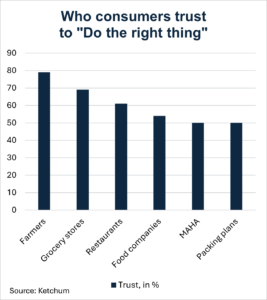
That’s more than grocery stores. That’s more than food companies. That’s more than the MAHA movement. It’s a testament to public appreciated for the hard work farmers do every day as the bedrock of nutrition — and in turn, it’s a responsibility farmers take seriously.
This week, the most important gathering of U.S. dairy farmers seeking better public policy for agriculture is taking place in Dallas. The National Milk Producers Federation is honored to serve those who do the right thing for American consumers and looks forward to the change to enhance its leadership in Washington and across the country.
And dairy farmers are proud to be a premier source of nourishment for Americans, and for the world, continuing to earn that trust that’s essential to our splintered-world success.
Kinler Shares Expo Highlights, Previews Annual Meeting
NMPF Senior Director of Board, State and Member Relations Casey Kinler shares with Dairy Radio Now listeners highlights from NMPF’s sessions at World Dairy Expo in October and teases what’s to come at the 2025 Joint Annual Meeting Nov. 10-12 in Arlington, TX.
Dairy leaders: Honor tradition, create tomorrow
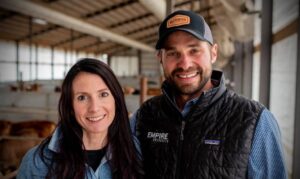 By Megan and Tim Schrupp, 2025 Chairs for the National Young Cooperators Program
Across America, a new generation of dairy farmers are stepping into leadership roles, bringing innovation, passion, and a fresh perspective to the industry. Driven by a deep devotion to the dairy industry, these emerging leaders are redefining traditional farming with cutting-edge technology and sustainable practices, and are capitalizing on opportunities that foster connection, communication and collaboration within their communities — showing that the next generation of dairy farmers is ready to carry the tradition forward with energy and innovation. Their commitment not only strengthens the agricultural backbone, but also inspires a renewed confidence in rural America.
Supporting them in this endeavor is the National Young Cooperators (YC) Program. Established in 1950 and managed by the National Milk Producers Federation (NMPF), the YC Program has dedicated 75 years to training and leadership development for beginning dairy farmers, helping them become effective managers and influential leaders while enhancing the resilience and sustainability of their farms. The program offers a comprehensive suite of educational resources, tools, and support through both in-person and virtual events. It also builds a vibrant national network of peers, allowing young dairy farmers to share experiences, address challenges, and collaborate on solutions. Through this connected community, farmers receive valuable support and guidance as they grow in their roles and contribute to the future of the dairy industry.
This past year, we have been fortunate to have served as the chairpersons of the Advisory Board for the YC Program. Our dairy, NexGen Dairy, is a fourth-generation dairy farm and member-owner of First District Association in central Minnesota. Through our involvement in the YC Program, we have witnessed firsthand the bright future of the dairy industry, meeting numerous young dairy farmers from across the country.
While change and challenges are constant, we feel more than ever that our generation is faced with the requirement for an ever-expanding skill set that goes beyond traditional dairy practices. However, young farmers are rising to the challenge and are not only mastering cow and forage management, genetics, and business operations, but also excelling in employee leadership, advanced technology, and market economics. Many young dairy farmers also actively engage in understanding milk pricing, sustainability, and regulatory changes, ensuring their farms thrive in a competitive environment. They are embracing collaboration and ongoing learning, building strong networks with peers and industry leaders, and creating a supportive community that empowers them to succeed and shape the future of dairy farming with resilience and optimism.
Engaging with fellow young dairymen and women through the YC Program, we have observed the determination, talent, and sense of community that defines this new generation of dairy leaders. Witnessing other dairy farmers’ commitment to innovation, sustainability, and regulatory affairs has highlighted for us the promising path forward for our industry as a whole. We, as young farmers, are not only honoring the traditions that built American dairy, but also boldly reimagining its future. With continued investment from groups such as NMPF, focusing on leadership, innovation, and collaboration, the future of dairy farming rests in capable hands — ensuring our industry will continue to nourish and connect communities for generations to come.
This column originally appeared in Hoard’s Dairyman Intel on Nov. 6, 2025.
Regulatory Register — Fall 2025
NMPF Summer Internship Now Accepting Applications
The National Milk Producers Federation is offering a 10–12-week summer internship in the Washington D.C. metro area. This internship offers students the unique opportunity to better understand the intersection of U.S. dairy industry policy, regulatory affairs, and trade. Interns will have the opportunity to learn from NMPF’s expert staff, covering areas including government relations, regulatory affairs, trade, communications, membership services and the National Dairy FARM Program. More information and the application can be found here. Applications close Dec. 31.
Marks-Yant Joins Economics Team
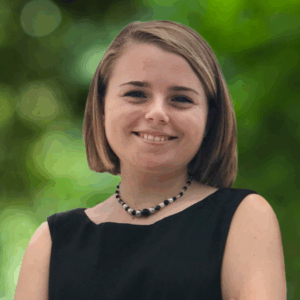 NMPF economics department, co-managed with the U.S. Dairy Export Council, in October welcomed its newest staffer Katriel Marks-Yant.
Marks-Yant will serve as the team’s Director of Economic Affairs, leading domestic market analysis.
Prior to joining NMPF, Marks-Yant was an International Economist with USDA Foreign Agricultural Service. She has also worked with NMPF member cooperative Land O’Lakes in international development and government relations functions.
Marks-Yant holds a master’s degree in international economics and international development from the Johns Hopkins School of Advanced International Studies and studied Agricultural Economics at Purdue.
Originally from Carmel, IN, she maintains close ties with her family’s farms in the Midwest.
Michigan Milk, Windemuller Awarded in Annual Communications Contest
NMPF named Michigan Milk Producers Association Cooperative Communicator of the Year in its annual cooperative communications contest Oct. 15, while Dairy Farmers of America member Paul Windemuller received NMPF’s Farmer Communicator of the Year award.
MMPA won five categories and a ‘Best of Show’ award in the Writing category, while also taking six second place finishes and three third place finishes in the competition, which recognizes the top communications efforts among NMPF’s member cooperatives.
NMPF recognized Windemuller for his active presence in social media and other platforms, serving as a catalyst for consumer curiosity by sharing real-life stories from the farm. Windemuller is an active member for DFA, participating in both its Young Cooperator program and Emerging Leaders program. He also serves as a DFA content creator, enabling farmers to create authentic social media content that highlights the good story of dairy farming. One of Windemuller’s clips, 3 Types of Tech on the Farm, has more than 445,000 views and 300+ comments on his dairy’s Instagram account.
Windemuller also hosts his own podcast, AgCulture, sharing anecdotal experiences, insights and innovations in the agricultural space. He and his wife, Brittany, are first-generation dairy farmers who own and operate Dream Winds Dairy in Coopersville, MI, where they milk approximately 260 cows with a robotic milking system.
NMPF selects the “Best of Show” award from the first-place entries in the contest’s primary areas: publication, writing, graphics and special projects. In addition to MMPA’s recognition in the writing category for its informational feature, “The Low Down on FMMOs,” DFA won the publications category for its “Life on the Farm” special report and in graphics for its smartphone photo, “Caught in the Glow”; Associated Milk Producers Inc. won the special projects category with its Dinner Bell Creamery promotional video, “Meet Our Farmers: The Siewert Family.”
NMPF will also recognize winners at NMPF’s annual meeting next week. A full list of the winners of the NMPF communications contest, which received 102 entries from 11 member cooperatives, can be found here.
FARM Participates in Global Animal Health Conversations
The National Dairy Farmers Assuring Responsible Management (FARM) Program discussed shared challenges and opportunities as it co-led a roundtable session comprised of international animal care programs as a precursor to the International Dairy Federation’s 2025 World Dairy Summit in Santiago, Chile.
The roundtable, which began at the summit held in Chicago in 2023, provides a valuable avenue for information sharing and alignment among animal care programs such as FARM.
“The FARM Program advances its mission of continuous improvement by interacting with the dairy industry at a global scale,” Jamie Jonker, NMPF chief science officer, said. “Being recognized as a leader in animal welfare through the Professional Animal Auditor Certification Organization and the International Organization for Standardization, it’s essential to bring our voice to the table and understand the latest science and technology that’s impacting the industry.”
FARM had the opportunity during the summit to join global industry leaders in sharing experiences and recommendations to shape the future of the dairy sector. The summit’s theme “Nourishing a Sustainable World” highlights key factors emerging in the industry, from sustainable practices to technology, market trends and animal health.
NMPF’s Jamie Jonker and Meggan Hain participated in sessions on topics such as meeting the growing global demand for milk as a great source of protein, working as an industry to adapt to a rapidly changing climate and the importance of engaging the industry in policy and standard discussions.
As science and best practices evolve, the FARM Program’s goal is to continue showing customers and consumers that the U.S. dairy industry is holding itself to the highest standards.
Currently, the program has begun the process of developing its Animal Care Version 2028 program cycle. The NMPF Animal Health and Wellbeing Committee met earlier last month to establish priorities for the FARM Animal Care Task Force to consider during its initial review process. The task force will meet in person this fall with the FARM Farmer Advisory Council during next week’s Joint Annual Meeting.
Annual Meeting Auction Features DMI’s O’Brien
This year’s live auction for NMPF scholarships at the annual meeting cheese reception features a top prize of welcoming DMI President and CEO, Barb O’Brien, to work on a dairy farm for a day.
The live auction is set to start at 6:45 p.m. CT on Nov 11. A simultaneous silent auction will be available for bidding at the scholarship booth and during the cheese reception, with prizes to include a holiday cookie box, a pie subscription, a gift box, and more.
NMPF’s online scholarship fundraising raffle is continuing until winners are announced Nov. 12. Prizes this year include American Express gift cards, Target gift cards, a Cabot Creamery Gift Box and more. The raffle can be accessed here.
The NMPF National Dairy Leadership Scholarship Program supports master’s degree and doctoral students conducting research important to dairy farmers. The scholarship program is largely funded through the raffle fundraiser, making ticket purchases essential to its funding. Sustaining this program means ensuring that critical research benefiting the entire dairy community can continue.
To learn about this year’s recipients, visit the program’s website.
Jonker Honored as NMPF Represents U.S. Producers at World Dairy Summit
An NMPF delegation collaborated with counterparts on shared dairy priority areas including trade, animal welfare, the use of dairy terms, dairy promotion and other topics at to the International Dairy Federation (IDF) World Dairy Summit in Santiago, Chile, Oct. 20-23.
The summit marked the end of NMPF Chief Science Officer Jamie Jonker’s five-year term as chair of IDF’s Science Program Coordinating Committee. Jonker spoke at the IDF Forum session, which featured a review of IDF’s key projects this year and priorities for 2026.
Jonker also received an honorary IDF membership recognizing his tenure as SPCC chair and his contributions to the organization and to dairy globally. Jonker has “demonstrated remarkable leadership, guiding the Federation through numerous changes and challenges with purpose,” the IDF Board of Directors cited in its recognition.
NMPF President and CEO Gregg Doud and NMPF Executive Vice Presidents Jaime Castaneda and Shawna Morris participated with U.S. Dairy Export Council and checkoff program leaders in bilateral meetings, including with the Indian Dairy Development Board, Dairy Farmers of Canada, Eucolait, European Dairy Association, Nestle, the Mexican dairy sector, and the Chilean dairy sector. The meetings provided the opportunity to exchange information on developments in key markets of interest to the U.S. dairy industry and explore the potential for further work together on shared interests.
Castaneda and Morris spoke on a panel discussion about ensuring that government-led dairy nutrition policies are guided by objective scientific evidence, a key message that will frame next year’s Latin American Dairy Nutrition Conference in Lima, Peru coordinated by NMPF and the U.S. Dairy Export Council in collaboration with the National Dairy Council.
Additionally, William Loux, who heads NMPF and the U.S. Dairy Export Council’s Joint Economics Team, shared the U.S. perspective of the current economic landscape on a separate panel session.
As a precursor to the summit itself, NMPF co-led a roundtable session of animal care programs around the world. Launched in Chicago during the summit hosted by the U.S. in 2023, the roundtable provides a valuable avenue for fostering information sharing and alignment steps by leading animal care programs such as FARM.
The annual gathering of more than 1,000 dairy industry professionals from around the world provides an opportunity to promote the U.S. industry and collaborate with global partners on the sector’s most significant trends and opportunities.
Policy, Outbreak Preparation Drive Interest at World Dairy Expo
Federal policy, farmer challenges and preparation for disease outbreak shaped conversations led by NMPF, the National Dairy FARM Program and the National Young Cooperators (YC) Program at World Dairy Expo sessions Oct. 2 in Madison, WI.
The day started with NMPF’s National Young Cooperators Program hosting a panel discussion featuring four dairy farmers who shared how they’re confronting real-time labor challenges through technology, training and people management.
YC Chairperson and First District Association member Dr. Meggan Schrupp shared how her strategy involves finding the right fit for the job, with Land O’Lakes Inc.’s Laura Raatz echoing the importance of cultivating a positive work culture. Rodney Fowler with Michigan Milk Producers Association said technology is a significant change, using robotic milkers and heat-detection technology to better manage his operation. Joel Eigenbrood, chief financial officer for multiple dairies in Michigan and chairman of Foremost Farms USA, shares a similar outlook, underlining the necessity of questioning existing practices and seeking better methods. The panel emphasized the importance of adaptability as the industry continues to evolve.
FARM’s mid-morning panel session gave attendees the latest updates and information on emerging diseases in dairy cattle. NMPF Chief Science Officer Jamie Jonker provided a high-level overview on current outbreaks, setting the stage on how these diseases impact animal health. Land O’Lakes member-owner Mitch Kappelman provided insight from a producer perspective, explaining biosecurity measures he implements on his family’s farm.
“I think the biosecurity issue affects all of us,” said Kappelman. “We all need to do what’s right for our industry, and I think that’s why we’re all here today.”
Dr. Rachel Cumberbatch noted the potential trade implications and barriers when dealing with an outbreak, and how this can impact access to foreign markets. Farmers left the session equipped with new information thanks to Danelle Bickett-Weddle’s presentation on strategies and tools available to producers, highlighting the work done with FARM Biosecurity to prepare producers for an outbreak.
NMPF’s afternoon session featured President & CEO Gregg Doud as part of a panel discussion on Dairy Policy in the Trump Era, with insight on issues such as regulatory rollbacks, ag labor, trade and the push to bring back whole milk.
Associated Milk Producer Inc.’s CEO Sheryl Meshke and Dairy Farmers of America’s farmer-member Brian Rexing joined Doud in the session, which NMPF’s Alan Bjerga moderated. The trio talked about the on-farm effects of recent policy changes, the Make America Healthy Again movement and the potential to capitalize on current challenges.
The night preceding the presentation was highlighted by another recognition: That of previous NMPF President & CEO Jim Mulhern as World Dairy Expo Industry Person of the Year. Mulhern, a Wisconsin native, concluded his tenure leading NMPF at the end of 2023 after a four-decade career in dairy.