WOTUS Rule Disappoints Dairy, NMPF Calls for Action

Yet another iteration of federal rulemaking guiding regulation of Waters of the U.S., released Dec. 30, drew criticism from NMPF and numerous agricultural groups for adding unnecessary confusion for farmers.

“NMPF is disappointed that once again dairy farmers, who every day strive to be leaders in environmental stewardship, may need to live under a WOTUS rule that is cumbersome, unclear and overly complicated,” NMPF said in a statement released Jan. 3. Because the EPA’s most recent iteration fails to resolve what is now a 50-year struggle to define what constitutes a water body subject to federal regulation under the Clean Water Act, our members will face continued uncertainty as they attempt to comprehend and comply with unclear regulations.

NMPF, a supporter of the Navigable Waters Protection Rule that had previously guided WOTUS policy, noted that the new rule was not a complete retreat from that regulation. “EPA’s listed exemptions at least try to address some of agriculture’s concerns over lack of clarity,” NMPF said in the statement. “Even so, EPA is reintroducing considerable ambiguity in this version of the rule as it attempts to determine what is a ‘Water of the US’ as seen in the treatment of ditches, ephemeral streams and groundwater, all of which were largely categorically out under the NWPR. NMPF fully anticipates continued litigation as a result of this rule.

NMPF called for congressional action to break the back-and-forth that has created confusion and brought added costs to dairy producers.

“It’s now clear that four successive administrations of both political parties have been unable to resolve this matter in a way that satisfies the broad range of stakeholders and provides long-term regulatory certainty which is badly needed. “Depending on the outcome of the Sackett case this spring, it may be time for Congress to step in in a bipartisan manner to provide clarity regarding which bodies of water are under the jurisdiction of the Clean Water Act.”

2023 Promises Policy Progress

A Washington truism is that the period that occurs after an election cycle is complete, but the next one hasn’t yet overtaken everyone’s attention, is when policy gets done. That makes it important for this industry to push for significant progress in 2023, as the 118th Congress convenes and clear policy challenges lie ahead.

High on NMPF’s priorities is leading the way toward federal adoption of a modernized Federal Milk Marketing Order system for producers that promotes a stable industry and provides fairer, more-up-to-date pricing for the nutritious and necessary products dairy farmers and their cooperatives provide. We made tremendous progress on this issue in 2022, driving a consensus approach that gathered many of this industry’s smartest minds and, through more than 100 committee and task force meetings of NMPF Board members and producers, and marketing experts from our member cooperatives, from all regions of the country, arrived at a proposal unanimously endorsed at our annual meeting in October. That’s a lot.

But there’s much more required to bring these efforts to fruition – much, much more. NMPF’s proposal itself isn’t quite complete – an important part of the plan, recommendations on updates to the nation’s  Class I price surface, are expected this month. From there, we will seek a final endorsement that prepares the way for us to request a USDA federal order hearing. That also will require extensive preparation, as the national consensus we’ve built among NMPF members will then form the basis of a conversation in which the entire industry will participate.

We welcome that conversation, which undoubtedly will include some good and not-so-good ideas from multiple interests. But throughout that conversation – and the hearing, and ultimately a producer vote – it will be critical to transcend narrow self-interest and work in a spirit of good faith to ensure that FMMO modernization is truly in the best interests of all producers. NMPF has kept that goal throughout; by crafting the most thoroughly researched, discussed, vetted and voted-upon of all proposals, we are in a strong position to meet the leadership challenge that falls to us as the nation’s dairy producer organization. We look forward to meeting this challenge, which will benefit all of dairy for years to come.

At the same time the FMMO discussions advance, we will be very active in shaping the farm bill due later this year, along with engaging in other legislative opportunities (and challenges) that come dairy’s way.

The twice-a-decade reauthorization of federal farm and nutrition programs sets the rhythm of ag policy in Washington, but it’s also important to remember that, in the end, the 2023 Farm Bill is simply another vehicle for advancing better policy, and it’s far from the only one available. Unlike the previous two farm bills, in which dairy policy clearly required significant change, this time around the main farm bill dairy safety net and risk-management programs – the Dairy Margin Coverage Program created at NMPF’s insistence, and the Dairy Revenue Protection and Livestock Gross Margin programs, which NMPF’s efforts made workable for broad producer participation – need evolution more than revolution.

Let’s not forget that the Farm Bill has many components, including sections governing trade, conservation and other areas critical to agriculture, so we’ll make sure all our priorities in the bill are addressed while pursuing other legislative goals, which range from financial incentives that support dairy’s Net Zero vision to immigration programs that work for dairy, through any means possible.

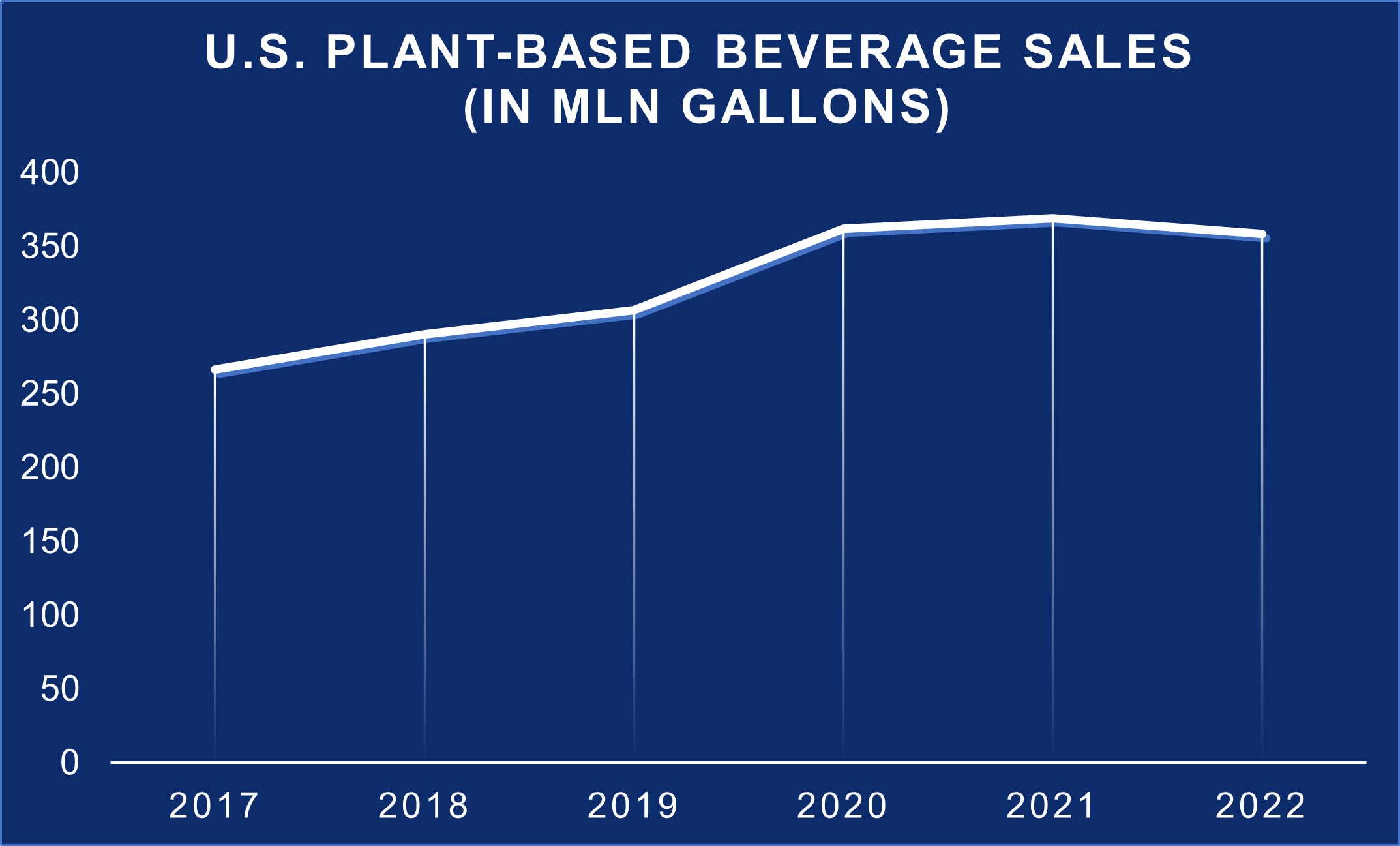
FMMO modernization and the farm bill alone would be more than enough to fill one year of Washington policy work. But of course, these two items are only the beginning of a long list of what must get done, from other legislative initiatives to federal nutrition policy proposals to overcoming regulatory challenges to expanding overseas markets The Biden Administration needs to pick up the pace on new trade deals even as it aggressively enforces existing ones. Yet another iteration of EPA’s Waters of the U.S. rule – this one going the wrong direction for agriculture – requires a strong response. And of course, we’re still waiting for FDA to give its guidance on labeling of plant-based dairy imitators, eternally hoping the agency charged with enforcing accurate nutrition labeling does what’s right for consumers.

Each year in Washington represents a new beginning. Opportunities are plentiful, and opportunities go to those who seize them. We embrace the challenge and expect that, working with the community that moves dairy forward, we can achieve great policy progress in the year ahead.


President & CEO, NMPF

NMPF Statement on New WOTUS Rule

From NMPF President and CEO Jim Mulhern:

“NMPF is disappointed that once again dairy farmers, who every day strive to be leaders in environmental stewardship, may need to live under a WOTUS rule that is cumbersome, unclear and overly complicated. Because the EPA’s most recent iteration fails to resolve what is now a 50-year struggle to define what constitutes a water body subject to federal regulation under the Clean Water Act, our members will face continued uncertainty as they attempt to comprehend and comply with unclear regulations.

“NMPF was pleased with the Navigable Waters Protection Rule (NWPR) and disappointed when it was revoked. NMPF is also disappointed that EPA failed to listen to numerous agriculture stakeholders that called on the agency to stay rulemaking on a new WOTUS rule until the Supreme Court ruled on the Sackett case, expected this spring.

“It’s important to note that EPA’s latest iteration is not a complete return to the unworkable rule adopted in 2015. EPA’s listed exemptions at least try to address some of agriculture’s concerns over lack of clarity. Even so, EPA is reintroducing considerable ambiguity in this version of the rule as it attempts to determine what is a “Water of the US” as seen in the treatment of ditches, ephemeral streams and groundwater, all of which were largely categorically out under the NWPR. NMPF fully anticipates continued litigation as a result of this rule.

“It’s now clear that four successive administrations of both political parties have been unable to resolve this matter in a way that satisfies the broad range of stakeholders and provides long-term regulatory certainty which is badly needed. Depending on the outcome of the Sackett case this spring, it may be time for Congress to step in in a bipartisan manner to provide clarity regarding which bodies of water are under the jurisdiction of the Clean Water Act.”

Trade Policy Victories for U.S. Dairy

Shawna Morris HeadshotBy Shawna Morris, Senior Vice President for Trade, NMPF and U.S. Dairy Export Council.

The National Milk Producers Federation (NMPF) and the U.S. Dairy Export Council (USDEC) are proud to be the voice of defending the American dairy industry and promoting dairy exports in Washington D.C. and around the world. Looking back at this past year of trade policy, American dairy producers and the entire industry have much to be proud of.

U.S. dairy exports are on track for another record year in both value and volume — despite a lack of new market access, protectionist actions in key markets, and ongoing supply chain challenges.

Working with the government to help U.S. dairy thrive

The record export numbers are happening despite high costs and unreliable shipping networks that are still causing headaches for the industry more than two years after the global COVID-19 outbreak first snarled supply chains.

NMPF and USDEC have led the way in working with the U.S. government to address the concerns. In June, President Biden signed the Ocean Shipping Reform Act into law. Championed by NMPF and USDEC, the legislation limits ocean carriers’ ability to deny exports and charge unreasonable fees, clearing a significant hurdle for dairy exporters.

Elsewhere, the EU’s abuse of geographical indication rules continues to threaten U.S. producers’ access to foreign markets for common-name cheeses like “Parmesan” and “Feta.” In collaboration with the Consortium for Common Food Names (CCFN), NMPF and USDEC have pushed the U.S. government to proactively defend the rights of U.S. cheesemakers and fought the court battles necessary to advance this effort.

That work resulted in a key win last January, when a U.S. District Court ruled in our favor that “Gruyere” cheese can be produced anywhere – not just in France or Switzerland. This landmark victory again proved that common names are widely understood to refer to types of food, regardless of where they are produced.

Holding Canada responsible

The U.S.-Mexico-Canada Agreement (USMCA) provided a much-needed update to trade rules. NMPF and USDEC supported it as a deal that would increase exports and boost farm gate milk prices.

Unfortunately, Canada hasn’t held up its end of the bargain. By reserving most of its dairy tariff rate quotas (TRQs) for Canadian processors and directly impairing American exporters’ ability to access the Canadian market, it’s clearly a break of the USMCA’s TRQ provisions that allow market access.

NMPF and USDEC successfully advocated for last year’s initiation of the first-ever USMCA dispute settlement process. The United States won the initial case in January, but upon Canadian refusal to comply with the ruling, NMPF and USDEC prompted the U.S. government to pursue a second dispute panel, resulting in the U.S. seeking formal consultations with Canada in May. The organizations have urged a strong response on behalf of wronged U.S. dairy industry members to ensure that America’s dairy sector receives the full export benefits promised under the agreement.

Strengthening relationships in Latin America

NMPF and USDEC finalized partnerships with the Chilean National Federation of Producers (Fedeleche) and Rural Society of Argentina this year that will advance shared policy priorities internationally. Far more than just agreements on paper, these relationships set a foundation to confront emerging threats, both in key export markets and in international standard-setting bodies to ward off anti-trade and anti-dairy policies.

These examples are just a slice of the trade policy issues that touched the U.S. dairy industry in 2022, but each highlights the great potential of the American dairy industry to grow worldwide and shows the need for the U.S. government to work with us to get there. Looking to 2023 and beyond, NMPF and USDEC are looking forward to ensuring that exports keep growing in volume and in value, supporting the bottom line of dairy farmers, manufacturers, and workers throughout the country.


This column originally appeared in Hoard’s Dairyman Intel on Dec. 26, 2022.

NMPF’s Bjerga on Dairy’s Recent Policy Wins

As the year comes to a close, the National Milk Producers Federation is applauding two recent measures that support the dairy industry. NMPF Senior Vice President of Communications Alan Bjerga spoke with RFD-TV’s own Janet Adkison about how the Growing Climate Solutions Act and Sustains Act benefit dairy farmers, and what USTR’s announcement of a new request for dispute settlement consultations with Canada means for U.S. dairy.


https://www.rfdtv.com/two-recent-measures-from-congress-and-ustr-are-giving-a-boost-to-dairy-farmers

Scholarships give back to dairy, NMPF’s Ayache says


The National Dairy Leadership Scholarship Program supports dairy research — and the industry as a whole — by assisting students who do cutting-edge scholarship, and then stay within the sector, said  Nicole Ayache, National Milk Producers Federation Vice President, Environmental Stewardship and Sustainability, in an interview with the National Association of Farm Broadcasters. “We’re really trying to support those individuals and their career. We want them to stay within dairy and contribute to our community,” she said. More information on the scholarships and how to donate to them is here.

U.S. Dairy Salutes USTR’s Pursuit of Canadian USMCA Compliance

ARLINGTON, VA – The National Milk Producers Federation (NMPF) and U.S. Dairy Export Council (USDEC) commend the U.S. Trade Representative’s announcement today that it is filing a new request for dispute settlement consultations with Canada in order to expand the scope of the second U.S.-Mexico-Canada Agreement (USMCA) dairy dispute to include additional elements necessary to ensure that Canada fully complies with its USMCA obligations.

The initial USMCA dispute panel, launched by the United States in May 2021, found Canada in violation of USMCA’s tariff-rate quota (TRQ) provisions by reserving most of its preferential dairy TRQs for Canadian processors. In March 2022, Canada released its revised approach to USMCA TRQs, which still violated the USMCA, by providing inequitable advantages to Canadian dairy processors and failing to administer TRQs in a manner to ensure full use of TRQs as intended by USMCA. This prompted USTR to request formal consultations with Canada over the measures, the first step in bringing a second case before a USMCA dispute settlement panel.

Today’s actions are the culmination of months of painstaking work to evaluate the strongest basis for the United States’ case and find the best approach to bring Canada into compliance given its persistent violations.

“We thank USTR and USDA for their diligence in working to ensure that American dairy producers have the market access promised under USMCA. NMPF is committed to doing everything it can to support the case,” stated Jim Mulhern, president and CEO of NMPF. “At the end of the day, if Canada continues to flagrantly flout its obligations, the U.S. government has to be ready with retaliatory measures that make the Canadian government reconsider its actions.”

“It is deeply unfortunate that Canada simply refuses to honor the full terms of our agreement,” said Krysta Harden, president and CEO of USDEC. “USMCA is a fair deal that was thoroughly negotiated and agreed to by the Canadian government. The U.S. dairy community is thankful the administration and Congress have taken Canada’s violations seriously and are fighting for full export benefits that the American dairy industry earned.”


NMPF Lauds Bipartisan Ag Climate Measures in Appropriations Package

The National Milk Producers Federation (NMPF) today commended Congress for including the Growing Climate Solutions Act and the SUSTAINS Act in its final fiscal year 2023 budget package. These measures will help dairy farmers seek additional sustainability opportunities as they work to fulfill the dairy sector’s voluntary, producer-led goal of becoming greenhouse gas neutral or better by 2050.

“Environmental markets and conservation programs have the potential to meaningfully assist dairy producers as they work to meet their 2050 environmental stewardship goals,” said NMPF president and CEO Jim Mulhern. “The Growing Climate Solutions Act and the SUSTAINS Act will strengthen these important tools.”

The Growing Climate Solutions Act, authored by Senate Agriculture Committee Chairwoman Debbie Stabenow, D-MI, and Senator Mike Braun, R-IN, passed the Senate last June on a bipartisan vote of 92-8. The legislation would enable USDA to register technical service providers that help farmers implement stewardship practices that can generate credits on environmental markets. In turn, producers will be better positioned to participate in these important markets. Reps. Abigail Spanberger, D-VA, and Don Bacon, R-NE, have introduced companion legislation in the House.

The SUSTAINS Act, authored by House Agriculture Committee Chairman-elect Glenn ‘GT’ Thompson, R-PA, passed the House Agriculture Committee in May on a bipartisan voice vote. The measure would allow private sector funds to supplement existing funding for farm bill conservation programs, which are continuously oversubscribed. The bill is an innovative approach to boosting funding for USDA conservation programs, which provide important technical assistance to dairy farmers for a variety of stewardship practices.

In addition to the sponsors of both bills, committee leaders Rep. David Scott, D-GA, and Sen. John Boozman, R-AR, also played important roles in finalizing the bipartisan package.

“We commend the leaders of the Agriculture Committees – Senators Debbie Stabenow and John Boozman and Reps. David Scott and GT Thompson – for working together to fashion this bipartisan agreement on agricultural climate legislation,” Mulhern said. “We look forward to working with them and their colleagues to build on this progress in the new year.”

CWT Assists with 5.9 Million Pounds of Dairy Product Export Sales

ARLINGTON, VA – Cooperatives Working Together (CWT) member cooperatives accepted 23 offers of export assistance from CWT that helped them capture sales contracts for 5.8 million pounds (2,600 MT) of American-type cheese and 37,000 pounds (17 MT) of cream cheese. The product is going to customers in Asia, Central America and Oceania, and will be delivered from December through June 2023.

CWT-assisted member cooperative year-to-date export sales total 99.1 million pounds of American-type cheeses, 657,000 pounds of butter (82% milkfat), 30.7 million pounds of whole milk powder and 8.8 million pounds of cream cheese. The products are going to 21 countries in six regions. These sales are the equivalent of 1.223 billion pounds of milk on a milkfat basis.

Assisting CWT members through the Export Assistance program positively affects all U.S. dairy farmers and cooperatives by fostering the competitiveness of US dairy products in the global marketplace and helping member cooperatives gain and maintain world market share for U.S dairy products. As a result, the program has helped significantly expand the total demand for U.S. dairy products and the demand for U.S. farm milk that produces those products.

The amounts of dairy products and related milk volumes reflect current contracts for delivery, not completed export volumes. CWT pays export assistance to the bidders only when export and delivery of the product is verified by required documentation.


###

The Cooperatives Working Together (CWT) Export Assistance program is funded by voluntary contributions from dairy cooperatives and individual dairy farmers. The money raised by their investment is being used to strengthen and stabilize the dairy farmers’ milk prices and margins. For more information about CWT, visit www.cwt.coop.

CWT Assists with 5.9 Million Pounds of Dairy Product Export Sales

Cooperatives Working Together (CWT) member cooperatives accepted 23 offers of export assistance from CWT that helped them capture sales contracts for 5.8 million pounds (2,600 MT) of American-type cheese and 37,000 pounds (17 MT) of cream cheese. The product is going to customers in Asia, Central America and Oceania, and will be delivered from December through June 2023.

CWT-assisted member cooperative year-to-date export sales total 99.1 million pounds of American-type cheeses, 657,000 pounds of butter (82% milkfat), 30.7 million pounds of whole milk powder and 8.8 million pounds of cream cheese. The products are going to 21 countries in six regions. These sales are the equivalent of 1.223 billion pounds of milk on a milkfat basis.

Assisting CWT members through the Export Assistance program positively affects all U.S. dairy farmers and cooperatives by fostering the competitiveness of US dairy products in the global marketplace and helping member cooperatives gain and maintain world market share for U.S dairy products. As a result, the program has helped significantly expand the total demand for U.S. dairy products and the demand for U.S. farm milk that produces those products.

The amounts of dairy products and related milk volumes reflect current contracts for delivery, not completed export volumes. CWT pays export assistance to the bidders only when export and delivery of the product is verified by required documentation.

CWT Assists with 1.2 Million Pounds of Dairy Product Export Sales

ARLINGTON, VA – Cooperatives Working Together (CWT) member cooperatives accepted two offers of export assistance from CWT that helped them capture sales contracts for 1.2 million pounds (546 MT) of American-type cheese. The product is going to customers in Central America and Oceania and will be delivered from January through May 2023.

CWT-assisted member cooperative year-to-date export sales total 93.3 million pounds of American-type cheeses, 657,000 pounds of butter (82% milkfat), 30.7 million pounds of whole milk powder and 8.8 million pounds of cream cheese. The products are going to 21 countries in six regions. These sales are the equivalent of 1.168 billion pounds of milk on a milkfat basis.

Assisting CWT members through the Export Assistance program positively affects all U.S. dairy farmers and cooperatives by fostering the competitiveness of US dairy products in the global marketplace and helping member cooperatives gain and maintain world market share for U.S dairy products. As a result, the program has helped significantly expand the total demand for U.S. dairy products and the demand for U.S. farm milk that produces those products.

The amounts of dairy products and related milk volumes reflect current contracts for delivery, not completed export volumes. CWT pays export assistance to the bidders only when export and delivery of the product is verified by required documentation.

###

The Cooperatives Working Together (CWT) Export Assistance program is funded by voluntary contributions from dairy cooperatives and individual dairy farmers. The money raised by their investment is being used to strengthen and stabilize the dairy farmers’ milk prices and margins.