The U.S. dairy industry told the Senate Finance Committee’s trade subcommittee today that the 2010 U.S.-Korea Free Trade Agreement has further strengthened U.S. dairy exports to the Korean market, even though it is not yet fully implemented.
At the same time, Shawna Morris, vice president for trade for the National Milk Producers Federation (NMPF) and the U.S. Dairy Export Council (USDEC), said a new and growing type of trade barrier involving common food names has emerged that is restricting access to the Korean market for key U.S. cheeses.

“(Korea’s restrictions on the use of several common cheese names) are the direct result of their separate free trade agreement with the European Union,” Morris, shown at right, testified. “In a nutshell, the European Union has been leaning on countries around the world to block imports of products by confiscating common food names and reserving them exclusively for cheese producers in their member countries.”
The U.S.-Korea free trade agreement eliminated nearly all Korean tariffs on America’s dairy exports. Morris said even though the agreement has only been in place since 2012, and its full impact is still years away, U.S. dairy exports to Korea in 2013 more than doubled the average of the three previous years.
Morris said the Korea FTA’s dairy provisions could be a good model for the Pacific trade liberalization agreement now being negotiated with Japan, Canada and eight other countries. “We hope that Trans-Pacific Partnership will result in an agreement that we can support as robustly as we have supported the Korea-U.S. Free Trade Agreement,” she testified.
Despite the positives under the U.S.-Korea FTA, Morris said, a separate 2011 Korea-European Union free trade agreement is abusing geographical indications regulations to inappropriately restrict U.S. access to the Korean market for gorgonzola, feta, asiago and fontina cheese.
“Since approval of the EU-Korea FTA, the EU has expanded around the world the model it first developed in that agreement,” Morris said. “EU pressure has resulted in similar restrictions in Central America, Peru, Colombia and most recently in South Africa. Canada has also agreed to restrict cheese names. And we understand the EU is pursuing similar objectives in Singapore, Japan, the Philippines, Malaysia and Vietnam, as well as China.”
Moreover, Morris said, it is clear the Europeans want to impose cheese name restrictions on the United States through the planned Trans-Atlantic trade agreement, which is also currently being negotiated. That is “entirely unacceptable,” she said, adding that the U.S. dairy industry, together with other food industries and many members of Congress, want already-imposed GI restrictions rolled back instead.
“Our negotiators should only come to an agreement on Geographical Indications with the EU if it simultaneously rejects restrictions in the U.S. market on common names, addresses the trade barriers erected against U.S. exports to third-country markets, and restores access to the EU for key U.S. exports such as parmesan and feta,” Morris said.
Morris’ complete testimony can be found here.
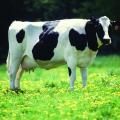 The National Milk Producers Federation on July 14 endorsed a draft plan for allowing the U.S. and Canada to cope with an outbreak of a serious foreign animal contagion, such as foot-and-mouth disease, suggesting the plan is a template for similar plans involving other important dairy export markets.
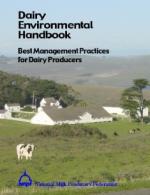 The National Milk Producers Federation on July 7th asked the Environmental Protection Agency (EPA) to withdraw recent guidance concerning when farmers must seek Clean Water Act permits for a long list of normal farming activities near wetlands.
 NMPF President and CEO Jim Mulhern reacted sharply to the apparent demise of immigration reform legislation in Congress this year. But Mulhern added that NMPF remains committed to the cause of reform, which, he said, will happen eventually.
 NMPF has made a series of recommendations to the Agriculture Department on how to implement the new dairy safety net included in the 2014 farm bill. The recommendations cover issues that are either unclear in the legislation or were left up to USDA to decide. The issues include such things as the timing of enrollment, the timing and structure of premium payments, and the treatment of farms with changing ownership structures.
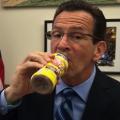 The latest skirmish in the battle over chocolate milk in schools ended June 12 when Connecticut Governor Dannel Malloy (left, drinking milk) vetoed legislation that would have effectively banned chocolate milk from state schools. The bill, passed on the final day of the legislature’s 2014 session, would have prohibited the sale of chocolate milk by setting a tight limit on the sodium allowed in drinks offered in Connecticut schools.
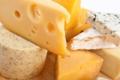 The Consortium for Common Food Names, which NMPF supports, is urging the European Union to make the right decision on a controversial proposal granting Denmark exclusive use of the generic cheese name “havarti” in the EU.
  In separate mid-June comments, the chairmen of both the House Ways and Means Committee and its trade subcommittee expressed strong opposition to European Union efforts to use geographical indications to restrict the use of generic food names. They also underscored the importance of securing favorable outcomes for the Trans Pacific Partnership negotiations, particularly with Japan on agricultural issues.