Action on Immigration Reform, Already Unlikely, Gets Even More So

The surge in undocumented children coming across the Texas border has thrown yet another monkey wrench into the immigration reform debate. And Congress’ failure to pass a stripped-down funding bill to address the border crisis before the August recess suggests the likelihood of action on comprehensive reform this year is now close to zero.

Administrative actions by the White House, either on their own or coupled with a quick border enforcement funding boost, are still possible. But they are at best a band-aide and cannot resolve the workforce problem confronting agriculture, and dairy farms in particular. So it will probably be 2015 before any lasting solution is possible.

In the meantime, NMPF will continue to make the case for comprehensive reform, working with other farm groups through the Agriculture Workforce Coalition. Farmers must be able to keep their current workers and attract and retain a future workforce. In addition, any farmers who may have employed undocumented workers in the past need assurances they will be held harmless.

“The problem is not going away,” said NMPF President Jim Mulhern. “The state of play may have shifted on Capitol Hill, but the economic reality outside of Washington has not. Our work will go on.” 

CWT Helps Dairy Exports Hit Record for June

The United States exported 17.3 percent of its milk production in June, the highest percentage ever achieved for the month of June and one of the highest monthly percentages ever.

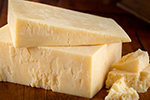
The increase from the previous June record – 16.5 percent in June 2013 – resulted partly from increased butter and cheese exports since last year. An important factor boosting butter and cheese exports was export assistance provided by NMPF’s Cooperatives Working Together, the voluntary, farmer-funded program that helps member cooperatives expand markets for U.S. dairy products overseas.

Between January and May, CWT helped with approximately a quarter of U.S. butter exports and more than half of U.S. American cheese exports. In the first six months of the year, butter exports were up 42 percent compared with 2013 and American and cheddar cheese exports were up 65 percent. CWT sales have helped keep U.S. butter and cheese prices above world levels during a significant downturn in world prices.

In July alone, CWT committed to assist with 26 million pounds of dairy product export sales arranged by five CWT-member cooperatives. That includes 21 million pounds of cheese, 1.2 million pounds of butter and nearly 4 million pounds of whole milk powder. Destinations include all six continents. The five cooperatives were Dairy Farmers of America, Land O’Lakes, Michigan Milk Producers Association, Northwest Dairy Association (Darigold) and Tillamook County Creamery Association.

NMPF Asks FDA to Fix Definition of ‘Added Sugars’ in Some Dairy Products

Question: When is lactose, which occurs naturally in dairy products, considered “added sugar”?

Answer: When the Food and Drug Administration attempts to define added sugars for the purposed of the nutrition facts label on foods.  

The FDA proposed in March to update the nutrition facts label, including adding a line to identify added sugars in food products. NMPF didn’t object to the concept, saying it will clarify the contribution of lactose, or milk sugar, to dairy products. But it balked at FDA’s proposed definition, which appears to include dairy products used as food ingredients, even though the lactose – or “milk sugar” – in those products occurs naturally and does not function as a sweetener.  

NMPF said under FDA’s proposed definition the lactose in a tablespoon of nonfat dry milk incorporated into another food would count as an “added sugar,” while the lactose in a glass of milk would not. “Surely, that can’t be what FDA intends,” said Beth Briczinski, NMPF’s vice present for dairy foods and nutrition. “We assume this is simply an oversight, but either way, it needs to be corrected.”

NMPF also used its comments on revisions to the nutrition facts label to remind the FDA that it is allowing manufacturers of imitation dairy products, including soy “milk” and rice “yogurt,” to trick consumers into thinking their products are nutritionally equivalent to real-milk products.

“Consumers think non-dairy alternatives with the term ‘milk’ or ‘yogurt’ in their name are nutritionally the same as real dairy products, but they aren’t,” said Briczinski. “In addition, allowing these imitations to call themselves “milk” or “yogurt” is a clear violation of FDA’s own food standards and labeling regulations.

In separate comments on serving-size issues, NMPF supported reducing a typical serving of yogurt from eight ounces to six ounces but opposed increasing a serving of frozen desserts from half a cup to a full cup. “Consumption of both ice cream and frozen desserts generally has been declining steadily for two decades,” said Briczinski. “That strongly suggests that an increase in the frozen dessert serving size is not warranted.”

White House Biogas ‘Roadmap’ Could Boost Profits for Dairy Farmers

NMPF called a new biogas “roadmap,” unveiled by the White House August 1, a potential revenue-generator for dairy farms that can also help the industry reach its goal of reducing its carbon footprint 25 percent by 2020.

Biogas systems recycle organic material — including cow manure and food waste — into renewable energy, fertilizer, nutrients, cow bedding and more. They include methane digesters and other systems that reduce greenhouse gases.

“The Biogas Roadmap will help stimulate the biogas market in ways that could provide revenue-generating opportunities for dairy farms of all sizes,” said NMPF President and CEO Jim Mulhern. “The voluntary strategies in the roadmap validate the path the industry has already taken to reduce methane emissions.”

Under the roadmap, the federal departments of agriculture and energy and the Environmental Protection Agency will take a variety of steps to promote the development of biogas systems. Included will be looking for ways to strengthen the biogas market and seeking to enhance the use of biogas systems through current government programs.

The Innovation Center for U.S. Dairy worked with the White House on the roadmap. Research by the Innovation Center last year identified a potential $2.9 billion market for systems that digest cow manure and food waste. NMPF serves on the Innovation Center board.

The dairy industry will serve on a USDA working group that will implement the roadmap’s strategies. “Dairy farmers are taking many steps to provide nourishing dairy foods and beverages that are responsibly produced,” said Tom Gallagher, chief executive officer of the Innovation Center for U.S. Dairy. “Biogas systems are one of many technologies available to the industry that help us continuously improve our stewardship and contribute to our communities.”

NMPF: Korea Trade Pact Beneficial, But Cheese Exports Restricted Due to Pressure from Europe

NMPF told a Senate subcommittee in July the 2010 U.S.-Korea Free Trade Agreement has already given a shot in the arm to U.S. dairy exports but that abuse of geographical indications by the European Union is restricting access to the Korean market for U.S. cheeses. 

“The European Union is leaning on countries around the world to block imports of products by confiscating common food names and reserving them exclusively for cheese producers in their member countries,” said Shawna Morris, NMPF vice president for trade.

The U.S.-Korea FTA eliminated nearly all Korean tariffs on U.S. dairy exports. Even though its full impact is still years away, Morris said U.S. dairy exports to Korea in 2013 more than doubled the average of the three previous years. 

Despite this positive result, Morris said a separate 2011 FTA between Korea and the European Union is keeping U.S. gorgonzola, feta, asiago and fontina cheese out of the Korean market. “This is without question due to EU efforts to claw back use of certain dairy product names for the sole of use of EU producers,” she said.

EU pressure has resulted in similar restrictions on U.S. cheese exports to Central America, Peru, Colombia and most recently South Africa. Canada has also agreed to restrict cheese names and the EU is pursuing similar objectives in Singapore, Japan, the Philippines, Malaysia and Vietnam, as well as in China.

Moreover, it is clear the Europeans want to impose cheese name restrictions on the United States through the planned Trans-Atlantic trade agreement, which is currently being negotiated. That is “entirely unacceptable,” Morris said, adding that the U.S. dairy industry, together with other in the food industry and many members of Congress, want already-imposed GI restrictions rolled back.

Morris testified July 29 before the Senate Finance Committee’s international trade subcommittee.

Earlier in the month, Morris and Senior Vice President for Strategic Initiatives and Trade Policy Jaime Castaneda traveled to Brussels to meet with those spearheading negotiations on the Trans-Atlantic trade pact. In addition to highlighting the common cheese name issue, they cited overly restrictive EU rules that have imposed unscientific requirements on U.S. dairy imports. These requirements have contributed to a $1 billion dairy trade deficit in favor of the European Union.

Dairy Farmer Tells Congress Producers Must Better Explain the Benefits of Biotechnology

Farmers need to connect better with the public on the benefits biotechnology brings to producers, consumers and the environment. That’s the message Joanna Lidback, a dairy farmer from northeast Vermont, delivered to a House agriculture subcommittee in early July.

Lidback said biotechnology plays a major role in farmers’ ability to both feed a growing global population and make improvements on farms, no matter their type or size. “The science shows that GMOs are safe and bring tremendous benefits, but we in agriculture have failed to communicate this effectively with the public,” she said.

Lidback said the 45-cow dairy farm she operates with her husband would not survive if they were forced to use non-GMO feed. The only currently available feed, she said, is organic and their feed costs would jump from $5,160 a month to $11,370 a month. “Over the course of a year, that means our feed costs alone would increase by $74,520,” she testified. “I do not see how we could survive, let alone farm profitably, in the long term with those increased feed costs.”

Lidback testified before the House Agriculture Subcommittee on Horticulture, Research, Biotechnology and Foreign Agriculture on behalf of New England dairy cooperative Agri-Mark and the National Council of Farmer Cooperatives.

NMPF Asks EPA to Withdraw Guidance that Could Hinder Water Conservation on Farms

NMPF has asked the Environmental Protection Agency to withdraw recent guidance concerning when farmers must seek Clean Water Act permits for a long list of normal farming activities near wetlands. In comments submitted July 7, NMPF said the EPA’s guidance could actually discourage water conservation by changing the long-standing relationship between farmers and the USDA’s Natural Resources Conservation Service.

Officially called an Interpretive Rule, the EPA guidance was issued in March. It says producers are only exempt from needing Clean Water Act permits for more than 50 routine farming practices if they comply with detailed NRCS technical conservation standards. Until now, these standards have been voluntary, and the farming practices exempt from the permit process.

NMPF said the guidance changes NRCS’s role from that of a conservation partner with farmers, to an enforcer of the Clean Water Act on EPA’s behalf. “Until now, NRCS has been the place producers could go for conservation advice, while EPA was charged with ensuring compliance with the Clean Water Act,” said Jamie Jonker, NMPF’s Vice President for Sustainability & Scientific Affairs. “The cooperative relationship with NRCS made it more likely farmers would adopt water conservation practices.

“Unfortunately,” Jonker said, “the interpretive rule moves NRCS into an enforcement role and, in the process, could set back conservation efforts.”

U.S.-Canadian Plan to Regionalize Trade in an Animal Disease Outbreak Endorsed

NMPF has endorsed a draft plan for allowing the United States and Canada to cope with an outbreak of a serious foreign animal contagion, such as foot-and-mouth disease.

The plan, drafted by the Agriculture Department’s Animal and Plant Health Inspection Service, calls for the United States and Canada to recognize each other’s efforts to control an outbreak, while regionalizing how the outbreak is handled, so as to allow continued trade with disease-free areas of the country.

In comments filed with APHIS, NMPF noted that Canada is the second-largest export market for U.S. dairy products, and that an outbreak of a highly contagious animal disease such as FMD in either country could be catastrophic for the U.S. dairy industry.

“We applaud the Agriculture Department for working with its Canadian counterparts to prepare for a foreign animal disease outbreak,” said Jamie Jonker, NMPF’s vice president for sustainability & scientific affairs. “We fully support the draft plan and see it as an effective tool for dealing with an outbreak.”

The plan, officially termed a framework, calls for the two countries to cooperate in establishing quarantine areas that would be the focus of disease eradication efforts in an outbreak. Trade could then resume or continue in areas considered free of disease. 

NMPF suggested the plan is a template for similar plans involving other important dairy export markets.

REAL® Seal Facebook Page Screamed for Ice Cream in July!

Ice cream… in cones, in sandwiches, in hot fudge sundaes, and dressed up in red, white and blue for Independence Day. Those were just some of the July posts on the REAL® Seal Facebook page, which took advantage of July as National Ice Cream Month.

One post suggested espresso poured over ice cream as an afternoon pick-me-up, while another reminded visitors that nondairy ice cream is made with things like corn, brown rice syrup, soybean oil and dehydrated cane juice.

By the end of the month, the Facebook page had more than 81,000 followers, up seven percent from June. The most popular July post? Appropriately, an image of two young girls eating ice cream, with the comment, “You can’t buy happiness, but you can buy ice cream … and that’s almost the same thing” It had a whopping 2,794 fans.

University of Florida Grad Student Receives NMPF Dairy Research Award

Eduardo de Souza Ribeiro, a doctoral student in animal sciences at the University of Florida, received the National Milk Producers Federation Richard M. Hoyt Award for dairy-related research last month. Ribeiro was recognized during the awards ceremony at the annual meeting of the American Dairy Science Association in Kansas City. NMPF Vice President for Dairy Foods and Nutrition Beth Briczinski made the presentation.

A native of São Joaquim, Brazil, Ribeiro has done extensive research in reproductive physiology and management of dairy cows. He earned a master’s degree from the University of Florida in 2011 and is currently in the animal molecular and cellular biology program there. His research has resulted in 24 publications, of which he was the lead author on eight.

The Richard M. Hoyt Award is a joint project of NMPF and ADSA, with NMPF providing the scholarship money. The award recognizes research efforts with direct application to problems in the dairy industry. The winner must be enrolled in or have completed a program leading to an advance degree in dairy science, dairy production, diary processing or a similar curriculum.

NMPF Wants Dairy Ingredients Problem Fixed in FDA ‘Added Sugar’ Definition

Group Also Seeks No Change in Ice Cream Serving Size, Smaller Size for Yogurt

ARLINGTON, VA – The National Milk Producers Federation wants the Food and Drug Administration to fix a problem in the planned definition of added sugars on food labels, saying it appears to include dairy products used as food ingredients, even though the lactose – or “milk sugar” – in those products occurs naturally.

Commenting August 1st on the FDA’s proposed changes to the nutrition facts label, NMPF was basically supportive of FDA’s proposal to list added sugars, saying it will clarify the contribution of lactose to dairy products and allow consumers to pinpoint added sweeteners in foods.

But, under FDA’s proposed definition, NMPF said the lactose in a tablespoon of nonfat dry milk incorporated into another food would count as an “added sugar,” while the lactose in a glass of milk would not.

“Surely, that can’t be what FDA intends,” said Beth Briczinski, NMPF’s vice present for dairy foods and nutrition. “We assume this is simply an oversight, since nonfat dry milk is often an ingredient in dairy products like yogurt and ice cream, as well as other foods, including baked and processed foods that benefit from added milk solids.”

“Either way,” Briczinski added, “this needs to be corrected.”

NMPF offered three specific reasons to exclude lactose-containing dairy ingredients from the definition of added sugars:

  • Unlike typical added sugars, dairy ingredients containing lactose are not used primarily to sweeten foods. In fact, compared with other sugars, lactose is not very sweet (it would take six times the amount of lactose to equal the sweetness level of table sugar). Instead, dairy ingredients like milk powder or whey powder are added to foods for other reasons, like texture and appearance.
  • The federal definitions of many standard dairy products allow them to include lactose-containing dairy ingredients, like nonfat milk powder, while still allowing the product to be called “unsweetened.” Examples include unsweetened yogurt and no-sugar-added ice cream.
  • Under FDA’s proposed definition, confusion would likely be created, since otherwise-identical dairy products would list or not list added sugars, depending on what ingredient was used. For example, a yogurt made with nonfat dry milk would be required to list added sugars, while the same yogurt made solely from skim milk would not list any added sugar.

NMPF also used its comments on the proposed revisions to the nutrition facts label to remind the FDA that it is allowing manufacturers of imitation dairy products, including soy “milk” and rice “yogurt,” to trick consumers into thinking their products are nutritionally equivalent to real-milk products.

“The name on a food conveys significant nutritional information,” said Briczinski. “Consumers think non-dairy alternatives with the term ‘milk’ or ‘yogurt’ in their name are nutritionally the same as real dairy products. But they are not. In addition, allowing these imitations to call themselves “milk” or “yogurt” is a clear violation of FDA’s own food standards and labeling regulations.

“It’s unfortunate that FDA has ignored this blatant misbranding of food products for decades, and is now touting its efforts to provide meaningful nutrition information to consumers,” Briczinski said.

Other points made in NMPF’s comments on FDA’s proposed revisions to the Nutrition Facts label:

  • Since industry in recent years has drastically reduced the trans fat in food – with a corresponding reduction in the trans fat in the American diet – it may no longer be necessary to list trans fat in the nutrition facts label. Regardless, ruminant trans fatty acids, which occur naturally in meat and dairy products, are not the same as added trans fats and should be exempt from the labeling requirement.
  • Dual-column labeling, designed to allow consumers to see nutritional information per-package as well as per-serving, doesn’t work for some dairy products, which should be exempted from the requirement – including quarts of milk, pints of cottage cheese, and dairy foods that are used primarily as ingredients, like butter and buttermilk.

In separate comments on serving-size issues, NMPF supported reducing a typical serving of yogurt from eight ounces to six ounces and opposed increasing a serving of frozen desserts

from half a cup to a full cup. “The yogurt change makes sense,” Briczinski said, “since it brings the government’s measurement in line with packaging found in the marketplace.”

At the same time, Briczinski said, while FDA is proposing to increase a frozen dessert serving, consumption of both ice cream and frozen desserts generally has been declining steadily for two decades. “Consumption data,” she said, “strongly suggests that an increase in the frozen dessert serving size is not warranted.”

“Overall,” said Briczinski, “FDA’s proposed Nutrition Facts and serving size changes will have a positive impact. They will provide accurate nutrition information to consumers. But a few aspects of the proposals will result in unintended consequences for some dairy foods and FDA needs to review those aspects and correct them.”


The National Milk Producers Federation, based in Arlington, VA, develops and carries out policies that advance the well-being of dairy producers and the cooperatives they own. The members of NMPF’s cooperatives produce the majority of the U.S. milk supply, making NMPF the voice of more than 32,000 dairy producers on Capitol Hill and with government agencies.

Biogas Opportunities Roadmap will foster innovation, revenue for dairy farms

The White House on Friday released a Biogas Opportunities Roadmap highlighting the economic and environmental benefits and potential for biogas systems in the U.S. According to the Roadmap, biogas systems offer a wide range of potential revenue streams, growing jobs and boosting economic development for communities, businesses and dairy farms. The systems work by recycling organic material — including cow manure and food waste — into valuable co-products such as renewable energy, fertilizer, separated nutrients and cow bedding.

To develop the Roadmap, The White House worked with the dairy industry through the Innovation Center for U.S. Dairy, which was established under the leadership of dairy farmers, and U.S. Department of Agriculture (USDA), Department of Energy (DOE) and Environmental Protection Agency (EPA).

The Innovation Center brings together leaders of dairy farmer organizations, including NMPF, along with cooperatives, processors, manufacturers, and brands, to foster innovation and help dairy farmers and importers sell more milk and dairy products. Biogas initiatives completed by the Innovation Center helped inform the Roadmap, including 2013 research that identifies a $2.9 billion market potential for anaerobic digester systems that co-digest dairy cow manure and food waste.

“The Biogas Roadmap will help stimulate the emerging biogas market in ways that could provide revenue-generating opportunities for dairy farms of all sizes,” said Jim Mulhern, president and chief executive officer of the National Milk Producers Federation, which develops and carries out policies that advance the well-being of dairy farmers and the cooperatives they own.

The Roadmap strategies are entirely voluntary, not regulatory. “This validates the proactive and voluntary path the industry is already taking to reduce methane emissions, and provides direction for future actions and opportunities,” said Mulhern. NMPF sits on the Board of Directors for the Innovation Center.

The USDA, DOE and EPA will take these steps to promote the development of biogas systems:

  • Fostering investment in biogas systems: To help overcome barriers to the widespread investment in biogas systems, USDA will lead efforts to better understand and track the performance of anaerobic digesters, seek opportunities to broaden financing options, and review Federal procurement guidelines.
  • Strengthening markets for biogas systems and system products: The Roadmap identifies activities that could strengthen the market for biogas systems and system products including energy and other value-added products. For example, dairy farms of all sizes could enhance their revenues through nitrogen and phosphorus recovery.
  • Improving communication and coordination: USDA will establish a Biogas Opportunities Roadmap Working Group, including the dairy industry, to implement the strategies in the Roadmap, with a goal to identify and prioritize policies and technology opportunities by August 2015.
  • Promoting biogas use through existing agency programs: Leveraging existing programs will provide a way to enhance the use of biogas systems in the U.S. by ensuring existing criteria for technical and financial assistance considers the benefits of biogas system, leveraging research funding, and strengthening programs that support the use of biogas for clean energy, transportation fuel, and other biobased products.

“On dairy farms, digesters can increasingly be part of the solution to manure management challenges and enhance our ability to sustain our farms for the next generation,” said Jim Werkhoven, a dairy farmer in Monroe, Washington, and Chairman, Darigold, Inc.

Biogas systems could help the dairy industry, which contributes approximately 2 percent of total U.S. greenhouse gas emissions, to further reduce its carbon footprint.  In 2009, the dairy industry established a voluntary goal to reduce its carbon footprint by 25 percent by 2020. The Dairy Power project is one of a portfolio of projects to help achieve that goal; it focuses on harnessing the value of manure and realizing the potential of biogas systems for U.S. dairy farmers.

“Dairy farmers are taking many steps to provide nourishing dairy foods and beverages that are responsibly produced,” said Tom Gallagher, chief executive officer of the Innovation Center for U.S. Dairy. “Biogas systems are one example of many technologies available to the industry today that help us continuously improve our stewardship and contribute to our communities.”


Visit USDairy.com/DairyPower for information and case studies about biogas projects on dairy farms, and watch this video to see how a coalition of urban and rural partners — including the Cleveland Browns – used a biogas system to recycle cow manure and food waste.