NMPF Calls for COOL Fix as U.S. Loses Last Appeal of WTO Trade Violation Finding

With Canada and Mexico poised to consider higher tariffs on U.S. farm products – including dairy foods – in retaliation for the Country of Origin Labeling program that violates international agreements, NMPF is supporting efforts to brings the United States into compliance with its WTO obligations.

In a May 18 ruling, the World Trade Organization found the U.S. labeling program violates international trade rules. The decision was the last opportunity for the U.S. to appeal earlier WTO findings against the COOL program.  As a result, Canada and Mexico are entitled to retaliate against U.S. exports, and that could well include higher tariffs on U.S. dairy products.

NMPF President and CEO Jim Mulhern noted that Canada has already indicated it will target the U.S. dairy industry, and that Mexico retaliated against U.S. dairy products in an earlier trade ruling against the United States just a few years ago.

“America’s dairy farmers should not suffer collateral damage as a consequence of our COOL policy,” Mulhern said. “The U.S. government needs to rectify this situation before we lose any export customers.  With U.S. farmers relying more and more on exports for income, we cannot allow the country of origin issue to interfere with dairy trade in this hemisphere.”

The House is expected to take up legislation soon to repeal the Country of Origin Labeling program and the Senate is also looking into a legislative fix to the COOL problem. If nothing is done, the dairy industry could see retaliatory tariffs as early as late summer or fall. Both Mexico and Canada are major export markets for U.S. dairy products.

CWT Helped Keep Member Dairy Cooperatives Competitive in World Markets in May

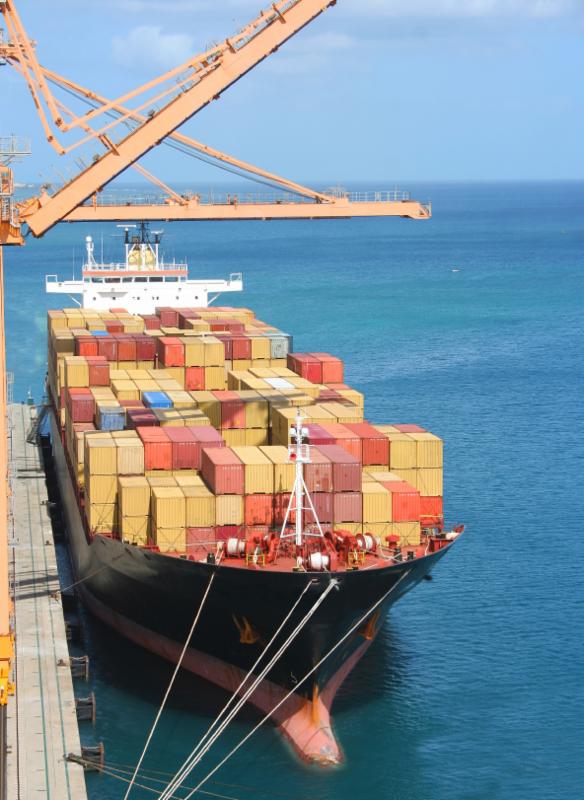
Cooperatives Working Together continued in May to help keep its member cooperatives competitive in world markets, as they contracted to sell 18.1 million pounds dairy products to customers in 10 countries on four continents. The products included 5.7 million pounds of American-type cheese, 2.2 million pounds of butter, and 10.2 million pounds of whole milk powder.

These 30 sales contracts bring the year to date 2015 CWT totals to 35.1 million pounds of cheese, 26.6 million pounds of butter, and 20.1 million pounds of whole milk powder. Together, these transactions will export the equivalent of 1.07 billion pounds of milk, on a milkfat basis, to customers in 28 countries on five continents.

Developed by NMPF, CWT is a voluntary export assistance program supported by dairy farmers producing 70 percent of the nation’s milk. By helping to move U.S. dairy products into world markets, CWT helps keep maintain and grow U.S dairy farmers share of these expanding markets which, in turn, keeps dairy farmer milk prices at reasonable levels.

Final ‘Waters of the US’ Rule Not Likely to End Controversy over Definitions, Applications

The U.S. Environmental Protection Agency’s final Waters of the U.S. (WOTUS) rule, unveiled May 27, is not likely to dampen the controversy over the regulation, with NMPF and a number of farm and business groups continuing to express concerns over the rule.

Based on an initial review, NMPF said the regulation doesn’t adequately address concerns the Federation raised about vague definitions and unclear application of the initial proposal. “Above all, agriculture needs certainty on which waterways fall under the jurisdiction of the CWA,” said NMPF President and CEO Jim Mulhern. “EPA’s final rule doesn’t appear to provide that clarity.”

The House has already passed a bill requiring the Environmental Protection Agency and the Army Corps of Engineers to withdraw the rule, and similar legislation is pending in the Senate. Legislators can also attempt to block implementation of the rule through the appropriations process.  At the same time, legal challenges to the EPA’s approach are also likely, as attorneys general in at least two states – Oklahoma and Arkansas – are considering seeking injunctions against enforcement of the rule.

The goal of the regulation is to better protect streams and wetlands from pollution. But from the start it was criticized, especially by farm groups, for its vague terminology, and for appearing to vastly increase the waterways subject to regulation under the federal Clean Water Act. The final, 297-page regulation attempts to more clearly define which streams and wetlands are considered tributaries of a navigable waterway, and therefore subject to CWA regulation. But in some instances, it says, case-by-case determinations will be necessary.

NMPF has followed Clean Water Act jurisdiction issues closely for many years. In July, it asked the EPA to withdraw written guidance for when farmers must seek CWA permits for a long list of normal farming activities near wetlands. A bipartisan group of House members backed up NMPF’s concerns and the guidance was eventually withdrawn.

NMPF Offers Federal Agencies Extensive Comments on Dietary Guidelines Report

Following up on its engagement throughout the U.S. Dietary Guidelines Advisory Committee process, NMPF last month submitted 17 pages of written comments to the Departments of Agriculture and Health and Human Services on the DGAC’s final report and recommendations.

Like the earlier testimony, the written comments filed in May urged the federal government to continue recommending three servings of dairy a day. They also suggested adding a recommendation for one additional daily serving of milk or dairy foods. Other NMPF recommendations urged the government to:

  • Continue to represent dairy as a separate food group
  • Encourage those who are lactose intolerant to choose low-lactose dairy products over non-dairy substitutes
  • Stop calling non-dairy substitutes “milk” or “yogurt” since they do not meet the federal definitions for those products
  • Adopt a balanced approach to nutrients like added sugars so that Americans are not discouraged from consuming otherwise beneficial dairy products like chocolate milk
  • Take note of emerging science on the potential benefits of consuming whole-fat dairy foods
  • Urge consumers to avoid unpasteurized dairy products since they are a demonstrated health risk

The Dietary Guidelines for Americans, the federal government’s basic nutrition advice for consumers, are updated every five years. The Departments of Agriculture and Health and Human Services will issue the full, formal 2015 Guidelines later this year.

NMPF Works with Congress and IDFA to Reverse Decline in School Milk Consumption

As Congress prepares to review and reenact federal child nutrition programs, NMPF has worked in concert with the International Dairy Foods Association and two House members to craft legislation aimed at reversing the decline in school milk consumption.

The bipartisan School Milk Nutrition Act of 2015, introduced in mid-May by Representatives G.T. Thompson (R-PA) and Joe Courtney (D-CT), reaffirms the long-standing requirement that milk is offered with each school meal. It attacks declining milk consumption with research and a pilot program increasing the variety and availability of milk in schools.

NMPF and IDFA want Congress to consider the Thompson-Courtney bill in the child nutrition reauthorization process. Legal authority to operate the programs expires in September.

“Although milk provides multiple health benefits and is the number one source of nine essential nutrients in the diets of young Americans, many children are not consuming the recommended three servings of milk or other dairy foods a day,” said NMPF President and CEO Jim Mulhern. “In addition, from 2012 to 2014, schools served 187 million fewer half-pints of milk, while total public school enrollment grew.”

Much of that decline, in NMPF’s view, is the result of a decision by USDA to limit flavored milk servings in schools to nonfat-only. NMPF had urged USDA to include lowfat along with nonfat flavored milk, consistent with the U.S. Dietary Guidelines, because of concern that many children do not like nonfat milk. NMPF warned USDA that milk consumption in schools would likely decline if flavored milk servings were limited to nonfat-only. “The net result of this misguided approach has been fewer beneficial nutrients consumed by schoolchildren who aren’t drinking as much milk,” Mulhern said.

In a related development, the National Dairy Council issued a report in May highlighting the history and nutritional importance of school milk. Fluid Milk in School Meal Programs identifies declining school milk consumption as a concern and notes that it is difficult to replace the nutrients in milk without adding extra calories and cost.

John Newton, University of Illinois Professor, to Join NMPF Economics Department

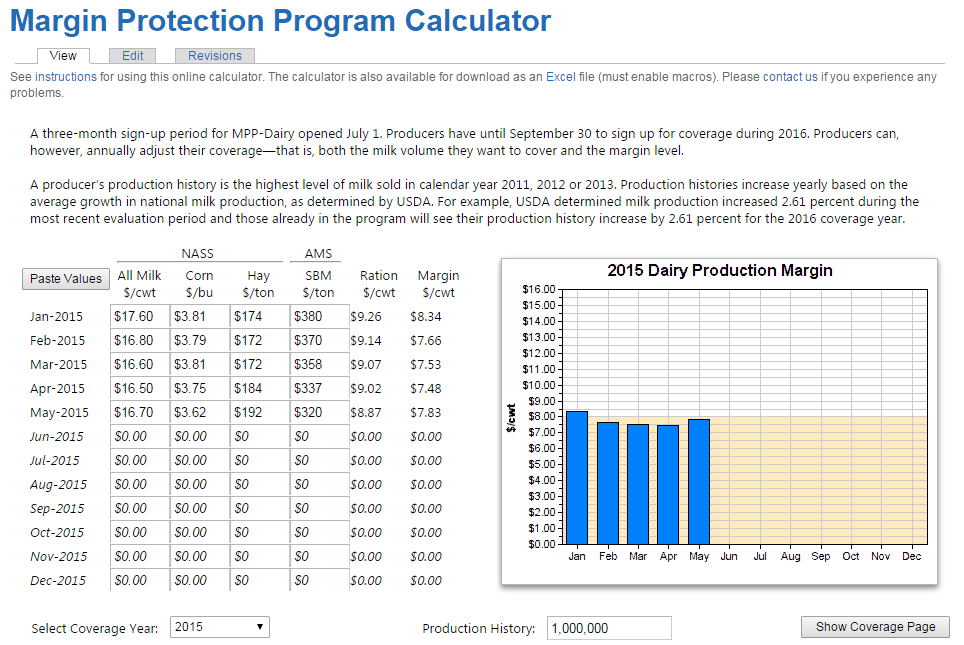
John Newton, an assistant professor at the University of Illinois at Urbana-Champaign, will join NMPF’s economics department July 1 as senior director of research. Newton, currently in the university’s Department of Agricultural and Consumer Economics, has more than a decade of experience in dairy policy, and recently helped U.S. Agriculture Department implement the new Margin Protection Program.

“John understands both the art and the science of helping farmers manage the risks of price volatility,” said NMPF President and CEO Jim Mulhern. “His skills at data analysis will help our members understand where milk prices are going, and more importantly, how they can use tools like the MPP to their advantage.”

Mulhern added that Newton’s experience working with the Federal Milk Marketing Order system also gives him an in-depth understanding of the importance of that program to the orderly marketing of milk.

A Louisville native, Newton earned a Ph.D. in agricultural economics, a M.A. in macroeconomics, and a M.S. in agricultural economics, all from Ohio State. From 2004 to 2014, he worked on risk management and income support programs for USDA’s Agricultural Marketing Service. In this role, he also served temporarily on the staff of the Senate Agriculture Committee and in the office of USDA’s chief economist.

Newton said he is looking forward to helping dairy farmers confront their economic challenges and prosper in the future. He will work with Peter Vitaliano, NMPF’s vice president of economic policy and market research, and Economic Analyst Dustin Baker.

University of Illinois’s John Newton to Join NMPF Economics Department

ARLINGTON, VA – Agricultural economist Dr. John Newton will join the staff of the National Milk Producers Federation on July 1 as Senior Director of Economic Research, enhancing the research and analytical capabilities of the organization. Newton currently is a Clinical Assistant Professor in Agricultural Commodity Markets, Department of Agricultural and Consumer Economics, at the University of Illinois at Urbana-Champaign.

Newton has more than a decade of experience in dairy policy, and has played a major role in the past year in helping the U.S. Agriculture Department implement the new federal dairy Margin Protection Program through his work with the Dairy Markets and Policy collaboration among Midwestern economists.

“John understands both the art and the science of helping farmers manage the risks of price volatility. His skills at data analysis will help our members understand where milk and feed prices are going, and more importantly, how they can use tools like the MPP to their advantage,” said Jim Mulhern, President and CEO of NMPF.

“His experience with the Federal Milk Marketing Order system, where he worked in a regional market administrator’s office, gives John an in-depth understanding of the importance of this program to farmers and cooperatives for the orderly marketing of milk,” Mulhern added.

Newton said that “I am looking forward to drawing on my experience in government and academia to help America’s dairy farmers confront the economic challenges they are facing, and working with them on ways to prosper in the future.” A native of Louisville, Kentucky, Newton received a Ph.D. in agricultural economics, a M.A. in macroeconomics, and a M.S. in agricultural economics, all from The Ohio State University. He has been at the University of Illinois since 2014.

Newton will be working with NMPF’s current economics staff, including Peter Vitaliano, Vice President of Economic Policy and Market Research, and Dustin Baker, Economic Analyst.

From 2004 to 2014, Newton worked for the USDA’s Agricultural Marketing Service on issues relating to risk management and federal farm income support programs. While serving in this role, Newton had the prestigious opportunity to serve both as a 2013 fellow on the United States Senate Committee on Agriculture, Nutrition, and Forestry and as a researcher for the USDA Office of the Chief Economist, providing policy insight for the Agricultural Act of 2014.


The National Milk Producers Federation, based in Arlington, VA, develops and carries out policies that advance the well-being of dairy producers and the cooperatives they own. The members of NMPF’s cooperatives produce the majority of the U.S. milk supply, making NMPF the voice of more than 32,000 dairy producers on Capitol Hill and with government agencies.

Too Much of a Good Thing

When she said that “too much of a good thing can be wonderful,” Mae West might have been referring to food and wine…or perhaps other earthly pleasures.  But she certainly didn’t have in mind what some Europeans are attempting to do with the names of some foods, including many cheeses: corrupting the legitimate concept of tying a food product to its place of origin, by distorting that notion in a way that hurts both consumers and food producers.

NMPF, the U.S. Dairy Export Council and the Consortium for Common Food Names have been sounding the alarm bells for several years about how the European Union – and it’s mainly just a subset of food companies and countries within Europe – want to restrict trade by monopolizing common foods names for their exclusive use.

I spent a week in May traveling to Brussels, Berlin and Dublin to deliver the message to a variety of EU policymakers and dairy stakeholders that these efforts to bastardize the concept of geographic indicators are indeed a very bad thing.  If pursued by the EU’s trade negotiators, this effort will doom the prospects for a U.S.-EU Transatlantic Trade and Investment Partnership.  This blatantly anti-competitive approach is something that America’s policymakers just won’t swallow.

Another important message to make clear was that, from the U.S. perspective, some use of geographic indicators can be beneficial…in moderation. We have no issue with specific names for foods from specific regions, the best examples being Parmigiano Reggiano in Italy, or Holsteiner Tilsit in Germany.  These compound names refer to a specific cheese type, from a specific region.  And consumers know well the difference when they are buying a Parmigiano Reggiano versus an American parmesan cheese.

But the legitimate use of compound names is very different than restricting the use of common, generic names, including parmesan, feta, asiago and havarti – just four examples where the EU has been fighting hard to monopolize these names for some member states (even though feta and havarti do not refer to any city or region in the world, let alone a region of Europe).

When food names have long been in the public domain, as has “parmesan,” it is completely inappropriate for government trade regulations in the 21st century to summarily remove the ability of cheesemakers outside of Italy to use such a name.  Already, the U.S. is not permitted to sell in Europe parmesan, muenster, feta or several other common cheese types, due to the EU’s decision to permit only certain member states to use these product names.  Additionally, the EU has negotiated trade deals with other countries that restrict the marketing of cheeses with these names, even if these are American-made cheeses that were not part of the bilateral agreement made between the EU and another nation.

The Europeans have suggested generating a list of names that we in the U.S. would agree to allow them to keep for themselves (and it includes meats and wines, not just cheeses).  But this is a non-starter. It is an attempt to legitimize a completely illegitimate name-grabbing scheme.  We already have a system that works: the compounding of a specific locale with a generic name, in order to provide a clear place of origin definition, is appropriate. But to say parmesan, asiago, muenster, feta or gorgonzola are the sole purview of a particular country or area is simply wrong, in any language.

Major trade deals like the TTIP involve lengthy negotiations, because they will have decades-long implications for commerce between our nations.  As always, the Europeans are playing the long game here, realizing that in the globalized future, dairy is a growing market with big opportunities. Clawing back geographic indications for their foods is Europe’s attempt to forestall competition with the U.S., and other New World countries, in the global market.

But we are in this for the long haul, too. Therefore, if an agreement is to be reached on GIs, it needs to include a suitable model for protecting both legitimate geographical indications, while protecting the broader use of generic food names. If there is to be an eventual U.S.-EU free trade agreement, it must be one in which European consumers have the opportunity to buy a Wisconsin Asiago, just as American consumers have long been able to buy a Parmigiano Reggiano.

There is the possibility of a reasonable outcome here, but not if the pursuit of too much of a good thing becomes the enemy of a fair and balanced approach.

Dairy Groups Praise Senate Passage of TPA, Call for Quick House Action

ARLINGTON, VA – The National Milk Producers Federation and U.S. Dairy Export Council tonight commended the Senate for approving new Trade Promotion Authority (TPA) legislation. They urged members of the House of Representatives to quickly pass their own TPA legislation.

“Trade promotion authority is crucial to concluding trade agreements that will open foreign markets to more U.S. dairy products,” said NMPF President and CEO Jim Mulhern. “In the Trans-Pacific Partnership negotiations in particular, having TPA in place is essential to increase pressure on Japan and Canada to extend their best offers.”

USDEC President Tom Suber added, “Knowing that a trade agreement will be considered by Congress under Trade Promotion Authority paves the way to press our negotiating partners to make their best offers on the most sensitive issues. Clearly, dairy exports fall into that category, and the U.S. needs all the tools it can muster to get the best possible deal.”

The two organizations said TPA will increase congressional influence over trade negotiations and lead to agreements that are better for both the country and the dairy industry. They urged the House to take up TPA legislation soon after returning from the Memorial Day recess.

TPA, which expired in 2007, is important to the U.S. dairy industry because the United States now exports the equivalent of one-seventh of its milk production.

###

The National Milk Producers Federation, based in Arlington, Va., develops and carries out policies that advance the well-being of U.S. dairy producers and the cooperatives they collectively own. The members of NMPF’s cooperatives produce the majority of the U.S, milk supply, making NMPF the voice of nearly 32,000 dairy producers on Capitol Hill and with government agencies. For more on NMPF’s activities, visit www.nmpf.org.
The U.S. Dairy Export Council is a non-profit, independent membership organization that represents the global trade interests of U.S. dairy producers, proprietary processors and cooperatives, ingredient suppliers and export traders. Its mission is to enhance U.S. global competitiveness and assist the U.S. industry to increase its global dairy ingredient sales and exports of U.S. dairy products. USDEC accomplishes this through programs in market development that build global demand for U.S. dairy products, resolve market access barriers and advance industry trade policy goals. USDEC is supported by staff across the United States and overseas in Mexico, South America, Asia, Middle East and Europe. The U.S. Dairy Export Council prohibits discrimination on the basis of age, disability, national origin, race, color, religion, creed, gender, sexual orientation, political beliefs, marital status, military status, and arrest or conviction record. www.usdec.org
Dairy Groups Praise Diplomatic Struggle against Additional Restrictions on Common Food Names

The dairy industry today praised U.S. representatives to a key international meeting for leading the fight against treaty changes that could seriously impair the ability of companies worldwide to use generic food terms in export markets. Among those potentially affected are U.S. dairy producers and processors relying on numerous generic cheese names.

The National Milk Producers Federation, the U.S. Dairy Export Council and the International Dairy Foods Association jointly thanked the U.S. delegation to the World Intellectual Property Organization’s Diplomatic Conference on the Lisbon Agreement for calling attention to the treaty changes. They also praised the U.S. diplomats for leading a coalition of countries in criticizing the lack of an inclusive WIPO process as well as the negative costs the agreement will likely impose on taxpayers, farmers and companies in other countries.

The three organizations urged the U.S. Trade Representative to evaluate the degree to which countries’ actions under the agreement are likely to violate World Trade Organization obligations and called on Congress to examine the deeply troubling side-lining of a majority of WIPO members in the development of an agreement with global ramifications.

WIPO is a United Nations agency charged with developing a balanced international intellectual property system. It concluded two weeks of talks in Geneva today that both expanded the Lisbon Agreement for the Protection of Appellations of Origin to include geographical indications and expanded the protections granted under the international registry of protected terms.

Geographical indications limit who can use certain product terms or names to those in a particular geographic area. GIs have been widely abused in recent years by European interests seeking to restrict competition from the United States and other non-European countries.

During the two-week diplomatic conference in Geneva, the United States led a 12-nation coalition in opposing the Lisbon Agreement changes and in urging equal participation rights for all WIPO members in considering the changes. In a radical departure from multiple precedents, WIPO chose to permit Lisbon Agreement members to deny meaningful participation to the majority of WIPO members.

Despite this power grab, the U.S. and its allies used the conference to draw attention to the agreement’s failure to adequately safeguard both trade and intellectual property rights. Dairy groups urged continued international collaboration in opposing misuse of geographical indications.

“The treaty and its proposed changes are clearly aimed at preventing competitors such as dairy producers and processors in the United States and other non-European countries from using names in international trade that they have used for decades,” said NMPF President and CEO Jim Mulhern. “We appreciate and commend the extensive work the office of the U.S. Trade Representative and the U.S. Patent and Trademark Office, along with the departments of State and Agriculture, have put into opposing these changes and in decrying WIPO’s refusal to allow all members to have a full say in the outcome of this agreement.”

USDEC President Tom Suber added, “WIPO’s decision to force non-Lisbon members into second-class status at this conference strips the resulting outcome of its legitimacy as an international agreement. It’s clear that this agreement is an effort to promote the interests of GI holders at the expense of generic users, rather than trying to balance both those concerns in good faith. It is clear to us that there are serious WTO consistency problems with the approach Lisbon members have decided to pursue and we ask USTR to carefully examine how to address these trade commitment violations.”

IDFA President and CEO Connie Tipton agreed, noting that “with U.S. leadership, international collaboration on these crucial issues can continue in a variety of forums. Countries have a right to enter into treaties to address their own goals, but this should not come at the expense of other countries’ exports, nor their rights to fully participate in treaties having international impacts.”


The National Milk Producers Federation (NMPF), based in Arlington, Va., develops and carries out policies that advance the well-being of U.S. dairy producers and the cooperatives they collectively own. The members of NMPF’s cooperatives produce the majority of the U.S, milk supply, making NMPF the voice of nearly 32,000 dairy producers on Capitol Hill and with government agencies.

The U.S. Dairy Export Council (USDEC) is a non-profit, independent membership organization that represents the global trade interests of U.S. dairy producers, proprietary processors and cooperatives, ingredient suppliers and export traders. Its mission is to enhance U.S. global competitiveness and assist the U.S. industry to increase its global dairy ingredient sales and exports of U.S. dairy products. USDEC accomplishes this through programs in market development that build global demand for U.S. dairy products, resolve market access barriers and advance industry trade policy goals. USDEC is supported by staff across the United States and overseas in Mexico, South America, Asia, Middle East and Europe. The U.S. Dairy Export Council prohibits discrimination on the basis of age, disability, national origin, race, color, religion, creed, gender, sexual orientation, political beliefs, marital status, military status, and arrest or conviction record. www.usdec.org

The International Dairy Foods Association (IDFA), Washington, D.C, represents the nation’s dairy manufacturing and marketing industries and their suppliers, with a membership of 550 companies within a $125-billion a year industry. IDFA is composed of three constituent organizations: the Milk Industry Foundation (MIF), the National Cheese Institute (NCI) and the International Ice Cream Association (IICA). IDFA’s nearly 200 dairy processing members run nearly 600 plant operations, and range from large multi-national organizations to single-plant companies. Together they represent more than 85 percent of the milk, cultured products, cheese, ice cream and frozen desserts produced and marketed in the United States. IDFA can be found at www.idfa.org.

U.S. Dairy Industry Supports Action by Congress to Repeal Country of Origin Labeling

ARLINGTON, VA – American dairy products headed to Canada and Mexico could face stiffer tariffs – and ultimately, reach fewer foreign customers – unless Congress repeals Country of Origin Labeling (COOL) requirements for meat products that violate international trade rules, the National Milk Producers Federation and the U.S. Dairy Export Council said today.

Under the World Trade Organization ruling announced Monday, “Canada and Mexico are entitled to retaliate against U.S. exports, and that could well include higher tariffs on U.S. dairy products,” said Jim Mulhern, NMPF president and CEO. He noted that Canada has already indicated it will target the U.S. dairy industry, while Mexico retaliated against U.S. dairy products in a past NAFTA finding against the United States.

America’s dairy farmers should not suffer collateral damage as a consequence of our COOL policy. The U.S. government needs to rectify this situation before we lose any export customers,” Mulhern said.

“Mexico is our largest export market, and Canada is also a significant destination for U.S. dairy products,” said Tom Suber, president of USDEC. “At a time of softer global dairy demand, we need to be focused on ensuring we keep exports moving and doing all we can to avoid new roadblocks from being put in our exporters’ paths.”

The WTO will finalize by the end of the month the recent decision faulting U.S. COOL requirements, after which Canada and Mexico can formally request permission to retaliate against the United States. Retaliation will be determined by how much the two countries can raise tariffs to address their losses under the U.S. meat labeling requirement, which was first challenged by Canada and Mexico in 2009. A panel will have 60 days to review the tariff amount, although the United States, Canada and Mexico could discuss a settlement before the 60-day clock runs out. The United States could see retaliatory tariffs by late summer or fall.

NMPF and USDEC are among a long list of food and agriculture organizations supporting bipartisan legislation to head off retaliation by repealing country of origin labeling requirements enacted in 2002. H.R. 2393, introduced by House Agriculture Committee Chairman Michael Conaway (R-Texas), is scheduled for committee consideration today.

Mulhern said NMPF will also be educating both House and Senate members to make sure they understand that dairy will likely be hurt if steps are not taken to bring the United States into compliance with the WTO rules.

“With U.S. farmers relying more and more on exports for income, we cannot allow the country of origin labeling issue to interfere with increased dairy trade in the hemisphere,” Mulhern said.

###

The National Milk Producers Federation, based in Arlington, Va., develops and carries out policies that advance the well-being of U.S. dairy producers and the cooperatives they collectively own. The members of NMPF’s cooperatives produce the majority of the U.S, milk supply, making NMPF the voice of nearly 32,000 dairy producers on Capitol Hill and with government agencies. For more on NMPF’s activities, visit www.nmpf.org.
The U.S. Dairy Export Council is a non-profit, independent membership organization that represents the global trade interests of U.S. dairy producers, proprietary processors and cooperatives, ingredient suppliers and export traders. Its mission is to enhance U.S. global competitiveness and assist the U.S. industry to increase its global dairy ingredient sales and exports of U.S. dairy products. USDEC accomplishes this through programs in market development that build global demand for U.S. dairy products, resolve market access barriers and advance industry trade policy goals. USDEC is supported by staff across the United States and overseas in Mexico, South America, Asia, Middle East and Europe. The U.S. Dairy Export Council prohibits discrimination on the basis of age, disability, national origin, race, color, religion, creed, gender, sexual orientation, political beliefs, marital status, military status, and arrest or conviction record. www.usdec.org