2nd Enrollment Period Opens for New Federal Dairy Safety Net

The second enrollment period for the Margin Protection Program — the new federal dairy safety net included in the 2014 farm bill — opened July 1st. Producers have until Sept. 30th to sign up at their county FSA office for coverage in 2016.

MPP helps protect against the kind of catastrophic losses that many dairy farmers experienced in 2009 and again in 2012. It does this by allowing farmers to use insurance to cover the margin between milk prices and feed costs. Producers insure their operations on a sliding scale, deciding both how much of their production to cover and the level of margin to protection.

NMPF was instrumental in MPP’s enactment and strongly encourages producers to use the program going forward.

To help farmers make coverage decisions, NMPF has updated the informational tools at the www.FutureforDairy.com website serving as a clearinghouse for information on MPP. Included are a brochure explaining the program and its importance to dairy farmers; a PowerPoint presentation that also highlights the benefits of the program; Frequently Asked Questions on the MPP; and a calculator allowing farmers to estimate future margins based on their forecasts of feed and milk prices.

Made in America Tools Offer Help for Farmers

 
The laws of economics, being mostly man-made, are not quite as unassailable as the law of gravity, but the same theory applies to both categories:  what goes up, eventually comes down…sometimes with painful results.  Dairy farmers have experienced this problematic principle so far in 2015, as milk prices have come down by at least one-third from their record highs of last year.  
 
There is some hope that the worst of the price trough is over, while at the same time, we have important tools to help America’s farmers confront the vicious swings of the economic pendulum:  the government’s Margin Protection Program, and the industry’s own Cooperatives Working Together. 

 
Starting this month, the U.S. Department of Agriculture has opened an enrollment window for farmers to obtain insurance coverage for 2016 under dairy’s Margin Protection Program.  Until September 30th (unless the USDA further extends the window, as it did in 2014), dairy producers can choose the margin level, and breadth of their production history to cover, under the MPP.  Last year, more than half of America’s dairy farmers signed up for the brand-new MPP, and more importantly, about 80% of the U.S. milk supply was enrolled in the program.  These figures are an encouraging start to what remains a unique effort to provide a backstop against the type of catastrophically-low margins that we know can occur again in the future.
 
Through the first four months of this year, the program has generated two bi-monthly payouts, in Jan-Feb., and again in March-April, to those who elected the $8/cwt. margin coverage.  Although only about one percent of the farms in the program are covered at that level for 2015, (suggesting that most farmers opted to utilize the program for the catastrophic protection it was designed to address), the payouts demonstrate that the program works as intended when margins are compressed by either high feed costs, low milk prices, or the combination.  By comparison, no Milk Income Loss Contract payments would have been generated during the same period, had that now-defunct program still been in existence in 2015. 
 
While farm milk prices are not where we would like to see them right now, it’s worth noting that current margin levels in the $8/cwt. range are close to the average margin level we’ve received over the past 15 years. Farmers can use NMPF’s www.futurefordairy.com website to help them make decisions about enrollment in the MPP next year.
 
There are still some issues that NMPF is working with USDA to resolve to enhance the value of the MPP to farmers.  One involves getting USDA to allow more flexible payment deadlines, so that farmers have additional choices about when they have to pay premiums for enhanced coverage.  The second issue involves greater flexibility on the part of USDA to allow new family members of a dairy operation to obtain coverage as their business expands across the generations.  We hope that both these issues can be resolved in the near future, which will only bolster the importance of the MPP in 2016 and beyond.
 
The other recent, positive development has to do with the future of Cooperatives Working Together.  Now in its 13th year, CWT is the only farmer-run program directly enhancing the ability of dairy producers to compete in international markets.  Last year, the program provided bonuses to help its members – and, ultimately, to help all of America’s dairy farmers – export the equivalent of 2.5 billion pounds of milk.  That’s more than one percent of the nation’s milk production last year.  So far in 2015, CWT has contracts to export more than 1.2 billion pounds, milk equivalent, putting the program on pace to at least match last year’s activity.
 
The gap between U.S. and world prices, and the corresponding need to keep U.S. dairy farmers active in world markets, was the reason CWT’s 37 cooperative members voted a few weeks ago to extend the program through 2018.  
 
CWT’s extension comes at a time when milk production across the country and around the world is still growing, putting downward pressure on prices.  As bad as the pricing situation has been domestically in 2015, the price farmers in Europe and Oceania are receiving has been even worse.  While U.S. markets are demonstrating some strength, and moving toward better margins, there is no light at the end of the tunnel for fellow dairy producers in other parts of the world.  And one of the primary reasons why conditions are improving here is the crucial role that CWT plays in helping farmers in this country.
 
Current economic forecasts suggests a slow recovery for farmers in the last half of 2015.  The pendulum is moving, but gradually.  CWT is helping apply momentum, but there are limits to how much can be done in the short run.  In the interim, the Margin Protection Program is serving as a firewall against even worse conditions.  
 
Both these efforts are singular, made in America programs that are giving our farmers a bit more respite from the laws of economics.
 

Dairy Groups Commend Senate for Passing TPA Legislation, Clearing It for President’s Signature

June 24 – The National Milk Producers Federation and the U.S. Dairy Export Council today thanked the Senate for passing and sending to the White House new Trade Promotion Authority (TPA) legislation. 

The two dairy groups also praised Senate passage of complementary Trade Adjustment Assistance legislation to help those who lose jobs as a result of trade. They urged the House to quickly approve TAA and send it to the president as well.


NMPF and USDEC said Trade Promotion Authority is crucial to negotiating a better deal for dairy farmers in the pending Trans-Pacific Partnership, as well as in future free trade agreements. They urged the president to sign the bill, which passed the House last week, as soon as possible. 

The U.S. dairy industry has been a strong advocate for TPA,” said NMPF President and CEO Jim Mulhern. “In turn, we have seen a broad level of support for TPA from many members of Congress in dairy districts and states. TPA now must be used by our negotiators to conclude a positive outcome for U.S. dairy producers in TPP so that we are able to realize the net trade benefits that a strong agreement could offer to the industry.”


USDEC President Tom Suber added, “To remain competitive globally, our sector needs trade agreements that maximize our export opportunities across the wide range of dairy products produced in the United States. We are confident that TPA will help the United States effectively pursue that path and expect our trade negotiators to insist on nothing less than balanced agreements with positive results for our industry.”

Both groups also thanked three leading legislators — Senators Orrin Hatch (R-UT) and Ron Wyden (D-OR), and Representative Paul Ryan (R-WI) — for playing key roles in drafting and steering TPA through Congress successfully. Hatch is chairman of the Senate Finance Committee, and Wyden is senior Democrat on that committee. Ryan is chairman of the House Ways and Means Committee.  

TPA, which expired in 2007, is important to the U.S. dairy industry because the United States now exports the equivalent of one-seventh of its milk production.

###

The National Milk Producers Federation, based in Arlington, Va., develops and carries out policies that advance the well-being of U.S. dairy producers and the cooperatives they collectively own. The members of NMPF’s cooperatives produce the majority of the U.S, milk supply, making NMPF the voice of nearly 32,000 dairy producers on Capitol Hill and with government agencies. For more on NMPF’s activities, visit www.nmpf.org.

The U.S. Dairy Export Council is a non-profit, independent membership organization that represents the global trade interests of U.S. dairy producers, proprietary processors and cooperatives, ingredient suppliers and export traders. Its mission is to enhance U.S. global competitiveness and assist the U.S. industry to increase its global dairy ingredient sales and exports of U.S. dairy products. USDEC accomplishes this through programs in market development that build global demand for U.S. dairy products, resolve market access barriers and advance industry trade policy goals. USDEC is supported by staff across the United States and overseas in Mexico, South America, Asia, Middle East and Europe. The U.S. Dairy Export Council prohibits discrimination on the basis of age, disability, national origin, race, color, religion, creed, gender, sexual orientation, political beliefs, marital status, military status, and arrest or conviction record. www.usdec.org

Dairy Groups Commend House for Resuming Progress on TPA Legislation

The National Milk Producers Federation and the U.S. Dairy Export Council today thanked the House of Representatives for resuming progress on Trade Promotion Authority by sending stand-alone TPA legislation to the Senate.

The two groups pledged to keep working with both the House and Senate to enact TPA and the important complementary legislation, Trade Adjustment Assistance (TAA). They said Trade Promotion Authority in particular is key to negotiating a better deal for dairy farmers in the pending Trans-Pacific Partnership and future free trade agreements.

“Trade promotion authority is crucial to concluding trade agreements that will open foreign markets to more U.S. dairy products,” said NMPF President and CEO Jim Mulhern. “In the Trans-Pacific Partnership negotiations, getting TPA in place is essential to increasing pressure on Japan and Canada to improve their offers. It will signal that the United States is serious about trade negotiations.”

USDEC President Tom Suber said, “Knowing that a trade agreement will be considered by Congress under Trade Promotion Authority paves the way to press our negotiating partners to make offers on the most sensitive issues that are commensurate with new and meaningful access. Clearly, dairy exports fall into that category, and the U.S. needs all the tools it can muster to get acceptable terms from Japan and Canada that ensure the U.S. is able to secure expanded market access opportunities for all types of dairy products under TPP. Given this, we welcome today’s strong step forward toward bringing TPA into law.”

 TPA, which expired in 2007, is important to the U.S. dairy industry because the United States now exports the equivalent of one-seventh of its milk production. NMPF and USDEC have also supported TAA as a key portion of the U.S. legislative trade package. 

 ###

The National Milk Producers Federation, based in Arlington, Va., develops and carries out policies that advance the well-being of U.S. dairy producers and the cooperatives they collectively own. The members of NMPF’s cooperatives produce the majority of the U.S, milk supply, making NMPF the voice of nearly 32,000 dairy producers on Capitol Hill and with government agencies. For more on NMPF’s activities, visit www.nmpf.org.

 The U.S. Dairy Export Council is a non-profit, independent membership organization that represents the global trade interests of U.S. dairy producers, proprietary processors and cooperatives, ingredient suppliers and export traders. Its mission is to enhance U.S. global competitiveness and assist the U.S. industry to increase its global dairy ingredient sales and exports of U.S. dairy products. USDEC accomplishes this through programs in market development that build global demand for U.S. dairy products, resolve market access barriers and advance industry trade policy goals. USDEC is supported by staff across the United States and overseas in Mexico, South America, Asia, Middle East and Europe. The U.S. Dairy Export Council prohibits discrimination on the basis of age, disability, national origin, race, color, religion, creed, gender, sexual orientation, political beliefs, marital status, military status, and arrest or conviction record. www.usdec.org

Congressional Hearing Focuses On Need for National GMO Labeling Requirements

The National Milk Producers Federation said today that a hearing in the House of Representatives reinforces the benefits of a national standard for labeling foods with genetically modified ingredients, over a patchwork of state requirements that would confuse consumers and frustrate food marketers.

“State-by-state GMO labeling is simply not an option, as testimony at today’s hearing and earlier hearings has shown,” said Jim Mulhern, NMPF president and CEO. “A better approach is federal legislation endorsed by NMPF that would set up voluntary regulations for labeling foods with GMO ingredients.” That legislation, the Safe and Accurate Food Labeling Act, was reviewed Thursday by the House Energy and Commerce Subcommittee on Health, during a hearing on developing a national framework for the labeling of foods make through biotechnology.

In March, Vermont dairy farmer Joanna Lidback and Land O’Lakes Chief Executive Office Chris Policinski testified on GMO labeling before the House Agriculture Committee. Lidback said genetically modified seeds keep her farm’s feed bills low and allow her to use less fertilizer and pesticides. Her state has enacted a mandatory GMO labeling bill that is scheduled to go into effect next year. Policinski said state GMO labeling “would be a logistical nightmare, creating dozens of different standards, different definitions, and different exemptions.”

The federal legislation endorsed by NMPF was introduced this spring by Reps. Mike Pompeo (R-KS) and G.K. Butterfield (D-NC). It requires the Food and Drug Administration to set standards for companies wishing to label products as either containing or not containing GMOs.

“The Pompeo-Butterfield bill would deal with GMO labeling at the national level,” Mulhern said. “It would set uniform rules and provide a national certification program for foods that have been produced without bioengineering.”

GMOs have been proven safe by nearly 2,000 studies from the leading scientific bodies in the world, including the World Health Organization and the American Medical Association. Agencies including the FDA, the U.S. Agriculture Department, the National Academy of Sciences, and the World Health Organization have found no negative health effects from consuming GMOs.

Currently, up to 80 percent of the food available in the United States contains genetically modified ingredients.
 

Dairy Groups Urge House Members to Vote to Approve TPA Package

The National Milk Producers Federation and U.S. Dairy Export Council urge House members to vote Friday to approve new Trade Promotion Authority and Trade Adjustment Assistance measures when they reach the floor. TPA is central to negotiating trade agreements that could be beneficial to the United States. That prospect includes the Trans-Pacific Partnership, the Transatlantic Trade & Investment Partnership, and future free trade agreements. Trade Adjustment Assistance has been for years an important complement to TPA, which is why both pieces of legislation have moved in concert. We urge support for it as well.

Without TPA, we cannot match our competitors’ aggressiveness in pursuit of their trade agendas. With TPA, we can move our own agenda forward and ensure that our position in foreign markets is not eroded. TPA provides the leverage our negotiators need to conclude trade agreements that are good for the dairy industry. TPA also governs the rules for how Congress will review and approve trade agreements that meet the Congressional requirements laid out in TPA.

But a vote for TPA is not a vote for TPP or any other trade agreement. It does not prejudge the treaty terms themselves. Our negotiators are working hard to deliver a trade agreement that reflect the basic needs of the dairy industry. TPA allows negotiators to finish their job and then allows a meaningful debate on the merits of these agreements.

###

The National Milk Producers Federation, based in Arlington, Va., develops and carries out policies that advance the well-being of U.S. dairy producers and the cooperatives they collectively own. The members of NMPF’s cooperatives produce the majority of the U.S, milk supply, making NMPF the voice of nearly 32,000 dairy producers on Capitol Hill and with government agencies. For more on NMPF’s activities, visit www.nmpf.org.

The U.S. Dairy Export Council is a non-profit, independent membership organization that represents the global trade interests of U.S. dairy producers, proprietary processors and cooperatives, ingredient suppliers and export traders. Its mission is to enhance U.S. global competitiveness and assist the U.S. industry to increase its global dairy ingredient sales and exports of U.S. dairy products. USDEC accomplishes this through programs in market development that build global demand for U.S. dairy products, resolve market access barriers and advance industry trade policy goals. USDEC is supported by staff across the United States and overseas in Mexico, South America, Asia, Middle East and Europe. The U.S. Dairy Export Council prohibits discrimination on the basis of age, disability, national origin, race, color, religion, creed, gender, sexual orientation, political beliefs, marital status, military status, and arrest or conviction record. www.usdec.org

FARM Program Statement on Cactus Acres Holsteins Dairy, Ft. Morgan, Colorado

Statement from Emily Meredith, Vice President Animal Care:

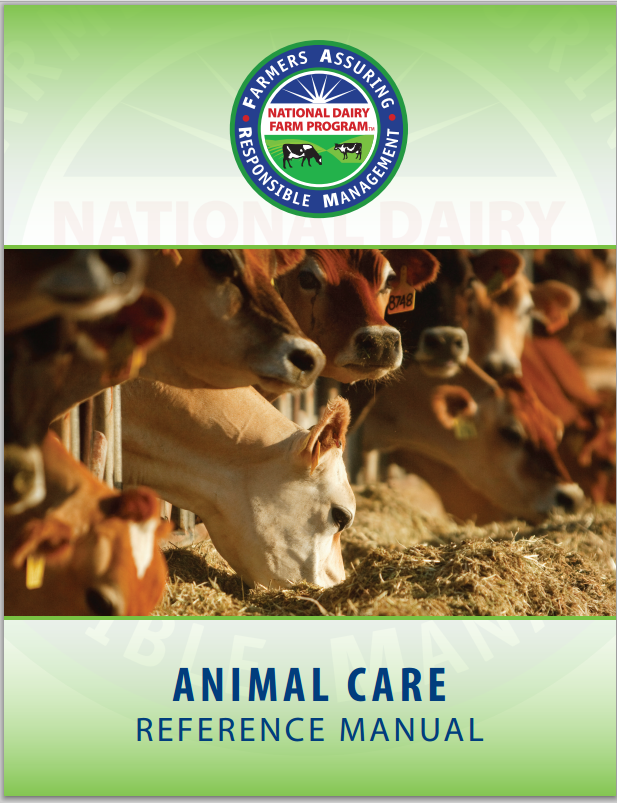
“The National Milk Producers Federation and its National Dairy FARM™ (Farmers Assuring Responsible Management) program was recently notified by Dairy Farmers of America (DFA) of animal care issues on one of its member farms in Fort Morgan, CO.  The FARM program, following its official protocol on Willful Mistreatment, launched a thorough investigation and today has placed Cactus Acres Holsteins on probationary status. 
 
Following notification from DFA, the FARM Program began gathering and reviewing evidence relating to reports of animal abuse on the dairy farm. In this situation, the evidence consists of excerpts from a video monitoring system used on the Cactus Acres farm, in which the farm owners witnessed several employees engaged in inappropriate treatment of animals.  In addition, the farm was notified by the local sheriff’s office of the existence of an undercover video produced by an animal rights activist who worked briefly at the farm.  
 
The FARM Program worked with DFA to dispatch the third party audit firm, Validus, to conduct an investigative audit into the animal care conditions on Cactus Acres. The audit consisted of animal observations, a review of both the internal video surveillance and undercover video footage, and interviews with current employees and farm management. 
 
Validus completed its investigative audit process late yesterday and a final report was received by the FARM program today, after which the decision about probationary status was made. 
 
The Goedert family, who own Cactus Acres Holsteins, has taken several corrective actions to address this situation, including terminating employees believed to have engaged in animal abuse. The Goedert’s fully cooperated with Validus during the investigative audit process and is developing a corrective action plan in consultation with their veterinarian and DFA.  
 
“The FARM program will work with the dairy to assist with their corrective action plan. The FARM program is founded on the principle of continuous improvement, and we commend the Goedert family for bringing these animal care concerns to light and the steps they are taking toward correcting them.
 
“The National Dairy FARM program, available to all producers, establishes an on-farm animal well-being program and third-party verification system that demonstrates farmers’ commitment to the highest standards of animal care. Today, more than 91 percent of the domestic milk supply is enrolled to participate in the FARM Program.” 
 
 
The National Milk Producers Federation, based in Arlington, VA, develops and carries out policies that advance the well-being of dairy producers and the cooperatives they own. The members of NMPF’s cooperatives produce the majority of the U.S. milk supply, making NMPF the voice of more than 32,000 dairy producers on Capitol Hill and with government agencies. Visit www.nmpf.org for more information.


CWT to Continue Offering Dairy Farmer-Funded Export Assistance through 2018

ARLINGTON, VA – The board of directors of the National Milk Producers Federation (NMPF) today voted to continue Cooperatives Working Together, the farmer-funded export assistance program, through 2018 at the current funding level of four cents per hundredweight. NMPF developed and manages the 13-year-old self-help program, known as CWT.

CWT’s extension until December 31, 2018, comes at a time of increasing U.S. milk production, declining world dairy prices and increased global competition due to the removal of European Union milk quotas.

“With the United States exporting the equivalent of one-seventh of its milk production, today’s vote will help ensure that this country remains a consistent and competitive supplier of dairy products to the world,” said NMPF Board Chairman Randy Mooney, a dairy farmer from Rogersville, MO.

“Through its vote, the NMPF board recognizes how important CWT is in helping every farmer gain access to fast-growing overseas markets,” Mooney added. “The program remains a tremendous self-help tool for all of America’s dairy producers.”

CWT is a voluntary membership program funded by contributions from 37 dairy cooperatives and more than 100 individual farmers. The money raised from the CWT membership fee of four cents per hundredweight helps maintain U.S. exports in an increasingly competitive world market.

CWT’s member cooperatives submit bids requesting help with sales in specific foreign markets. Only if the amount is justified is the bid accepted and financial assistance provided. The bidder then has six months to deliver the product to the overseas purchaser.

Through the first five months of 2015 alone, CWT has helped its members contract to sell 35.1 million pounds of cheese, 26.6 million pounds of butter and 20.1 million pounds of whole milk powder. Together, these transactions will export the equivalent of 1.07 billion pounds of milk to customers in 28 countries on five continents.


The Cooperatives Working Together (CWT) Export Assistance program is funded by voluntary contributions from dairy cooperatives and individual dairy farmers. The money raised by their investment is being used to strengthen and stabilize the dairy farmers’ milk prices and margins. For more information about CWT, visit www.cwt.coop.

The National Milk Producers Federation (NMPF), based in Arlington, VA, develops and carries out policies that advance the well-being of dairy producers and the cooperatives they own. The members of NMPF’s cooperatives produce the majority of the U.S. milk supply, making NMPF the voice of more than 32,000 dairy producers on Capitol Hill and with government agencies.

House Vote on TPA Likely This Month; Farmers Urged to Contact Representatives

The House of Representatives is expected to vote on Trade Promotion Authority legislation later this month. It is likely the House will take up the same legislation that passed the Senate May 22 by a margin of 62-37.

The House TPA measure, after achieving bipartisan support in the Ways and Means Committee, faces stronger headwinds in the full House. As a result, NMPF is asking farmers to continue using the Dairy GREAT grassroots program to urge their representatives to support TPA. Any farmers that have not already used this important tool should do so.

NMPF views TPA as a way to help secure trade agreements that can deliver positive results for U.S. dairy farmers. “Trade promotion authority is crucial to concluding trade agreements that will open foreign markets to more U.S. dairy products,” said NMPF President and CEO Jim Mulhern. “Market access expansion for dairy is not yet where it needs to be in the Trans-Pacific Partnership negotiations, but having TPA in place is essential to increase pressure on Japan and Canada to extend their best offers.” Mulhern said TPA will increase congressional influence over trade negotiations and lead to agreements that are better for both the country and the dairy industry.

“Knowing that a trade agreement will be considered by Congress under Trade Promotion Authority paves the way to press our negotiating partners to make their best offers on the most sensitive issues,” said Mulhern. “Clearly, dairy exports fall into that category, and the U.S. needs all the tools it can muster to get the best possible deal.”

Dairy Groups Urge U.S. to Investigate WTO Impacts of Expanded GI Protections

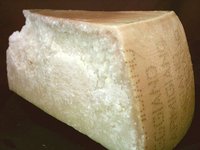
In the wake of a diplomatic conference that expanded geographical indications protections for European countries, NMPF joined other dairy organizations in urging the U.S. Trade Representative to evaluate the degree to which the new expansions violate World Trade Organization obligations. Among those potentially hurt by the conference are U.S. dairy producers and processors using generic cheese names.

The World Intellectual Property Organization (WIPO), an arm of the United Nations, held two weeks of talks in May that expanded the Lisbon Agreement for the Protection of Appellations of Origin to include geographical indications.  It also expanded the protections granted under the international registry of protected terms.

NMPF, the U.S. Dairy Export Council and the International Dairy Foods Association praised the U.S. representatives at the meeting for leading the effort to battle against changes that will seriously impair the ability of companies worldwide to use generic food terms in export markets. Among those affected are U.S. dairy producers and processors relying on numerous generic cheese names.

The three groups also praised U.S. diplomats for leading a coalition of countries in criticizing the lack of an inclusive process during the two-week meeting. In a departure from multiple precedents, WIPO let Lisbon Agreement members deny meaningful participation to the majority of WIPO members.

“The treaty changes were clearly aimed at preventing competitors such as dairy producers and processors in the United States and other non-European countries from using names in international trade that they have used for decades,” said NMPF President and CEO Jim Mulhern. “We appreciate the work the office of the U.S. Trade Representative and the U.S. Patent and Trademark Office, along with the departments of State and Agriculture, have devoted to this issue and look forward to their view on whether the impacts that will result from this treaty violate international trade agreements.”

USDEC President Tom Suber added, “WIPO’s decision to force non-Lisbon members into second-class status at this conference strips the outcome of its legitimacy. It’s equally clear that there are serious WTO consistency problems with the approach Lisbon members decided to pursue and we ask USTR to carefully examine how to address these trade commitment violations.”