Dairy Industry Welcomes Swift Action by USTR Lighthizer to Launch NAFTA Modernization Efforts

WASHINGTON, D.C. – The U.S. dairy industry commended Robert Lighthizer, the newly confirmed U.S. Trade Representative, for taking swift action under the Bipartisan Congressional Trade Priorities and Accountability Act (TPA) to begin the process for modernizing the North American Free Trade Agreement (NAFTA).

In a notification letter sent today to Congress, Ambassador Lighthizer outlined some of the areas of the agreement that are either outdated or missing – several of which are important to the U.S. dairy industry – and reaffirmed commitment to pursuing the trade priorities outlined by TPA, including goals related to market access and curbing the abuse of geographical indications. He also emphasized the importance of effectively implementing and aggressively enforcing the commitments made by Canada and Mexico, two of the dairy industry’s top trade partners.

The International Dairy Foods Association (IDFA), the National Milk Producers Federation (NMPF) and the U.S. Dairy Export Council (USDEC) have repeatedly urged administration officials and legislators to focus on maintaining what has worked well, such as trade with Mexico, the top market for U.S. dairy exports. The dairy groups have also continued to call for improving market access to Canada and tackling that country’s expanding list of protectionist policies and other barriers to U.S. dairy exports.

“As an industry, we fully support the administration’s call to modernize NAFTA. Without this trade agreement and the market access it provides, the United States would stand to lose nearly $2 billion annually in dairy exports and tens of thousands of farming and manufacturing jobs in communities across the country,” said Michael Dykes, D.V.M., IDFA president and CEO. “The issues of geographical indications, intellectual property rights and ways to resolve sanitary and phytosanitary measures (SPS) are also of keen interest to the dairy industry. We look forward to working with Ambassador Lighthizer and other Trump Administration officials during the renegotiation process to provide helpful data and input.”

“We agree with Ambassador Lighthizer that the current NAFTA agreement has areas upon which we can build as the renegotiation process begins, including the market we have developed in Mexico,” said Jim Mulhern, president and CEO of NMPF. “Obviously, dairy trade with Canada – where we continue to face 200%-300% tariffs and a slew of nontariff policies that distort dairy trade – is an entirely different story, and we need to address it as part of these talks. Central to any successful NAFTA negotiations will be changes to Canada’s new policies designed to harm bilateral trade and dump their structural dairy surplus on the world market.”

“With this first step, I now encourage the administration to swiftly commence modernization negotiations with our NAFTA partners and prioritize their quick conclusion,” said Tom Vilsack, president and CEO of USDEC. “Mexico is our only $1 billion dairy market; finding a replacement for sales that are so critical to supporting tens of thousands of jobs across this country is no small task, so preserving it is essential. At the same time, numerous opportunities exist to shore up open trade and further deepen it with our NAFTA partners, such as addressing Canada’s tariff and nontariff constraints on dairy trade, instituting stronger SPS commitments and ensuring that geographical indications are not used to restrict the use of common names.”

#  #  #

The International Dairy Foods Association (IDFA), Washington, D.C., represents the nation’s dairy manufacturing and marketing industries and their suppliers with a membership of nearly 525 companies within a $125-billion a year industry. IDFA is composed of three constituent organizations: the Milk Industry Foundation (MIF), the National Cheese Institute (NCI) and the International Ice Cream Association (IICA). IDFA’s nearly 200 dairy processing members operate more than 600 manufacturing facilities and range from large multi-national organizations to single-plant companies. Together they represent more than 85 percent of the milk, cultured products, cheese, ice cream and frozen desserts produced and marketed in the United States. Visit IDFA at www.idfa.org.

The National Milk Producers Federation (NMPF), based in Arlington, Va., develops and carries out policies that advance the well-being of U.S. dairy producers and the cooperatives they collectively own. The members of NMPF’s cooperatives produce the majority of the U.S, milk supply, making NMPF the voice of dairy producers on Capitol Hill and with government agencies. For more on NMPF’s activities, visit www.nmpf.org.

The U.S. Dairy Export Council (USDEC) is a non-profit, independent membership organization that represents the global trade interests of U.S. dairy producers, proprietary processors and cooperatives, ingredient suppliers and export traders. Its mission is to enhance U.S. global competitiveness and assist the U.S. industry to increase its global dairy ingredient sales and exports of U.S. dairy products. USDEC accomplishes this through programs in market development that build global demand for U.S. dairy products, resolve market access barriers and advance industry trade policy goals. USDEC is supported by staff across the United States and overseas in Mexico, South America, Asia, Middle East and Europe.

NMPF Facilitates NCIMS Passage of Proposals to Enhance Safety of Dairy Foods

GRAND RAPIDS, MICH. – The National Milk Producers Federation (NMPF) helped secure several positive developments for dairy farmers and their cooperatives at the National Conference on Interstate Milk Shipments (NCIMS) this week, as multiple NMPF-led initiatives won approval from the NCIMS delegates during their biennial meeting here.

The NCIMS is a national cooperative regulatory program that includes state milk regulatory agencies, dairy companies and the U.S. Food and Drug Administration (FDA), which work together to ensure the safety and integrity of Grade “A” dairy products. The six-day NCIMS meeting concluded Wednesday, after delegates approved approximately 40 of the 100 proposals offered to revise the conference’s model milk sanitation ordinance and supporting documents.

“NMPF appreciates the opportunity to advocate on behalf of our members and is proud of our relationship with the NCIMS Conference and its participants,” said NMPF Vice President for Dairy Foods Beth Briczinski. “The collaborative spirit of this year’s conference again demonstrated the NCIMS motto of ‘Assuring the Safest Possible Milk Supply for All the People.’”

NMPF staff and members significantly contributed to the drafting of two proposals that were ultimately passed by the state voting delegates to finalize the alignment of the Pasteurized Milk Ordinance (PMO) – which has regulated the production and processing of Grade “A” milk products since 1924 – with the Food Safety Modernization Act (FSMA) Final Rule for Preventive Controls for Human Foods. NMPF has been working since FSMA was approved in 2011 to bring both regulatory schemes into one harmonized program, as the FSMA law has led to the most significant change to U.S. food safety regulations in 70 years.

NMPF submitted several proposals that were passed by conference delegates to provide clarity for processors, dairy cooperatives and their farmer-members, including alleviating any confusion about the timing criteria for tanker washing and milk sample collection; increasing transparency around milk safety program equivalence in other countries; and updating the requirements for bulk milk transportation and the requirements for voluntary testing of milk for drug residues.

Conference delegates also approved a resolution submitted by NMPF to encourage participation in a new pilot program to screen the milk supply for tetracycline drugs.  Although not mandatory by industry or states, widespread participation in the program starting July 1 would assure any future changes in milk testing “can be based on the most representative and complete data available,” according to the resolution.

Briczinski noted that the dairy industry currently tests each tanker load of milk for the most commonly used farm antibiotics, beta-lactam drugs, and also carries out additional random testing for other classes of antibiotics, such as tetracycline. The new program “will help us fine tune the more than 3 million tests already being conducted each year to keep antibiotics out of the milk supply, and give us sound data on how to continue improving the screening process in the future,” she said.

NMPF also played a key role in opposing proposals that would have added an undue regulatory burden and unnecessary costs to dairy producers and the industry at large without enhancing food safety – such as adding requirements to the designs of milkhouses and milking equipment, and to the transportation of manufactured dairy products.

NMPF expressed gratitude for the involvement of its member cooperatives, processors, state dairy program regulators and FDA for their active participation during the conference.

###

The National Milk Producers Federation (NMPF), based in Arlington, VA, develops and carries out policies that advance the well-being of dairy producers and the cooperatives they own. The members of NMPF’s cooperatives produce the majority of the U.S. milk supply, making NMPF the voice of dairy producers on Capitol Hill and with government agencies. For more on NMPF’s activities, visit our website at www.nmpf.org.

State Milk Regulators Ask FDA for Assistance on Assuring Proper Use of Dairy Product Terminology

GRAND RAPIDS, MICH – State milk regulators today requested that the U.S. Food and Drug Administration (FDA) work with them to enforce the proper use of milk and milk product labeling terms, especially those meant to distinguish between real dairy products and plant-based imitators – a development the National Milk Producers Federation (NMPF) hailed as “the strongest statement yet that the abuse of dairy terms has gone too far.”

“It’s time for FDA to work with state agencies in defending standards of identity for dairy products,” said Beth Briczinski, NMPF’s vice president of dairy foods and nutrition.

The pushback by state officials against FDA’s history of inaction on labeling enforcement came Wednesday at the biennial meeting of the National Conference on Interstate Milk Shipments (NCIMS) in Grand Rapids this week. The NCIMS is a national cooperative regulatory program that includes state milk regulatory agencies, dairy companies and FDA. The states collaborate with federal regulators and industry groups to ensure the safety and integrity of dairy products regulated under the Grade “A” program, including fluid milk, yogurt and other dairy products.

During today’s NCIMS session, state milk safety regulators voted unanimously in favor of a resolution intended to clarify the responsibilities of FDA and state programs in ensuring the proper use of standardized dairy product names.

“The state agencies, through their vote today, acknowledged that more effort is needed from FDA to clarify the role of State Milk Regulatory Programs in assuring the proper use of the standardized names of milk and milk products,” said Briczinski. “FDA needs to stop picking and choosing which regulations it wants to enforce.”

For example, FDA’s standards of identity specify that milk is the product of cows and other dairy animals, and that yogurt is the product obtained exclusively from the culturing of dairy ingredients.  Absent any regulatory consistency about how these label terms are applied, “consumers are bound to be confused and misled by the growing variance in the nutritional and compositional content of imitation foods made from nuts, seeds and grains, but purporting to be dairy products,” Briczinski said.

By approving this resolution, “the NCIMS delegates are acknowledging that states need federal assistance in the regulation of all products utilizing standardized dairy terms. This will ultimately benefit consumers, who face an increasingly bewildering assortment of imitation dairy products,” Briczinski said.

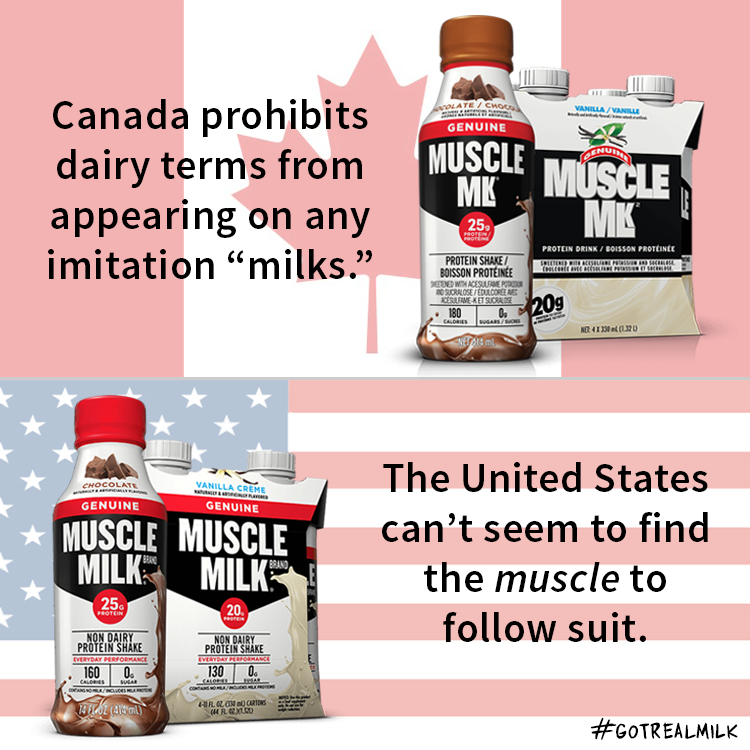
A renewed emphasis by FDA on the regulation of dairy terms would bring the United States into closer alignment with how the issue is handled in other countries, Briczinski noted. Canada, the United Kingdom and the European Union “do not allow plant-based imitators to call themselves milk on their packages. We have the same regulation on the books in the United States, but there has been no effort to enforce that policy. Today’s decision will hopefully create a new approach to the issue.”

###

The National Milk Producers Federation (NMPF), based in Arlington, VA, develops and carries out policies that advance the well-being of dairy producers and the cooperatives they own. The members of NMPF’s cooperatives produce the majority of the U.S. milk supply, making NMPF the voice of dairy producers on Capitol Hill and with government agencies. For more on NMPF’s activities, visit our website at www.nmpf.org.

NAFTA Relationships Need Attention as NMPF, USDEC Begin Work with New U.S. Trade Representative Lighthizer

ARLINGTON, VA – The dairy industry is eager to work with U.S. Trade Representative Robert Lighthizer to protect and expand market access for U.S. dairy while addressing problematic Canadian dairy policies, the National Milk Producers Federation (NMPF) and the U.S. Dairy Export Council (USDEC) said today following Lighthizer’s Senate confirmation.

Lighthizer will begin work on a variety of pressing trade policy issues, including the renegotiation of the North American Free Trade Agreement (NAFTA), expanding market access channels in Asia, and preventing the loss of common food names.

“We welcome Mr. Lighthizer’ s confirmation because of his grasp of global trade rules and understanding of the importance of balanced trade agreements to the U.S. dairy sector,” said NMPF President and CEO Jim Mulhern. “We will continue to urge USTR to focus on protecting Mexico, our No. 1 market, insist that Canada revoke its detrimental new milk pricing policy, and pursue additional export opportunities around the world.”

Another significant challenge for Ambassador Lighthizer is the European Union’s aggressive stance on the use of geographic indications (GIs). Not only must the United States resist using GIs at home, Lighthizer has said, it should discourage other countries from agreeing to use them, as well.

“As the Trump Administration’s trade policy strategy develops, we want to build upon the U.S. government’s past successes in pushing back against the EU’s global GI agenda,” said Tom Vilsack, president and CEO of USDEC. “We also want to examine opportunities for bilateral trade agreements in key markets like Japan.” Vilsack recently visited Japan on a trade mission.

Lighthizer’s experience includes deputy trade representative under President Ronald Reagan, chief of staff for the Senate Finance Committee, as well as direct private sector experience in enforcing trade rules on behalf of his clients.

###

The National Milk Producers Federation (NMPF), based in Arlington, Va., develops and carries out policies that advance the well-being of U.S. dairy producers and the cooperatives they collectively own. The members of NMPF’s cooperatives produce the majority of the U.S, milk supply, making NMPF the voice of dairy producers on Capitol Hill and with government agencies. For more on NMPF’s activities, visit www.nmpf.org.

The U.S. Dairy Export Council (USDEC) is a non-profit, independent membership organization that represents the global trade interests of U.S. dairy producers, proprietary processors and cooperatives, ingredient suppliers and export traders. Its mission is to enhance U.S. global competitiveness and assist the U.S. industry to increase its global dairy ingredient sales and exports of U.S. dairy products. USDEC accomplishes this through programs in market development that build global demand for U.S. dairy products, resolve market access barriers and advance industry trade policy goals. USDEC is supported by staff across the United States and overseas in Mexico, South America, Asia, Middle East and Europe.

NMPF Statement on Confirmation of Scott Gottlieb as FDA Commissioner

ARLINGTON, VA – “We congratulate Dr. Gottlieb on his confirmation by the Senate today. NMPF will engage with the U.S. Food and Drug Administration’s new leadership on ways to strengthen the safety of the food supply, promote the judicious use of antimicrobials in livestock, and ensure the clear, consistent labeling of foods regulated by FDA.

“We share Commissioner Gottlieb’s goal of remedying the bureaucratic inertia that has hindered FDA’s work on several issues. This should include the proper labeling of foods that are disregarding FDA standards of identity. For too long, FDA has not responded to dairy imitators’ obvious violation of FDA’s clear definition that milk, cheese, ice cream and yogurt must be made from real dairy sources.

“We welcome a more proactive, responsive FDA on the food standards issue to reduce the confusing terminology proliferating in grocery stores and retail food markets. This will greatly enhance the credibility of the agency as the federal authority on food labeling, composition and safety.”

###

The National Milk Producers Federation (NMPF), based in Arlington, VA, develops and carries out policies that advance the well-being of dairy producers and the cooperatives they own. The members of NMPF’s cooperatives produce the majority of the U.S. milk supply, making NMPF the voice of dairy producers on Capitol Hill and with government agencies. For more on NMPF’s activities, visit our website at www.nmpf.org.

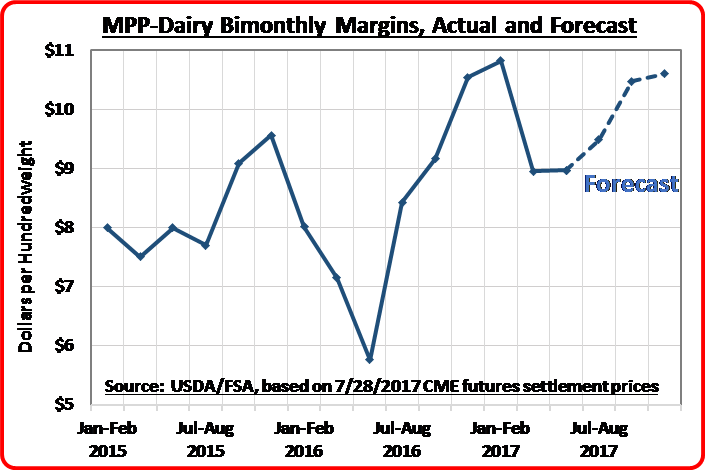
NMPF’s Proposed Changes to MPP

NMPF Board of Directors Unanimously Approves Recommendations to Margin Protection Program

The Margin Protection Program-Dairy (MPP-Dairy) was developed by the National Milk Producers Federation through a lengthy, detailed and deliberative process in response to the dairy industry financial crisis of 2009. However, when Congress eventually enacted the program in 2014, the MPP had been amended and diluted to the extent that it, too, fell short of providing the protection required of an effective farm safety net program. Over the last two years, NMPF staff gathered feedback on the program from producers across the country. At the 2016 NMPF Annual Meeting, NMPF Chairman Randy Mooney re-established the Economic Policy Committee (EPC) to review the program and suggest possible improvements. The NMPF Board of Directors approved the final list of recommendations at its meeting on March 7.

Farmers Encouraged to Tell Personal Stories to Reintroduce Consumers to Dairy

Young woman smiling and petting cows in fieldOver the next few weeks, the Innovation Center for U.S. Dairy – in partnership with dairy farmers through their checkoff – will launch a multi-year, multi-stakeholder proactive campaign that boldly and proudly tells dairy’s stories through people in the industry.

The campaign kicks off on World Milk Day on June 1, and celebrates June Dairy Month through a creative and engaging communications effort. During this time, farmers, cooperatives, brands and other dairy community members will come together to spark connections with consumers by sharing stories that build dairy trust and relevance.

Farmers have some of most credible voices in telling dairy’s story about how milk is produced and the commitment to animal care and environmental stewardship. Visit www.dairyinfo.org for more information about the campaign and content farmers can share to reignite the passion people have for nature’s perfect food. Further details about the campaign and how to share its content will come next month.

FARM Program Releases Environmental Reference Manual, Drug Residue Manual, Stockmanship Training Video

The National Dairy FARM Program released several farm-focused materials in April, each focused on one of its three pillars: Environmental Stewardship, Antibiotic Stewardship and Animal Care. All of the materials are now available on the FARM Program website.

In celebration of Earth Day on April 23, the FARM Program’s Environmental Stewardship (ES) module released its first-ever guide, the Environmental Stewardship Continuous Improvement Reference Manual, in cooperation with the Innovation Center for U.S. Dairy. The guide provides a comprehensive suite of on-farm management practices to reduce a farm’s environmental footprint and improve its profitability. Specifically, the manual features a detailed explanation of the Environmental Stewardship module, as well as strategies to reduce on-farm greenhouse gas (GHG) emissions in various areas of farm management, including feed, manure, energy, forage and animal health.

From its Antibiotics Stewardship pillar, FARM launched the 2017 edition of the Milk and Dairy Beef Drug Residue Prevention Manual, the primary educational tool for dairy managers about the judicious, responsible use of antibiotics and how to prevent drug residues in milk and meat. The newest edition now identifies drugs subject to the newly implemented Veterinary Feed Directive (VFD), and contains updated industry data on the declining presence of antibiotic residues found in milk.

Finally, to help animal handlers improve their stockmanship skills, FARM Animal Care and the National Beef Quality Assurance program jointly released a training video, now on the FARM Program website. The 27-minute video is divided into several chapters and multiple choice questions to test viewers on the content. The video can serve as a training resource to satisfy the FARM Animal Care Version 3.0 requirement for annual employee training.

For any questions regarding these materials, please contact Beverly Hampton.

Dairy Farmers May Lose Air Emissions Reporting Exemption

An appeals court ruling last month could significantly expand the air emissions reporting requirements imposed on animal agriculture operations across the nation, if the court’s decision is not challenged. NMPF is working with federal regulators to assess and mitigate the problems that may arise from the April 11 ruling, in which the United States Court of Appeals for the District of Columbia removed a long-standing exemption for dairy and other livestock operations from two federal laws requiring reporting any air emissions associated with animal manure.

Back in 2008,  the U.S. Environmental Protection Agency (EPA) issued a final rule that exempted most farms from the Comprehensive Environmental Response, Compensation and Liability Act of 1980 (CERCLA) and the Emergency Planning and Community Right-to-Know Act of 1986 (EPCRA) reporting requirements for air releases from animal waste. Both rules were originally created to address accidental hazardous air emission emergencies. Initially, EPA did not hold that these measures warranted the inclusion of animal agriculture operations, but the recent appeals court ruling said EPA cannot simply ignore a statute because the reporting requirements “aren’t worth the trouble.” The final rule required CAFOs to continue reporting air emissions under EPCRA, but not under CERCLA; smaller farms were exempted from both rules.

The exemption from CERCLA notifications applied to the general release into the air of hazardous substances from animal waste (on dairy farms, this includes ammonia and hydrogen sulfide). The exemption from EPCRA notifications applied only to air releases of hazardous substances (on dairy farms, this includes ammonia and hydrogen sulfide) from animal waste on farms below the thresholds specified in the U.S. regulatory code 40 CFR 355.31, and for farms that are not confined. With respect to dairy, the reporting size threshold was 700 mature dairy cows, milked or dry.

EPA has not clarified the requirements for reporting in response to the court decision, nor has it revealed its intention to file an appeal. NMPF and other agriculture groups have conveyed to EPA the gravity of the situation and the short timeline to act. If the decision stands, CAFOs and smaller farms that exceed the daily reportable quantity (RQ) of 100 pounds per day of air emissions of either ammonia or hydrogen sulfide could have to file the required notifications. NMPF estimates that farms with as few as 250 cows could be required to report. The court will not release its mandate to vacate the exemption until the time to appeal has run out around May 26 (45 days from the decision).

NMPF and other animal agriculture associations are discussing all short-term options, which include appealing the decision or securing a regulatory fix from EPA, as substantive discussions with EPA begin.  Discussions with Congress about a legislative intervention as a long-term solution also are underway. For now, dairy producers should not take any action until the best course of action has been determined. For further information, please contact Clay Detlefsen at or Jamie Jonker.

FDA Issues PMO Waiver Sought by NMPF for Sanitary Transportation Act

In early April, the U.S. Food and Drug Administration (FDA) announced three waivers to the final Sanitary Transportation rule mandated by the Food Safety Modernization Act (FSMA), including the Pasteurized Milk Ordinance (PMO) waiver long sought by NMPF.

NMPF has advocated for several years for a waiver for PMO-regulated facilities. When the initial Sanitary Transportation of Human and Animal Food rule was proposed, FDA said it intended to waive the rule’s requirements in certain cases “in which they would not be needed to further protect foods from becoming unsafe.”

The waiver, to be issued soon, applies to inbound raw milk, outbound shipments of milk and cream, and shipments of finished Grade “A” milk products from PMO-regulated facilities.

As part of the regulatory process, NMPF asked for clarification about the phrase “only when transporting Grade ‘A’ milk and milk products” out of concern that most outbound shipments of finished Grade “A” products do not comprise only Grade “A” products, but include non-Grade “A” products like orange juice or ice tea. Thus, the waiver could be viewed as nullifying an outbound shipment containing both Grade “A” and non-Grade “A” products.

FDA declined to provide any further insight, but NMPF holds that outbound shipments of finished products from a PMO-regulated facility are not subject to the rule, even if the shipment contains non-Grade “A” products. For more information about this rule or the waiver, please contact Clay Detlefsen.

NMPF Argues that Dairy Products Should be Defined as “Healthy”

Dairy products should be labeled as “healthy” and the government should recognize new science that shows the benefits of dairy at all fat levels, NMPF told the U.S. Food and Drug Administration (FDA) last month as the agency takes input from industry groups about food labeling terminology.

NMPF told the FDA that dairy should be included in a separate category for “healthy” claims, similar to fruits and vegetables. National Milk also said FDA should disregard criteria on total fat and saturated fat in recognition that dairy foods are nutrient-dense and part of three different eating patterns that the Dietary Guidelines for Americans (DGA) defines as “healthy.” The comments noted that the DGA recommends more dairy consumption.

FDA has long enforced rules about which foods can bear the term “healthy” and similar claims on their packaging. NMPF said that because of new scientific evidence, dairy foods considered “healthy” should not be limited to low-fat and fat-free varieties, but also include reduced-fat varieties. NMPF also advised FDA to be flexible in changing “healthy” guidelines so the agency could later add full-fat dairy products as scientific understanding progresses about the benefits of dairy fat in the diet.

Along with other groups, NMPF said FDA should better align its criteria with authoritative dietary guidance, including the DGA. Food identified as “under-consumed” by the DGA should automatically be able to make a “healthy” claim, NMPF said.