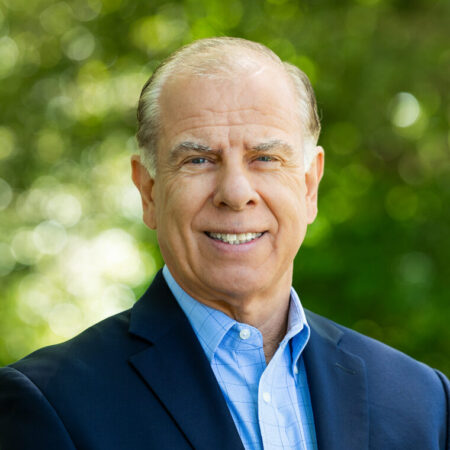
 By Jaime Castaneda, Executive Vice President, Policy Development & Strategy
For America’s dairy farmers, few trade relationships matter more than the one we have built with Mexico. This summer brought fresh proof that partnership remains strong, and fresh urgency to get the policy details right as the two countries renegotiate trade terms.
Deepening ties at the binational summit
The National Milk Producers Federation (NMPF) led a delegation of U.S. dairy leaders to Querétaro, Mexico, from July 29 to 31, for the eighth annual U.S.-Mexico Binational Dairy Summit.
NMPF and leading Mexican dairy organizations discussed issues affecting producers and consumers in both countries, and reaffirmed shared principles supporting dairy sector growth and competitiveness in both markets. Participants also adopted a new commitment: supporting the next generation of dairy farmers through the exchange of knowledge and experience.
“When dairy farmers on both sides of the border sit down together, we find we’re solving the same problems and chasing the same opportunities,” said Becky Nyman, a dairy farmer who took part in this year’s summit. “This relationship works because it’s built on real conversations.”
Why Mexico matters to U.S. dairy farmers
Mexico is the single most important export market for American dairy by a wide margin. In 2025, Mexico bought $2.6 billion worth of U.S. dairy products — 27% of all U.S. dairy exports by value — making it America’s top cheese customer ($965 million), and top buyer of nonfat dry milk/skim milk powder ($1.1 billion).
That success didn’t happen overnight. Before the North American Free Trade Agreement (NAFTA) took effect in 1994, U.S. dairy exports to Mexico totaled just $211 million a year. Mexico crossed the $1 billion threshold in 2011; by 2025, that figure had grown nearly two-and-a-half-fold again.
Every pound of cheese and every truckload of milk powder moving south reflects real commercial value on U.S. dairy farms. That’s why strengthening this relationship is a bottom-line issue for producers nationwide.
USMCA Talks: where things stand
That growth is precisely why NMPF has been at the negotiating table as the U.S. and Mexico work through the review process of the U.S.-Mexico-Canada Agreement (USMCA). In addition to the Querétaro summit, NMPF’s Shawna Morris and I traveled to Mexico City July 22 to 23 for the third round of U.S.-Mexico bilateral negotiations. U.S. talks with Canada are continuing on a separate track.
Throughout the week, Shawna and I pressed Mexican officials, including the lead agricultural negotiator, trade ministry staff, and the director general of Mexico’s intellectual property office, on two priorities: protecting common cheese names like “Feta” and “Parmesan” from restrictions Mexico is facing pressure to adopt under its trade deal with the European Union, and preserving the broad market access that U.S. dairy exporters currently enjoy in the Mexican market.
NMPF-led engagement also included meetings with Mexican dairy industry leadership, plus briefings on Capitol Hill and with the U.S. Trade Representative’s office. As confidential advisors to the Office of the U.S. Trade Representative and USDA, Shawna and I are continuing to urge the U.S. negotiating team to resolve outstanding issues constructively so a stronger and renewed trade agreement with Mexico emerges from this review.
Mexico didn’t become the top dairy market of the United States by accident. It took fair trade rules to open the door, and decades of relationship-building to keep it open. As USMCA negotiations continue, NMPF will keep working every angle to make sure this relationship remains productive for the next generation of dairy farmers on both sides of the border.
This column originally appeared in Hoard’s Dairyman Intel on Aug. 31, 2026.