Incoming Head of Dairy Farmer Group Urges More Grassroots Engagement

The more engagement members have, the more that can be achieved, Mulhern says

PHOENIX – The incoming president of the National Milk Producers Federation (NMPF) urged dairy farmers today to become more engaged in the organization and the policymaking process.

“We need your financial commitment, yes,” Chief Operating Officer Jim Mulhern told nearly 1,000 attendees at the organization’s annual meeting. “But even more importantly, we need your time and effort and engagement. The more engagement our members have … the more our organization can achieve for our members. It’s a virtuous circle.”

Mulhern will take over as NMPF president and CEO January 1, 2014, when long-time leader Jerry Kozak retires. The organization is the voice of more than 32,000 dairy producers in Washington.

“30 years ago,” Mulhern said, “NMPF, like many organizations, could be a neatly defined hierarchy, and be successful….But not anymore.” Today, he said, both NMPF and the entire dairy industry must be more engaged in the free and rapid flow of information.

“If there’s a message I can leave with you today, it’s that the future of NMPF is not a function of what I want … or any one leader,” he said. “Rather, the successful future of NMPF will be a function of the active engagement that our board, our delegates and, yes, our grassroots members, have in the organization and the industry.”

Mulhern also stressed the need for increased transparency in the dairy industry. “Look at how food marketers have increased the flow of information about their products,” he said. “20 years ago, it was calorie and nutrition information on the back panel. 10 years ago, it was absence claims about artificial sweeteners and growth hormones. And now, it’s whether a product is locally and sustainably produced. Whether it can be traced back from the store to a field or barn.” Mulhern called that “transparency in action,” but he added it can also be misused.

“The strategy of some food companies is to try to increase sales by scaring consumers into paying more for their particular product because of how it was produced,” he said. “That’s not transparency. It’s fear-based marketing….left unchecked, it not only affects the marketplace; it also affects the policy environment. We must tell our story because if we don’t, others—who don’t have our interest at heart—are telling a very different, and harmful, story.”

Mulhern said transparency requires telling stories about brands and product categories and entire industries. “The clean lines that used to exist between farmer and processor and distributor and retailer have blurred.” He said. “Transparency has created a value chain where everyone is accountable for what they do, and why they do it.”

On other subjects, Mulhern said once the 2013 farm bill is enacted NMPF should tackle reform of the federal milk marketing order system and consider addressing some changes to federal identity standards for dairy foods—but only if they benefit farmers.

Milk marketing orders set minimum prices for different categories of milk in regions across the country. For example, processors are required to pay a higher price for milk destined for fluid use compared with milk used to make yogurt, ice cream and cheese. Mulhern said NMPF considered asking Congress to address marketing order reform as part of the 2013 farm bill, but decided against that step. “But reforms delayed cannot be reforms denied,” he said. “It won’t be easy, but it will be a priority going forward.”

At the same time, Mulhern said any changes to the federal order system must benefit farmers. “Some of the dairy processors talk about reforming federal milk orders when what they really seem to mean is increasing their control of the market and their share of the dairy dollar,” he said. “That’s a non-starter for us. Our focus will be on reforms needed to ensure the orderly marketing of milk and to protect the financial interests of the nation’s dairy farmers.”

Mulhern noted that some in the processing community are also calling for changes to the federal standards that protect the content and quality of dairy foods. But, he said, “sometimes this talk is being delivered by those who either don’t fully understand the concept of standards of identity. Other times it’s from those who actually do understand, but are looking for a way to benefit financially through deviations marketed as ‘innovations.’”

“Are there some provisions of standards that could be improved? Absolutely, especially if they relate to improvements and efficiencies in plant-level processing technologies,” Mulhern said. “However, NMPF will not agree to revisions to standards designed to ‘water down’ their quality or deceive consumers, and we will continue to work diligently to preserve all aspects of standards that preserve the integrity of traditional dairy products, their names and their composition.”


The National Milk Producers Federation (NMPF), based in Arlington, VA, develops and carries out policies that advance the well-being of dairy producers and the cooperatives they own. The members of NMPF’s cooperatives produce the majority of the U.S. milk supply, making NMPF the voice of more than 32,000 dairy producers on Capitol Hill and with government agencies.

New FARM Program Report Quantifies High Level of Animal Care on U.S. Dairy Farms

PHOENIX, AZ – Dairy farmers participating in the industry’s program to quantify animal care practices are continuing to improve the manner in which they adhere to the program’s standards, according to a new summary year in review report issued today by the National Milk Producers Federation (NMPF).

Available to all dairy farmers in the United States, Farmers Assuring Responsible Management (FARM) is a voluntary, national set of guidelines designed to demonstrate farmers’ commitment to outstanding animal care and a quality milk supply. Cooperatives, proprietary milk processors, and individual producers are using the program to assure consumers that the dairy foods they purchase are produced with integrity. Since enrollment began in September 2010, the FARM Animal Care Program has been implemented by suppliers accounting for 70% of the nation’s milk supply.

At this week’s NMPF annual meeting in Phoenix, a newly-released annual assessment derived from 8,000 second-party evaluations, found universal adoption of many of the best practices from the program. For example, 94% farms enrolled in the program train their employees to properly move animals that cannot walk, and 98% train employees to handle calves with a minimum of stress. Other findings included:

  • 99% of farms observe animals daily to identify health issues for early treatment;
  • 93% have protocols developed with veterinarians for dealing with common; diseases, calving and animals with special needs.
  • 92% train workers to recognize the need for animals to be euthanized.

On the other hand, the report found some areas still in need of improvement. For example, the report indicated less than 82% of farms in the program have a valid veterinarian-client relationship, and just 67% of farm operators apply antiseptic to the navels of calves after birth as a preventative health measure.

Participants are given training materials and are evaluated by a veterinarian or another trained professional. Evaluators provide a status report and, if necessary, recommend areas for improvement.

Each year, a nationwide sample of dairy farms in the program is randomly selected for visits from third-party “verifiers” to assure (to a 95% confidence interval) that the observations recorded during the second-party evaluations are valid. Validus Certification Services, an Iowa-based certified auditing company, is used to conduct the third-party verification process.

“The thousands of data points this program collects on an ongoing basis show that dairy farmers aren’t just talking the talk about animal care – they’re performing dozens of practices on a daily basis to provide for animal well-being and produce high-quality milk,” said Jamie Jonker, NMPF’s vice president of scientific and regulatory affairs. “Still, we’re not yet where we want to be. The journey is continuing.”

The second annual third-party verification of the FARM program was begun in 2012 with on-farm evaluations, and completed in 2013 with statistical analysis of results. This analysis confirmed that effective implementation of the FARM program is occurring through producer education and on-farm evaluation. The third-party verification for 2013 is currently underway, Jonker said.

Also today, NMPF released its 2014 safe use manual for antibiotics and other animal drugs. The Milk and Dairy Beef Drug Residue Prevention Manual permits producers to quickly review those antibiotics approved for use with dairy animals. It can also be used to educate farm managers in how to avoid drug residues in milk and meat.

New in the 2014 edition is a section on multiple drug screening tests, as well as an updated drug and test kit list. The 2014 manual also includes a certificate that can be signed by both a producer and veterinarian to demonstrate commitment to proper antibiotic use.

“With each year, the use of antibiotics and other drugs in livestock is more intently scrutinized,” said Jonker. “To maintain consumer confidence, we must show we are using these medicines properly. This manual shows dairy farmers’ commitment to using antibiotics responsibly.”

The residue prevention manual was sponsored by Charm Sciences, Elanco Animal Health, IDEXX, and Zoetis. No government funds were used in its development. For more information on the FARM program, contact Betsy Flores at (703) 243-6111 or visit www.nationaldairyfarm.com.


The National Milk Producers Federation (NMPF), based in Arlington, VA, develops and carries out policies that advance the well-being of dairy producers and the cooperatives they own. The members of NMPF’s cooperatives produce the majority of the U.S. milk supply, making NMPF the voice of more than 32,000 dairy producers on Capitol Hill and with government agencies.

And the Real Winner is … DairyUS!

Name for Animated Dairy REAL® Seal Character Picked in Nationwide Vote

PHOENIX, AZ – After a nationwide vote, a new cartoon character helping to build awareness of the advantages of real dairy foods has a name: DairyUS, the National Milk Producers Federation (NMPF) announced today here at its annual meeting.

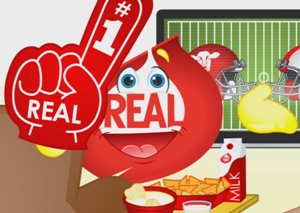
The animated character, modeled after the iconic REAL® Seal logo, will help a new generation of consumers distinguish between genuine U.S. dairy products and a growing list of list of imitations. A video announcing the name is on the REAL® Seal website homepage.

NMPF, which represents cooperatives that produce the majority of the U.S. milk supply, designed the cartoon character after assuming management of the REAL® Seal last year. The new animated icon is part of an effort to revitalize the seal, which was created in the 1970s and is already used on more than 10,000 food products.

NMPF asked the public to suggest names for the character last summer, using the REAL® Seal website and new REAL® Seal Facebook page. Three finalists were selected from among more than 100 names submitted. An online vote was held from mid-September through Election Day, November 5.

In all, nearly 800 votes were cast. DairyUS, suggested by Kathryn in Clermont, Iowa, received 379 votes. The runner-up, Milkdrop, received 343 votes, while the third finalist, Roscow, received 74 votes. The results of the vote were announced today at the NMPF annual meeting, being held in Phoenix, Arizona.

“DairyUS will help both kids and adults learn about foods made with real dairy products,” said NMPF Chief Operating Officer Jim Mulhern. “The REAL® Seal not only means a product is a real dairy product, but that it is made with milk from cows on U.S. dairy farms and without imported, imitation or substitute ingredients.”

The cartoon character is just one of a number of innovations NMPF has made to promote the REAL® Seal on the internet and through social media. Until recently, for example, the REAL® Seal website was targeted mostly to companies interested in using the seal on their products. Today, it is focused on consumers.

NMPF also offered a preview at today’s annual meeting of the REAL® Seal buyer’s guide, a web-based search engine that will make it easier for consumers to patronize brands and stores that offer real dairy products. The buyer’s guide website will soon be online.


The National Milk Producers Federation (NMPF), based in Arlington, VA, develops and carries out policies that advance the well-being of dairy producers and the cooperatives they own. The members of NMPF’s cooperatives produce the majority of the U.S. milk supply, making NMPF the voice of more than 32,000 dairy producers on Capitol Hill and with government agencies.

Farm Bill Conference Begins on Capitol Hill

The Farm Bill conference formally began last week on Capitol Hill, as the 41 House and Senate members of the joint conference committee outlined their priorities and pledged to finalize a compromise bill this fall. NMPF issued a statement urging the lawmakers to include the Senate’s Dairy Security Act in the measure, and reject the House dairy language because it lacks the market stabilization component supported by NMPF.

The principal leaders of the House and Senate Agriculture committees are now working informally to resolve the key points of contention between the two chambers’ respective versions. In addition to dairy policy, the lawmakers must reconcile differences including country of origin labeling for meat, the national implications of California’s egg production requirements, whether to require conservation compliance as part of crop insurance, and most prominently, the level of funding reduction for food stamps.

These issues will have to be addressed relatively quickly, given that holiday schedules will limit the amount of time for the House and Senate to pass a final bill prior to the end of the year.

NMPF is continuing its efforts to educate lawmakers about the importance of having a voluntary margin insurance program coupled with the market stabilization program, in order to make the overall dairy safety net as effective and affordable as possible. Dairy farmers can contact their members of Congress to urge that the Dairy Security Act be included in the Farm Bill by using NMPF’s Dairy GREAT system.

CWT Assists with 23.9 Million Pounds of Export Sales

In October, Cooperatives Working Together (CWT) accepted 77 bids from 11 member cooperatives. Sales totaled 12.6 million pounds of cheese and 11.3 million pounds of butter, equivalent to 80.1 million pounds of milk on a milkfat basis. That is equal to more than 50% of the year-over-year increase in September’s milk production.

These sales brings CWT-assisted total export sales in 2013 to 106 million pounds of cheese and 81 million pounds of butter, the equivalent of 2.93 billion pounds of milk on a milkfat basis, or nearly five times the year-over-year increase in year to date U.S. milk production through September 2013.

NMPF Concerned by Negative Market Impacts of Canadian Concessions to EU on GIs

News reports about the just-completed European Union (EU)-Canada Free Trade Agreement indicated that Canada has agreed to protect a list of 145 Geographical Indications (GIs) of importance to the EU. This development is particularly concerning with respect to the treatment of five cheese names that have long been generic in the Canadian market: asiago, feta, fontina, gorgonzola, and muenster.

This is deeply troubling given the fact that these terms have been used generically in the Canadian market for many years, so any new restrictions on these terms’ usage would appear to impose a very disturbing new barrier to competition and trade. The details have yet to be confirmed, but indications at this stage suggest that Canada has agreed to the following:

  • Those already selling these five cheeses in Canada will be able to continue to do so, but they will need to clearly display the country of origin on the label. They will also be prohibited from including on the label the relevant flag corresponding to the EU country that owns the GI or other symbols that may evoke that country.
  • All other non-established producers would need to call the product “feta-like” or “asiago-style,” and also comply with the previously mentioned new labeling requirements.
  • “Parmiggiano Reggiano” will become a protected term, but “parmesan” can still be used as a generic name, according to one press report.

Visit the Consortium for Common Food Names for additional information on GIs.

NMPF Urges USDA to Enhance Dairy Consumption Opportunities in Schools

In comments submitted last week to the USDA, NMPF urged the agency to make adjustments in a proposed rule affecting how dairy products are made available to school students beyond the lunch line. The NMPF comments single out as a point of concern the “favorable treatment afforded to competing beverages – which, in contrast to milk and juice, do not supply significant amounts of nutrients essential to students’ diets,” and points out that the proposed regulation confers an unfair and inappropriate advantage to these products.

The comments are in response to USDA’s interim final rule establishing nutrition standards for foods sold outside of school meal programs. Because dairy products in those settings are competing against other foods and beverages, NMPF urged USDA to limit the time and place that non-dairy, non-juice lower-calorie and calorie-free beverages are available.

In addition, NMPF also asked USDA to include low-fat flavored milk as an allowable beverage, extend the saturated fat exemption for reduced-fat cheese to combination foods, and clarify the final rule’s saturated fat standard.

Those changes – particularly allowing the reintroduction of low-fat flavored milk, which was removed from federal school nutrition regulations three years ago – will “further enhance dairy consumption in order to close the gap between current dietary recommendations, and consumption of milk and dairy products.” NMPF pointed out that actual average consumption of milk is “barely barely half the USDA’s recommended amount and, after early childhood, all age groups continue to fall further short of recommended amounts.”

If You’re Involved in the Dairy Industry, You Need this New Book

Need to know the nation’s top 10 milk-producing states? How about Class III milk prices by month going back eight years? Or perhaps you need the top 10 export markets for U.S. dairy products in 2012.

All that and more is available in the latest edition of Dairy Data Highlights from NMPF. The handy, pocket-size booklet includes 53 tables and 19 graphs filled with national and state milk and dairy production data from the mid-1970s through 2012.

Dairy Data Highlights has been published annually by NMPF for more than 60 years. A must for anyone involved in milk production, it is available to NMPF member cooperatives and associate members for $7.50 a copy, or $5 for orders of more than 10 copies. For nonmembers, the cost is $10 for single copies or $7.50 for bulk orders.

All aspects of milk and dairy products production are covered, as well as producer, wholesale and retail milk and dairy product prices; federal milk marketing orders; sales and consumption data for milk and dairy products, and comparative information for U.S. dairy imports and exports. Specific tables include:

  • National milk production data going back to 1925;
  • Cow numbers, farms and herd size data going back to 1950;
  • Milk production and prices, production-per-cow, cow numbers and dairy farms by state, with comparative data from the 1980s and 1990s;
  • Class III, manufacturing grade and all-milk wholesale prices by year from 1965;
  • Annual wholesale prices for butter, cheddar cheese, and nonfat dry milk;
  • The ratio of feed prices to milk prices by month;
  • The share of commercial sales by product—including milk, butter, cheese, frozen products and nonfat dry milk;
  • Annual production and per-capital consumption of key cheese, butter and frozen products from 1975;
  • Annual exports of milk, butter, cheese, ice cream, yogurt, and nonfat dry milk by region and country;
  • A short glossary of dairy industry terms and useful conversions factors for milk and dairy products.

Visit the NMPF website for ordering information.

NMPF Promotes John Hollay to Vice President of Government Relations

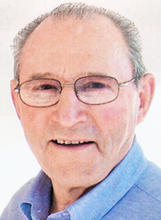
NMPF announced last month that John Hollay (left) has been promoted to the position of Vice President of Government Relations, effective immediately. Hollay joined the organization in May 2012 as Director of Government Relations, and was promoted to Senior Director in the summer of 2012.

“John has made a tremendous, positive impact on the organization in the short time he’s been with NMPF, building on our relationships on Capitol Hill and across Washington, DC,” said Jim Mulhern, Chief Operating Officer of NMPF. “His strategic insight and hard work on behalf of dairy farmers have helped make our entire organization more effective.” Hollay’s main focus has been on farm bill, immigration, and labor issues during his time with NMPF.

Before joining NMPF last year, Hollay served as senior legislative assistant with Connecticut Congressman Joe Courtney, with responsibility for issues pertaining to agriculture, energy, environment, and labor. He was also the lead congressional staffer on the re-establishment of the Dairy Farmer Caucus on Capitol Hill.

NMPF also announced the departure of Senior Vice President of Government Relations, Dana Brooks, who left NMPF in October. Brooks accepted a position with Elanco, the animal health division of Eli Lilly and Company, directing the firm’s federal government affairs office in Washington, DC.

Dairy Industry to Gather in Phoenix Next Week

Dairy producers, member cooperatives, Young Cooperators (YCs), industry representatives, staff, and others from all over the country will arrive in Phoenix, Arizona next week for three days of speeches, reports, banquets, general sessions, town hall meetings, and award ceremonies. NMPF hosts the meeting jointly with the National Dairy Promotion and Research Board (NDB) and the United Dairy Industry Association (UDIA).

Meeting information is available on the main NMPF website, including the final program. NMPF will also debut its new mobile meeting app, which is now accessible from the Google Play Store for Android devices or the iTunes Store for Apple devices. Search for “National Milk meetings.” The app is free to download. For those who do not have smartphones, the app information is also available on a mobile website. NMPF will use this app for various meetings held throughout the year, so attendees are encouraged to check back again.

For those on Twitter, NMPF will be tweeting live from the annual meeting using the hashtags #JAM13 (short for “joint annual meeting”) and #DairyChat. We will also post updates on our Facebook page whenever they become available.

2013 NMPF Annual Meeting Presentation

For the November CEO’s Corner, we have included the presentation that was made November 13th, 2013 by Chief Operating Officer Jim Mulhern at the NMPF annual meeting in Phoenix, AZ. Mulhern will take over as NMPF’s chief executive when Jerry Kozak retires at the end of this year.


NMPF Incoming President & CEO Jim Mulhern Annual Meeting Speech

Thank you very much, Jerry. Good morning ladies and gentlemen. Let me first say how pleased I am to be here, to have the honor of taking the reins of this great organization and lead us forward at this important time in our industry’s history.

Jerry, to you I want to express my deep appreciation for the support and guidance you have provided through this transition period. From you I inherit a strong legacy of leadership and a solid foundation for the future. I pledge to build on that record of success as we face the many new challenges that lay before us in the years ahead.

Randy, I am very excited by the opportunity to work closely with you in guiding our organization forward. I’m looking forward to building on the strong relationship we’ve already established. And I want to thank you and the Board of Directors for your faith and confidence in me as the new President and CEO of National Milk.

As many of you know, this isn’t my first dance here. I initially worked for this organization as a young, 20-something soon after I first came to Washington. A few years have passed, and yet I’m here again because I firmly believe in the mission of this organization and the goals and aspirations of its members. There is no greater honor for me than to work on your behalf, to advance the interests of dairy farmers and the cooperatives you own. My professional career has always kept me close to the dairy producer community – and it has paved the path leading me back to NMPF.

I now have a great opportunity to leverage the learning experiences of my career in agricultural policy, harnessing the hope that we can make this an even better organization in the future.

What I’d like to do this morning is outline my vision for NMPF, and the challenges before us, and talk about how the changes I’ve seen in the past three decades inform my perspective on where we need to go in the future.

So what’s changed since I first worked at NMPF in the mid-80s? Back then, we were talking about the need to fix the government dairy safety net…just as we are doing today with the farm bill’s Dairy Security Act. Back then, we were engaged in trade policy negotiations with high stakes for dairy farmers… just as we are today. Back then, we saw the value of the use of an industry-devised standard of identity, called the REAL Seal… which we’re now bringing back, although we aren’t going to resurrect the late great Vince Price as our spokesman. And back then, Washington was the home of a House controlled by one party that strongly opposed policies put forth by the President, who represented the other party. Sounds a lot like today.

However, if we dig beneath the historical headlines and the armchair analysis, we’ll see that much has changed, both in Washington and in our industry. While many of the changes at NMPF have been for the better, the same cannot be said for the changes in Washington, DC.

We as dairy producers are more united than we have been at any point in my career. But unfortunately our government in Washington seems more divided than it has ever been. Congress is in gridlock — witness the inability to pass a farm bill or a budget, or immigration reform, or much of anything else for that matter.

But here’s the key insight about our world, whether in 1983, or 2013, or the years ahead: Things change. Nothing stays exactly the same. History has familiar patterns and echoes, but time marches on.

Now, we can either be driven by the changes we see around us, most of which are beyond our control. Or, we can help drive those changes, expanding our reach toward those near our grasp, by positioning this organization as a resource for its members, now and in the future. That’s a great opportunity. And I know we can work together to seize it. But it will entail effort and commitment – engagement from each of you – along the way.

So, what I’d like to do is outline where we must commit this organization and this industry, and then address some of the things that will be needed to help get these jobs done.

Let me start with the area that always has been and always will be a core purpose of NMPF, and that is helping farmers economically. We are still in the middle of a pitched battle on this matter, as Congress decides whether to pass the Dairy Security Act, with both margin insurance and market stabilization…. or, to adopt a costly, ineffective and, frankly, counter-productive imitation of the DSA that some dairy processors want.

Because the stakes are high, we have fought hard to get this policy right. We will continue that fight until the end. And we intend to win.

Once we get through this process and have a farm bill that establishes an effective safety net, we will then be in a position to tackle the other key component of dairy economics, and that is the system of classified pricing we use in the U.S.

In particular, we must turn our attention again to discussions aimed at reforming the federal milk marketing order system. This was originally part of the Foundation for the Future initiative, but for many reasons, it fell by the wayside. But reforms delayed cannot be reforms denied. As important as it is for us to get a workable safety net in the farm bill, it’s equally important to address some of the challenges in federal orders, from end product pricing to make allowances.

The good news is we don’t have to start from scratch; the work done previously gives us a leg up on how to make this happen. It won’t be easy, but it will be a priority going forward.

But let’s also be clear: any changes to the federal order system have to benefit the nation’s dairy farmers. Some dairy processors talk about reforming federal milk orders, when what they really seem to mean is increasing their control of the market and their share of the dairy dollar. That’s a non-starter for us.

Our focus will be on reforms needed to ensure the orderly marketing of milk, and to protect the financial interests of the nation’s dairy farmers.

On a related note, in recent times we have heard a continual drumbeat from some of our colleagues in the processor community calling standards of identity for dairy products the great barrier to a brighter future.

But it’s important to listen closely to what’s being said. Sometimes this talk is being delivered by those who don’t seem to fully understand the concept of standards of identity. Other times it’s from those who actually do understand, but are looking for a way to benefit financially through deviations marketed as “innovation.”

One recent example comes to mind. A prominent marketer of fluid milk attempted to patent a lower-calorie alternative to skim milk called “light milk.” This product sought patent protection through the addition of a novel low-calorie ingredient. What was this novel ingredient? Something known as dihydrogen monoxide. That’s right: Water.

In years past, dairymen who added this same novel ingredient to their milk on the farm have, appropriately, gone to jail. But when it’s a processor proposing it, it is somehow innovation. Fortunately, the requested patent was turned down.

Beyond that, we continue to see situations where the processing community seems unaware of the legitimate flexibility already permitted under existing standards. When you combine this lack of understanding with the unfortunate tendency to confuse standards of identity with definitions under classified pricing — the result is predictable: Let’s Get Rid of These Restrictive Standards! Well, let’s not!

Are there provisions of standards that could be improved? — absolutely, especially if they relate to improvements and efficiencies in plant-level processing technologies. And we are willing to explore them. However, National Milk will not agree to revisions to standards designed to “water down” (pun intended) their quality or deceive consumers, and we will continue to work diligently to preserve all aspects of standards that preserve the integrity of traditional dairy products, their names and their composition.

But let me also be clear: we have much more in common than we have in difference with our friends in the processing community. We must and we will work closely together to accomplish what’s in the best interest of the entire dairy industry. For us, the focus must be on growing the pie, not re-dividing the existing pie.

It’s all about finding a win-win, and preventing win-lose scenarios.

Let me turn briefly to another economic issue that has become critically important to our industry, and will only grow in importance, and that is trade policy. Those of you in yesterday’s Town Hall meeting heard that we are at a critical juncture regarding the Trans-Pacific Partnership agreement. We need greater access to Canada, and also Japan, in order for a TPP agreement to be useful to America’s dairy farmers. We also need reforms of Fonterra as part of the deal.

On the other side of the world, the Trans-Atlantic Trade deal also offers potential new opportunities as well as challenges. Any eventual agreement has to create a more level playing field between the US and the EU, particularly when it comes to market access.

In addition, it must not in any way disrupt our ability to use the same cheese names that we have used for well over a century. The European Union’s effort on “geographical indicators,” the latest in a long line of schemes to establish non-tariff trade barriers, cannot be allowed to stand. Our government must not allow Europe to selfishly claim the exclusive use of common food names in a way that hobbles our ability to meet future consumer demand here in the U.S., in Europe, or anywhere else.

Beyond the importance of strong, workable trade agreements that break down barriers and increase market opportunities, we also must aggressively continue our efforts to grow market share through our investment in Cooperatives Working Together.

CWT is an important tool in our trade arsenal. This self-help program is providing real economic benefits to farmers and our cooperatives, and it also helps us tell a positive story about how we are working together and pooling our resources for the collective betterment of our industry.

You can see on this slide how important CWT is in helping us export cheese and butter. The value of this cooperation – the benefits it provides to all dairy farmers — must not be underestimated.

Shifting gears to another area of emerging concern, let me highlight the need for an increased focus on environmental issues. It’s yet another area where we have to play both offense and defense.

From a proactive standpoint, we’re working collaboratively with our partners at DMI and the Innovation Center to maximize the value of all of the great work being done on sustainability. Dairy is at the forefront of all the agricultural commodities when it comes, not just to measuring our carbon footprint, but also taking steps to reduce it. That’s yet another positive story to tell. It’s important to the food marketing value chain, and it’s also important when we speak on Capitol Hill, and with regulatory agencies. Too many people mistakenly view livestock agriculture as a problem. But with our long history of dairy stewardship and our increased focus on sustainability efforts, we can, and are, positioning ourselves as part of the solution.

At the same time, we also have to recognize that environmental issues, be they regulations or litigation, are a reality now, and will only grow in importance in the future. That’s why we had a special panel on the topic at yesterday’s town hall session.

We are engaged in two different, yet precedent-setting challenges: one the result of litigation in Washington’s Yakima Valley; the other the result of regulation of the Chesapeake Bay watershed. Add to those the court challenges affecting the vast Mississippi River watershed, and you begin to understand the complexity of the challenge. These will be long-term contests requiring new approaches, perhaps new technologies, and the commitment of resources across the industry, so that farmers on the East and West coasts, and everyone in between – continue to have the license to operate freely, and responsibly.

Yet another issue that will be increasingly important going forward is making sure we shape federal nutrition policy to reflect the tremendous nutritive value of milk and dairy products.

Let us never forget that, when all is said and done, it is dairy’s important contribution to the human diet that sets our product apart. We offer Americans, and consumers around the world, affordable, high quality proteins and other key nutrients essential for human health. But we can’t rest on our past.

We must regain dairy’s place on the nutritional high ground. We can’t assume that policymakers who write the rules for the school lunch program, and the WIC program, and the SNAP program, will compose future regulations that recognize dairy’s unique nutrient package.

One big change during my career in dairy is that we’re in a much more competitive environment. We’re competing with other sources of calcium and vitamins featured in products that didn’t exist 10 or 20 years ago. We’re competing against vegan activists who hide behind innocuous-sounding organizational names, and treat fiction as fact in their quest to end animal agriculture.

Working with the National Dairy Council and other nutrition organizations, we must defend our franchise and promote the message that children, indeed, people of all ages, benefit from what dairy contributes to our diet.

These are just some of the areas where we must place increased emphasis going forward into the future.

Let me talk about one other factor influencing our society and, ultimately our industry, and how it will shape the role and mission of NMPF. And that is the need for more active engagement by all of us in the dairy industry to tell our story — it’s the need for openness and transparency. In the information age we live in, there is an expectation about communicating how things happen. Today’s world is more globalized. Hierarchies have been flattened, and technology has empowered people to speak out – and in that speaking, they have new expectations about being heard, and being engaged in a dialogue. This may sound abstract, but the impact on our business is very real.

Look at how food marketers have increased the flow of information about their products. 20 years ago, it was calorie and nutrition information on the back panel. 10 years ago, it was absence claims about artificial sweeteners and growth hormones. And now, it’s whether a product is locally and sustainably produced. Whether it can be traced back from the store to a field or barn. Why farmers are being featured more on packages and in marketing campaigns.

That’s transparency in action. But it can also be manipulated. And that’s one reason why we must more actively engage.

The strategy of some food companies is to try to increase sales by scaring consumers into paying more for their particular product because of how it wasn’t produced. That’s not transparency. That’s fear-based marketing. We have to combat that. Left unchecked, it not only affects the marketplace; it also affects the policy environment.

We must tell our story because if we don’t, others – who don’t have our interests at heart – are telling a very different, and harmful, story. So transparency is the need to tell stories about brands and product categories and entire industries. The clean lines that used to exist between farmer and processor and distributor and retailer have blurred. Transparency has created a value chain where everyone is accountable for what they do, and why they do it. This dynamic is part of the reason why we need a renewed commitment to the REAL Seal program.

It helps us illustrate – literally, on our packages – illustrate the story about real dairy foods.

This dynamic is why we need additional support and commitment to our national dairy animal care program — the FARM program.

It helps us explain to an increasingly interested and engaged public what happens on our farms – and why — before the milk ever reaches store shelves or restaurant tables.

This dynamic is why we need more farmers involved in using the tools of transparency, especially social media channels, to talk about what they do and why they do it, and to challenge in a respectful way all the myths that abound in the public square about dairy farming today.

This dynamic is why I applaud the great work Tom Gallagher and our partner organization DMI is doing to address these very challenges in the consumer marketplace. Our two organizations have a strong history of working together on behalf of our dairy farmers members. And I am very much looking forward to building on that success and taking it to a new level.

And this dynamic is why we need even more active engagement of dairy farmers in the policymaking process. To be successful in the future, we must be better able to enlist our co-op producer members in grass roots action.We must adopt the communication strategies and tools of the 21st century to drive our message home.

30 years ago, National Milk, like many organizations, could be a neatly-defined hierarchy, and be successful. It could function as a narrow organization, with a Board of Directors and a small staff, operate somewhat opaquely, and yet be effective in driving home a uniform message, on Capitol Hill, in the media, and across the dairy sector. But not anymore.

The forces of transparency mean organizations can’t be successful if they remain opaque and narrow, and function as if in a vacuum. Information flows much more quickly and freely, and every stakeholder wants a piece of it. As a result, the future of this organization, and this industry, belongs to those who are engaged in it.

If there’s a message I can leave with you today, it’s that the future of NMPF is not a function of what I want, or what Randy wants, or any one leader.

Rather, the successful future of NMPF will be a function of the active engagement that our Board, our delegates, and, yes, our grass roots members, have in the organization and the industry. It’s not merely about having names on our letterhead. We need voices, your voices, in the media, on the web and on Capitol Hill. We need your financial commitment, yes; but even more importantly, we need your time and effort and engagement. The more engagement our members have with our organization, the more our organization can achieve for our members. It’s a virtuous circle.

Working together we can accomplish so much. We can establish an effective safety net for all dairy farmers. We can improve the effectiveness of federal milk orders. We can ensure that US trade policy helps protect and promote our industry’s interests. We can address environmental concerns AND maintain our freedom to operate. We can improve dairy’s standing in nutrition policy discussions.

And working together, communicating our message together, we can make sure consumers know that the dairy products coming from milk produced on our farms is not only safe and wholesome…it is the best and highest quality milk in history.

I look forward to engaging with all of you as we work together to accomplish all these things, and more.

Thank you.

NMPF Urges Farm Bill Conferees to Include Senate’s Dairy Security Act in Final Measure

From Jim Mulhern, Chief Operating Officer, NMPF:

“At long last, the House and Senate are poised to finish their work on a final farm bill package. For America’s dairy farmers, this is no time for a game of congressional trick or treat. The final product must provide farmers real stability, and not be a costumed disguise that masks the serious problems that will result if the House dairy program were enacted.

“The Senate’s bipartisan Dairy Security Act is the only option that will provide help to farmers when they need it most, while also limiting taxpayers’ exposure through its market stabilization mechanism. It’s an important safety net to farmers when they need it, and not an underfunded liability to the government when the program is in operation.

“In contrast, the proposal that finally emerged from the House is a bad trick: it would be fiscally irresponsible and ineffective. Lacking the Senate’s market stabilization program, the House approach would cause farmers to suffer prolonged periods of poor margins, while taxpayers subsidize dairy processors through artificially-low milk prices.

“We strongly encourage the farm bill conferees to support the dairy title language in the Senate bill, and to include its provisions in the final package.”


The National Milk Producers Federation (NMPF), based in Arlington, VA, develops and carries out policies that advance the well-being of dairy producers and the cooperatives they own. The members of NMPF’s cooperatives produce the majority of the U.S. milk supply, making NMPF the voice of more than 32,000 dairy producers on Capitol Hill and with government agencies.