Dairy Farm Groups Urge Congressional Agriculture Conferees to Support Dairy Security Act

NMPF Joins 53 Other Farm Groups in Endorsing Senate Dairy Title

ARLINGTON, VA – More than 50 state and national dairy and farm organizations have joined together to urge congressional farm bill conferees to adopt the Senate’s Dairy Security Act (DSA), because it offers farmers the most effective safety net for the future. The groups expressed their support in a joint letter sent today to the Senate and House members who will decide the fate of the 2013 farm bill.

On Saturday, the House leadership named 17 Republicans and 12 Democrats to the conference committee that will reconcile the respective House and Senate farm bills passed earlier this year. They are joining seven Democratic Senators and five Republicans.

“As we reach what we all hope is the home stretch in the quest to develop a better economic safety net, dairy farmers from coast to coast are saying loud and clear that the Senate approach is not just the best choice; it’s the most effective choice for farmers,” said Jim Mulhern, Chief Operating Officer of NMPF. “The large number of organizations signing this letter highlights the breadth of support among the dairy farmer community for the Senate version of the farm bill, because it offers producers of all sizes the best safety net.”

The letter to the conferees points out that the “Dairy Security Act is specifically designed to offer dairy farmers help when they desperately need it: when margins between farm milk prices and production costs shrink to dangerous levels. Equally important, the Dairy Security Act is designed to limit taxpayers’ liability through its market stabilization mechanism. This provision will help farm milk prices recover more quickly, while mitigating against prolonged or particularly serious downturns that would otherwise increase government program costs.”

The dairy and farm groups note that current programs have been a costly failure, because they “did nothing to address the underlying cause of the problem: low prices triggered by milk supplies that badly outstripped demand. Without the two-pronged Dairy Security Act, the conditions that created the crisis in 2009 will continue and could easily worsen in the future.”

Noting that individual farmers can decide whether or not to participate in the dairy program, the groups said the “DSA is a voluntary program that protects producers and keeps taxpayer costs in check. Contrary to the gross distortion pedaled by DSA’s opponents during the House debate, the plan doesn’t increase retail milk prices. It is designed merely to keep farm milk prices from staying too low for too long, conditions that put 2,000 dairy farms out of business in 2009.”

Reacting to opposition to the DSA from dairy processors, the dairy farmer groups point out that “processors, wholesalers and retailers receive 70% of the amount consumers pay for dairy products (with farmers receiving only 30%), and they employ their own supply management daily by buying only the amount of milk they want. Without the stabilization mechanism, when there are excess supplies that drive down the price of all milk it is dairy farmers, the cooperatives they own and taxpayers who would suffer.”

“Collapsing farm prices and unchecked milk supplies are a bonanza for dairy processors. Again in 2009, as prices fell precipitously and farmers lost money on every gallon of milk they produced, processors’ earnings soared (“the perfect sunny day,” as one processing industry leader said at the time). No wonder they oppose a system designed to keep milk supplies in better balance with demand and prevent a prolonged collapse in farmers’ margins.”

Mulhern said it is critical that farm bill conferees adopt the Senate dairy provisions in order to protect dairy farmers, provide greater stability to dairy markets and protect taxpayers.

“Without the DSA’s market stabilization program, dairy farmers will continue to suffer periods of unsustainably low prices, even as  taxpayers will subsidize processors by keeping milk prices artificially low through margin insurance that blunts the market signals contained in the market stabilization component,” he said.

The leaders of the farm bill conference said Wednesday they are likely to formally begin meeting the last week of October.


The National Milk Producers Federation (NMPF), based in Arlington, VA, develops and carries out policies that advance the well-being of dairy producers and the cooperatives they own. The members of NMPF’s cooperatives produce the majority of the U.S. milk supply, making NMPF the voice of more than 32,000 dairy producers on Capitol Hill and with government agencies.

NMPF Commends House for Naming Conferees to Complete Work on Farm Bill

From Jim Mulhern, Chief Operating Officer, NMPF:

“We commend the leadership of the House of Representatives for taking the next crucial step towards completing a new farm bill, and creating a new and better safety net for dairy farmers. With the naming of these House members, negotiations with the Senate can now proceed on a final farm bill package.

“NMPF will be working in the coming days to remind both the Senate and House conferees of the importance of a balanced and cost-effective dairy program. The Senate’s bipartisan Dairy Security Act is the only program designed to both help farmers when they need it most, while also limiting taxpayers’ liability through its market stabilization mechanism. Without the market stabilization program, farmers will continue to suffer prolonged periods of poor margins, while taxpayers will subsidize artificially-low milk prices.

“The Dairy Security Act protects farmers of all sizes, allows for growth, and keeps taxpayer costs in check. The alternative is an irresponsible budget-buster. We strongly encourage the agriculture conferees to support the dairy title language in the Senate farm bill, and to include its provisions in the final package.”


The National Milk Producers Federation, based in Arlington, VA, develops and carries out policies that advance the well-being of dairy producers and the cooperatives they own. The members of NMPF’s 30 cooperatives produce the majority of the U.S. milk supply, making NMPF the voice of more than 32,000 dairy producers on Capitol Hill and with government agencies.

If You’re Involved in Milk Production, You Need this New Book!

Updated Dairy Data Highlights Now Available from NMPF

ARLINGTON, VA – Need to know the nation’s top 10 milk-producing states? How about Class III milk prices by month going back eight years? Or perhaps you need the top 10 export markets for U.S. dairy products in 2012.

All that and more is available in the latest edition of Dairy Data Highlights from the National Milk Producers Federation (NMPF). The handy, pocket-size booklet includes 53 tables and 19 graphs filled with national and state milk and dairy production data from the mid-1970s through 2012.
Dairy Data Highlights has been published annually by NMPF for more than 60 years. A must for anyone involved in milk production, it is available to NMPF member cooperatives and associate members for $7.50 a copy, or $5 for orders of more than 10 copies. For nonmembers, the cost is $10 for single copies or $7.50 for bulk orders. An order form is available on the NMPF website.

All aspects of milk and dairy products production are covered, as well as producer, wholesale and retail milk and dairy product prices; federal milk marketing orders; sales and consumption data for milk and dairy products, and comparative information for U.S. dairy imports and exports. Specific tables include:

  • National milk production data going back to 1925;
  • Cow numbers, farms and herd size data going back to 1950;
  • Milk production and prices, production-per-cow, cow numbers and dairy farms by state, with comparative data from the 1980s and 1990s;
  • Class III, manufacturing grade and all-milk wholesale prices by year from 1965;
  • Annual wholesale prices for butter, cheddar cheese, and nonfat dry milk;
  • The ratio of feed prices to milk prices by month;
  • The share of commercial sales by product—including milk, butter, cheese, frozen products and nonfat dry milk;
  • Annual production and per-capital consumption of key cheese, butter and frozen products from 1975;
  • Annual exports of milk, butter, cheese, ice cream, yogurt, and nonfat dry milk by region and country;
  • A short glossary of dairy industry terms and useful conversions factors for milk and dairy products.


The National Milk Producers Federation (NMPF), based in Arlington, VA, develops and carries out policies that advance the well-being of dairy producers and the cooperatives they own. The members of NMPF’s cooperatives produce the majority of the U.S. milk supply, making NMPF the voice of more than 32,000 dairy producers on Capitol Hill and with government agencies.

Farm Bill Stymied by Congressional Battles over the Budget, Debt Limit

The 2013 farm bill inched forward in September and seemed headed for a House-Senate conference committee until the Congressional agenda was hijacked by major fights over the budget and raising the limit on the national debt. Little more is likely to happen until those two issues are resolved at some point in October.

Before the budget impasse took center stage last week, the House rejoined the separate measures reauthorizing farm and nutrition programs into one large bill, similar in scope to the Senate bill. That prompted the Senate to reappoint its agriculture conference committee members in preparation for negotiations with the House over a final, compromise farm bill. Among the major issues to be worked out in conference are a funding level for the food stamp program (somewhere between the House’s $40 billion in cuts, and the Senate’s $4 billion), and reform of the dairy program.

In terms of dairy policy, the Senate bill, passed in June, includes a voluntary program offering producers margin insurance. Those enrolling in the program also will be subject to a market stabilization program asking them to trim production if milk supplies outstrip demand, prices fall, and margins shrink precipitously. According to an analysis by the University of Missouri, the Senate bill would have increased net farm revenue by $.55 per cwt. from 2009 through 2012, had it been in place in recent years.

The House, meanwhile, passed a weaker insurance program that does not include the market stabilization element. Most national and state dairy organizations favor the Senate provisions because the House bill will not rectify low-margin conditions, meaning that dairy farmers could face long periods of severely depressed prices.

NMPF urges dairy farmers to continue to tell lawmakers to pass a farm bill that includes the Senate dairy policy reforms. Farmers can use NMPF’s Dairy GREAT system to email Capitol Hill.

Meanwhile, some farm programs, including MILC payments, expired with the end of the fiscal year September 30. That will have little practical effect on dairy producers, since MILC payments are not expected between now and December 31. Other programs, including the dairy price support program, are authorized through the end of the calendar year.

Should Congress be unable to reach agreement on a new long-term farm bill by then, another extension of current programs is possible. In the absence of either another extension or passage of a farm bill, farm policy would revert back to the permanent law of 1949.

It’s Time to Name the New REAL® Seal Cartoon Character

The suggestions are in, and the nominees are: Dairyus, Milkdrop, and Roscow. Now it’s up to you to pick one of those three as the name for the new REAL® Seal animated cartoon character.

Votes can be cast on the REAL® Seal website through Tuesday, November 5. Fittingly, that’s Election Day. Any member of the public can vote. The results will be announced November 12 at the NMPF annual meeting in Phoenix.

It’s all part of NMPF’s effort to revitalize the REAL® Seal and build awareness of the benefits of real milk among a new generation of consumers.

“We’re excited to use the new animated REAL® Seal character to help kids, parents, and dairy fans of all ages learn about the foods made with real American dairy products,” said NMPF Chief Operating Officer Jim Mulhern. “And giving people a chance to vote for the character’s name is democracy in action.”

NMPF used the REAL® Seal website and Facebook page to gather more than suggestions for the name over the summer. More than 100 suggestions were made.

NMPF took over management of the REAL® Seal last year. It is using social media and other means to inform consumers about the iconic dairy symbol and the advantages of real dairy foods. The REAL® Seal not only means a product is a real dairy product, but that it is made with milk from cows on U.S. dairy farms and without imported, imitation or substitute ingredients.

NMPF has made a significant investment in promoting the REAL® Seal. Until last fall, the REAL® Seal website was targeted mostly to companies interested in using the seal on their products. Today, it is focused on consumers. A buyer’s guide will soon be added to make it easier for consumers to buy real dairy products.

Recent CWT Export Assistance Puts 2013 Product Volumes Ahead of 2012

Through September of 2013, Cooperatives Working Together (CWT) has provided export assistance helping members to sell 102 million pounds of cheese and 72 million pounds of butter to 37 countries on six continents. These volumes represent a 9% year-to-date increase in cheese volume and a 28% increase in the tons of butter (82% butterfat) that CWT has helped its members to sell. The products will be delivered now through March 2013.

How important are dairy product exports to dairy farmers’ milk checks? NMPF economist Dr. Peter Vitaliano estimates that the growth in U.S. dairy exports over the past three years, 2010 through 2012, has increased the average U.S. producer milk price by $1.35 per hundredweight (cwt.), and generated an additional $9.1 billion in net income for U.S. dairy farmers during those three years. In that three-year period, CWT provided assistance for members to export 63 million pounds of butter and 250 million pounds of American-type cheeses.

The CWT program is valuable to all of its members, even those who are currently exporting product. Of the 37 current CWT member cooperatives, 11 are using the Export Assistance program. The 26 cooperatives not currently using the program know that their businesses and their dairy farmer owners benefit from their 4¢ per hundredweight investment in CWT through higher market prices resulting from the increased exports.

Producers, Processors Join Forces to Oppose Wisconsin Raw Milk Bill

NMPF and the International Dairy Foods Association (IDFA) joined forces in September to urge state lawmakers in Wisconsin to reject legislation allowing sales of unpasteurized milk to consumers. It was the second time in three years that groups representing milk producers and milk processors teamed up to oppose raw milk legislation in the nation’s second-largest dairy state.

In a letter to state senators, NMPF and IDFA said the risks of consuming raw dairy products are not worth any of the claimed benefits of raw milk to consumers or producers.

“Consumption of raw milk has been opposed by every major health organization in the United States, including the American Medical Association and the American Academy of Pediatrics,” the letter said, noting that raw milk is a vehicle for transmitting E. coli 0157:H7, Campylobacter, Listeria monocytogenes, and Salmonella and other pathogens.

“The link between raw milk and foodborne illness has been well-documented in the scientific literature, with evidence spanning nearly 100 years,” the letter said.

Wisconsin has been at the center of a vigorous raw milk debate since 2010, when former Democratic Governor Jim Doyle vetoed legislation permitting on-farm sales. His successor, Republican Scott Walker, initially said he would sign similar legislation if it included provisions safeguarding public health. More recently, however, Walker has expressed concern about what legalizing raw milk sales would mean for Wisconsin’s dairy industry.

NMPF Chief Operating Officer Jim Mulhern called it “disheartening” that lawmakers in America’s Dairyland would even consider legislation allowing raw milk sales. “The benefits of consuming raw milk are illusory,” Mulhern said, “but the painful costs of illness and death are very real.”

FARM Program Report to be Featured at November Annual Meeting

The latest results from NMPF’s comprehensive, dairy industry-wide animal care program, National Dairy FARM Program: Farmers Assuring Responsible ManagementTM, have been compiled and will be released next month at the NMPF-DMI-UDIA annual meeting.

The 2013 Year in Review for the National Dairy FARM Program will highlight results of the only nationwide program addressing animal care by the nation’s dairy farmers. The report includes review of the recent changes made to the FARM Animal Care guidelines, results from data collected during the Second-Party evaluations and the findings of the Third-Party verification. With more than 70 percent of the U.S. milk supply now enrolled in the FARM program, the report will provide assurance of the industry’s high-level commitment to animal care. The Year in Review will be released in November and will be made available online at the FARM Program website, www.nationaldairyfarm.com.

NMPF Working with CCFN & U.S. Government to Combat Restrictions to U.S. Cheese Exports

Through its work in the Consortium for Common Food Names (CCFN), NMPF has continued to support extensive efforts to preserve market access for U.S. cheeses in several Latin American countries.

Products facing potential restrictions include parmesan, feta, mozzarella, provolone, romano, brie, camembert, fontina, gorgonzola, emmental, and pecorino. Countries where restrictions are developing include Colombia, Costa Rica, El Salvador, Guatemala, Honduras, Nicaragua, Panama, and Peru.

In addition, limits on use of these and additional products are expected to be proposed in Singapore, a hub for shipments throughout Asia. Members concerned about this issue and interested in getting additional information can contact Shawna Morris at smorris@nmpf.org.

Only Days Left to Register for NMPF’s 2013 Annual Meeting

There are less than two weeks left to register for NMPF’s annual meeting at the Arizona Biltmore Hotel in Phoenix November 11 – 13. The meeting is held jointly with the National Dairy Promotion and Research Board and the United Dairy Industry Association.

Individual and group registrations, along with hotel reservations, can be made conveniently online at www.dairyevents.com. Or they can be mailed or faxed in. But all registrations plus payments must be submitted no later than Thursday, October 17.

With a theme of “Changing. Innovating. Growing,” the meeting offers two core days of programming, plus opportunities to network with producers and industry leaders from across the country. There also will be touring and shopping opportunities in one of the nation’s fastest-growing and most dynamic cities. Producers, cooperative staff, suppliers, trade press, and all others from the dairy sector are encouraged to attend.

Topping the program is a Tuesday afternoon speech by Peter Sheahan, CEO of ChangeLabs™, and an internationally-known business thinker. The author of six books, Sheahan has worked with some of the world’s leading brands, including Google, News Corporation and Harley Davidson.

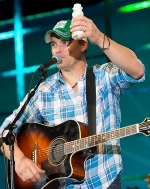
Former NFL head coach and current ESPN analyst Herman Edwards speaks at the opening lunch on Tuesday while Nashville recording artist James Wesley entertains at the banquet Wednesday night. Visit the NMPF website for more information.

Choosing the Path Against Pathogens

My career started 40 years ago in the state of New Jersey’s public health department. My first job out of graduate school involved inspecting restaurants, processing plants and warehouses, where the quality and safety of food products sometimes was compromised by both sins of omission and sins of commission, allowing that food to become tainted.

Now, as my professional career nears its end, I find it disheartening that one of the greatest public health measures of all time continues to be under assault. I’m speaking of efforts to roll back the requirement that milk sold within states be properly pasteurized. The joint effort between states and the Food and Drug Administration to ensure that milk sold interstate be pasteurized is part of the bedrock of our national food safety system. But the effort to encourage individual states to take a different path, by permitting in-state sales of raw milk, is deeply concerning to me as a former public health officer and as a national dairy industry representative, because these efforts are wrong-headed and the trend is going the wrong direction.

That’s why the National Milk Producers Federation (NMPF) has been so vocal, as various states – including, several years ago, my home state of New Jersey – have considered, and in some cases approved, laws liberalizing the sales of raw milk. Last month, NMPF joined with the International Dairy Foods Association, and a robust coalition of state farm, food and health organizations, to challenge a pending state senate bill in Wisconsin that would expand the availability of raw milk in America’s Dairyland. Anyone who professes a concern about providing consumers with quality dairy products – and safety is part and parcel of the idea of “quality” – should be joining us in expressing opposition to this kind of initiative.

The potential perils of raw milk are manifest, and I shouldn’t have to belabor that point. There’s hardly a month that goes by when raw milk isn’t implicated in the headlines as causing some type of illness. Beyond mere anecdotes, the Centers for Disease Control (CDC) reported in 2012 that between 1993 and 2006, unpasteurized dairy products resulted in 73 known outbreaks – causing 1,571 cases of foodborne illness, 202 hospitalizations, and two deaths. Even more damning, the CDC also concluded that unpasteurized milk was 150 times more likely to cause food‐borne illness outbreaks than pasteurized milk, and such outbreaks had a hospitalization rate 13 times higher than those involving pasteurized dairy products.

Supporters of the Wisconsin state bill assert that most major dairy states, including California, already allow some form of raw milk marketing (the equivalent of my kids once saying “but all my friends are doing it!”). Yet, the CDC has reported nearly 75% of raw milk‐associated outbreaks have occurred in states where sale of raw milk was legal. Legalizing a product doesn’t make it any safer, especially since we know that raw milk is inherently dangerous, whether it’s obtained from small farms or large, from cow‐share programs, or even from licensed raw milk vendors. As a public health officer in New Jersey, I often found it was easier to rectify the visible sources of foodborne contamination, as opposed to finding pathogens that couldn’t be seen. That’s why there are no assurances that milk from certified or inspected raw milk farms would be any safer.

The other argument made by proponents is that consenting individuals should have the right to choose what they ingest. That argument may work for tobacco or alcohol, but an honest assessment of the issue has to account for the risks to children. Kids frequently are the ones given raw milk; they can’t fully comprehend the hazards involved, and therefore aren’t in a position to consent to those risks. This is not just a legal point, but an ethical matter as well.

That’s because nearly two‐thirds of all outbreaks associated with raw milk or raw milk products involve children. In 2011, five children in California were infected with E. coli O157:H7 after drinking raw milk; three required hospitalization with hemolytic uremic syndrome (HUS), a serious condition that may lead to kidney failure. In Wisconsin, at a school event in 2011, 16 people consuming donated raw milk, including several fourth grade students, later suffered from diarrhea, nausea and vomiting from Campylobacter infections.

Supporting the sales of raw milk – or even turning a blind eye to it – would be the easier path for the national dairy industry, but it’s not the right one. And all of us, regardless of where we are in our careers, ultimately end up regretting the times when we chose the easy path, not the right one.

NMPF Statement on House of Representatives Passage of the Farm Bill’s Nutrition Program

From Jim Mulhern, Chief Operating Officer, NMPF:

“Now that the House has passed its nutrition policy portion of the farm bill, the National Milk Producers Federation (NMPF) urges House leaders to quickly appoint conferees who should, with their counterparts in the Senate, finish work on a new farm bill and get it passed into law. It’s harvest time outside of Washington; it needs to be on Capitol Hill as well.

For the nation’s dairy farmers, it is critical for agriculture leaders in the House and Senate to include in the 2013 farm bill the provisions of the Dairy Security Act, which has already been approved this year by both the House and Senate Agriculture committees.

The Dairy Security Act will provide dairy farmers with a cost-effective safety net, while protecting consumers and taxpayers at the same time. Dairy producers have been waiting two years to know the details of the federal dairy safety net. They need this information to make business decisions. Along with the rest of American agriculture, milk producers nationwide urge lawmakers to take this critical last step in the evolution of a better farm program.”


The National Milk Producers Federation (NMPF), based in Arlington, VA, develops and carries out policies that advance the well-being of dairy producers and the cooperatives they own. The members of NMPF’s cooperatives produce the majority of the U.S. milk supply, making NMPF the voice of more than 32,000 dairy producers on Capitol Hill and with government agencies.