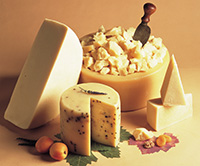
 The dairy industry today praised U.S. representatives to a key international meeting for leading the fight against treaty changes that could seriously impair the ability of companies worldwide to use generic food terms in export markets. Among those potentially affected are U.S. dairy producers and processors relying on numerous generic cheese names.
The National Milk Producers Federation, the U.S. Dairy Export Council and the International Dairy Foods Association jointly thanked the U.S. delegation to the World Intellectual Property Organization’s Diplomatic Conference on the Lisbon Agreement for calling attention to the treaty changes. They also praised the U.S. diplomats for leading a coalition of countries in criticizing the lack of an inclusive WIPO process as well as the negative costs the agreement will likely impose on taxpayers, farmers and companies in other countries.
The three organizations urged the U.S. Trade Representative to evaluate the degree to which countries’ actions under the agreement are likely to violate World Trade Organization obligations and called on Congress to examine the deeply troubling side-lining of a majority of WIPO members in the development of an agreement with global ramifications.
WIPO is a United Nations agency charged with developing a balanced international intellectual property system. It concluded two weeks of talks in Geneva today that both expanded the Lisbon Agreement for the Protection of Appellations of Origin to include geographical indications and expanded the protections granted under the international registry of protected terms.
Geographical indications limit who can use certain product terms or names to those in a particular geographic area. GIs have been widely abused in recent years by European interests seeking to restrict competition from the United States and other non-European countries.
During the two-week diplomatic conference in Geneva, the United States led a 12-nation coalition in opposing the Lisbon Agreement changes and in urging equal participation rights for all WIPO members in considering the changes. In a radical departure from multiple precedents, WIPO chose to permit Lisbon Agreement members to deny meaningful participation to the majority of WIPO members.
Despite this power grab, the U.S. and its allies used the conference to draw attention to the agreement’s failure to adequately safeguard both trade and intellectual property rights. Dairy groups urged continued international collaboration in opposing misuse of geographical indications.
“The treaty and its proposed changes are clearly aimed at preventing competitors such as dairy producers and processors in the United States and other non-European countries from using names in international trade that they have used for decades,” said NMPF President and CEO Jim Mulhern. “We appreciate and commend the extensive work the office of the U.S. Trade Representative and the U.S. Patent and Trademark Office, along with the departments of State and Agriculture, have put into opposing these changes and in decrying WIPO’s refusal to allow all members to have a full say in the outcome of this agreement.”
USDEC President Tom Suber added, “WIPO’s decision to force non-Lisbon members into second-class status at this conference strips the resulting outcome of its legitimacy as an international agreement. It’s clear that this agreement is an effort to promote the interests of GI holders at the expense of generic users, rather than trying to balance both those concerns in good faith. It is clear to us that there are serious WTO consistency problems with the approach Lisbon members have decided to pursue and we ask USTR to carefully examine how to address these trade commitment violations.”
IDFA President and CEO Connie Tipton agreed, noting that “with U.S. leadership, international collaboration on these crucial issues can continue in a variety of forums. Countries have a right to enter into treaties to address their own goals, but this should not come at the expense of other countries’ exports, nor their rights to fully participate in treaties having international impacts.”
The National Milk Producers Federation (NMPF), based in Arlington, Va., develops and carries out policies that advance the well-being of U.S. dairy producers and the cooperatives they collectively own. The members of NMPF’s cooperatives produce the majority of the U.S, milk supply, making NMPF the voice of nearly 32,000 dairy producers on Capitol Hill and with government agencies.
The U.S. Dairy Export Council (USDEC) is a non-profit, independent membership organization that represents the global trade interests of U.S. dairy producers, proprietary processors and cooperatives, ingredient suppliers and export traders. Its mission is to enhance U.S. global competitiveness and assist the U.S. industry to increase its global dairy ingredient sales and exports of U.S. dairy products. USDEC accomplishes this through programs in market development that build global demand for U.S. dairy products, resolve market access barriers and advance industry trade policy goals. USDEC is supported by staff across the United States and overseas in Mexico, South America, Asia, Middle East and Europe. The U.S. Dairy Export Council prohibits discrimination on the basis of age, disability, national origin, race, color, religion, creed, gender, sexual orientation, political beliefs, marital status, military status, and arrest or conviction record. www.usdec.org
The International Dairy Foods Association (IDFA), Washington, D.C, represents the nation’s dairy manufacturing and marketing industries and their suppliers, with a membership of 550 companies within a $125-billion a year industry. IDFA is composed of three constituent organizations: the Milk Industry Foundation (MIF), the National Cheese Institute (NCI) and the International Ice Cream Association (IICA). IDFA’s nearly 200 dairy processing members run nearly 600 plant operations, and range from large multi-national organizations to single-plant companies. Together they represent more than 85 percent of the milk, cultured products, cheese, ice cream and frozen desserts produced and marketed in the United States. IDFA can be found at www.idfa.org.

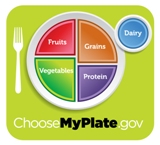 Following up on its engagement throughout the U.S. Dietary Guidelines Advisory Committee process, NMPF last month submitted 17 pages of written comments to the Departments of Agriculture and Health and Human Services on the DGAC’s final report and recommendations.
 As Congress prepares to review and reenact federal child nutrition programs, NMPF has worked in concert with the International Dairy Foods Association and two House members to craft legislation aimed at reversing the decline in school milk consumption.
 John Newton, an assistant professor at the University of Illinois at Urbana-Champaign, will join NMPF’s economics department July 1 as senior director of research. Newton, currently in the university’s Department of Agricultural and Consumer Economics, has more than a decade of experience in dairy policy, and recently helped U.S. Agriculture Department implement the new Margin Protection Program.
 ARLINGTON, VA – The National Milk Producers Federation and U.S. Dairy Export Council tonight commended the Senate for approving new Trade Promotion Authority (TPA) legislation.
  ARLINGTON, VA – American dairy products headed to Canada and Mexico could face stiffer tariffs – and ultimately, reach fewer foreign customers – unless Congress repeals
  WASHINGTON, DC – A bipartisan bill to help reverse the decline of milk consumption in schools will be introduced this afternoon by Representatives G.T. Thompson (R-PA) and Joe
 NMPF is