Editor’s Note: In place of Jim’s usual monthly column, please find the speech given by Jim and NMPF Chairman Randy Mooney at the 2015 Annual Meeting in Orlando, FL.
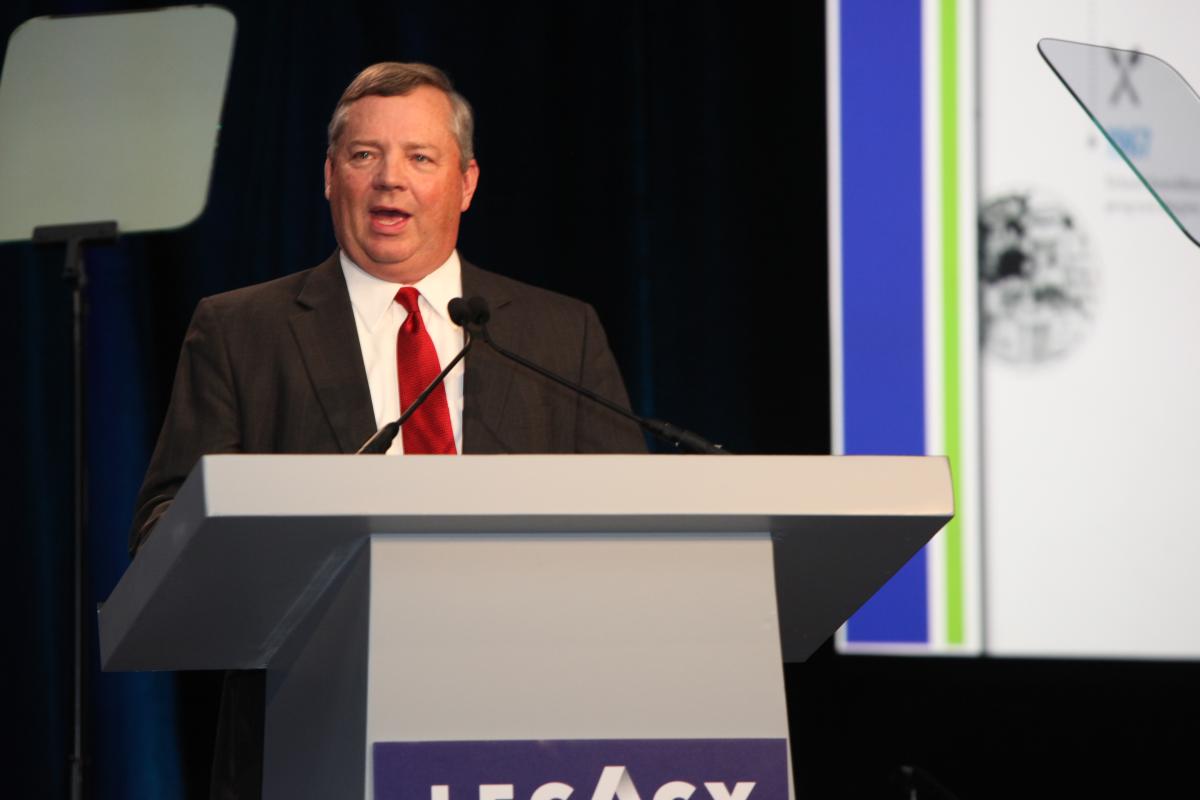 Randy Mooney – This year is an extra special occasion for our joint meeting with the checkoff folks, because we have a lot to celebrate in 2015. Congratulations to DMI and the US Dairy Export Council for 20 years of helping farmers promote their milk, both here at home, and abroad. During those two decades, NMPF has forged a strong partnership with both organizations on many areas of mutual interest. This joint annual meeting is really just the tip of the iceberg — the cherry on top of the whipped cream — in the collaborative efforts that our groups engage in, to the benefit of farmers across the country.
Jim Mulhern – And we also need to salute the National Dairy Council, celebrating its 100th anniversary this year. What an incredible legacy that is: 100 years of educating the public about the critically important role that dairy products play in human nutrition. Milk, cheese, yogurt, and other dairy foods have been a daily part of the lives of millions of Americans for decade after decade, thanks to the investment that farmers have made in building a reputable, science-based organization to spread the word about nature’s most perfect food. Talk about a Legacy of Leadership…that’s what NDC embodies. Here’s a toast to NDC, DMI and USDEC….we know there are many more great years of partnership to come.
Randy Mooney – And since we’re in the process of celebrating these important anniversaries, Jim and I also want to commemorate another important watershed: This meeting marks the beginning of the 100th anniversary of the National Milk Producers Federation. And what an eventful and momentous 100 years it has been! In recognition of this important milestone, we want to use our time this afternoon to highlight a few of the major themes of the past century, and bring you up to speed on what’s been happening in the past year.
Jim Mulhern – One thing we’re doing to mark the beginning of the next 100 years of the National Milk Producers Federation is to refresh the logo that most of you are familiar with. We’ve been using this blue logo of our four letters, beneath the U.S. Capitol dome, since 1974. And, as with most things from the mid-70s, from disco to Ford Pintos to the length of my hair back then, it’s time to move on. So what you see on the screen is the new logo we’ll be using to start our next 100 years. It’s not a major change – there’s still the capitol dome, which signifies our organizational focus on matters of national policy – but a new century and new challenges call for a new, more modern design.
Randy Mooney – Another thing we are doing to celebrate NMPF’s first 100 years is to provide each of you with what we’re calling a centennial report. When you leave this room in a few minutes – after our speech – you can pick up your own copy. This extensive report is ten decades in the making. It features a great overview of the challenges, and accomplishments, the people and the progress, of this organization, dating back to the early years of the 20th century. Inside the report is a foldout timeline, with some of the greatest hits of the past 100 years. It’s a wonderful at-a-glance history lesson of the unfolding of the modern American dairy industry. The report will remind us that many of the underlying issues that led to the formation of NMPF in 1916 are still issues that we are dealing with a century later, just in a more modern form. In fact, we used the same name for the booklet as we did for this conference: A Legacy of Leadership. Because this is a perfect description of what our predecessors at NMPF have created for us. Those who are members today are inheriting and advancing that legacy from the many who were part of the organization in the past.
Jim Mulhern – As the saying goes, the more things change, the more they stay the same. The first part of the centennial report talks about the formation of NMPF, and how a handful of farmers and cooperative leaders came together to build a powerful and lasting testament to the importance of collaboration. We are their legacy. The leadership demonstrated by our members, on issue after issue, is based on the vision and commitment of all of those who have come before us. The report is divided into a handful of subject areas that have been an ongoing challenge to dairy farmers, and thus a focus of our organization from the very beginning. These include efforts to stabilize milk prices; defending dairy from imitation milk products; addressing dairy imports and exports; food assistance and nutrition; as well as animal health and food safety. These five broad issue areas have been the building blocks of NMPF over the decades, and it’s no coincidence that they remain bedrock topics for us, even now. So we’d like to take a few minutes to reflect on the lessons of the past, and how they shape the realities of the 21st century. Let’s see what that legacy consists of, and see how consistent it remains.
Randy Mooney – The bottom line for dairy farmers is, of course, the bottom line. And since the days of the War to End all Wars, a century ago, the industry has struggled with the best way to stabilize the price of milk that farmers receive. Too low a price leads to a mass exodus of farms, which contracts the supply and eventually leads to higher prices; if those prices get too high, that’s bad for consumer demand, and leads to a period of surpluses that pushes the roller coaster back in the other direction. The early years of NMPF were focused on how best to walk this tightrope; it’s still a concern today. The 1920s saw a variety of efforts, including government programs, mostly directed at farmers, to bring stability to prices through efforts to manage supply. Later on, the Great Depression led to a larger role for the government all across agriculture. And that’s what makes last year’s farm bill such a watershed change in the history of our industry.
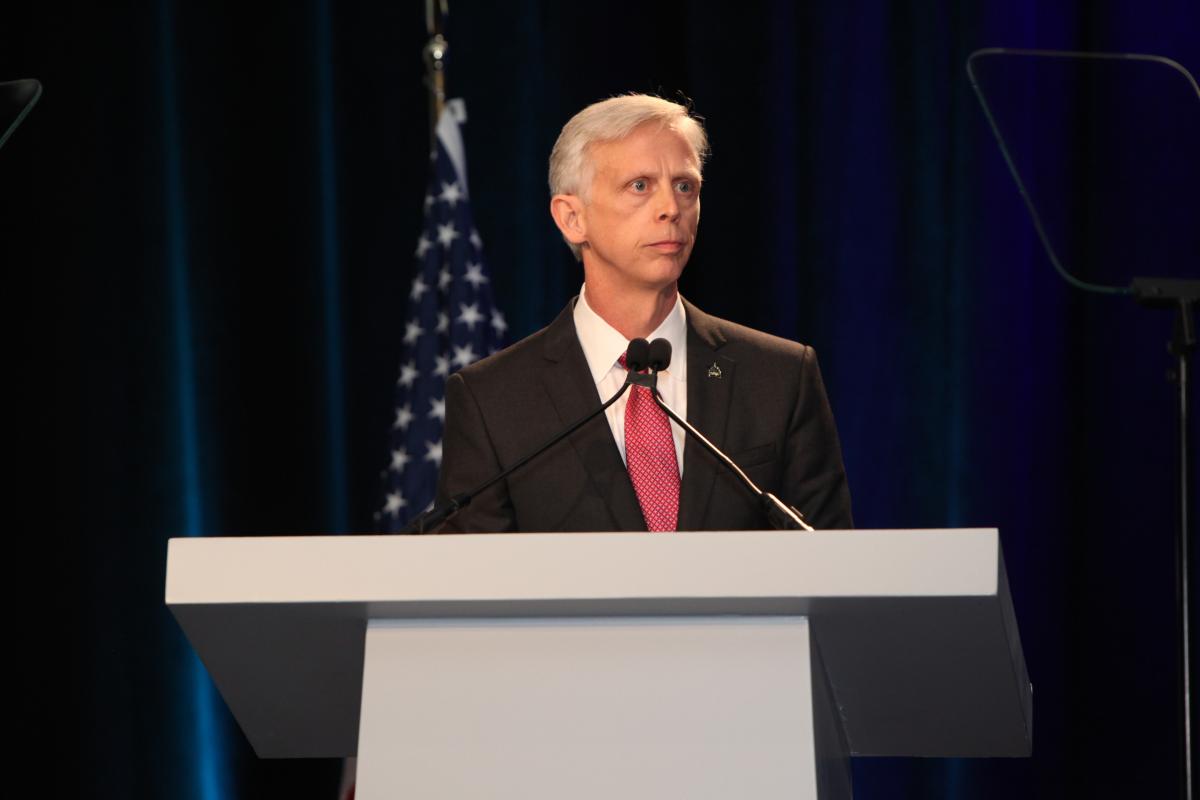 Jim Mulhern – Throughout the decades, NMPF focused its milk stabilization efforts on policies like the price support program, where government was directly involved in trying to shore up prices when the market turned south. But like many other ideas whose time has passed, that approach was a 20th century idea, ineffective in an increasingly globalized world. That’s why two years ago, we worked with Congress to pass the Dairy Security Act, with its new Margin Protection Program. No longer would the government safety net focus just on milk prices. Today’s dairy industry depends on margins, not simply milk prices, for its health. And that margin between feed prices and milk prices is what the MPP helps address. We’re now about 10 months into the margin program. More than 55 percent of farmers enrolled in the MPP in 2015, representing more than three quarters of the U.S. milk supply. Without question, the program has its challenges, challenges we continue to work to address. But it’s important to recognize that the program was designed as a producer insurance safety net, not an income enhancement program.
Randy Mooney – Obviously, margins have been compressed this year, due to the same things that worried farmers back during World War I: production is up, world demand is down, and prices are poorer as a result. For our farmers here in the U.S., prices have actually held up better than almost anywhere else in the world. More on that in a moment. And while our farm milk prices are down 30 percent from last year’s record highs, feed prices have also been lower. This has resulted in margins that can best be described as mediocre. The takeaway from all of this is that the Margin Protection Program, in its first year, really has not been tested yet, for the conditions it was created to address. The MPP was designed for catastrophic conditions, like what we saw throughout 2009, and during part of 2012. As challenging as this year has been, the margins of 2015 have dropped to around the $8 level, which is about the average margin our industry has experienced over the past 15 years. Painful, yes, but not devastating.
Jim Mulhern – So far in 2015, the MPP has made small payments to those farmers who elected the maximum, $8 coverage level. Those who paid less in premiums for lower margin coverage haven’t received a payout. That’s how insurance of any kind is designed to work. The MPP is a catastrophic risk management program to protect against the worst-case scenario. This evolution toward a much more limited government safety net approach has been one of the major changes in farm legislation in the 30 plus years that I’ve been working on farm bills. And it is clear that Congress is not going to return to the days of price supports – nor should it.
And for those wondering how MPP stacks up against its predecessor, the old MILC program would not have paid a penny this year to any dairy farmer, anywhere in the country. Milk prices have been well above the trigger level for that now-defunct program.
Randy Mooney – So what we need to focus on is how we can make the MPP better. We were pleased last month when USDA granted our request for farmers to have additional time, until November 20th, to sign up for coverage next year. USDA also granted another of our requests, to allow for more payment flexibility. Co-ops can now collect premium payments monthly, and next year’s premiums aren’t due till September 2016. And we are looking for other ways to strengthen the program. Perhaps the biggest adjustment, as it is with any brand-new program, is one of expectations. The MPP won’t make you money, but it will help keep some from losing the farm. And that’s a reasonable role for a tool like this, in times like these, where around the world, the government has a different role in supporting agriculture than in the past.
Jim Mulhern – Throughout the history of NMPF, and its efforts to stabilize milk prices, another theme keeps recurring, and that is the notion of self-help. There were several major self-help initiatives mounted over the years; most of them failed because Congress ultimately didn’t agree with what the industry proposed. The only one that actually worked, and still works today, is our own Cooperatives Working Together. It works because it is exactly the right tool, at the right time, and we manage it efficiently and effectively. This year has been another busy one for CWT. So far in 2015, we have exported over 51 million pounds of cheese, 26 million pounds of butter and 36 million pounds of whole milk powder to 35 countries on six continents. This is the equivalent of 1.3 billion pounds of milk production.
Randy Mooney – I want to thank CWT’s members for their foresight, in voting to extend the program for another three years. CWT remains a dairy industry self-help tool unique throughout the world. I mentioned a minute ago that prices for dairy farmers in Europe and Oceania are far worse than here in the states. A major reason for that is because CWT helps our co-ops export key products like American-type cheese and butter. These products are important to stimulating Class 3 and 4 prices, which form the basis of all of our milk checks. CWT has made the difference between what has been a disappointing year for our milk prices in the U.S., and a disastrous year virtually everywhere else around the globe.
Jim Mulhern – The point with both CWT and the MPP is not that price stabilization is impossible, but rather, that in this global market for both feed and milk, the resources at our disposal are limited. What we can actually stabilize is finite. That’s true for what the federal government can do, and it is also true for what any one industry can do, given the competitive nature of our economy. So the best way in the 21st century to crack this nut, is by focusing resources where they matter most, whether through targeted CWT exports, or by creating a risk management program to eliminate the worst effects of margin compression. We are not going to stop the inevitable swing of the price pendulum every few years. But as these efforts demonstrate, we can take steps to lessen the downside impact.
Randy Mooney – I want to also mention that NMPF in the 21st century remains focused on another issue that galvanized its members back in the day, and that is competition from imitation dairy products. As far back as the Depression, farmers were up in arms about the granddaddy of all fake dairy foods: margarine. Back then, it was called oleomargarine, which sounded even worse than it tasted. The Federation did enjoy some success in restricting the marketing of margarine early on, but by World War II, when butter was in short supply, the government was not going to completely keep the lid on competition from margarine. And after the war, as health concerns about butter were raised, butter lost further ground.
Jim Mulhern – The good news about this historic comparison is that we don’t need to regulate away butter’s competition, because the pendulum is already swinging back in butter’s favor. Consumers are tasting the benefits of real butter, and the science is finally catching up with the fact that saturated fat may not be the villain it was made out to be in the 1960s, 70s and 80s. There are definite parallels between butter’s history, and the rise of other imitation dairy products in the past 40 years. Whether it’s soy cheese, or almond milk, or rice yogurt…NMPF continues to urge the government to crack down on the use of dairy terms on these decidedly non-dairy foods. Unfortunately, because of so-called resource constraints, the FDA has yet to lift a finger in any meaningful way. So history is repeating itself here again. What we can do, and are doing, is using marketing tools like the REAL® Seal, to remind consumers about the benefits of original, made in America dairy products. And if history is any guide, the food fad of the moment — gluten-free quinoa, anyone? – tends to fade once people realize that there is a difference between food, and fad, just as there is a difference between butter, and oleo, and all the other dairy imitators.
Randy Mooney – Yet another contemporary issue that harks back to the early years of NMPF is competition from a difference source: not imitators, but dairy products from other countries entering our market. For many years, NMPF worked with Congress to maintain strict import controls, whether on casein, or butter, or other foods. We were almost like an island, where few of our products were sold overseas, and products coming in from overseas were kept to a minimum. And that was true for many other agricultural commodities, for many decades.
Jim Mulhern – But the times changed in the 1980s, as the Cold War thawed, agricultural productivity soared, and barriers between nations came down. The U.S. dairy sector could no longer maintain a fortress America posture. Instead, through a series of bilateral and multilateral talks like GATT and NAFTA, we have successfully created new markets for American dairy products. While NMPF’s early annual reports once referred only to import restrictions and controls – reflecting a one-way mindset – today we talk about trade, and seeking a balanced approach in two-way exchanges. That 14% of our milk production that we export these days is the result of thinking bigger picture and longer term about global opportunities.
Randy Mooney – We are in the middle of a great example of this dynamic right now, as the U.S. has just concluded negotiations with 11 other nations that border the Pacific Ocean. When the U.S. decided five years ago to enter the Trans-Pacific Partnership, National Milk grappled with how to best influence what was then, really just another name, for a trade agreement with New Zealand. We were one of the loudest voices insisting that the TPP needed to offer more opportunities on the export side of the ledger. Ultimately, our viewpoint won out, and the agreement was expanded from the initial 5 countries, to the final 12, including the sizable, yet closed, dairy markets of Japan and Canada. Both of these countries right now resemble the closed U.S. market of 40 years ago. Our message to our trade negotiators was that their participation created the opportunity for a more balanced agreement. If dairy farmers were going to be asked to support this deal, we needed to ensure it would not be just a one-way agreement, only benefiting other countries eyeing the U.S. dairy market.
Jim Mulhern – Randy, NMPF and USDEC have worked long and hard ensuring that message was received, not only by the U.S.’s top trade negotiators, but also by many of the key lawmakers whose committees must ultimately approve the final deal. As more details of the final agreement become public, it appears that we have successfully prevented the very real risk of a harmful agreement, that would have sacrificed U.S. dairy farmers’ interests as chits in a high-stakes poker game. In the end, we didn’t gain unrestricted access to Canada and Japan, but neither did New Zealand achieve the unfettered access it wanted into our market. In effect, we played both offense and defense, and the net result is not going to be a major game-changer in either direction. To me, that’s actually a huge victory. Considering how damaging the TPP could have been in allowing major new imports, without creating sufficient export opportunities, preventing that outcome is an achievement for the U.S. dairy sector.
Randy Mooney – We also need to talk about another of those key issues from the past that is still a major consideration today: the connection between food assistance programs, public health, and the dairy farmer. We talked earlier about how important the role of the National Dairy Council has been in promoting the nutritional value of dairy products. NDC has helped to sponsor and share research about the need for good nutrition overall, not just the need for dairy foods. And National Milk has been directly involved in that effort, for many years.
Jim Mulhern – Going back as far as the Depression, NMPF recognized that ensuring access to dairy foods is a win-win: it helps our society, especially children, and it helps farmers. That’s when the government first started to play a role in designing programs to include dairy foods as part of a nutritious, balanced diet….and National Milk was a key contributor to that process. When World War II broke out, and it became apparent that we needed a large Army of able-bodied soldiers to fight the Axis powers, it also became obvious that milk and dairy foods help build those bodies. By the end of the war, the government mandated a program for milk in schools. This unique opportunity for milk didn’t just happen; it happened because NMPF and NDC were there at the table, as it were.
Randy Mooney – Jim, we’re still there, all these years later, as federal dietary guidelines are written, ensuring that the protein, vitamins and minerals in dairy products remain in people’s diets. Earlier this year, NMPF presented 20 pages of comments on the federal Dietary Guidelines for America, as those are being updated. The good news is that it doesn’t look like there is any effort to reduce the recommendation of two or three servings of dairy per day. In fact, there is a strong case to make, that the “or” should be dropped from “two or three.” We’d like to see a final recommendation of three servings per day.
Jim Mulhern – We talked earlier about how the dietary pendulum is swinging into more favorable territory for dairy. Unlike milk prices, this movement is measured in decades, not years, but the evidence is mounting that dairy fat is not the villain it was made out to be in the 60s and 70s. And now there’s more evidence that milkfat – in reasonable amounts — not only doesn’t make you fat, it doesn’t raise your cholesterol levels, or your risk of heart disease. This is one reason why we’ve been working so hard this year on the Child Nutrition Act, under consideration by Congress. It’s an opportunity to fix the USDA policy that only allows nonfat flavored milk in schools. Under current school lunch regulations, the only low-fat milk allowed is plain white, which we know isn’t as popular as low-fat chocolate milk. We need to fix that provision. It will increase milk consumption, decrease food waste, and most of all, it’s consistent with those federal dietary guidelines Randy just mentioned.
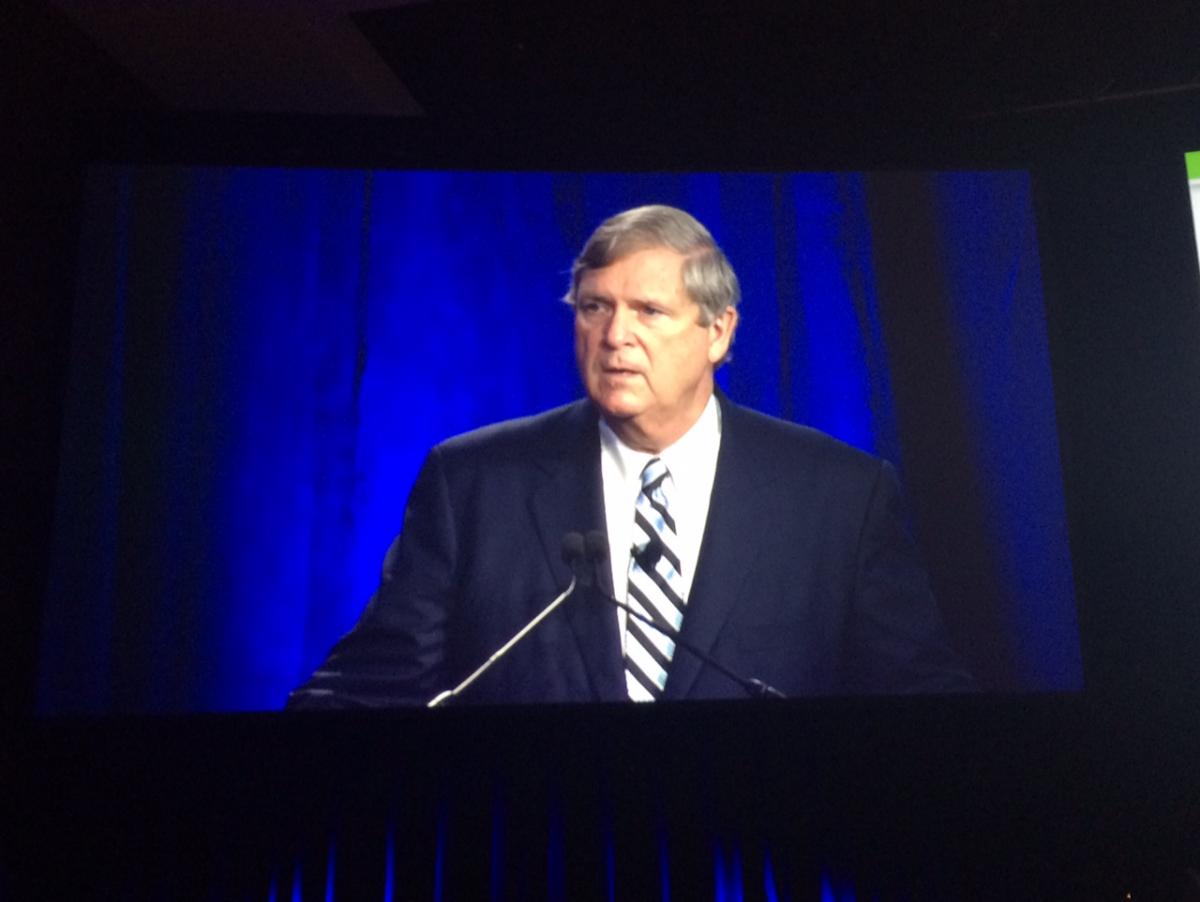
Randy Mooney – And to his credit, Agriculture Secretary Vilsack indicated this summer that even if Congress doesn’t take action yet this year on the Child Nutrition Act, the USDA still may rethink its policy on low-fat flavored milk. We agree with the Secretary that great-tasting chocolate milk is good for kids, and is a nutritional powerhouse. We urge USDA to fix this problem.
Jim Mulhern – Randy, readers of our centennial report will also notice that NMPF has a long history of work on another issue, really, two intertwined issues: animal health and food safety. We know that healthy cows make the best milk, and that healthy herds are what keep dairy farmers in business. NMPF has worked on these challenges for many years. In fact, concern over the spread of bovine tuberculosis was one of the first national public health issues, leading to the widespread use of milk pasteurization. And as we vanquished the specter of bovine TB, the states and the federal government, together with National Milk and the dairy industry, worked to codify a whole series of on-farm sanitation and hygiene measures that today regulate Grade A milk production. The Pasteurized Milk Ordinance is a model of industry-state-and federal cooperation to protect and advance public health, and NMPF has been a long-time proponent of this process.
Randy Mooney – Just this past year, we saw the continued leadership of NMPF come to fruition, when the FDA’s Center for Veterinary Medicine released the findings of probably the most comprehensive testing program ever, looking for evidence of more than 30 drug residues in farm-level milk. After subjecting more than 1,900 raw milk samples to very extensive testing, the FDA found that less than one percent had any residues in them. This outcome is yet another proof point when we say that farmers are using antibiotics wisely, and keeping them out of the milk supply. NMPF worked with regulators to help structure the study, and we continue to work with states and the FDA on helping our testing process evolve in the future.
Jim Mulhern – We still need to be vigilant in our efforts, so that we get ever closer to the goal of absolutely zero positive samples, whether in this type of survey, or the tanker load testing that occurs thousands of times each day in the industry. I’m very proud of the steps we continue to take to use antibiotics judiciously, as part of the overall great stewardship that dairy farmers engage in, on their farms. We all know the increased pressure on the livestock community to restrict which drugs are used, and in what types of situations. But we have a great story to tell in dairy, and we will continue highlighting the safety of our milk and the overall health of our herds.
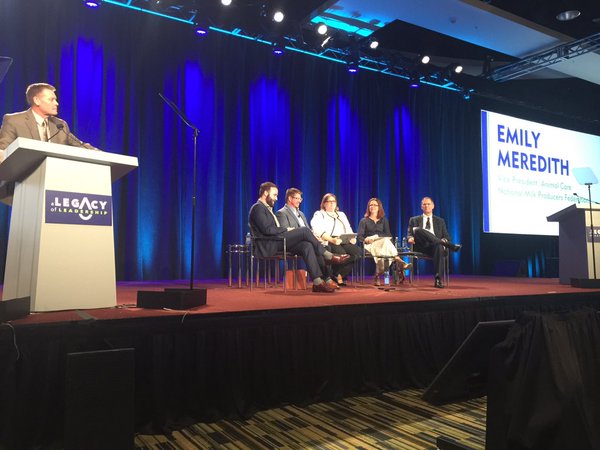
Randy Mooney – Jim, you noted earlier that some things have been constants in the past 100 years for NMPF. The last few pages of the centennial report highlight some of those issues that are more recent, and are requiring an additional focus as we move into the 21st century. Certainly, animal care is one of those. We had a great panel discussion earlier today about the increased focus of food marketers on the conditions under which milk is produced. That wasn’t a societal concern in the 20th century, but it is today, and it’s getting bigger and bigger. The irony is, now that we have controlled diseases like TB and brucellosis, the new emphasis is on animal well-being, which means more than just the absence of disease.
Jim Mulhern – The bar never gets set any lower, does it? Especially in the area of animal care. The great news in this case is that, here again, we have a great story to tell, thanks to the National Dairy FARM animal care program. The FARM program quantifies the great steps that the farms contributing more than 90% of the U.S. milk supply are taking, to care for their herds. No other sector in livestock has as comprehensive or widely-adopted program as ours. F.A.R.M. aims to address concerns before they become critical issues for the industry. And that’s true leadership – taking people and companies and even consumers to places they didn’t even know about.
Randy Mooney – Jim, as we look forward beyond 2015, we know there are other challenges ahead as well. We still are struggling to reform our nation’s immigration system, so that farmers have access to the workforce needed to milk the cows. We have been continually disappointed in the lack of action by Congress on this, but we will continue fighting to make the point that comprehensive immigration reform is a must-do for agriculture and for society.
Jim Mulhern – Another issue that wasn’t around 100 years ago but certainly is a concern today is the environmental impact of farming. Like animal care, this too, is an ongoing challenge. We have been among those groups fighting the EPA’s Waters of the U.S. rule. That issue is now in the courts, but regardless of where it nets out, we need to find proactive solutions to address water and air quality. Tomorrow, you’ll hear more about the Newtrient management initiative that NMPF and DMI and many of our co-ops have been working on. This is an innovative, forward-thinking approach to turn a liability into an asset; it’s the type of approach we need more of in the 21st century.
Randy Mooney – One of the things we realize as we look back through the decades is that whatever the specific challenge is, NMPF has worked as an organization to tackle it. Not every outcome was exactly what we wanted. Some issues defy a quick solution; some efforts take years. But as our work today demonstrates, it’s that leadership is a journey, not a destination. It’s not just a word on a piece of paper; leadership is the tangible result of hard work.
Jim Mulhern – And Randy, I am proud that our organization – our Board of Directors, our co-op members and their Boards, and the NMPF staff – demonstrates that leadership on issue after issue. It has been a hallmark of this organization for the past 100 years, and because of the commitment of all of you, it will continue to shape and guide us as we move into our next century. Let’s get on with it!

 The European Union, by using free trade agreements to limit the use of common cheese names by non-EU producers, is bullying its trading partners into violating international trade rules, NMPF and the U.S. Dairy Export Council told U.S. trade officials.
 The Obama administration released the much-anticipated
  In other annual meeting news, six new members were elected to the NMPF board, five retiring board members were honored with certificates of appreciation and four were given special recognition awards.
 On-farm animal care was a hot-button issue throughout this year’s meeting. On Oct. 27, the NMPF board took up the sometimes emotional topic of tail docking. Following substantial deliberation, members approved a resolution moving up by five years the date for farmers participating in the industry’s Farmers Assuring Responsible Management animal care program to phase out routine tail docking. Farmers will now have until Jan. 1, 2017, to phase out the practice.
 Kicking off a year-long centennial commemoration, NMPF’s 99th annual meeting, held in Orlando at the end of October featured themes ranging from dairy’s economic outlook and safety net programs to recent developments in trade policy and animal care.
 ARLINGTON, VA – The National Milk Producers Federation and the U.S. Dairy Export Council welcome this morning’s release of the full text of the Trans-Pacific Partnership agreement by the Obama administration. The TPP dairy provisions are extremely important to the nation’s dairy industry since today we export nearly 14 percent of all U.S. milk production.
 ORLANDO, FL – Representatives from Chobani, Walmart, Starbucks and Kroger commended dairy producers this week for their hard work and passion, but also for their dedication to top-notch animal care, during a panel session at the 2015 Annual Meeting.
 ORLANDO, FLORIDA – Kicking off a year-long centennial commemoration, the leadership of the National Milk Producers Federation today reflected on the organization’s many achievements on behalf of dairy farmers, and noted continuing challenges ranging from assuring humane animal care to reforming federal immigration laws.