NMPF Supports USDA Efforts to Modernize Animal ID and Disease Traceability Requirements

The National Milk Producers Federation submitted comments supporting the United States Department of Agriculture’s Animal and Plant Health Inspection Service (APHIS) proposal on the Use of Radio Frequency Identification Tags as Official Identification in Cattle and Bison. APHIS has proposed to require the use of official 840-RFID tags for all dairy cattle involved in interstate commerce starting Jan. 1, 2023.

“We commend USDA-APHIS for taking this next step in moving animal identification forward, with the use of RFID tags for official animal identification for dairy cattle,” said Jim Mulhern, president and CEO of NMPF. “A national animal identification system can provide immediate access to relevant information in an animal disease or food safety crisis that could endanger the entire dairy chain, while protecting farmers’ privacy.”

The U.S. dairy industry has long advocated modernizing animal ID and disease traceability systems. Farmer organizations including NMPF, the American Jersey Cattle Association, Holstein Association USA, Inc., National Association of Animal Breeders, National Dairy Herd Information Association and Dairy Calf and Heifer Association formed a group called IDairy to collectively advance official mandatory animal identification to aid disease traceability.

IDairy in received a USDA-APHIS cooperative agreement on premise registration and animal ID education that propelled the use of RFID tags in the U.S. dairy industry. Since 2009, the National Dairy FARM Program: Farmers Assuring Responsible Management (FARM) Program has also recommend use of official 840-RFID tags for all dairy cattle.

Animal ID and disease traceability needs may be different for other livestock sectors, so NMPF encouraged APHIS to carefully consider comments from those other livestock industries when finalizing requirements and implementation timelines.

U.S. Dairy Exports to Benefit from New USDA-FDA Partnership

The U.S. Department of Agriculture (USDA) and Food and Drug Administration (FDA) today signed a Memorandum of Understanding (MOU) that will establish an interagency process to further support exports of U.S. dairy products. Both agencies play critical roles in facilitating foreign sales of American-made dairy products, which is recognized and appreciated by the U.S. dairy industry. This MOU will draw upon the expertise of FDA as well as USDA’s Agricultural Marketing Service (AMS) and Foreign Agricultural Service (FAS) to deepen and streamline their work together on the issues facing dairy exports to the benefit of U.S. dairy farmers and manufacturers.

The U.S. Dairy Export Council (USDEC) and the National Milk Producers Federation (NMPF) worked with both agencies to advance this new approach to dairy export collaboration. NMPF and USDEC deeply appreciate the USDA and FDA’s dedication to drafting this new MOU to facilitate U.S. dairy exports and their ongoing collaboration with the dairy industry. Foreign competitors are making advances in international markets, making efforts to expand overseas opportunities for U.S. dairy critical to the long-term health of U.S. dairy farmers and processors.

“Today’s announcement of an interagency MOU on dairy trade between USDA and FDA is the result of years of conversation and efforts between stakeholders within the U.S. dairy industry and the U.S. government to establish consistent guidance on tackling the rising number of export challenges facing our industry. This MOU will help our industry continue to grow in an increasingly competitive global environment,” said Tom Vilsack, president and CEO of USDEC.

“This new partnership ensures that the staff at USDA and FDA are working together in the most efficient way possible to lower barriers for our farmer’s dairy exports. Increasing U.S. dairy exports will strengthen the health of our farmers and rural communities, which is more important than ever as America’s dairy industry faces new and unprecedented challenges. We appreciate all of the hard work from both agencies and stand ready to support the USDA and FDA’s commitment to open new doors for U.S. dairy exports,” said Jim Mulhern, president and CEO of NMPF.

A Crisis Should Bring Opportunity – Not Opportunism

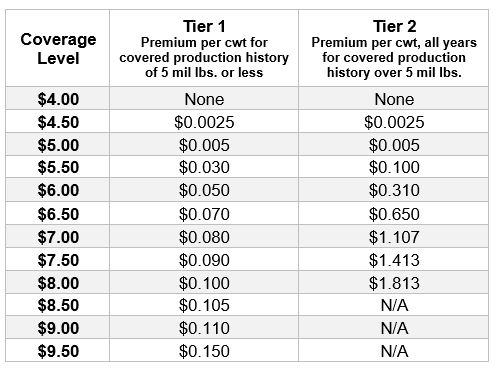
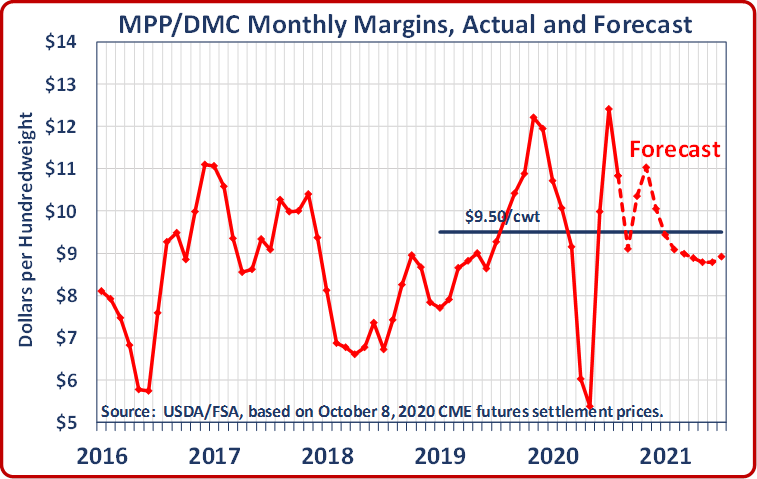
There’s an adage applied often in politics that “in the midst of every crisis lies great opportunity.” And while no one would ever wish for what’s happened in dairy markets over the past several months, this crisis does provide opportunities – to reaffirm the importance of cooperatives in marketing producers’ milk; to appreciate robust risk management protection initiatives like the Dairy Margin Coverage program, for which 2021 signup starts Oct. 12; and to remember the power that dairy has when it works together, both to stabilize markets and reassure consumers who turn to it in troubled times.

But it’s also important to distinguish between opportunities — which come from the lessons of a crisis — and opportunism, which exploits a crisis to push policies that may not lead to real improvements or prevent a similar crisis in the future. That contrast is important to remember when discussing what’s been a hot topic in dairy the past few months: the negative Producer Price Differentials that have resulted from the wild gyrations in markets, understandably frustrating farmers who don’t feel they’ve captured the full benefits of the market rebound we’ve seen.

Negative PPDs – which happen when milk-price swings among component classes fall out of sync — create an ugly accounting deduct line on a milk check. They’re frustrating, but they’re rare – in fact, negative PPDs have occurred during only 16 months out of the past 10 years. The ones we’ve seen recently have been based on extremely unusual circumstances, specifically the unprecedented price collapse that accompanied the COVID-19 pandemic and the impact of other factors, including the federal government’s response, which combined to whipsaw dairy markets.

When the pandemic hit this past spring, the nation’s foodservice industry ground to a halt, kneecapping a market that traditionally absorbs well over a third of total U.S. dairy sales and sending commodity markets into a tailspin. NMPF efforts weren’t limited to helping farmers with direct payments; NMPF and allied organizations also pursued federal government support to step in to purchase displaced dairy products and provide them for donation to those in need. Those efforts were hugely successful; they will result in hundreds of millions of dollars in federal government dairy-product purchases provided to food banks and other outlets, feeding families and buoying markets.

It’s important to keep in mind that while the federal government’s purchases of dairy products for donation contributed to bringing about the negative PPDs this summer, that outcome was vastly superior to the alternative of no government and industry action. The intervention sharply raised farm milk prices from catastrophic lows. Without this intervention, we were facing a sustained collapse of the U.S. dairy market, with ongoing massive losses within both the farm and processor communities.

While the government has purchased a variety of dairy products, the largest purchases have been for cheese. Those purchases, along with strong export sales, quickly and forcefully lifted commodity cheese markets from $1 a pound to nearly $3 a pound. That undoubtedly kept cheese plants open and saved family dairy farms – it also, in turn, dramatically boosted Class III milk prices. Meanwhile, the government to date has purchased limited amounts of butter and very little nonfat dry milk. That has resulted in much smaller increases in Class IV prices and created a large gap between Class III and IV.

That gap, along with the Federal Milk Marketing Order program’s standard advance pricing announcement of Class I fluid milk, led to high levels of Class III milk being de-pooled from federal orders rather than pay into the pool to share the revenue across the market. For co-op cheese plants that de-pooled, the revenue stayed within their farmer-owned operations and benefitted their members. Proprietary cheese plants may or may not have shared those monies with their farm suppliers.

The large amount of temporary de-pooling that occurred has certainly raised concerns in some markets. Those concerns could be addressed by looking at whether stronger pooling requirements are needed, something that is available and could be looked at on an order-by-order basis within the FMMO system.

Other, related issues could be examined as well — the FMMO system is always an area worthy of careful thought and consideration. But changes to a system that’s managed milk pricing for generations shouldn’t be the result of a knee-jerk reaction prompted by extremely rare, black swan events. Any suggestion otherwise isn’t one that’s seeking a genuine opportunity – it’s opportunism in a crisis, and it’s an approach of which dairy farmers should be wary.

We all know that making long-term policy changes in response to short-term disruptions and unprecedented conditions, even if challenging, rarely results in good policy. Instead, it can lead to longer-term unintended consequences that could permanently reduce farmer income without remedying any fundamental market shortcomings. Preventing negative PPDs can sound like a good idea – but how might a “fix” affect milk checks in more-normal times? Those are the questions that need to be explored. Concern with negative PPDs is understandable. But negative PPDs will largely go away once markets return to normal function, which ought to be our underlying goal.

At NMPF we are engaged in an ongoing review of the federal order system to identify areas for potential improvement, and for discussion with our members as we examine ways to create consensus among the nation’s dairy farmers and their cooperatives. We welcome input and ideas, and especially appreciate the thoughts expressed by our member cooperatives that so effectively represent their members’ collective judgment. This is what ensures that real opportunity is pursued.

This industry has been through a lot these past few months. Let’s use the time ahead wisely, gaining the most from the lessons we have learned as we seek together to benefit most from the opportunities that are certain to arise. These decisions should be made in a deliberate and organized manner, with dairy farmers and their cooperatives leading the effort.