(Washington, D.C. – June 27, 2017) An international coalition of 10 dairy industry organizations, including three U.S. dairy groups, is asking their governments’ trade ministers to intercede in the increasingly acrimonious dispute over Canada’s harmful dairy policies that is having global repercussions. The groups co-signed a joint letter today requesting that their respective trade ministries “pursue all avenues available to challenge these measures, including WTO dispute settlement and bilateral trade agreement relationships.”
The U.S. dairy sector, represented by the International Dairy Foods Association (IDFA), the National Milk Producers Federation (NMPF) and the U.S. Dairy Export Council (USDEC), together with seven dairy groups from Argentina, Australia, the European Union, Mexico and New Zealand, is insisting that Canada remove the recently implemented policies that are facilitating the dumping of Canadian dairy products in the international market, while making already prohibitive Canadian restrictions on dairy imports even more onerous.
“IDFA will use every opportunity to urge administration officials and legislators who are working to modernize the North American Free Trade Agreement (NAFTA) to tackle these unfair, illegitimate and protectionist policies,” said Michael Dykes, D.V.M., IDFA president and CEO.
Jim Mulhern, NMPF president and CEO, said that “Canada’s revised dairy policy amounts to a ‘beggar-thy-neighbor’ approach, damaging not just its neighbor to the south, but also causing harm to other major dairy exporting countries around the world. This policy must stop now, before any more damage is done to American farmers and those from other nations seeking to compete on a level global playing field.”
“Canada has been adopting policies that run counter to our longstanding agreements and upending what has until recently been a mutually beneficial trade relationship,” said Tom Vilsack, president and CEO of the U.S. Dairy Export Council. “Our trade agreements must be honored and not ignored—or worse—by our closest neighbor.”
In February, Canada implemented a special milk Class 7 pricing policy that artificially lowers milk ingredient prices for Canadian processors and is designed to incentivize the substitution of domestic Canadian dairy ingredients for imported ingredients, while also pushing Canadian proteins out onto world markets at below-market prices. The result of this policy is the widely reported cancellation of purchases by Canadian cheese makers of U.S.-sourced ultra-filtered (UF) milk, and the even more damaging ability of Canadian exporters to sell milk proteins globally at a much lower price, thereby undercutting exports from the U.S. and the other countries. It is due to this latter impact that dairy groups in multiple countries have been expressing opposition to Canada’s new system.
The letter was sent to U.S. Trade Representative Robert Lighthizer, as well as to Argentina and Australia’s Ministers for Trade, Mexico’s Secretary of Economy, the EU Commissioner for Trade, and New Zealand’s Minister of Trade. In addition to the U.S. dairy leaders, the letter was signed by the CEOs of the European Association of Dairy Trade (Eucolait), European Whey Products Association (EWPA), European Dairy Association (eda), Dairy Companies Association of New Zealand (DCANZ), Camara Nacional De Industriales de la Leche (CANILEC), the Centro De La Industria Lechera (CIL), and the Australian Dairy Industry Council (ADIC).
“Our respective dairy industries are firmly of the view that the operation of Ontario’s Class 6 and Canada’s Class 7 contravene Canada’s international commitments,” the letter reads in part. “Canada’s increasingly protectionist policies are diverting trade with attendant global price-depressing impacts, and are in conflict with the principles of free markets and fair and transparent trade. We therefore request the authorities of Argentina, Australia, the EU, Mexico, New Zealand, and the US to take all steps available to them to resolve this issue and ensure that Canada complies with its international obligations. “
Earlier this month, U.S. Secretary of Agriculture Sonny Perdue conducted a series of meetings with Canadian officials, raising the points of disagreement and reinforcing that these issues need to be resolved, particularly in light of the renegotiation of NAFTA.
For more background on Canadian dairy trade issues, please visit the Trade Policy page of the NMPF website.
# # #
The National Milk Producers Federation (NMPF), based in Arlington, Va., develops and carries out policies that advance the well-being of U.S. dairy producers and the cooperatives they collectively own. The members of NMPF’s cooperatives produce the majority of the U.S, milk supply, making NMPF the voice of nearly 32,000 dairy producers on Capitol Hill and with government agencies. For more on NMPF’s activities, visit www.nmpf.org.
The International Dairy Foods Association (IDFA), Washington, D.C., represents the nation’s dairy manufacturing and marketing industries and their suppliers with a membership of nearly 525 companies within a $125-billion a year industry. IDFA is composed of three constituent organizations: the Milk Industry Foundation (MIF), the National Cheese Institute (NCI) and the International Ice Cream Association (IICA). IDFA’s nearly 200 dairy processing members operate more than 600 manufacturing facilities and range from large multi-national organizations to single-plant companies. Together they represent more than 85 percent of the milk, cultured products, cheese, ice cream and frozen desserts produced and marketed in the United States. Visit IDFA at www.idfa.org.
The U.S. Dairy Export Council (USDEC) is a non-profit, independent membership organization that represents the global trade interests of U.S. dairy producers, proprietary processors and cooperatives, ingredient suppliers and export traders. Its mission is to enhance U.S. global competitiveness and assist the U.S. industry to increase its global dairy ingredient sales and exports of U.S. dairy products. USDEC accomplishes this through programs in market development that build global demand for U.S. dairy products, resolve market access barriers and advance industry trade policy goals. USDEC is supported by staff across the United States and overseas in Mexico, South America, Asia, Middle East and Europe. The U.S. Dairy Export Council prohibits discrimination on the basis of age, disability, national origin, race, color, religion, creed, gender, sexual orientation, political beliefs, marital status, military status, and arrest or conviction record.

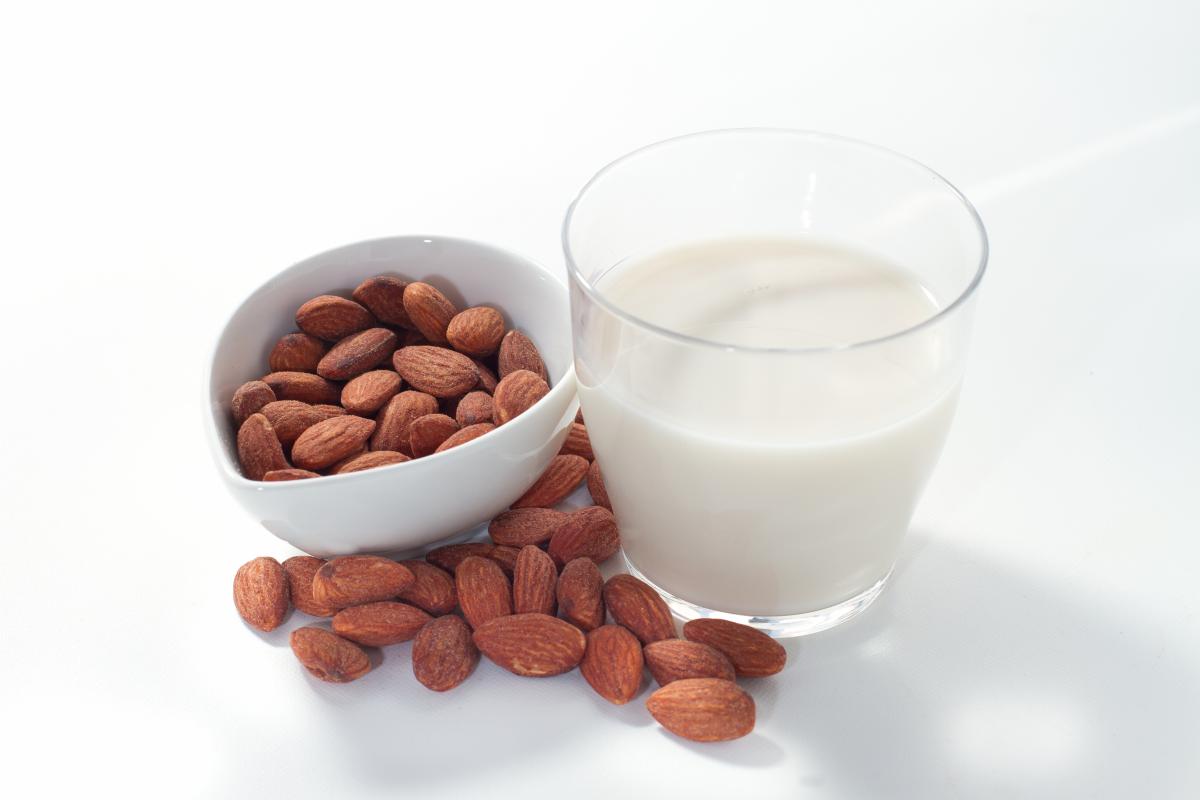 In a decision with clear implications for the regulation of U.S. dairy foods, the European Union (EU) Court of Justice ruled in late June that plant-based food companies cannot use most dairy-specific terms in labeling or advertising, and must abide by European law reserving terms such as “milk” and “cheese” for products derived from animals. During visits with European dairy companies in late June, NMPF’s leadership praised the ruling and discussed ways that dairy farm groups can further collaborate to defend the image and proper marketing of milk products.
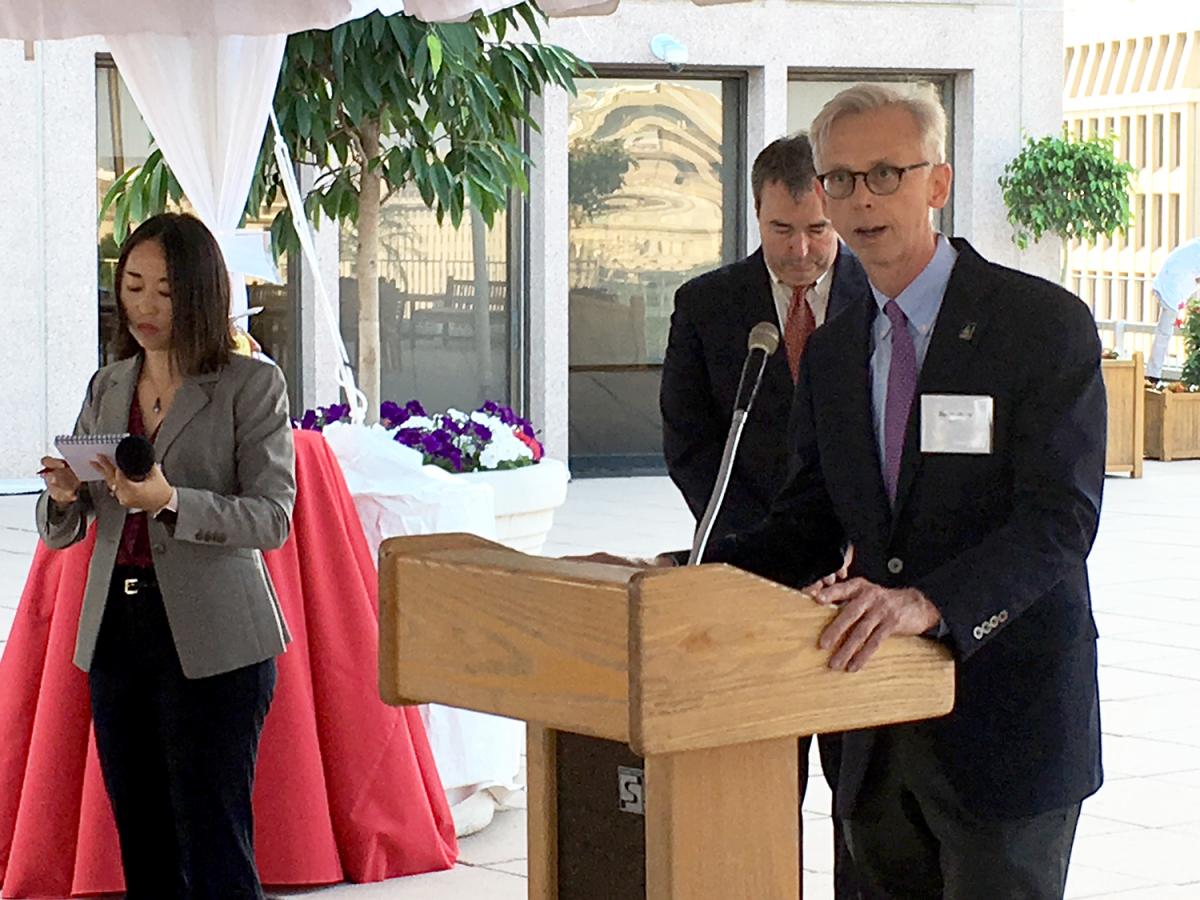 After more than two years of extensive effort by NMPF and the U.S. Dairy Export Council (USDEC), the United States and China signed a Memorandum of Understanding (MOU) last month that will increase access to China for more than 200 U.S. dairy exporters in the short-term, and paves the way for additional U.S. entrants to the Chinese market in the future.
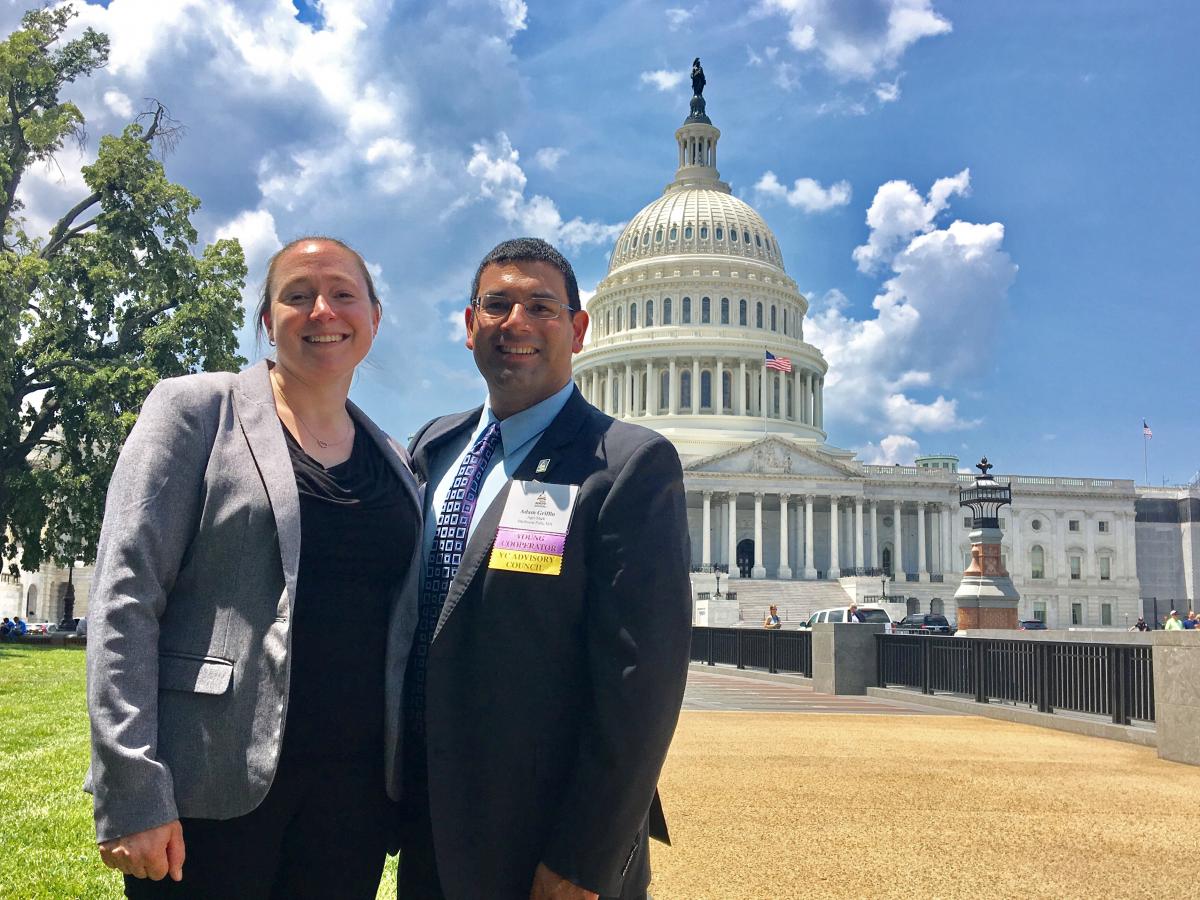 More than 60 dairy farmers from across the country descended upon Washington, D.C., in mid-June as part of NMPF’s annual young farmer fly-in, where in more than 200 meetings they asked their elected officials for support on key issues of importance to the dairy farmer community, including trade, food labeling, labor availability and the farm bill.
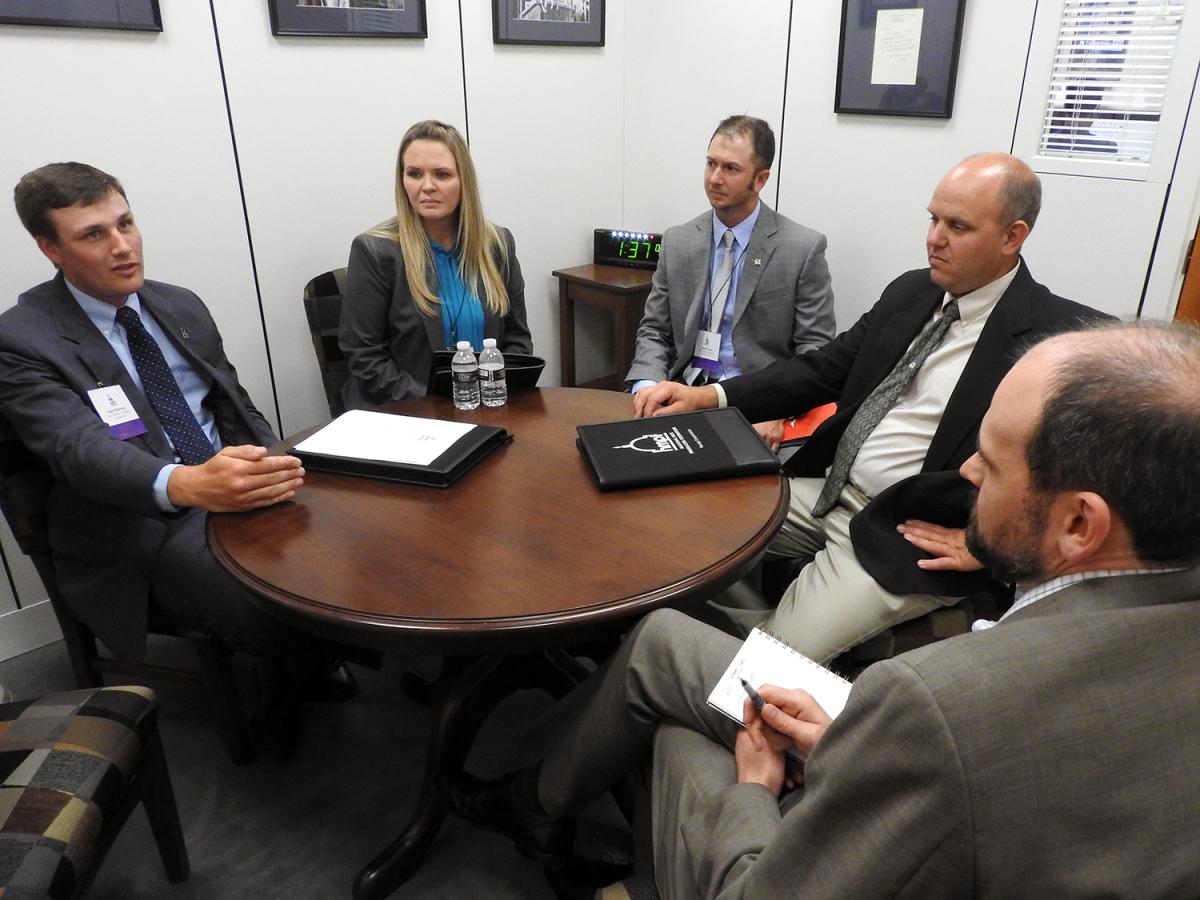 “We are excited to share the first-person perspective of America’s dairy sector at a time when elected officials in Washington really need to hear our voices about the topics that matter most to farmers,” said Melissa Griffin, a dairy farmer from Buckland, Mass., and chairwoman of the 2017 YC Advisory Council.
 As the United States, Mexico and Canada move closer to talks on re-negotiating the North American Free Trade Agreement (NAFTA), NMPF is emphasizing the importance of strengthening our trade relationship with Mexico and addressing Canada’s habitual anti-free trade policies in dairy.
 PARIS, FRANCE – The recent European Court of Justice ruling upholding European Union regulations that prevent plant-based dairy alternatives from using terms like “milk,” “cheese” and “yogurt” is a victory in the same battle occurring in the United States, leaders of the National Milk Producers Federation told their French dairy counterparts here today.
 WASHINGTON, D.C. – Dairy farmers from across the country visited Capitol Hill today as part of the National Milk Producers Federation’s annual young farmer fly-in to Washington, where in more than 200 meetings they asked lawmakers for action on a handful of issues important to the dairy sector.
 Randy Mooney, chairman of NMPF and a dairy farmer from Rogersville, Mo., said that the YC Program “provides our community with a powerful grassroots presence. We need their engagement in Washington because there are so many issues competing for the attention of Congress. Thanks to our younger leaders stepping forward, we have a much better opportunity to reach our legislative goals.”
 During Walmart’s Sustainability Milestone Summit in April, NMPF member cooperatives Dairy Farmers of America and