
NMPF Applauds House Subcommittee for Putting Dairy First; DMC Decision Tool Now Online

ARLINGTON, Va. – As key milestones are being met in offering much-needed financial relief for dairy producers, the National Milk Producers Federation today thanked the House Agriculture Committee’s Subcommittee on Livestock and Foreign Agriculture for choosing dairy as the subject of its first hearing this year.

Lawmakers heard a diverse array of witnesses who provided important perspectives on the state of U.S. dairy, which is in its fifth year of low prices and its second year of trade-related hardships. In their opening statements:

  • Minnesota dairy farmer Sadie Frericks spoke of the importance of the new Dairy Margin Coverage program as a risk management tool as her family weathers economic challenges;
  • California Dairies, Inc. President and CEO Andrei Mikhalevsky provided an overview of dairy’s trade issues, a rising concern as exports are crucial to increasing dairy demand;
  • Pennsylvania dairy farmer Dave Smith, Executive Director of the Pennsylvania Dairymen’s Association, discussed additional challenges, including the importance of milk consumption in schools and the need to combat mislabeled fake milks in the marketplace.
  • New York dairy farmer Michael McMahon gave voice to the dairy industry’s unique workforce challenges, including the lack of a viable guest worker program that covers year-round workers
  • and Dr. Scott Brown, Director of Strategic Partnerships for the University of Missouri’s College of Agriculture, Food and Natural Resources, provided economic insight.

“Dairy’s challenges reverberate through the U.S. economy, and it’s appropriate that lawmakers put dairy first on its 2019 agenda,” said Jim Mulhern, president and CEO of NMPF. “We thank all of the farmers and industry leaders who spoke out. We also commend subcommittee Chairman Rep. Jim Costa (D-CA) and ranking member Rep. David Rouzer (R-NC), as well as Agriculture Committee Chairman Rep. Collin Peterson, (D-MN), who made helpful opening statements at the hearing, for their attention to dairy’s urgent needs.”

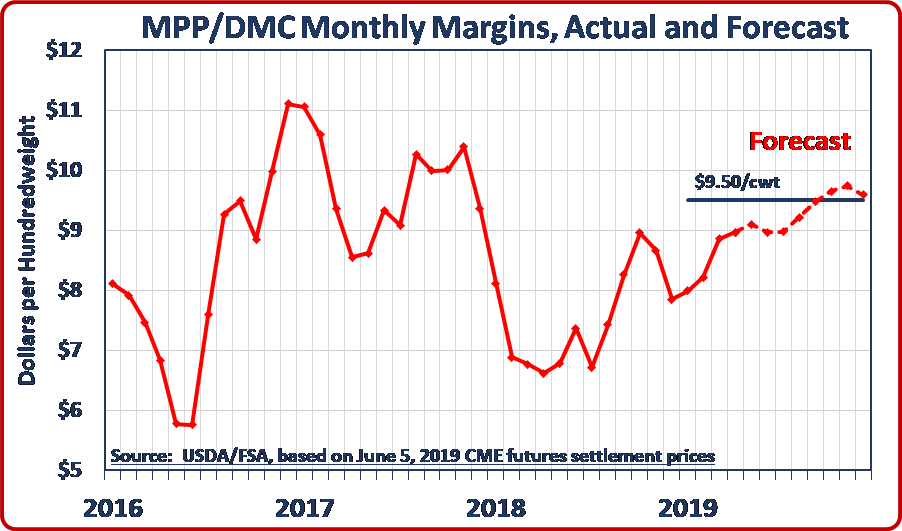
The NMPF continues to encourage farmers to prepare for Dairy Margin Coverage signup, scheduled to begin June 17. The USDA’s decision tool, designed to help farmers determine their appropriate coverage level, is now online here. Later this week, letters will be sent to producers informing them of their premium refunds under the previous Margin Protection Program.

###

The National Milk Producers Federation (NMPF), based in Arlington, VA, develops and carries out policies that advance dairy producers and the cooperatives they own. NMPF’s member cooperatives produce the majority of U.S. milk, making NMPF the voice of dairy producers on Capitol Hill and with government agencies. For more, visit www.nmpf.org.
U.S. Special 301 Report Criticizes Europe for Wrongly Targeting U.S. Dairy Exports

U.S. dairy officials today lauded the U.S. Trade Representative’s Office for denouncing Europe’s anti-trade agenda against common-name food products and pursuing avenues to preserve U.S. export access rights.

The U.S. Special 301 Report, issued yesterday by USTR, categorically rejects EU policies that seek to intentionally disadvantage U.S. suppliers in global markets by blocking their ability to use common names such as fontina, gorgonzola, asiago and feta cheeses.

“The EU pressures trading partners to prevent all producers, other than in certain EU regions, from using certain product names,” read the report. “This is despite the fact that these terms are the common names for products and produced in countries around the world.”

Europe’s actions infringe on the rights of U.S. producers and imposes unwarranted market barriers to U.S. goods, according to the USTR.

“Europe has disadvantaged the U.S. dairy industry for too long by abusing geographical indications (GI) policies,” said Tom Vilsack, president and CEO of the U.S. Dairy Export Council. “We face unfair barriers around the world because of Europe. USTR should be commended for recognizing the problem, and we look forward to working with them to rectify it.”

Vilsack urged the USTR to prioritize securing binding commitments from America’s current trading partners to prevent future GI restrictions. The market access preservation commitments secured with Mexico as part of the U.S.-Mexico-Canada Agreement, he said, provide a positive precedent to build upon.

Jim Mulhern, president and CEO of the National Milk Producers Federation, also urged the Administration to take into account the lopsided dairy trade imbalance between the United States and Europe in formulating policies to tackle the EU’s predatory attacks on U.S. dairy exports.

Europe sent $1.8 billion in dairy goods to the U.S. market in 2018 but only imported $145 million of U.S. products, even though America is a major dairy supplier to the rest of the world.

“Trade is supposed to be a two-way street,” Mulhern noted. “America’s struggling U.S. dairy producers deserve a lot better than the current one-way trade relationship with the European Union whereby they sell us a billion dollars of cheese each year while erecting walls to our ability to compete head to head with them overseas.”

Federal policy for dairy producers is better than it was a year ago, but there are still many challenges in the year ahead. This report details accomplishments that have brought us to where we are and suggests paths we will need to take. We at NMPF are proud to tell this positive story for dairy.

USMCA Passage Critical to Preserve and Strengthen Dairy Export Markets


ARLINGTON, VA – The U.S. International Trade Commission (ITC) released an economic analysis of the U.S.-Mexico-Canada Agreement (USMCA) today and dairy industry officials eager to see USMCA’s passage welcomed this key step in the trade agreement approval process.

Tom Vilsack, president and CEO of the U.S. Dairy Export Council, said the ITC study is important because it moves the USMCA process closer to ratification, a step urgently needed to secure trading conditions with Mexico and usher in the improvements the agreement makes for U.S. exports.

“We shipped $1.4 billion in dairy products to Mexico last year, which accounts for more than one-fourth of U.S. dairy exports,” he said. “Without a trade treaty with Mexico in place, the dairy industry would be hard pressed to maintain and expand these sales, as our competitors in Europe are expected to implement a lucrative new trade arrangement with Mexico by next year. Moreover, without USMCA we lose out on the new rules this deal puts in place such as key reforms to Canada’s dairy system. Congress must pass USMCA to shore up our market in Mexico and harness the gains made in other areas through USMCA.”

In addition to increases in tariff-rate quota access for dairy products to the Canadian market, Canada will remove a controversial milk pricing scheme that disadvantaged American businesses, impose new disciplines on its dairy pricing programs and Mexico will update the way it treats imports of common-name food products like parmesan and swiss cheeses that could face trade roadblocks.

“When examining USMCA’s benefit to the economy, we believe it is important to keep the full picture in mind of what’s at stake here,” explained Jim Mulhern the president and CEO of the National Milk Producers Federation. “USDA recently reported that our country lost an average of seven dairy farms a day in 2018 due to the poor economic conditions in rural America. That’s a startling number, and reversing this alarming trend is what we should be discussing. USMCA helps put us on a path to doing that by safeguarding our largest export market and instituting valuable new improvements to dairy trade in North America.”

The benefits of USMCA expand far beyond just dairy; the Food & Agriculture Dialogue on Trade also summarized the value of the agreement and the proper lens through which to examine the ITC report’s results. That document lays out why American Agriculture needs passage of USMCA noting for instance that: “uncertainty about NAFTA’s future threatens the North American market integration that has created and supports jobs for many U.S. food and agriculture producers.”

NMPF Endorses EPA WOTUS Proposal, Praising Clarity and Certainty

ARLINGTON, Va. – The National Milk Producers Federation endorsed the Environmental Protection Agency’s proposed changes to the Waters of the U.S. rule, a proposal meant to provide clarity and certainty about the waterways subject to regulation under the federal Clean Water Act. Released in February 2019, the EPA proposal was a response to the ill-fated 2015 WOTUS rule that has been mired in litigation.

NMPF urged the EPA in 2014 to rethink WOTUS, citing its many ambiguities and uncertainties. A subsequent NMPF analysis showed that the EPA and Army Corps of Engineers’ proposal did not meet the requirements of various Supreme Court rulings that were the catalyst for the 2015 regulation.

NMPF expressed strong support for the basic jurisdictional line EPA made around intermittent and more significant waters as being within the regulatory power of the United States. NMPF believes this line accurately reflects the U.S. Constitution, statutes, and court decisions interpreting the law.

“Clean water is essential to milk production, and the dairy industry is very willing to work with EPA to protect U.S. waters,” said NMPF President and CEO Jim Mulhern. “EPA’s latest draft provides the clarity and certainty we were seeking in 2014 around which waterways fall under the jurisdiction of the Clean Water Act. While it has taken five years, we are grateful EPA has redrafted the WOTUS regulations.”

NMPF submitted 22 pages of comments on the EPA regulation for when farmers must seek Clean Water Act permits for a long list of normal farming activities near wetlands. While the WOTUS proposal did address many long-standing concerns, NMPF offered some additional points of clarity in other areas to further improve the proposal.

###

The National Milk Producers Federation (NMPF), based in Arlington, VA, develops and carries out policies that advance dairy producers and the cooperatives they own. NMPF’s member cooperatives produce the majority of U.S. milk, making NMPF the voice of dairy producers on Capitol Hill and with government agencies. For more, visit www.nmpf.org.
NMPF Welcomes New Government Relations Staffer

NMPF is pleased to announce that Claudia Larson has joined the staff as Director of Government Relations to work with NMPF Vice President of Government Relations Paul Bleiberg.

Claudia Larson

Larson arrives from the office of Representative Jim Costa (D-CA), Chairman of the House Agriculture Subcommittee on Livestock and Foreign Agriculture and a longtime friend of dairy and agriculture. She served as Costa’s Communications Director and Strategic Policy Associate, working on a wide range of legislative areas.  Prior to her work on the Hill, Claudia was a researcher and educator at Northeastern University – including agriculture-related projects – and other Boston-area institutions.  Claudia holds bachelor’s and master’s degrees in Political Science from Boston College and a Ph.D., also in Political Science, from Northeastern University.

“We’re very pleased to have Claudia join our team,” said NMPF President and CEO Jim Mulhern. “Her skills and background make her a valuable addition to NMPF’s government relations efforts and we’re excited to have her working with us on behalf of America’s dairy farmers and their cooperatives.”


FARM Releases Human Resource Materials for Dairy Producers

The National Dairy Farmers Assuring Responsible Management (FARM) Program in April released additional materials as part of its new Workforce Development initiative.

FARM Workforce Development focuses on the people who work year-round to provide excellent cow care and produce wholesome milk: dairy farm families and their employees. The program’s resources offer guidance and best management practices around human resources and health and safety.

The new FARM Human Resources (HR) Reference Manual is designed to help dairy farm owners, managers and other relevant staff develop a consistent and compliant human resources programs on their farms. It guides farm owners and managers in handling a variety of human resources activities. The manual also helps address employee-related challenges that owners and managers might face in their day-to-day farming operations.

A set of HR templates and a sample Employee Handbook accompany the FARM HR Manual. These resources can be downloaded and tailored by owners and managers to fit the needs of their operation. The manual can be found here.

Spanish-language versions of the manual and templates will be available soon.

CWT-Assisted Export Sales Near a Half-Billion Pounds of Milk Equivalent, Adds Products

CWT member cooperatives secured 50 contracts to sell 5.1 million pounds of American-type cheeses, 1.6 million pounds of butter, and 11.1 million pounds of whole-milk powder in March. These contracts bring the 2019 total of the CWT-assisted product sales contracts to 25.4 million pounds of cheese, 2.8 million pounds of butter, and 22.2 million pounds of whole milk powder and will move the equivalent of 459.6 million pounds of milk on a milkfat basis abroad this year.

CWT also announced that effective April 1, it will add pasteurized process cheese, cream cheese and anhydrous milkfat to the other dairy products eligible for export assistance – American-type cheeses, butter and whole milk powder.

“World dairy markets are evolving and the addition of these products to those eligible for CWT assistance will help U.S. dairy farmers serve world consumer demand,” noted Jim Mulhern, President and CEO of NMPF.

Assisting CWT member cooperatives gain and maintain world market share through the Export Assistance program expands the demand for U.S. dairy products and the U.S. farm milk that produces them. This, in turn, positively impacts all U.S. dairy farmers by strengthening and maintaining the value of dairy products that directly impact their milk price.

The amounts of dairy products and related milk volumes reflect current contracts for delivery, not completed export volumes. CWT will pay export assistance to the bidders only when export and delivery of the product is verified by the submission of the required documentation.

All cooperatives and dairy farmers are encouraged to add their support to this important program. Membership forms are available at http://www.cwt.coop/membership