U.S. Dairy Industry Commends Administration and Members of Congress as USMCA Enters into Force

The U.S. dairy industry celebrates the U.S. Trade Representative’s office and Congress for the strides made in the United States-Mexico-Canada Agreement (USMCA) as it enters into force today. At the same time, the National Milk Producers Federation (NMPF) and U.S. Dairy Export Council (USDEC) also noted that harvesting the full benefit of those hard-fought wins now relies on robust enforcement of the agreement.

The modernized trade deal is a testament to the tremendous bipartisan effort from both the Administration and members of Congress to improve trade rules. USMCA is designed to usher in significant changes to U.S.-Canadian dairy trade, restore certainty to U.S.-Mexico trade relations and establish important protections for common name cheeses.

Given the importance of these reforms to the growth of U.S. exports and economic health of the dairy industry, it is critical that the U.S. Trade Representative and U.S. Department of Agriculture utilize USMCA’s stringent enforcement measures to ensure Canada and Mexico are held accountable to their trade commitments.

This is of particular importance given that Canada’s recently announced TRQ allocations run counter to USCMA commitments crafted to expand access to the Canadian dairy market. In the next few months, Canada will finalize its plans for future TRQ allocations and the elimination of its Class 6 &7 pricing programs, making it incumbent upon the U.S. to insist on full alignment with USMCA obligations.

“As USMCA enters into force, America’s dairy farmers and cooperatives are looking forward to a brighter future built on the foundation of this modernized trade agreement. Dairy is counting on this trade agreement, carefully crafted by USTR and with strong bipartisan support, to deliver tangible benefits to our industry during an uncertain time when our farmers need additional export markets and trade opportunities more than ever. To fulfill the promises of USMCA, the U.S. government can’t take its eyes off the goal of ensuring that this deal is fully enforced and implemented as intended,” said Jim Mulhern, president and CEO of NMPF.

USMCA also strengthens the relationship between Mexico and the U.S. and establishes new protections for products that rely on common cheese names, such as parmesan and feta. It is critical that Mexico abide by these new requirements and refrain from introducing new trade mandates, such as product conformity assessments, that place a larger burden on U.S. exporters than on Mexican companies.

“After years of hard work by the Administration and Congress to bring this new agreement to fruition, the U.S. dairy industry is pleased to celebrate USMCA as it enters into force, mandating new access into Canada’s restrictive markets and establishing groundbreaking protections for American-made cheeses in Mexico,” said Tom Vilsack, president and CEO of USDEC. “If implemented in good faith and diligently enforced, USMCA will deliver positive benefits to dairy, and all of agriculture, as it facilitates the smooth flow of trade in North America. The implementation of USMCA’s provisions is

not the end of our work, it’s simply the beginning as we continue our efforts to break down global barriers to fair dairy trade and to ensure this agreement is fully enforced.”

According to the International Trade Commission, if USMCA is implemented as negotiated, U.S. dairy exports are projected to increase by more than $314 million a year. These dairy sales will have a positive effect on American farmers, bolstering dairy farm revenue by an additional $548 million over the first six years of implementation, according to industry estimates.

Dairy Defined: Cooperative Spirit Carrying Dairy Through Difficulties

There’s no way around this fact: The past three months brought a near-death experience for many dairy farm families across the U.S., even as consumers boosted support and the federal government showed it understands dairy’s importance to rural communities and the economy. Coronavirus impacts were swift and severe for milk producers, with plunging prices and evaporating foodservice markets from March into May.

At least for now, that moment seems to have passed. Prices have recovered. Economic forecasts for the rest of the year more closely resemble pre-pandemic assumptions than anyone could have dared hope in April. Restaurants are re-opening. Federal aid has been helpful and timely. But at the root of dairy’s recovery is the work of farmers themselves — specifically those in farmer-owned cooperatives who collectively crafted an effective response to the crisis on the fly and lifted the entire industry as a result.

The story is as simple as supply and demand. At the beginning of 2020 producers were increasing production to take advantage of the highest prices they’d seen since 2014. They added cows and boosted production. By March, the year-over-year increase in U.S. milk supplies was nearing 3 percent.

But the collapse in sales to schools, restaurants and other public eating places sent overall demand into a tailspin, even as retail consumers stocked up on dairy. That imbalance between supplies – because cows can’t be turned off with a switch – and demand quickly became severe. Farmers entered a spring that loomed with the specter of emergency milk-dumping, culled dairy herds and drastically reduced revenues.

But dairy farmers – specifically, cooperative farmers – stepped up to the challenge. And something incredible happened. Cutbacks in production in response to low prices that normally take years to achieve, occurred in two months.

Many dairy cooperatives, which collectively handle 85 percent of the nation’s milk, implemented programs encouraging producers to cut output – and farmers went to work. They cut back on the number of milkings per day, took some cows out of production, changed feed rations to stimulate less milk production per cow – and it all added up. Meanwhile, cooperatives themselves sought out new distribution chains, redirecting supplies and working with nonprofits to distribute more milk to families in need. As demand crept back and production fell, emergency milk-dumping disappeared. Cows that would have been culled stayed on farms. And consumers, families in need, and dairy farmers all benefited.

When welcome federal aid started to arrive, dairy farmers had done much of what they could do to help themselves – allowing that aid to shore up dairy’s damaged bottom lines. That combination of cooperative-led farmer self-help, a broader market recovery, and federal support have all brightened the outlook for farmers this year, as both the USDA’s Dairy Margin Coverage “Decision Tool” forecaster and NMPF’s own estimates illustrate.

This story isn’t assured a happy ending: With the economy in the grip of a virus that doesn’t care about supply or demand, nothing is certain. And damage has been done. Farmers with already-stretched finances from five years of low prices were understandably ill-equipped to manage the COVID-19 shock, and the cloud that hangs over them hasn’t lifted. The need for federal assistance isn’t over, and as everyone has seen this year, skies can darken very quickly.

But crises teach lessons, and this one has taught several so far to dairy. One is that retail consumers are big fans of milk and dairy products. Another is that, for all their marketing hype, plant-based beverages aren’t what people turn to in a crisis.  And yet another one, shown by trends in supplies and in prices, is that dairy farmers have an incredible power to work together to help themselves and each other when times turn hard.

Of course, that’s been true for more than a century of the cooperative movement. But the refresher is valuable, and the lesson bodes well for the future. And that’s good, because the disruption isn’t over yet, and for all the hope, we don’t know what lies ahead. But in dairy we do know that, together, we will rise to whatever challenges the future may hold.

NMPF “Sharing Our Story” Page Amplifies Dairy’s Voice

Supporting the hard work of dairy cooperatives and providing a voice for them on Capitol Hill are core parts of the National Milk Producers Federation’s mission. In conjunction with National Dairy Month, NMPF has developed a new “Sharing Our Story” page on its website highlighting its member dairy-farm families and offering a place where the latest and most compelling arguments on behalf of the dairy community can be found.

Leading the page is a revamped “Farmer Focus” feature, spotlighting the work of NMPF cooperative farmers from across the country. NMPF’s “Dairy Defined” thought-leadership series is also featured, dispelling myths about the industry and offering fact-based views on its current challenges through timely essays and a regular podcast. “CEO’s Corner,” a monthly column on the dairy policy environment from NMPF President and CEO Jim Mulhern, rounds out the page.

“Dairy has a compelling, and crucial, story to tell readers and listeners from farms and grocery aisles to Capitol Hill. It’s only fitting that we launch an effort to get the word out during National Dairy Month,” Mulhern said. “We hope visitors to Sharing Our Story will better understand all that dairy has to offer and be motivated to become an ally to the important work dairy farmers do every day.”

The new page is NMPF’s second significant web addition this year, following the establishment of its special page devoted to dairy’s response to coronavirus in March.

Swift Action from Farmers, Government Helped Spur Dairy Recovery, NMPF’s Vitaliano Says

Dairy prices have rebounded dramatically because farmers quickly adjusted their milk production and consumers boosted retail demand as government purchases kicked in to help offset lost food-service sales, said Peter Vitaliano, chief economist for the National Milk Producers Federation.

“That has resulted in a very, very rapid change in the market price outlook,” Vitaliano said in an NMPF podcast released today. “The markets currently are looking like there’s going to be a very strong rebound, and prices will get to a more normal level in the second half of this year,” he said.

Vitaliano, who writes NMPF’s monthly Dairy Market Report, said the continued spread of the coronavirus and whether farmers quickly increase milk production remain significant questions that will affect dairy’s further recovery. To subscribe to the Dairy Market Report, click here.

To listen to the full discussion, click here. You can also find this and other NMPF podcasts on Apple Podcasts, Spotify and SoundCloud. Broadcast outlets may use the MP3 file. Please attribute information to NMPF.

Study Shows EU Intervention Program Wreaked Havoc on Global Dairy Prices; U.S. Groups Call for End to EU Dumping of Dairy Products in International Markets

An economic analysis published today shows the serious impact of the European Union’s Skim Milk Powder (SMP) Intervention Program on the U.S. dairy industry—especially to U.S. farm-gate milk prices—in the years 2016-2019.

The report authors conclude that the United States was “economically harmed by the EU’s Intervention program for SMP” in three ways. First, the EU program depressed the global price of SMP, which lowered U.S. milk prices in 2018 and 2019, contributing to a $2.2 billion loss of U.S. dairy-farm income those years. The EU program also artificially inflated its global export market share, resulting in drastically lower market share for U.S. dairy exporters and other SMP exporters and U.S. dairy export losses of $168 million from 2018-2019. Finally, the analysis shows that when the EU unleashed its stockpile of “Intervention SMP” onto the global marketplace, the disposal of the product had harmful effects on the competitiveness of the United States in historically important export markets including Southeast Asia.

In a letter to U.S. Trade Representative Robert Lighthizer and Agriculture Secretary Sonny Perdue, the leading dairy trade associations in the United States—the International Dairy Foods Association (IDFA), the National Milk Producers Federation (NMPF), and the U.S. Dairy Export Council (USDEC)—point to this economic analysis as proof that the EU’s SMP Intervention program wreaked havoc on the U.S. dairy industry. In their letter, the groups urge the U.S. government to prevent the EU from using future Intervention practices to effectively dispose of publicly stockpiled EU dairy products at discounted prices in the international markets. In May, dairy groups from across the Americas joined to call for an end to the EU Intervention Program.

“It is time for the EU to stop dumping government-purchased SMP on the world market and implementing policies that undermine global dairy markets under the guise of protecting its farmers,” said Michael Dykes, D.V.M., president and CEO of IDFA. “The EU program has harmed U.S. dairy export prospects by artificially inflating the EU’s market share and damaging the competitiveness of the United States in historically important export markets.”

“This report puts into hard numbers the bitter truth that U.S. dairy farmers already know: the EU’s dump of intervention stocks onto the world market depressed farm-gate milk prices in the U.S. in 2018 and 2019,” said Jim Mulhern, president and CEO of NMPF. “Now, as farmers and cooperatives are working tirelessly amid a global pandemic to keep an essential food ingredient moving to those markets that need it most, it’s time to do the advance work necessary to ensure we don’t see a repeat of those harmful impacts from EU Intervention policy in the future. The EU SMP Intervention Program needs serious reforms and the Administration should examine the best tools at its disposal to help drive that needed change.”

“Europe’s SMP Intervention Program is just one tool in the EU’s arsenal of destructive trade policies meant to propel their dairy industry forward at the expense of the rest of the world. As the global dairy market reels from unprecedented disruption, and the consequences of the use of this EU policy to disrupt trade have become much clearer, it’s essential to drive forward reform of this program. Looking ahead, if the EU is allowed to again dump government stockpiles on the world market, it will harm U.S. farmers and processors and erode efforts to advance fair trade policies that create greater market access for U.S. dairy,” said Tom Vilsack, president and CEO of USDEC.

The EU tripled the annual ceiling of SMP Intervention purchases in 2016 from 109,000 metric tons (MT) at the beginning of the year to 350,000 MT by June 24, 2016. The EU continued its Intervention Program, accumulating the equivalent of 16 percent of the global market in government storage. As global SMP demand began to improve in 2018, the EU released its stockpile of SMP onto the commercial market. During the 18-month period from January 2018 to June 2019, the EU sold, via a tendering process, 379,453 MT of Intervention product, depressing global prices for SMP below what they otherwise would have been. The EU government implemented no restrictions to prevent the product from entering the global market. The SMP Intervention product entered export channels since the domestic market was not capable of handling this volume without an adverse impact on the domestic price of SMP, and hence the farm-gate milk price. Instead, the negative impacts were felt by others, including U.S. farmers and exporters, in 2018 and 2019.

The economic impact analysis, “Impact of the European Union’s SMP Intervention Program on the United States: 2016-2019,” was written by Kenneth Bailey, Ph.D. and Megan Mao, B.S., from Darigold, a wholly owned subsidiary of the Northwest Dairy Association based in Seattle, Wash.

The United States is now one of the world’s top dairy exporters, shipping high-quality, wholesome, nutritious dairy products to consumers in more than 140 countries. In 2019, U.S. dairy exports were valued at more than $6 billion, according to USDEC, an increase of 8 percent from 2018. U.S. export volumes of SMP/Non-Fat Dry Milk (NFDM) topped 700,000 tons for the second straight year in 2019.

Driven by greater global dairy demand, U.S. dairy exports have nearly tripled since the early 2000s, and the United States is now the world’s third-largest dairy product exporter behind New Zealand and the European Union (EU). As the global population continues to grow and consumers everywhere purchase more delicious dairy products to consume inside and outside of the home, the U.S. dairy industry will continue to advocate for a rules-based system of free trade that provides greater certainty and eliminates barriers for American producers and processors. This report concludes that the United States and other exporters are harmed when publicly stockpiled product accumulates and is disposed of on the global market.

U.S. Dairy Industry Criticizes Canada TRQ Allocations, Urges U.S. Government to Insist on Good Faith Implementation of USMCA

The U.S. Dairy Export Council (USDEC) and National Milk Producers Federation (NMPF) sharply criticized Canada’s allocation of its tariff-rate quotas (TRQ) under USMCA, released Tuesday, June 15. USDEC and NMPF call attention to the fact that these TRQ allocations undermine the intent of USCMA’s dairy provisions by thwarting the ability of the U.S. dairy industry to make full use of the trade agreement’s market access opportunities.

USDEC and NMPF have repeatedly warned that the full benefits of this carefully negotiated trade agreement will not materialize without careful monitoring and stringent enforcement of Canada’s USMCA commitments. The U.S. dairy industry urges the U.S. Trade Representative (USTR) to immediately raise this issue with Canada and insist that Canada adheres faithfully not just to the letter of its commitments under USMCA, but to its spirit as well.

“Canada’s administration of previous TRQs under existing free trade agreements gave the U.S. dairy industry ample cause for concern, which has unfortunately been confirmed by the announced TRQ allocations,” said Tom Vilsack, president and CEO of USDEC. “Canada’s actions place the U.S. dairy industry at a disadvantage by discouraging utilization of the full use of the TRQs and limiting the market access granted by USMCA. We urge the U.S. government to act immediately to ensure that these provisions are implemented in good faith so that the U.S. dairy industry is able to reap the full range of benefits negotiated by USTR and its interagency partners at U.S. Department of Agriculture.”

USMCA will enter into force July 1, 2020 and contains important provisions to the U.S. dairy industry that will facilitate the smooth flow of U.S. dairy products throughout North America at a time of critical need and economic uncertainty. However, Canada has announced the distribution of the TRQs in such a way as to discourage high value food service or retail products from entering the market.  Most of the TRQs are given to competitors who have no incentive to import products.

“U.S. dairy farmers and cooperatives are ready to help increase deliveries of high-quality U.S. dairy products to the Canadian market, but Canada’s TRQ allocations fall far short of the full potential of its commitments under USMCA,” said Jim Mulhern, president and CEO of NMPF. “Canada has chosen once again to manipulate its access commitments in order to protect its tightly controlled dairy market and

U.S. farmers will bear much of the brunt of this biased interpretation of USMCA’s dairy provisions. USTR should act quickly to ensure Canada is held strictly responsible for abiding by the intent of USMCA to promote fairer trade between our nations.”

Dietary Guidelines Committee Should Consider Full Range of Studies, NMPF Says

ARLINGTON, Va. – The committee charged with recommending dietary guidelines for Americans needs to consider the full range of studies on different types of fats and their role in a healthy diet when crafting its final report, noting that scientific understanding has evolved, the National Milk Producers Federation said in letters to Dr. Barbara Schneeman, the chairwoman of the committee, as well as the secretaries of Agriculture and of Health and Human Services.

“We would like to reiterate our strong view, as explained more fully in previous comments to the DGAC, that a body of science in recent years has found that dairy foods, regardless of fat level, appear to have either neutral or beneficial effects on chronic disease risks,” NMPF wrote in a letter co-signed with the International Dairy Foods Association sent earlier today. “We are concerned that a number of well-recognized studies appear to have been excluded from consideration.”

Focusing on the need for the most robust review of science possible, the letter asks the committee “to complete its review by including all relevant scientific studies that bear on these questions and, if the findings so indicate, recommend Americans incorporate dairy foods in all forms as an integral part of all dietary patterns.”

If the committee fails to examine the validity of existing dietary advice, “this will represent a lost opportunity to share newer science with consumers, health professionals and policy makers and contribute to ongoing confusion about the healthfulness of dairy,” the letter said.

The Dietary Guidelines for Americans Committee is discussing its draft conclusions and the final advisory report Wednesday, with final guidelines expected by the end of the year. A copy of the letter is available here.

Dairy Defined: Rising Milk Sales Bust ‘Death of Dairy’ Myth

For years, a variation of this sentence has appeared in nearly every news story that touches on fluid milk consumption: “Milk sales are down while plant-beverages are rising.”

It’s easy shorthand to use because while it has been a factually accurate statement in its own limited scope, it can be used toward fantastical ends, such as overhyping the rise of plant-based drinks or crafting a false narrative about dairy trends when dairy, as a whole, is seeing its highest per-capita consumption levels in decades. The assertion will never require a correction in a newspaper, so it persists.

Except … it’s no longer true. The coronavirus crisis appears to be resetting consumer grocery habits, and early signs are that that some of these changes — including increased milk purchases — are continuing as the country re-opens. If current trends hold, milk’s revival may finally force a revision of one of the few non-fake talking points the “death of dairy” myth ever had.

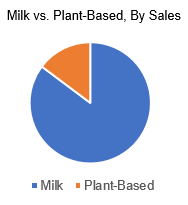
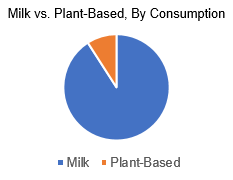
This year’s data tells the story. While milk outsells plant-based imitators by a margin more than 10 to 1, 2020 began as another year of slow decline for milk sales in stores. And indeed, as the shorthand would have it, plant-based volumes were increasing.

Then the crisis hit – and behavior changed.

As consumers emptied store shelves, both dairy and plant-based beverages saw gains – but the sizes of those gains were drastically different. While consumers bought 7.9 million more gallons of plant-based beverages during the two peak weeks in March than they did during the same period a year earlier, milk demand exploded by more than 45 million gallons, erasing its year-to-date decline in less than two weeks.

This dramatic turnaround was important for dairy farmers. Literally, retail consumers helped keep dairies in business as food-service orders disappeared and federal disaster assistance hadn’t yet arrived. But after the shock of lockdowns faded and everyone had already stocked up, something interesting happened: People still bought more milk. That five-to-one advantage established in March has stayed steady through May.

When times got tough, consumers seemed to want to return to the comfort of natural, wholesome and nutritious foods like milk, eschewing the marketing hype of plant-based imitators whose taste and nutrition profile stack up poorly against the real thing.

Future retail trends are tough to predict, especially in this environment. When life becomes more “normal” and as restaurants re-open, do consumers bring home as many bottles of milk from the grocery store? When schools return, do parents buy less milk for their children? These are open questions.

What we do know is this: Milk is back in grocery carts, in a big way. Its gains are much greater than its self-proclaimed competitors, and they’re showing signs of sticking. Consumers are navigating new grocery realities – and they are creating them as well. The return of milk may be one that’s built to last. That makes it time to pause the “milk is struggling” stories. And it means even less support for the “death of dairy” myth.

Might be smart to toss that one altogether.