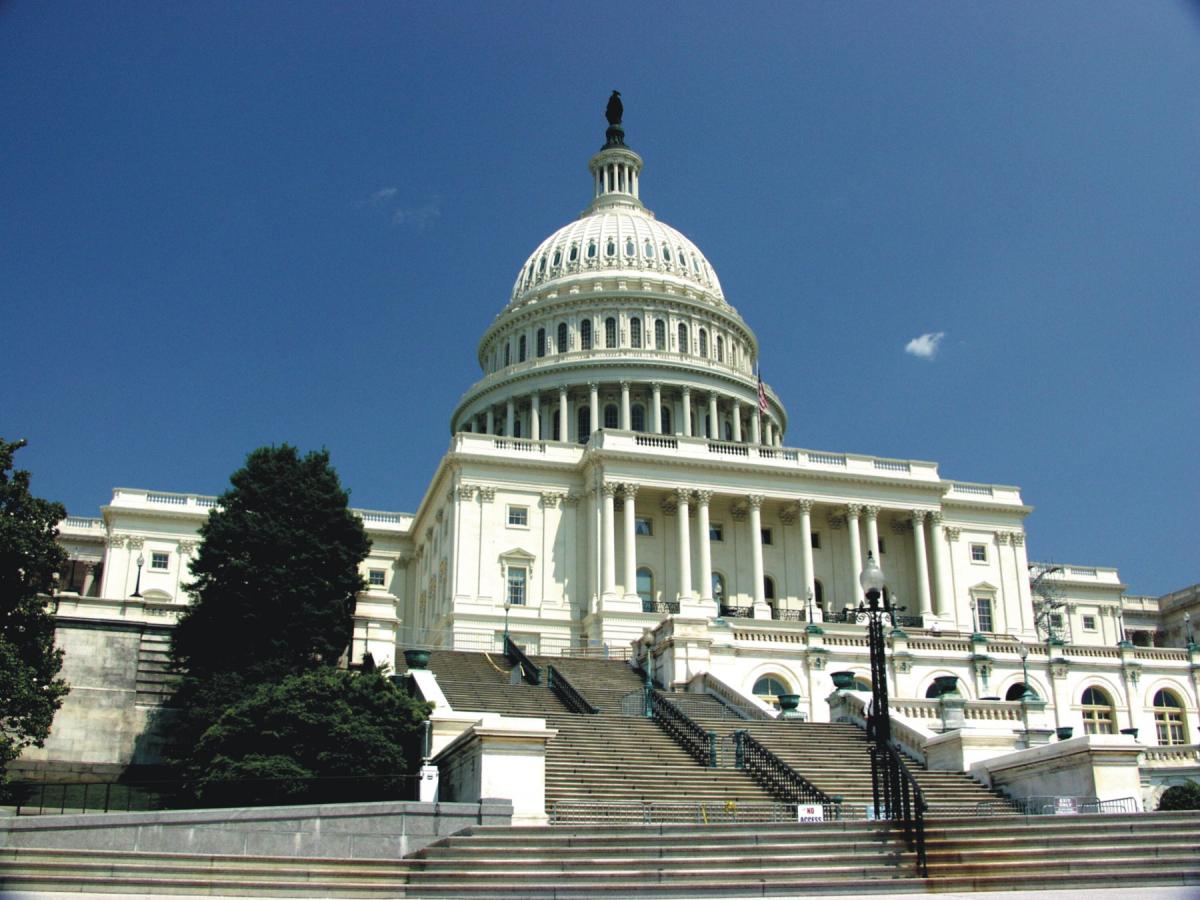
Congress Returns for Busy January Session to Address Several NMPF Priority Issues

Congress returned to session on Jan. 3 with a substantial legislative roster ahead of it, including several items on NMPF’s priority list, such as securing disaster aid for farmers, passing a new Farm Bill and addressing immigration reform.  In addition to these issues, Congress also must quickly focus on the federal budget, as a stop-gap funding package approved just before Christmas expires on Jan. 19.

The House took tentative steps on farm policy prior to the end of 2017 by including assistance to dairy and cotton farmers in a larger disaster assistance bill intended to help states and communities ravaged by last fall’s severe hurricane season. NMPF applauded the House package for taking steps to improve risk management options for dairy farmers by eliminating the existing $20 million annual cap on the Livestock Gross Margin (LGM) program. This would enable USDA to offer coverage to more farmers in the current LGM program as well as provide new risk management approaches for dairy producers.  As the bill moves to the Senate, NMPF is pushing to include badly-needed changes to the dairy Margin Protection Program (MPP) in the final version of the disaster bill. Combined, these actions would help pave the way for making final fixes to the dairy safety net program in the upcoming 2018 Farm Bill.

The government funding debate is an opportunity to address other NMPF priorities, including a solution to the pending air emissions reporting requirements for dairy farms and other livestock operations under CERCLA and EPCRA that have been triggered by a court decision [see later story].  NMPF is working closely with Congress, the U.S. Environmental Protection Agency (EPA) and industry partners to resolve this issue in a timely, effective manner.

Once Congress votes to fund the government past January, attention will shift to several other pressing items for 2018, including the Farm Bill.  The House and Senate Agriculture Committees spent much of 2017 holding hearings and listening sessions, gathering stakeholder priorities, and beginning the drafting process. NMPF will continue to work closely with Congress to finalize and secure improvements to the dairy MPP to help ensure the program provides a meaningful safety net to all dairy producers.

Congress is also expected to address legislation on the soon-to-expire Deferred Action for Childhood Arrivals (DACA) program, which protects from deportation undocumented individuals who came to the United States as children. A legislative solution to this issue may provide an opportunity to focus on other pressing immigration issues, and NMPF will continue seeking all avenues to address dairy’s unique workforce challenges.

NMPF Works to Ensure New Tax Law Benefits Farmers, Cooperatives

After working intently to shape the final tax cut legislation adopted by Congress shortly before Christmas, NMPF said the measure provides several important benefits for farmers and their cooperatives. NMPF had worked closely with House and Senate members on the once-in-a-generation tax package to achieve a positive outcome for the dairy community.

NMPF, along with the National Council of Farmer Cooperatives and others, urged lawmakers to preserve the economic value represented by the Section 199 deduction, which was eliminated as part of the tax package’s deep cut in corporate tax rates.  The final compromise to address the loss of Section 199 will help protect farmer-owned businesses from a major tax increase at a time when America’s farm sector is struggling with low commodity prices and reduced incomes.

Also known as the Domestic Production Activities Deduction (DPAD), this important provision of the tax code applied to proceeds from agricultural products marketed through cooperatives, making the Section 199 an important means of reducing taxation for farmers and cooperatives alike. Cooperatives have passed the vast majority of the benefit to their farmer owners, and reinvested the remainder in infrastructure improvements for the processing and marketing of food products.

The final tax package repeals the DPAD, but the legislation allows cooperative members to claim a new 20-percent deduction on payments from a farmer cooperative. Cooperatives also will be able to claim the 20-percent deduction on gross income less payments to patrons, limited to the greater of 50 percent of wages or 25 percent of wages plus 2.5 percent of the cooperative’s investment in property.

In addition to the Section 199 issue, NMPF worked on several other components of the legislation of importance to the dairy sector, including:

  • Depreciation. The bill would allow farms and other businesses to immediately write off 100 percent of qualified property costs through 2022.  Current law allows businesses a 50 percent write-off for 2017, which decreases in the coming years.
  • Expensing.  The final bill expands the Section 179 provision made permanent by the PATH Act of 2015, thanks to NMPF’s support.  The bill would adjust the maximum allowance from $500,000 to $1 million, which would revert back to $500,000 when the value of property put into service surpasses $2.5 million.
  • Estate Tax Relief. NMPF has actively supported giving farmers additional relief from the federal estate tax, which taxes the transfer of farms between generations of family members.  The final bill makes important progress on this issue, doubling the existing exemption to $11 million for individuals and $22 million for couples. Importantly, the package also preserves a full stepped-up basis for inherited property, avoiding what could have been another tax increase to offset reducing the estate tax.
  • Interest Deductibility. The bill attempts to preserve the business interest deduction for most farmers.  The package allows farms with less than $25 million in average annual gross receipts for the three prior taxable years to continue to deduct interest expenses.
  • Cash Accounting. The package would continue to allow farms to use cash accounting.
  • Like-Kind Exchanges. The bill would limit the use of Section 1031 like-kind exchanges to real property, removing their use for equipment.
  • Environmental Stewardship. The bill allows the Section 48 Investment Tax Credit for solar energy to phase down after several more years, per the PATH Act of 2015, and does not renew Section 48 for any additional technologies.  Therefore, the Agriculture Environmental Stewardship Act to expand Section 48 to cover nutrient recovery systems and digesters was unfortunately not incorporated into the bill.  NMPF will seek other legislative opportunities to address this issue over the coming months.

NMPF expressed thanks to Sens. John Hoeven (R-ND) and John Thune (R-SD), as well as multiple House members, including Agriculture Committee Chairman Mike Conaway (R-TX), whose determined efforts to compensate for the loss of Section 199 will help prevent a higher tax bill for cooperatives and avert the loss of economic activity in rural communities that these businesses help generate.

“NMPF believes that this provision, plus components of the bill that increase exemption levels from the federal estate tax, enhance depreciation and expensing opportunities for producers, and preserve farmers’ ability to deduct interest expenses, should help farmers and cooperatives alike,” said NMPF President and CEO Jim Mulhern. “The compromise advanced by Sens. Hoeven and Thune recognizes that farmer cooperatives play an indispensable role in our nation’s economy and need to be treated fairly in the tax reform legislation.”

NMPF Tells State, Federal Regulators: Enforcement Action Needed Against Doubly Deceptive Kite Hill “Almond Milk Yogurt”

ARLINGTON, VA – The National Milk Producers Federation (NMPF) urged state and federal regulators today to take enforcement action against a plant-based food company whose imitation “yogurt” violates the federal definition for dairy foods and fails to provide the same nutrition as real yogurt.

NMPF called out Hayward, California-based Kite Hill for illegally labeling its line of products and implying the nut-based foods are suitable substitutes for the real dairy foods it attempts to mimic.

NMPF President and CEO Jim Mulhern said that Kite Hill’s line of products “is doubly deceiving, first as it declares the use of ‘almond milk’ as the main ingredient in their foods, and second in calling the resulting product ‘yogurt.’ A whitened slurry of nuts does not make milk, and adding bacteria to that mix and pouring it in a cup does not make yogurt.”

In letters sent today to the U.S. Food and Drug Administration(FDA) and California Department of Food and Agriculture, NMPF said that under existing federal regulations, the proper term for Kite Hill’s products is “imitation yogurt product.” The FDA standard of identity for yogurt defines a product made by culturing cream, milk, partially skimmed milk, or skim milk, alone or in combination, with specific lactic acid bacteria. NMPF said that “without real milk’s many nutrients as a base, this fake yogurt product fails to deliver the same nutrition as the real thing.”

NMPF noted that the Kite Hill imitation delivers 40 percent more calories and 10 more grams of fat compared to an equivalent serving of vanilla yogurt, while providing one-third less protein and zero calcium. “This is another outrageous example where plant foods misappropriate the names of real dairy products, but offer inferior levels of nutrition,” Mulhern said.

“Adding a word or two in front of the name of a standardized dairy food does not represent an appropriate common or usual name of the food. It only adds confusion for consumers about the nutritional content of foods,” according to the letter signed by Beth Panko Briczinski, Ph.D., NMPF’s Vice President of Dairy Foods and Nutrition.

National Milk also wrote to the California Department of Food and Agriculture because Kite Hill is based in northern California, and because the agency has jurisdiction over the labels of products manufactured and marketed in that state.

NMPF is revealing the company’s nutritionally inferior product in a shareable graphic, the latest installment in NMPF’s “Dairy Imitators: Exposed” effort that illustrates the nutritional disparities between imitation foods and real dairy foods, such as yogurt.

###

The National Milk Producers Federation (NMPF), based in Arlington, VA, develops and carries out policies that advance the well-being of dairy producers and the cooperatives they own. The members of NMPF’s cooperatives produce the majority of the U.S. milk supply, making NMPF the voice of dairy producers on Capitol Hill and with government agencies. For more on NMPF’s activities, visit our website at www.nmpf.org.

NMPF Statement on Importance of Dairy Policy Changes in Disaster Aid Legislation

From Jim Mulhern, President and CEO, NMPF:

ARLINGTON, VA – “We applaud the U.S. House of Representatives for taking steps to address the needs of dairy producers in the disaster aid package it approved Thursday. Thanks to the efforts of Agriculture Committee Chairman Rep. Mike Conaway (R-TX), with support from ranking member Rep. Collin Peterson (D-MN), the House bill will eliminate the existing $20 million annual cap on the Livestock Gross Margin program, enabling the U.S. Department of Agriculture to offer coverage to more farmers in the current LGM program and provide new risk management options for dairy producers.

“As the bill moves forward, dairy farmers still badly need changes to the ineffective dairy Margin Protection Program (MPP), and we strongly urge the Senate to include such changes when it takes up the disaster bill.  We support the efforts of Sens. Patrick Leahy (D-VT) and Debbie Stabenow (D-MI) to include MPP improvements in the final supplemental spending bill.

“Combined, these actions can help pave the way for making final fixes to the dairy safety net program in the upcoming 2018 Farm Bill.”

###

The National Milk Producers Federation (NMPF), based in Arlington, VA, develops and carries out policies that advance the well-being of dairy producers and the cooperatives they own. The members of NMPF’s cooperatives produce the majority of the U.S. milk supply, making NMPF the voice of dairy producers on Capitol Hill and with government agencies. For more on NMPF’s activities, visit our website at www.nmpf.org.

NMPF Statement on Tax Reform Legislation

From Jim Mulhern, President and CEO, NMPF: 

ARLINGTON, VA – “National Milk has worked closely with House and Senate members on the tax reform conference package to achieve a positive outcome for dairy farmers and their cooperatives, and we’re pleased that conferees have completed work on a package that should provide important relief. The final compromise to address the loss of the Section 199 deduction will help protect farmer-owned businesses from a major tax increase at a time when America’s farm sector is struggling with low commodity prices and reduced incomes.

“America’s dairy farmers, who overwhelmingly rely on cooperatives to market their milk, appreciate the determined efforts by Sens. John Hoeven (R-ND) and John Thune (R-SD), as well as multiple House members, including Agriculture Committee Chairman Mike Conaway (R-TX), to seek a fair and reasonable solution to this challenge. Their efforts will help prevent a higher tax bill for cooperatives and avert the loss of economic activity in rural communities that these businesses help generate. We’re also grateful for the numerous senators on both sides of the aisle who elevated this issue during the debate.

“At issue is the loss of the benefit that both farmers and cooperative businesses enjoy from the Section 199 deduction, also known as the Domestic Production Activities Deduction (DPAD). This important provision of the tax code applies to proceeds from agricultural products marketed through cooperatives, making the Section 199 an important means of reducing taxation for farmers and cooperatives alike. Cooperatives pass the vast majority of the benefit – nearly $2 billion nationwide – directly to their farmer owners, then reinvest the remainder in infrastructure improvements for the marketing and processing of food products.

“The final tax package released on Friday repeals the DPAD, but the legislation allows cooperative members to claim a new 20-percent deduction on payments from a farmer cooperative. Cooperatives would also be able to claim the 20-percent deduction on gross income less payments to patrons, limited to the greater of 50 percent of wages or 25 percent of wages plus 2.5 percent of the cooperative’s investment in property. This favorable treatment for gross income will help minimize any potential increase in the tax burden on farmer-owned cooperatives.

“NMPF believes that this provision, plus components of the bill that increase exemption levels from the federal estate tax, enhance depreciation and expensing opportunities for producers, and preserve farmers’ ability to deduct interest expenses, should help farmers and cooperatives alike. The fix offered by Sens. Hoeven and Thune recognizes that farmer cooperatives play an indispensable role in our nation’s economy and need to be treated fairly in the final tax legislation.”

###

The National Milk Producers Federation (NMPF), based in Arlington, VA, develops and carries out policies that advance the well-being of dairy producers and the cooperatives they own. The members of NMPF’s cooperatives produce the majority of the U.S. milk supply, making NMPF the voice of dairy producers on Capitol Hill and with government agencies. For more on NMPF’s activities, visit our website at www.nmpf.org.

USDA Announces Regulation that Would Allow Low-Fat Flavored Milk Back into Schools

Low-fat (1%) flavored milk will be returning to schools now that the U.S. Department of Agriculture announced new regulatory changes in late November. An interim final rule implements the changes needed to reinstate low-fat flavored milk in schools, and goes into effect in time for milk processors to negotiate supply contracts for the 2018-2019 school year.
The regulation follows changes USDA Secretary Sonny Perdue initially proposed earlier this year to streamline the process by which schools can serve low-fat flavored milk. In 2012, USDA implemented new regulations that required that schools only offer fat-free flavored milk, mostly to reduce calories. Participation rates in school meal programs fell, with students consuming 288 million fewer half-pints of milk from 2012-2015, even though public school enrollment was growing. NMPF and the International Dairy Foods Association worked together to persuade Congress to address the issue.

“Secretary Perdue’s willingness to provide greater flexibility to schools recognizes that a variety of milks and other healthy dairy foods is critically important to improving the nutritional contributions of child nutrition programs in schools,” said Jim Mulhern, president and CEO of the National Milk Producers Federation (NMPF).

In October, Reps. G.T. Thompson (R-PA) and Joe Courtney (D-CT) introduced the bipartisan School Milk Nutrition Act of 2017, which would allow schools to offer low-fat and fat-free milk, including flavored milk with no more than 150 calories per 8-ounce serving. The bill allows individual schools and school districts to determine which milkfat varieties to offer their students.

The publication of the interim final rule allows school districts to solicit bids for low-fat flavored milk next spring before the 2018-19 school year begins, giving milk processors time to formulate and produce a low-fat flavored milk that meets the specifications of a particular school district.

NMPF will file comments in response to the proposed rule, expressing strong support for permitting schools to offer 1% flavored milk on a permanent basis. After taking comments, USDA will issue a final rule next fall that is expected to extend the regulation to school years after 2018-2019.

As science continues to suggest health benefits from higher-fat milk varieties, NMPF continues to take a leadership role in encouraging this newer science to be incorporated in school meals and dietary guidelines.

Dairy Sustainability Awards Now Taking Nominations

The U.S. Dairy Sustainability Awards program is now taking nominations for 2018. Any dairy farm, business or community effort that demonstrates resourceful leadership and employs sustainable practices can be nominated.

These national awards bring deserved recognition to farmers, dairy companies and their partners that invest time and resources in continually improving their operations to benefit the environment, their community and their local economy.  Four categories are available for nomination:

  • Outstanding Dairy Farm Sustainability
  • Outstanding Supply Chain Collaboration
  • Outstanding Dairy Processing & Manufacturing Sustainability
  • Outstanding Community Impact

Nominations will be judged on measurable results; approach and innovative use of resources; communication of learnings; and the potential for adoption by other farms/businesses. The deadline to nominate a person or group is Monday, Feb. 12, 2018. Winners will be announced during a ceremony in Chicago in May later that year. For inspiration, take a look at the stories from past winners and then download a nomination form.

For additional details about the program, contact Jennifer.Block@dairy.org or your local dairy promotion organization.

FARM Program Hosts Final Evaluator Trainings, Forums for the Year

The National Dairy FARM Program is wrapping up 2017 with several successful training and customer forums.

From November 13-15, the FARM Program hosted a FARM Animal Care Evaluator and Evaluator Trainer course in Albuquerque, N.M., with 20 veterinarians, veterinary students, cooperative staff and other industry personnel. Facilitated by Praedium Ventures, the course consisted of one day in the classroom and one day on a dairy farm. The classroom portion featured discussions on program history, evaluation methods and evaluation questions. Dairy Farmers of America member Jimmy Pareo of Belen, N.M., then led the group through an on-farm evaluation.
The FARM Program and the Innovation Center for U.S. Dairy cohosted the final customer forum of the year in Jacksonville, Fla. The October forum, the final of four held in 2017, shared the dairy industry’s focus on social responsibility with prominent national and international dairy customers. Representatives from grocery stores, sourcing companies and restaurant chains were in attendance.

During each two-day forum, educational sessions provided a deep dive into the FARM Program. Expert speakers shared insights into the rigorous standards of the program for animal care, environmental stewardship and antibiotic stewardship, as well as updates on emerging issues in the social responsibility arena. On the second day of the event, participants visited a local dairy farm to see the FARM Program in action.

Meanwhile, the National Dairy FARM Program, with Merck Animal Health, the University of Florida Extension and Southeast Milk, Inc. (SMI), will host a series of SMI membership trainings throughout Louisiana, Georgia and Florida during the week of December 11-15. These trainings will focus on creating a culture of cow care and continuous improvement; ensuring proper employee training and monitoring; creating and implementing standard operating procedures; and assessing farms’ vulnerabilities. For more information on these trainings, please contact Emily Meredith.