India and Indonesia are using policy tools to impact market access for American dairy producers, and because of this, should not receive trade benefits under the U.S. Generalized System of Preferences (GSP), according to testimony last month from NMPF’s Shawna Morris before the U.S. Trade Representative (USTR).
Speaking on behalf of NMPF and the U.S. Dairy Export Council (USDEC) on June 19, Morris recommended that USTR ask President Donald Trump to suspend GSP benefits that would allow in certain products duty-free to participants in the program. India, she said, has a 14-year record of using unscientific sanitary and phytosanitary requirements to erect barriers to dairy trade in a way that fails to comply with the GSP program’s congressionally mandated requirements.
“In practice, [India’s] requirements have created an unjustified impediment to U.S. exports despite extensive and creative efforts spanning three administrations to reopen the market,” she said. “It is unfortunate that India has not chosen over the past 14 years to engage constructively with the U.S. to resolve this issue in full and reopen the market. U.S. dairy products are safely consumed by people in countries all around the world and we would very much like to offer the people of India the choice to consume our products, as well.”
In 2003, India introduced new requirements for the government-issued health certificates that must accompany dairy imports. The United States has pursued resolution of one challenge after another in the hopes of re-opening access to India for U.S. dairy products. Those efforts included data, evidence and solution-based proposals to work through each topic, but the market remains closed to most U.S. dairy products due to continued intransigence by India on certain animal feeding provisions that go well beyond international guidance.
During the day-long hearing on various countries’ GSP standing, Morris also testified on one of the dairy industry’s most important export markets in Southeast Asia: Indonesia. Indonesia has long been a strong U.S. trading partner. In 2017, the United States exported $133 million in dairy products to Indonesia. It has been the third-largest market for skim milk powder and is a top-10 U.S. dairy export market. But new local content policies for dairy are intended to curtail imports from a variety of sources, including the United States.
In 2017, the Indonesian Ministry of Agriculture issued a new regulation that required local milk processors to procure locally-produced milk or invest in ways to support the local dairy farming sector. Businesses that only import, and do not have manufacturing facilities in Indonesia, are also required to enter into agreements to provide support to or promote the local dairy industry. U.S. companies have reported being required to submit such “partnership plans” to be assured of access to import licenses in 2018.
The United States has been working extensively since 2017 to convey concerns about the policy to Indonesia. To date, however, Indonesia has not yet agreed to change course. “We are spotlighting our concerns here today through this process in the hopes of preserving what has long been a positive relationship on dairy trade, rather than allowing a deterioration of that dynamic,” Morris said.

 At its June meeting in Arlington, Virginia, the NMPF Scholarship Committee selected two graduate students to receive scholarships as part of the 2018 NMPF National Dairy Leadership Scholarship Program. These students are conducting research in areas that will benefit dairy cooperatives and producers.
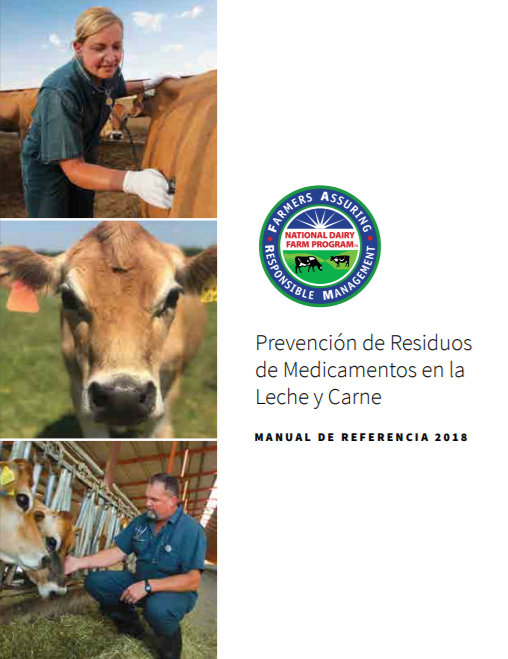 To create relevant on-farm resources for Hispanic farm workers not fluent in English, the National Dairy Farmers Assuring Responsible Management (FARM) Program is releasing two Spanish-language tools: The
  The National Dairy Farmers Assuring Responsible Management (FARM) Animal Care Technical Writing Group met in June to kick off the FARM Animal Care Version 4.0 revision process.
 CWT helped member cooperatives secure 44 contracts to sell 5.88 million pounds of American-type cheeses, 194,007 pounds of butter and 5.69 million pounds of whole milk powder to customers in Asia, Central America, the Middle East, North Africa, Oceania and South America. The product will be shipped to customers in 15 countries in six regions of the world during the months of June-December 2018.
 NMPF’s efforts to elevate the dairy industry’s concerns with Canada’s harmful dairy trade practices have had a noticeable impact in the White House: during the past month, President Donald Trump
  Two of U.S. dairy’s top trading partners, Mexico and China, have enacted new tariffs against U.S. dairy products in response to American tariffs on Mexican steel and aluminum, as well as soon-to-be imposed tariffs on a variety of imports from China. National Milk, in collaboration with the U.S. Dairy Export Council (USDEC), has raised concerns about the financial impact of these actions on America’s dairy farms.
 The U.S. House of Representatives failed last month to pass an immigration reform bill, as members of Congress considered two different versions, but couldn’t muster the votes to pass either one. The outcome means dairy farmers and other agricultural employers are again left without a functioning agricultural worker program – although House leaders have committed to a separate vote on a guest worker visa program once Congress returns to Capitol Hill in July.
 Adoption of a 2018 Farm Bill took two major steps toward realization in late June when both the U.S. House of Representatives and the Senate passed their versions of the bill. The two chambers must now reconcile the two versions through a conference committee process before voting on a final, compromise version.