(September 12, 2016 – Washington, D.C.) Dairy organizations in the United States, Australia, the European Union, Mexico and New Zealand today issued a joint letter to their respective trade and agriculture officials, expressing indignation about Canada’s recent actions to deepen its already prohibitive restrictions on dairy trade.
The groups said Canada’s increasingly protectionist policies violate “international trade obligations, hold out the prospect of trade diversion with attendant global price-depressing impacts and are in conflict with the principles of free markets and fair and transparent trade.”
The U.S. groups, including the National Milk Producers Federation, the U.S. Dairy Export Council and the International Dairy Foods Association, oppose a Canadian Agreement in Principle recently concluded between Canada’s dairy producers and processors. The agreement, which is undergoing finalization and review in Canada, would provide an incentive to substitute Canadian dairy ingredients for imported dairy ingredients and would unfairly subsidize exports of Canadian dairy products. If ratified, the agreement would take effect November 1, 2016.
In addition to the three U.S. organizations, the other dairy groups are the Australian Dairy Industry Council, the European Dairy Association, the European Whey Products Association, the European Association of Dairy Trade, Mexico National Chamber of Industrial Milk and the Dairy Companies Association of New Zealand. Each of the dairy organizations asked officials in their respective countries to initiate a WTO dispute settlement proceeding to challenge the agreement once its details are announced.
In the letter sent jointly to U.S. Trade Representative Michael Froman and to the other government trade officials, the dairy organizations stated that the Agreement in Principle would breach Canada’s trade obligations under the World Trade Organization (WTO) and the North American Free Trade Agreement (NAFTA). They said it also would undermine the intent of the pending Trans-Pacific Partnership (TPP) and the EU-Canada Comprehensive Economic and Trade Agreement (CETA).
“Canada’s continued disregard for the provisions in its pacts with trade partners is unacceptable,” said Connie Tipton, president and CEO of the International Dairy Foods Association. “These protectionist policies are in direct conflict with the principles of free markets and fair trade, which trade agreements like TPP aim to promote.”
“The dairy trade situation with Canada has gone from bad to worse this year and now Canada is contemplating doubling down on that terrible track record,” said Jim Mulhern, president and CEO of the National Milk Producers Federation. “Enough is enough; Canada needs to stop shirking its dairy commitments and hold up its end of already negotiated agreements.”
“For years U.S. exporters have borne the brunt of a continuing procession of new Canadian policy tools intended to curtail dairy imports,” said Tom Suber, president of the U.S. Dairy Export Council. “TPP has included new features to move toward more open trade by expanding market access compared to the status quo; but Canada’s been doing its best to erode longstanding existing access as much as possible before this agreement is even put in place.”
# # #
The National Milk Producers Federation (NMPF), based in Arlington, Va., develops and carries out policies that advance the well-being of U.S. dairy producers and the cooperatives they collectively own. The members of NMPF’s cooperatives produce the majority of the U.S, milk supply, making NMPF the voice of nearly 32,000 dairy producers on Capitol Hill and with government agencies. For more on NMPF’s activities, visit www.nmpf.org.
The U.S. Dairy Export Council (USDEC) is a non-profit, independent membership organization that represents the global trade interests of U.S. dairy producers, proprietary processors and cooperatives, ingredient suppliers and export traders. Its mission is to enhance U.S. global competitiveness and assist the U.S. industry to increase its global dairy ingredient sales and exports of U.S. dairy products. USDEC accomplishes this through programs in market development that build global demand for U.S. dairy products, resolve market access barriers and advance industry trade policy goals. USDEC is supported by staff across the United States and overseas in Mexico, South America, Asia, Middle East and Europe. The U.S. Dairy Export Council prohibits discrimination on the basis of age, disability, national origin, race, color, religion, creed, gender, sexual orientation, political beliefs, marital status, military status, and arrest or conviction record.
The International Dairy Foods Association (IDFA), Washington, D.C, represents the nation’s dairy manufacturing and marketing industries and their suppliers, with a membership of 550 companies within a $125-billion a year industry. IDFA is composed of three constituent organizations: the Milk Industry Foundation (MIF), the National Cheese Institute (NCI) and the International Ice Cream Association (IICA). IDFA’s nearly 200 dairy processing members run nearly 600 plant operations, and range from large multi-national organizations to single-plant companies. Together they represent more than 85 percent of the milk, cultured products, cheese, ice cream and frozen desserts produced and marketed in the United States. IDFA can be found online at www.idfa.org.
 Registration also remains open for the inaugural FARM Program Evaluator’s Conference, a two-day event from Nov. 2-3, 2016, in Nashville, following NMPF’s annual meeting Oct. 31-Nov. 2.
 Registration remains open until October 7 for the NMPF 2016 Annual Meeting, to be held October 31-November 2 in Nashville, Tennessee. NMPF will join the National Dairy Board and United Dairy Industry Association in gathering stakeholders to share in dairy’s accomplishments and challenges, as well as discuss the best paths to follow for the future. Registration information
  The National Dairy FARM Program continues to roll out materials to help producers prepare for the implementation of Version 3.0 of the program on Jan. 1, 2017. The following resources are now available on the FARM Program website:
 Cooperatives Working Together member cooperatives captured 36 contracts to sell 5.392 million pounds of American-type cheese, 440,925 pounds of butter, and 573,202 pounds of whole milk powder in August. These products will go to customers in Asia, Central and South America, the Middle East, North Africa, and Oceania. The product will be shipped from August 2016 through February 2017.
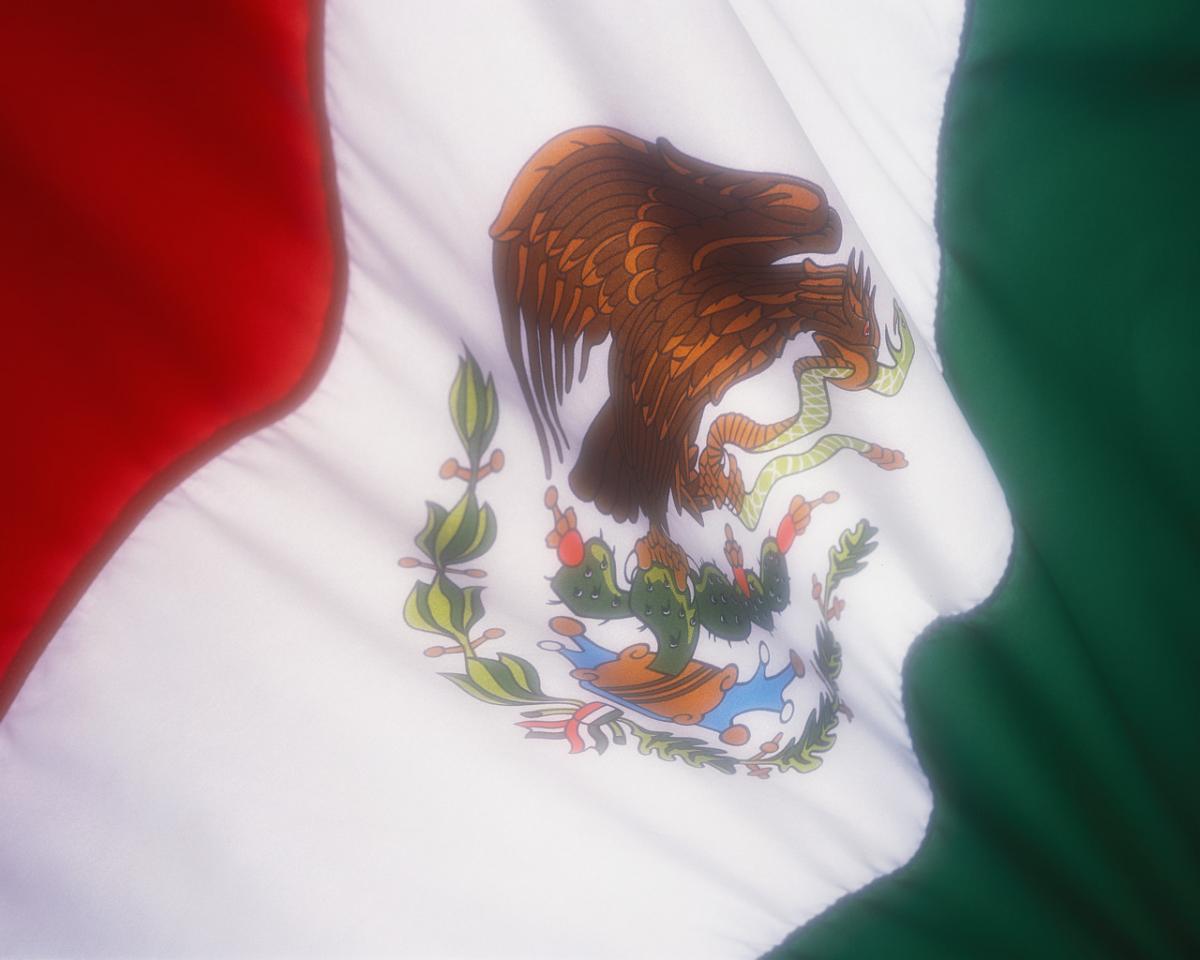 Industry leaders from both the U.S. and Mexican dairy sectors held a two-day summit last month to foster a renewal of the strong relationship between farmers in both countries. Representatives from both nations, including NMPF President and CEO Jim Mulhern and U.S. Dairy Export Council President Tom Suber, pledged to work together to boost trade between the two countries, address mutual challenges and increase dairy consumption while also promoting milk production on both sides of the border.
 NMPF President and CEO Jim Mulhern was one of several top agriculture leaders who discussed the outlook for the Trans-Pacific Partnership during a recent segment on RFD-TV. Mulhern told the audience watching a special segment last Thursday of
  NMPF joined the U.S. Dairy Export Council last week in commending two U.S. Senators for urging the U.S. government to investigate new Canadian dairy pricing policies. These policies have impacted current trade and stand to negatively affect U.S. dairy farmers and manufacturers, jeopardizing the country’s trade commitment to the United States, they said.