NMPF Applauds House Increasing Kids’ Access to Critical Nutrition

The National Milk Producers Federation (NMPF) emphatically commended the House of Representatives for taking a critical step toward improving child nutrition by approving the Whole Milk for Healthy Kids Act today with a commanding 330-99 bipartisan margin. The measure, led by Representatives GT Thompson, R-PA, and Kim Schrier, D-WA, expands the tools schools can use to deliver vital nutrition to students by increasing the variety of healthful milk options school can choose to serve.

“NMPF is delighted that the House approved the bipartisan Whole Milk for Healthy Kids Act,” said Jim Mulhern, President & CEO of National Milk Producers Federation. “Milk’s unique nutritional profile gives it an unparalleled role in providing kids the nutrients they need. Expanding the milk schools can choose to serve to include 2% and whole is a common-sense solution that will help ensure kids have access to the same healthful milk options they drink at home. House passage is a critical step, and we urge the Senate to consider this bill immediately so it may be enacted into law.”

School milk, a mainstay of lunch menus for generations, plays an especially important role in improving nutrition security as an effective, inexpensive way of providing the nutrition kids need. NMPF has been tireless in its advocacy for reinstating whole milk, which was removed from school lunch menus in 2012. Since then, advancing science on the benefits of milk at all fat levels, as well as evidence of increased food waste from current limited choices, makes its return a top nutrition priority for schoolchildren, the families who serve nutritious fuller-fat varieties at home, and the school meal professionals who strive to effectively nourish those whom they serve.

The House-approved Whole Milk for Healthy Kids Act will now be sent to the Senate, which already has its own version of the bill. The Senate measure is being led by Senators Roger Marshall, R-KS, and Peter Welch, D-VT, and has Republican, Democratic, and Independent cosponsors.


Whole Milk Brings the Nutrition Children Want, and Need

Much has changed about milk consumption since 2012, the year that whole and 2 percent milk varieties were no longer allowed in federal school meal programs. Since then, the body of research supporting the benefits of fuller-fat milk has grown more robust, with research showing that dairy foods at higher fat levels are linked to outcomes such as lower total body mass in kids and lower childhood obesity. Milk is, simply put, a nutrition powerhouse.

Concern over food waste has also grown, with food waste rising when kids are given meals they don’t want to eat. Meanwhile, the gulf between what kids drink at home versus what they’re served in schools – already gaping when the ban took effect — has only widened.


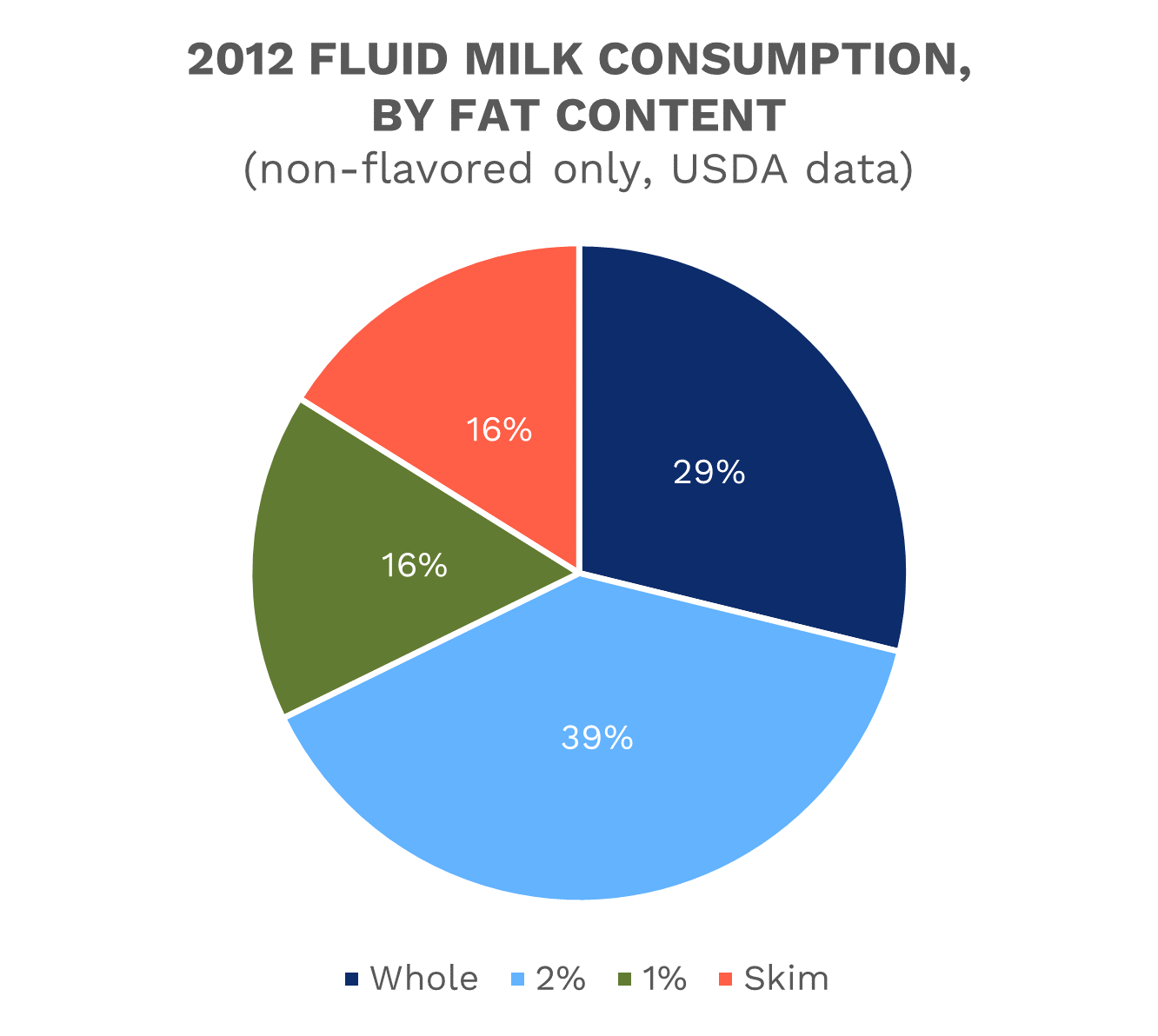
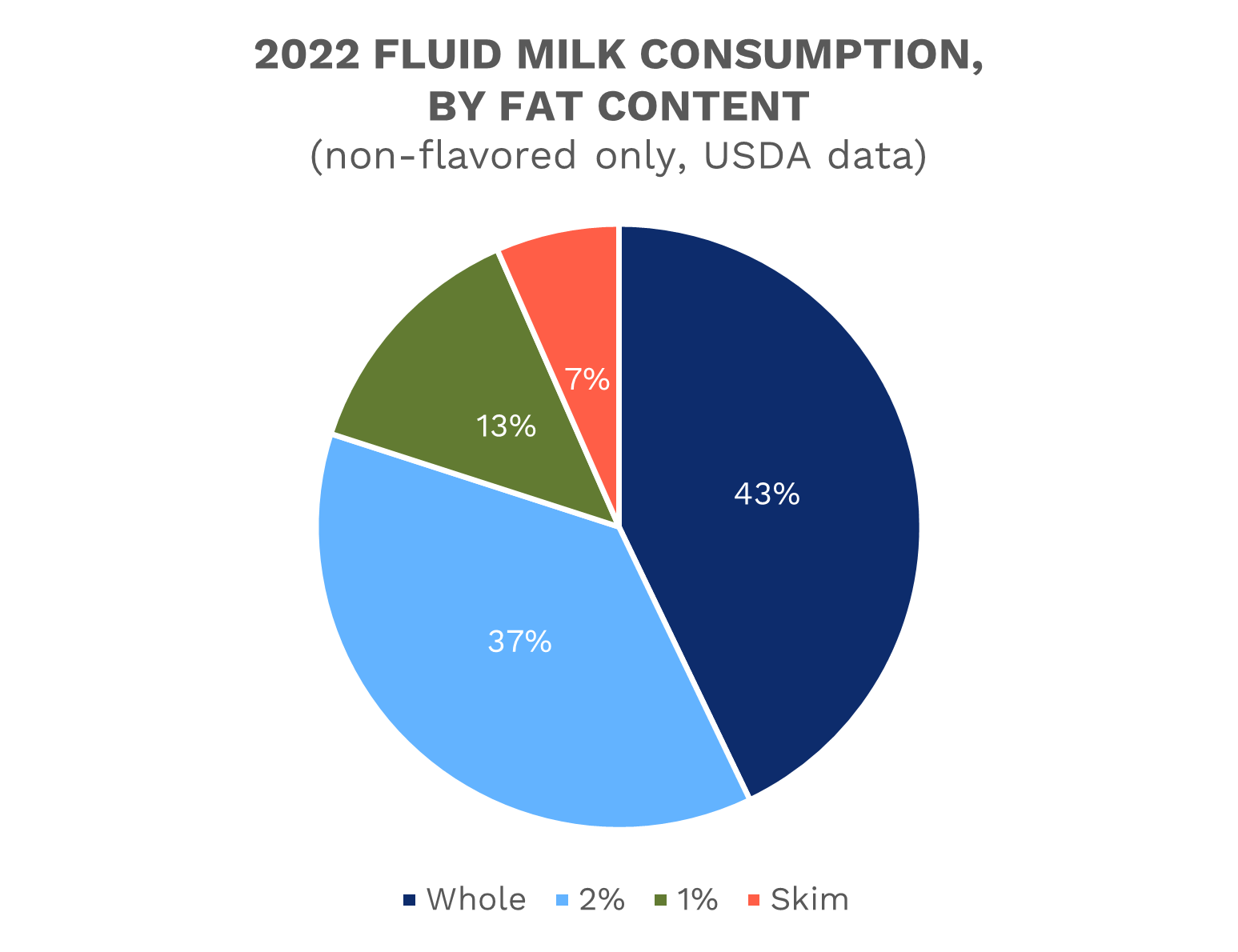
This is the percentage of U.S. fluid milk consumption, excluding flavored varieties, in 2012, and again in 2022. Even at the time the rules changed, keeping whole and 2 percent milk off school meal menus was out of step with what parents gave their own children, with roughly 68 percent of consumption coming from those varieties. That should have been an ominous sign for anyone who ever thought children would flock to milk that didn’t taste like what they had at home.

That disconnect is even worse today.

In 2022, whole and 2 percent milk accounted for roughly 80 percent of consumption – and still, students don’t have access to the same healthy choices they almost certainly have at home. This is a lost opportunity for high-quality, affordable nutrition that kids would gladly consume. And that’s why, when the House of Representatives takes up the Whole Milk for Healthy Kids Act this week, lawmakers should take heed of the choices voters make at the grocery store – decisions that align with the latest scientific research on the benefits of dairy at all fat levels as well as consumer preference.

Having whole and 2 percent milk in school meals will nourish children and reduce food waste. And most importantly, it encourages kids to consume the nutrients they need. Taking the most popular varieties of milk out of meals was a questionable decision in 2012 – it’s indefensible in 2023. NMPF has a call to action urging lawmakers to pass the bill – the bigger the margin, the more pressure on the Senate to make it law. Dairy farmers, as well as parents and educators everywhere, will be watching the House with great interest this week.

And when common sense wins, we know exactly what we’ll drink at the celebration.

NMPF Builds Support for Whole Milk in Schools

NMPF built support for the Whole Milk for Healthy Kids Act in both chambers of Congress in June, with lawmakers giving increased attention to the need to increase milk options in schools.

The measure would allow schools to serve 2% and whole milk in school breakfast and lunch programs, which aren’t currently allowed. Although versions of the bill have been introduced in previous congressional sessions, the legislation has more support and is advancing further in Congress this session.

The House bipartisan measure, H.R. 1146, was approved by the House Committee on Education and the Workforce in early June, marking the first time the measure has made it through the committee approval process. NMPF worked with bill sponsors House Agriculture Committee Chair Glenn “GT” Thompson, R-PA, and Rep. Kim Schrier, D-WA, a pediatrician, to build bipartisan support for the bill within the House and the committee itself.

NMPF wrote and organized a letter of support for the bill signed by 58 dairy organizations, sending to the committee a strong message of support for the measure. With over 125 cosponsors, the bill providing this “practical solution” has bipartisan support from the committee and the House, with potential House action as soon as this month.

NMPF is also building support for the Senate version of the bill, sponsored by Sens. Marshall, R-KS, and Peter Welch, D-VT and introduced in mid-June. That legislation also has solid bipartisan support but has not yet had a committee vote.