U.S. milk production continues to grow at an annual rate of less than 1 percent. Despite this, milk prices are weakening going into the first half of 2016. Weakness in world markets is transmitting low prices into the domestic nonfat dry milk and dry whey markets, while exports of butter and cheese remain well below levels of last year. The bimonthly MPP margin for November-December was $9.56, but most forecasts project that it will fall to between $7 and $8 during the next few months.
Uncategorized
NMPF Files Opposition Letters to USDA on Organic FMMO Proposal
On September 29, 2015 USDA received a hearing request from the Organic Trade Association seeking a hearing to amend all Federal Milk Marketing Orders (FMMO) to include alternative producer-settlement fund payments for USDA certified organic milk. OTA’s proposal, if adopted, would certainly eliminate producer settlement fund payment obligations paid by organic handlers into the FMMO revenue sharing pools. As a result, the regulated minimum milk value provided by FMMOs would be reduced by tens of millions of dollars each year. In addition, this proposal would set a bad precedent as it would erode participation and undermine the stability of the time honored FMMO system.
NMPF filed two letters to USDA in oppostion to this hearing request. These letters are linked below:
MILC Would Not Have Triggered in 2015
The rapid decline in U.S. milk prices experienced during 2015 combined with the lack of widespread program payments from the new Dairy Margin Protection Program (MPP) has perpetuated a sense of “buyer’s remorse” with respect to MPP. Many farmers may be openly curious if the old Milk Income Loss Contract (MILC) payment program would have offered better safety net protection against recent milk price declines.
When the initial sign-up period for MPP coverage in 2015 got underway in September of 2014, farmers were in the midst of record-high milk prices. The U.S. all-milk price averaged $24 per hundredweight for the year, and in some parts of the country fluid milk prices approached $30 per hundredweight. Despite economic evidence of price cycles in dairy markets, many U.S. producers responded to the market price signals of 2014 by adding cows and increasing milk production.
Now, more than halfway through 2015, the U.S. is fast approaching another record year of milk production. Meanwhile, reduced demand in the wake of global supply increases have combined to put downward pressure on global dairy market prices. U.S. milk prices have fallen from their 2014 record highs but remain above milk prices received by farmers in Europe and New Zealand. Importantly, current U.S. milk prices would not havetriggered any payments under the old MILC program.
The MILC program, repealed in the 2014 Farm Bill, provided income support to dairy farmers based on the shortfall in milk prices below a feed-adjusted $16.94 per hundredweight trigger price. USDA milk and feed price data reveals that program payments under MILC would not have been triggered at any point during the first half of 2015. Through July of 2015 the Boston Class I milk price has averaged $19.59 per hundredweight while the feed-adjusted MILC trigger price would have averaged $17.98 per hundredweight. As a result, on average, milk prices would have needed to be $1.61 per hundredweight lower to have consistently triggered MILC in 2015. On a monthly basis, the closest MILC came to triggering a payment was in April of 2015 when the Boston Class I price was 64¢ per hundredweight above the feed-adjusted MILC trigger price. Put simply, MILC would not have triggered during the first half of 2015.
Going forward, August through October Boston Class I milk prices are known at $19.53, $19.59, and $19.09 per hundredweight, respectively. Late-September futures prices for milk and feed indicate that the likelihood of MILC triggering, had it not been terminated, remain at very low levels through the remainder of 2015.
In contrast, MPP, which replaced MILC in September 2014, immediately began making payments in 2015. While MPP remains a work in progress, MPP is functioning as intended and has been in payment status for all months during the first half of 2015. MPP is not a direct payment program, it is not designed to enhance income, and importantly it is not an investment product. Instead, MPP is an insurance-style safety net program designed to help dairy farms protect against catastrophic losses in farm income resulting from milk and feed price variability. Farmers pay premiums for coverage and in exchange receive risk management protection at levels they choose up to $8 per hundredweight. Protection above $8 per hundredweight is not provided by MPP. However, farmers can simultaneously use private risk management options such as futures or forward pricing programs to compliment MPP and potentially cover margins higher than $8 per hundredweight.
For the 2015 coverage year USDA Farm Service Agency data revealed that 55 percent of licensed dairy operations, representing approximately 80 percent of projected 2015 U.S. milk production, signed-up to participate in MPP. While few farmers elected the highest level of supplemental coverage, those that did are scheduled to receive more than $400,000 for the first half of 2015. Those who insured less, including those who paid $100 for basic $4 coverage, have not received any compensation because national average margins haven’t been at the catastrophically low levels experienced during 2009 or 2012. Instead, three consecutive big crop years in corn and soybeans have pushed feed prices to their lowest levels in four years and effectively offset recent milk price declines. The net effect of parallel declines in both national average milk and livestock feed prices has been that MPP margins remain near the five-year average level of $8 per hundredweight.
USDA’s MPP decision tool indicates that margins are improving, yet considerable risks remain for 2016. There are a number of factors to reflect on that could combine to pressure dairy markets going forward. First, feed prices are at multi-year lows and grain farmers may soon consider adjusting acreage in search of crops with higher per acre returns. If feed supplies tighten through fewer acres planted, or adverse weather reduces the crop size, feed prices would increase and margins would surely decline.
Second, for a number of years growth in domestic milk production has outpaced domestic consumption growth. With supplies increasing faster than domestic consumption, increased export opportunities helped to remove surplus product and support U.S. milk prices. However, current U.S. prices of cheese and butter remain above international price levels and a strong U.S. dollar makes our products less competitive overseas. The Russian embargo and slowing Chinese demand for dairy also hang over the market. The U.S. Dairy Export Council expects exports to struggle through mid-2016. With dwindling export opportunities milk prices could face pressure in 2016 as the U.S. amasses record inventories of cheese and powder. Bottom line, milk and feed price volatility is likely to persist. While risk in 2015 has been on the revenue side, going forward, risks will remain two-fold and justifies replacement of MILC with MPP.
USDA’s MPP decision tool includes a financial stress-test calculator. Using the stress-test feature dairy farmers may examine the extent to which MPP can assist in managing farm risk as it pertains to profit, liquidity, and solvency, given the uncertain milk and feed environment during the upcoming year. With so much uncertainty in 2016 now is not the year to walk away from MPP.
FARM and BQA Extend Collaborative Commitment on Animal Care Issues
 (Washington, D.C. – February 16, 2016) – In order to strengthen the ongoing partnership between the dairy and beef segments of the cattle industry on animal care issues, the National Milk Producers Federation and the beef checkoff-funded Beef Quality Assurance program today announced they will jointly be offering more training opportunities for farmers and ranchers in 2016.
NMPF has been working for the past year on identifying areas where its Farmers Assuring Responsible Management (FARM) program can further coordinate with the Dairy Beef Quality Assurance (BQA) Program, managed by the National Cattlemen’s Beef Association on behalf of the Beef Checkoff. Both programs focus on educating cattle producers about the best practices in animal care, to assure consumers that their meat and milk comes from animals that receive optimal care throughout the animals’ lives.
At the Cattle Industry Convention last month, the BQA Advisory Board approved an addition to its program whereby any dairy producer evaluated using the FARM program’s upcoming version 3.0, due out in January 2017, will also receive their BQA certification. BQA will also be working with the FARM program in the coming years to create training opportunities for dairy producers to preserve the beef quality of their cows. These training sessions will focus on stockmanship, residue prevention, and transportation. Many of these training opportunities will be available at the state level, implemented by the BQA state coordinators.
“This partnership will maximize the value of the beef checkoff’s investment in animal care, which is an issue of greater importance today because of consumers’ interest in the source of their beef, and the treatment of cows,” said Dan Kniffen, Ph.D., vice chair of the BQA Advisory Board.
Emily Meredith, NMPF’s Vice President of Animal Care, and director of the FARM program, said that “education is the key to preventing health and wellness problems for cattle further down the road. This collaboration with BQA will extend the reach of the FARM program’s educational materials, and harness the expertise that BQA state network of educators can provide to dairy farmers.”
In addition to regional training sessions and additional educational materials, the FARM program and BQA will jointly produce online stockmanship training resources that will be made available to dairy farmers in 2016.
# # #
About NMPF
The National Milk Producers Federation, based in Arlington, VA, develops and carries out policies that advance the wellbeing of dairy producers and the cooperatives they own. The members of NMPF’s cooperatives produce the majority of the U.S. milk supply, making NMPF the voice of more than 32,000 dairy producers on Capitol Hill and with government agencies. Visit www.nmpf.org for more information.
About the Beef Checkoff Program
The Beef Checkoff Program was established as part of the 1985 Farm Bill. The checkoff assesses $1 per head on the sale of live domestic and imported cattle, in addition to a comparable assessment on imported beef and beef products. States with qualifying state beef councils retain up to 50 cents on the dollar and forward the other 50 cents per head to the CBB, which administers the national checkoff program, subject to USDA approval.
About NCBA
The National Cattlemen’s Beef Association (NCBA), based in Centennial, Colo., and a contractor to the Beef Checkoff Program, has represented America’s cattle producers since 1898. As the largest association of cattle producers, NCBA works to create new markets and increase demand for beef.
NMPF Board Endorses Trans-Pacific Partnership Agreement
ARLINGTON, VA – The National Milk Producers Federation voted Tuesday to support the Trans-Pacific Partnership (TPP) agreement, an historic pact between 12 countries containing features that will help America’s dairy farmers in the future.
After wto realease of retaloation amount, dairy groups again
There are many variations of passages of Lorem Ipsum available, but the majority have suffered alteration in some form, by injected humour, or randomised words which don’t look even slightly believable. If you are going to use a passage of Lorem Ipsum, you need to be sure there isn’t anything embarrassing hidden in the middle of text. All the Lorem Ipsum generators on the Internet tend to repeat predefined chunks as necessary, making this the first true generator on the Internet. It uses a dictionary of over 200 Latin words, combined with a handful of model sentence structures, to generate Lorem Ipsum which looks reasonable. The generated Lorem Ipsum is therefore always free from repetition, injected humour, or non-characteristic words etc.
February 2016 Dairy Market Report
Margin Protection Program Forecast
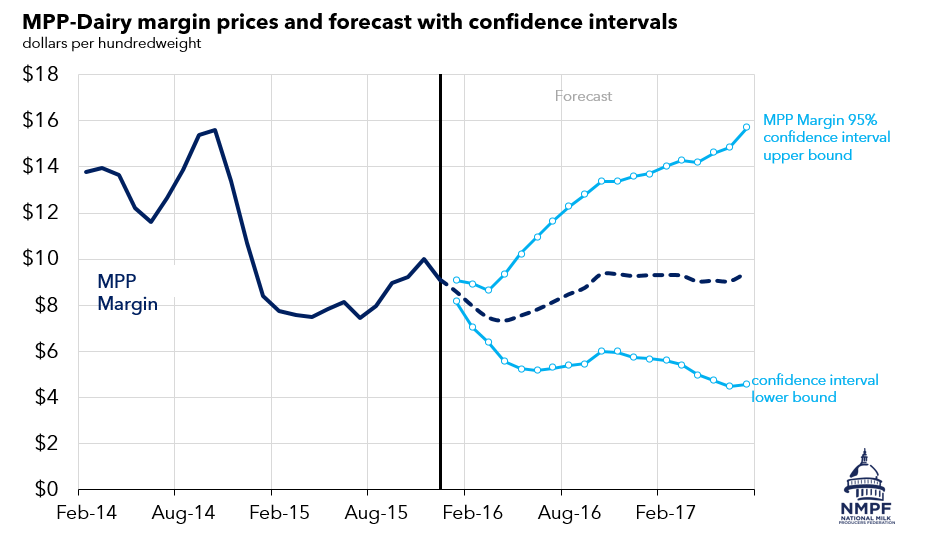
NMPF’s forecast for 2016 MPP margins – based on early February milk and feed futures prices – indicates that margins early in 2016 may dip below the $8 threshold in the spring before strengthening in the latter half of 2016. As evidenced by the wide confidence interval, a high degree of uncertainty remains in milk and new crop feed prices.
2016 NMPF Scholarship Program Still Welcoming Applications
 The National Milk Producers Federation continues to accept applications for its National Dairy Leadership Scholarship Program for academic year 2016-2017. Applications must be received no later than Friday, April 8, 2016.
Each year, NMPF awards scholarships to outstanding graduate students (enrolled in Master’s or Ph.D. programs) who are actively pursuing dairy-related fields of research that are of immediate interest to NMPF member cooperatives and the U.S. dairy industry at large.
Graduate students pursuing research of direct benefit to milk marketing cooperatives and dairy producers are encouraged to submit an application. Applicants do not need to be members of NMPF to qualify. The top scholarship applicant will be awarded the Hintz Memorial Scholarship, which was created in 2005 in honor of the late Cass-Clay Creamery Board Chairman Murray Hintz.
Recommended fields of study include, but are not limited to, Agriculture Communications and Journalism, Animal Health, Animal and/or Human Nutrition, Bovine Genetics, Dairy Products Processing, Dairy Science, Economics, Environmental Science, Food Science, Food Safety, Herd Management, and Marketing and Price Analysis.
For an application or more information, please visit the NMPF website or call the NMPF office at 703-243-6111.
NMPF Welcomes Paul Bleiberg as New Senior Director of Government Relations
 Paul Bleiberg joined the National Milk Producers Federation staff last month as Senior Director of Government Relations, bringing with him 10 years of government and agriculture policy experience with a strong focus on dairy policy.
For the last five years, Bleiberg worked for Rep. Reid Ribble (R-WI) as both legislative director and later deputy chief of staff. His duties included managing Ribble’s legislative operations in the House of Representatives, and advising him in the areas of agriculture, trade and transportation. Bleiberg has played a significant role in several pieces of legislation, including 2015’s massive transportation reauthorization bill. In 2014, he worked with Rep. Ribble to secure the inclusion of the Wisconsin dairy industry’s priorities in the 2014 farm bill conference report.
Prior to his position in Ribble’s office, Bleiberg worked for two years as a consultant to agriculture and food industry clients regarding dairy policy, nutrition and food safety. He also worked as a legislative assistant in the Capitol Hill offices of former New York Republican congressmen Randy Kuhl, Jr., and Sherwood Boehlert.
“Paul is widely recognized as one of the go-to staffers on dairy policy in Congress,” said NMPF President and CEO Jim Mulhern. “His connections to farm policy, our member co-ops and rural America make him a valuable addition to our team.”
Bleiberg is a native of New Hartford, N.Y. He graduated from Hamilton College with a bachelor’s degree in government.
NMPF Staff to Lead FSMA Training in April and May
 Trained NMPF staff are offering the dairy processing industry the necessary courses to become compliant with the FSMA Preventive Controls for Human Food rule. NMPF is planning a course for the dairy industry in Arlington in April.
The Food Safety Preventive Controls Alliance (FSPCA) course is the standardized curriculum that the Food and Drug Administration (FDA) considers adequate; taking the FSPCA training will meet the requirements in the rule for training of a preventive controls qualified individual.
The Preventive Controls (PC) rule requires each food processing facility to have a “preventive controls qualified individual” on staff who has successfully completed training in the development and application of risk-based preventive controls, or has equivalent job experience to develop a food safety system.
 The course agenda and materials for these courses were developed by FSPCA under a grant from FDA. Each course will last 2½ days, providing attendees with the knowledge to allow them to develop the necessary food safety plans to meet the new and enhanced FDA requirements that go into effect over the next three years.
Attendees will receive a registered Certificate of Attendance that is a part of the requirement to be a “Preventive Controls Qualified Individual.” This will allow those individuals to demonstrate that they have attended the recommended training to be able to develop, implement and monitor a company’s food safety plan.
To register for the course, click here. The registration deadline is February 26, 2016. Additional course offerings will be scheduled as requested. Please contact Beth Briczinski or Clay Detlefsen for further details about NMPF course offerings.
NMPF Working with State of Maryland on Nutrient Trading Program
 As part of NMPF’s ongoing focus on developing new markets for dairy farmers in the environmental area, NMPF staff have been working with officials in Maryland who are developing a new Nutrient Trading Program.
Maryland’s Nutrient Trading Program, scheduled to be finalized later this year, will include the agriculture sector so that point sources and agricultural nonpoint sources alike can start benefitting from a new market in environmental products, such as managing the nutrient flow from livestock operations.
While policies that define the basic structure of the program are still in development, the purpose of Maryland’s program includes “establishing economic incentives for reductions from all sources within a watershed and achieving greater environmental benefits than through, existing regulatory programs,” according to the program’s website.
One of the key principles established for agricultural nonpoint source credit generation is that farming operations must first meet baseline requirements before generating credits. The baseline is determined by the level of nutrient reduction called for in the Tributary Strategy for a farm’s respective basin. Any reductions beyond that are eligible to generate credits, which can be sold on the Maryland Nutrient Trading Program’s marketplace. The marketplace is where the buying and selling of nutrient credits, for nitrogen and phosphorous, occurs.
While still in its infancy, the Maryland program offers an example of how a market for farm nutrients could be constructed. Creating this type of market has been one of NMPF’s key goal in the environmental policy area, and helped lead to the formation of the new co-op business entity Newtrient LLC in 2015.
For agricultural operations, certain land use (like crop conversions) and agronomic practices (cover crops, reduced fertilizer application, and manure export), along with structural Best Management Practices, or BMPs (riparian buffers, livestock fencing, etc.), are eligible to produce credits. To qualify, these practices must be certified and inspected. In comments filed with the Maryland Department of Agriculture on January 27, NMPF urged the state to broaden eligible practices to include nutrient recovery technologies and to allow for long-term trades, specifically, 10 years or longer. When NMPF raised that issue earlier this year at a nutrient trading symposium, Maryland officials stated that technology-based trading does have merit and is under consideration.
NMPF staff will meet regularly with Maryland officials over the next few months to advocate for sensible revisions to the program. The goal is to create a robust trading program that will benefit dairy farmers in Maryland and serve as a model for other jurisdictions.