Uncategorized
2017 Annual Meeting Remarks
This month’s CEO Corner is a video of Jim Mulhern’s presentation at the recent 2017 NMPF annual meeting in Anaheim, California.
Jim provides an overview of the federation’s activities with its members, checkoff groups, and other farm and dairy organizations. These include making needed improvements in the farm bill; reforming immigration policy; protecting and expanding export opportunities; prompting the FDA to enforce food labeling standards; and challenging the fear-based marketing claims made about modern farming practices.
For more on NMPF’s 2017 annual meeting, click here.
Dairy Farms Should Not Report Air Emissions from Manure as Legal Process Continues
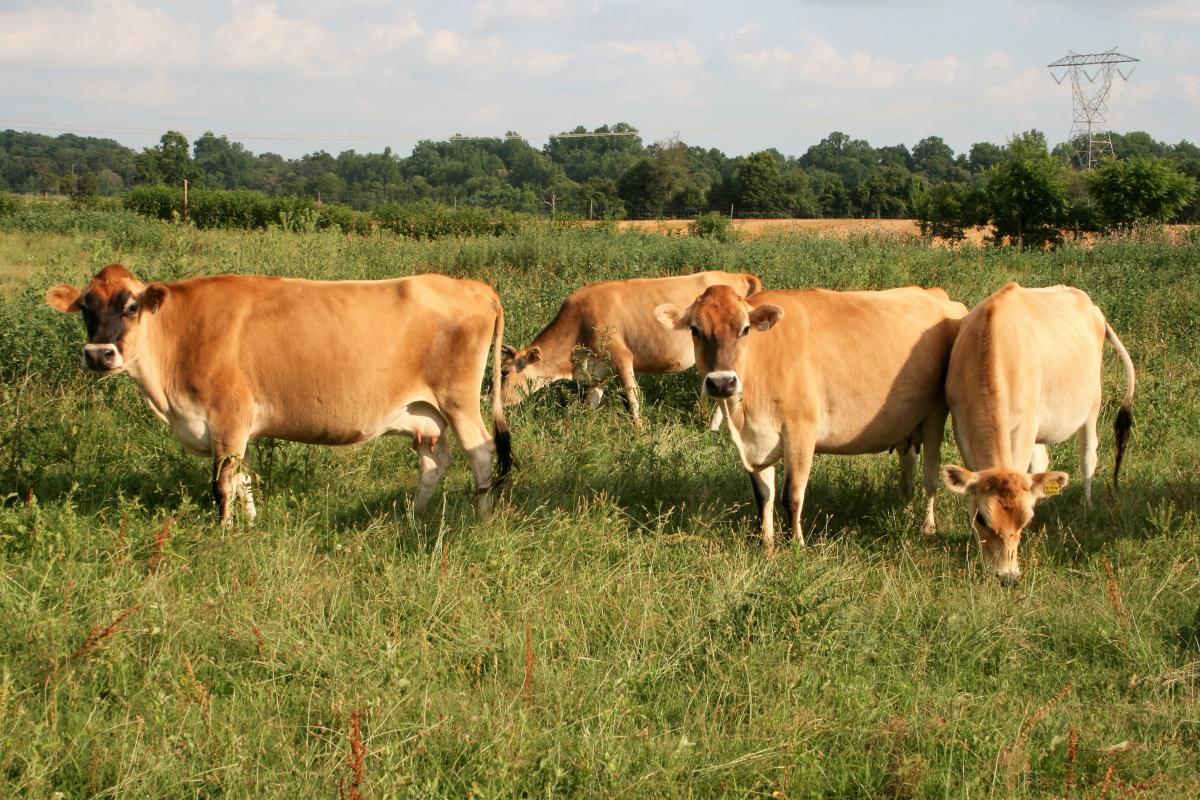 Months of legal discussion over whether and how livestock farms must comply with air emissions regulations have yet to be resolved in court, and National Milk remains firm in its recommendation that farms that could be impacted should not file emissions reports until the legal process is complete.
NMPF has been actively engaged with the Environmental Protection Agency, Congress and other animal agriculture organizations to find a solution to the problem created by the U.S. Court of Appeals’ decision to end the nine-year-old federal exemption for reporting air emissions from manure. In 2008, EPA exempted all livestock operations from reporting under the Comprehensive Environmental Response, Compensation, and Liability Act (CERCLA) regulation, and exempted all but the largest livestock operations from reporting under the Emergency Planning Community Right to Know Act (EPCRA).
However, last April, a federal appeals court ended EPA’s exemption for reporting of livestock air emissions under CERCLA/EPCRA, following legal challenges made by activist groups. EPA sought and was granted additional time from the court to delay the effective compliance date so that the agency could develop materials to help farmers understand their obligations. In late October, the EPA filed a motion requesting that the stay remain in place until January 17, 2018. The appeals court has yet to act on that motion, and several others, even though the Nov. 14 court-established compliance deadline has passed.
Based on our interpretation of the regulations and the various court findings, NMPF believes any reporting now would be premature as the industry waits for additional legal direction. Confirming NMPF’s guidance, the EPA’s website concurs that “farms with continuous releases do not have to submit their initial continuous release notification until the D.C. Circuit Court of Appeals issues its order, or mandate, enforcing the Court’s opinion of April 11, 2017. No reporting is necessary until the mandate is issued.”
NMPF Tells House Ag Committee About Importance of NAFTA; NMPF Leaders Heading to Mexico for Next Round
 NMPF maintained its full-court press on its NAFTA priorities as negotiations over the North American Free Trade Agreement (NAFTA) continue this month. NMPF President and CEO Jim Mulhern and Senior Vice President for Strategic Initiatives and Trade Policy Jaime Castaneda will attend the next round of negotiations, which started Nov. 15 in Mexico City, where they will continue to press trade officials to open Canada’s dairy market and maintain existing access to Mexico’s.
As a prelude to this weekend’s fifth round of talks, NMPF participated in an early November roundtable discussion with House Agriculture Committee members that was organized by Chairman Mike Conaway (R-TX) and Ranking Member Collin Peterson (D-MN). The roundtable was part of the committee’s continued focus on obtaining input from the agriculture community about the stakes for farmers in the NAFTA talks.
Shawna Morris, NMPF’s vice president for trade policy, was one of a handful of farm association executives there discussing the importance of the agreement with Mexico and Canada to America’s dairy farmers. Morris told the House committee that “U.S. dairy farmers cannot afford to lose NAFTA or see new restrictions on U.S. agricultural exports put in place. We support mending but not ending NAFTA by preserving the market access established under the agreement already and focusing on how to further deepen our most important FTA.”
Following the discussion, Rep. Conaway noted that “All parties today were on the same page – NAFTA is important to agriculture and agriculture must remain a top priority in the negotiations. I am hopeful that both Canada and Mexico will come to the next round of negotiations prepared to have substantive conversations.”
Rep. Peterson expressed his concerns about the impact Canada’s supply management program is having on U.S. dairy and poultry producers: “I have expressed my concerns to the administration and urge them to continue working to get these farmers a fair deal. We can’t go backward,” he said.
The critical importance of preserving the agreement and building upon it has been a key talking point that NMPF and numerous other organizations and companies have hammered home in letters to Commerce Secretary Wilbur Ross in October and to America’s governors in mid-November.
NMPF Hosts 101st Annual Meeting in Anaheim, California
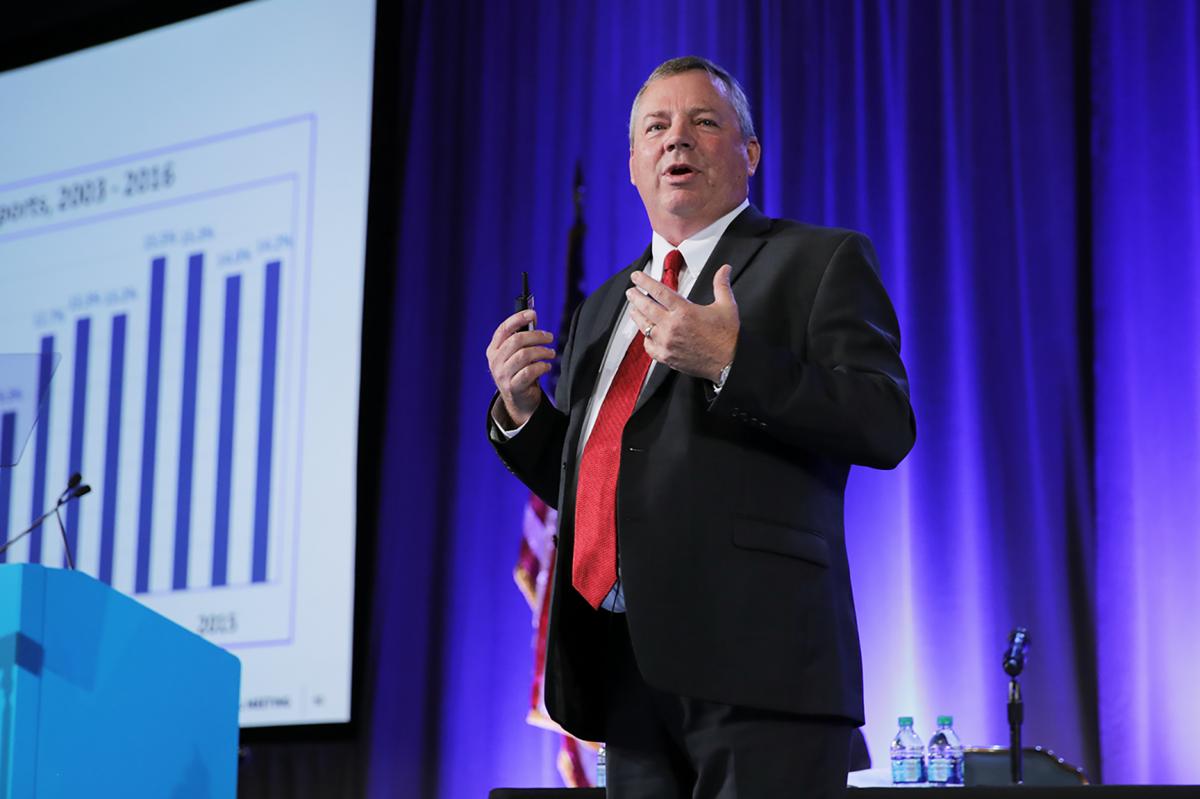 Strategies to create more opportunities for the U.S. dairy industry were a dominant theme as over 800 dairy producers, cooperative leaders and industry stakeholders gathered at the Disneyland Hotel in Anaheim, Calif., last month to attend National Milk’s 101st annual meeting, and the joint meeting of NMPF, the National Dairy Board and United Dairy Industry Association. about how. As marketing challenges abound, both domestically and internationally, attendees heard from their policy and promotion organizations about the importance of increased collaboration across the dairy community, pursuing innovative new marketing strategies, and promoting dairy’s critical role in people’s diets and its place in the supermarket.
This year’s meeting was themed “We Are Undeniably Dairy,” referencing the campaign launched earlier this year that celebrates dairy’s undeniable goodness in the areas of nutrition, sustainability and community involvement.
“We have to stop looking at other U.S. cooperatives as if we’re competitors,” said NMPF Chairman Randy Mooney in his opening remarks. “We have to recognize that in a globalized dairy market, our competitors are outside of America’s borders, and we have to work together to fight for a larger share of those markets.” Mooney said NMPF’s members need to find more ways to collaborate in the coming years. He said a visit to Europe earlier this summer by NMPF’s Officers convinced him that U.S. dairy cooperatives must redouble efforts to work together, as even the domestic dairy market is feeling pressure from foreign-based entities expanding their presence in the United States.
 NMPF’s annual Town Hall event featured presentations from staff on the latest policy issues affecting the industry, including immigration reform and the ongoing negotiations over the North American Free Trade Agreement. Later in the day, NMPF President and CEO Jim Mulhern discussed the organization’s work this year to improve the dairy safety net in 2018 Farm Bill, as well as its new campaign to push back on fear-based food marketing, Peel Back the Label.
Trace Sheehan, co-producer of the documentary “Food Evolution,” was the meeting’s keynote speaker. The film, which centers on the contentious debate over genetically modified organisms (GMOs), was screened for attendees later that evening.
The NMPF Board of Directors welcome four new members during its meeting: Tom Beringer of Bongards’ Creameries, Leon Berthiaume of St. Albans Cooperative Creamery, Brad Nosbush of First District Association, and Brian Rexing of Dairy Farmers of America. NMPF also honored retiring board members Ralph McNall of St. Albans Cooperative Creamery and George Mertens of Dairy Farmers of America.
In another meeting highlight, NMPF’s annual cheese competition was won by a pepperjack cheese made by Michigan Milk Producers Association in its Middlebury, Ind., processing plant. Dairy Farmers of America’s communications team was awarded “Communicator of the Year” in the annual NMPF communications competition. The 2018 Young Cooperator Advisory Council also selected its leadership for the upcoming year: Justin and Jennifer Malott of Maryland & Virginia Milk Producers Cooperative Association were elected as the new Chaircouple; Josh and Emily Reinhardt of Prairie Farms were elected Vice Chaircouple; and Nate and Jenny Elzinga of Michigan Milk Producers Association were elected Secretary Couple.
NMPF Board Approves Proposal to Improve Risk Management for Fluid Milk
At its 2017 annual meeting in Anaheim, Calif., NMPF’s Board of Directors endorsed a proposal to improve the price risk management of fluid milk in a way that also captures for farmers the monetary value of the current fluid milk pricing system. The proposal will be one element of a larger package of farm bill risk management improvements that NMPF will ask Congress to approve in the coming months, as the House and Senate Agriculture committees begin to formulate the next farm bill.
The proposal approved by the board was developed earlier this year by a task force of NMPF members, who engaged in discussions with members of the International Dairy Foods Association to find a mutually acceptable approach to improving the risk management of Class I milk while preserving the farm-level revenue that the Class I formula generates for producers’ milk checks.
The current classified pricing system, established in 2000, uses the higher of the Class III or IV price in each month, plus a location-specific differential in each milk marketing order region, to set the monthly Class I price. Use of the “higher of” makes it difficult for Class I milk handlers to hedge risk because they don’t know which class will be the mover for a particular month. However, the “higher of” calculation as the Class I mover has benefited dairy producers since its implementation, and NMPF task force members made clear that value needed to be reflected in any alternative pricing formula going forward.
Under the terms of the agreement, which will ultimately require approval by Congress, the current Class I system would be adjusted using the simple average of Classes III and IV as the Class I mover. This will reduce some of the unpredictability of pricing beverage milk, as it gives processors the ability to hedge Class I milk prices using Class III and IV futures.
To compensate for any loss of the “higher-of” pricing approach, this proposal applies a $0.74/cwt increase to the monthly skim milk value in each federal milk marketing order. This represents the average value of the “higher-of” system dating back to 2000. The adjustment is needed so that moving to an average of the two market-determined manufacturing class prices does not diminish the contribution to the blend price provided by Class I revenue.
“This action will improve price risk management by reducing some of the unpredictability of beverage milk prices, as it gives fluid milk handlers and their customers the ability to hedge milk prices using the futures market,” said Jim Mulhern, president and CEO of NMPF. “This change locks in the value of the ‘higher-of’ pricing approach, protects the integrity of the Federal Order system, and aligns the policy interests of dairy farmers and processors as we begin work with Congress on a new farm bill.”
House Judiciary Committee Approves Goodlatte Agriculture Labor Reform Legislation
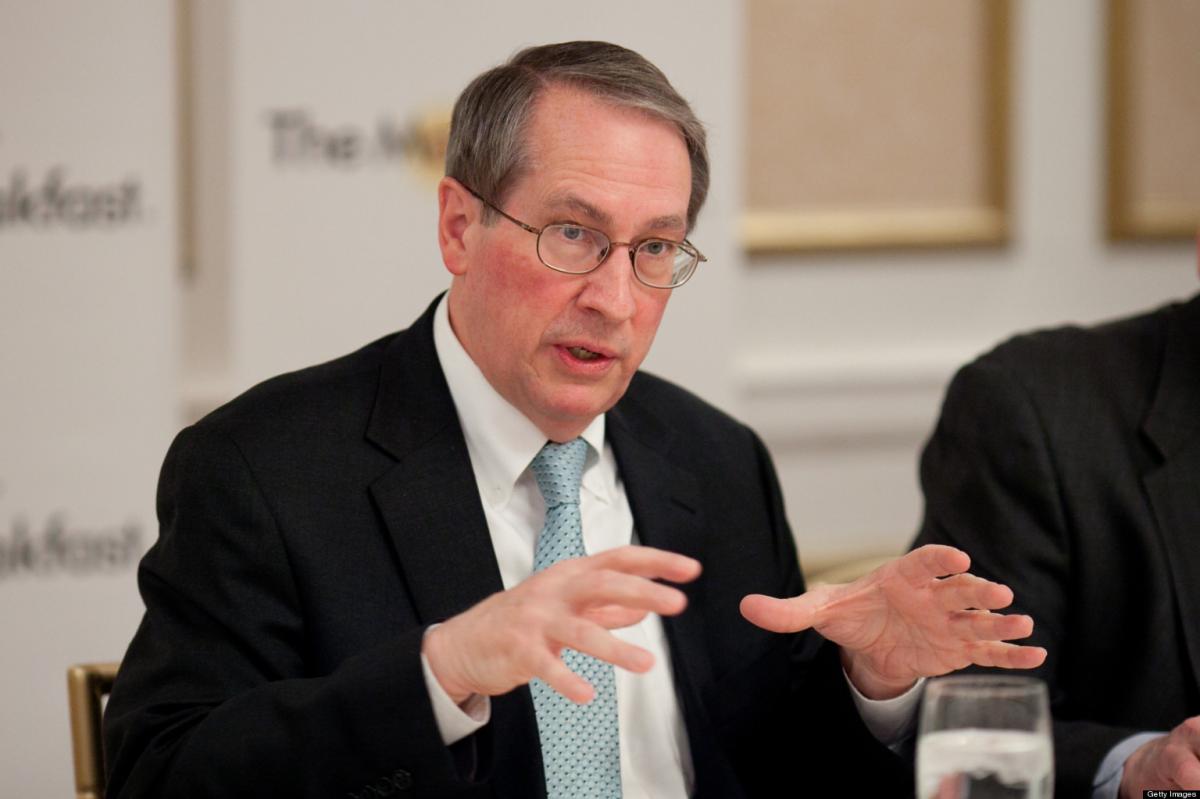 NMPF applauded the efforts of the House Judiciary Committee and its Chairman Bob Goodlatte (R-VA) last month after the committee approved legislation that would establish an entirely new visa program for the agriculture workforce.
The Agriculture Guestworker (AG) Act (H.R. 4092) would replace the existing H-2A temporary visa program, which dairy farmers largely cannot use because their labor needs are year-round, not seasonal. In addition, it would allow currently undocumented farm workers to apply for H-2C visas so that they can participate legally in the agricultural workforce. The measure was developed by Goodlatte after NMPF provided input to the committee about the workforce needs of America’s dairy farms.
NMPF President and CEO Jim Mulhern said the AG Act would help advance efforts to assure a stable, dependable and legal workforce for America’s dairy farmers, now and in the future. “The AG Act is the first step in a long process of establishing a workable solution for dairy farmers’ labor needs,” he said. “While it is not the ideal bill, it does recognize that we must improve on the current system by pursuing a new approach to matching the supply and demand for workers in U.S. agriculture.”
He added that the bill merits the support of America’s farming community, and its refinement and passage must be a priority for congressional leaders. It will also be important for dairy farmers to continue making their voices heard on this critically important issue, he said.
School Milk Act Would Allow Schools to Offer Low-fat and Fat-free Milk
NMPF is working to build support in Congress for a new bipartisan bill introduced last month that would help reverse the decline of milk consumption in schools.
 The School Milk Nutrition Act of 2017, introduced by Reps G.T. Thompson (R-PA) and Joe Courtney (D-CT), would allow schools to offer low-fat flavored milk, in addition to the current offering of fat-free milk, to participants in the federal school lunch and breakfast programs. The bill allows individual schools and school districts to determine which milkfat varieties to offer their students.
Once enacted, the bill would make permanent the administrative changes in the school lunch program proposed earlier this year by the U.S. Department of Agriculture (USDA). USDA Secretary Sonny Perdue supports giving school districts the option to offer a variety of milk types, beyond low-fat white milk and fat-free white and flavored choices.
The legislation – reflecting input from both NMPF and the International Dairy Foods Association (IDFA) – includes a pilot program to test strategies that schools can use to increase the consumption of fluid milk. This could include ways to make milk more attractive and available to students, such as improved refrigeration, packaging and merchandising. The act would also allow participants in the Special Supplemental Nutrition Program for Women, Infants and Children (WIC) to have access to reduced-fat milk.
“When kids don’t drink milk, it’s extremely difficult for them to get sufficient amounts of three of the four major nutrients most lacking in children’s diets: calcium, potassium, and vitamin D,” said NMPF President and CEO Jim Mulhern. “This legislation addresses that shortcoming both in schools and in the WIC program.”
NMPF Pushes FDA Commissioner for Action Against Mislabeled Dairy Imitations
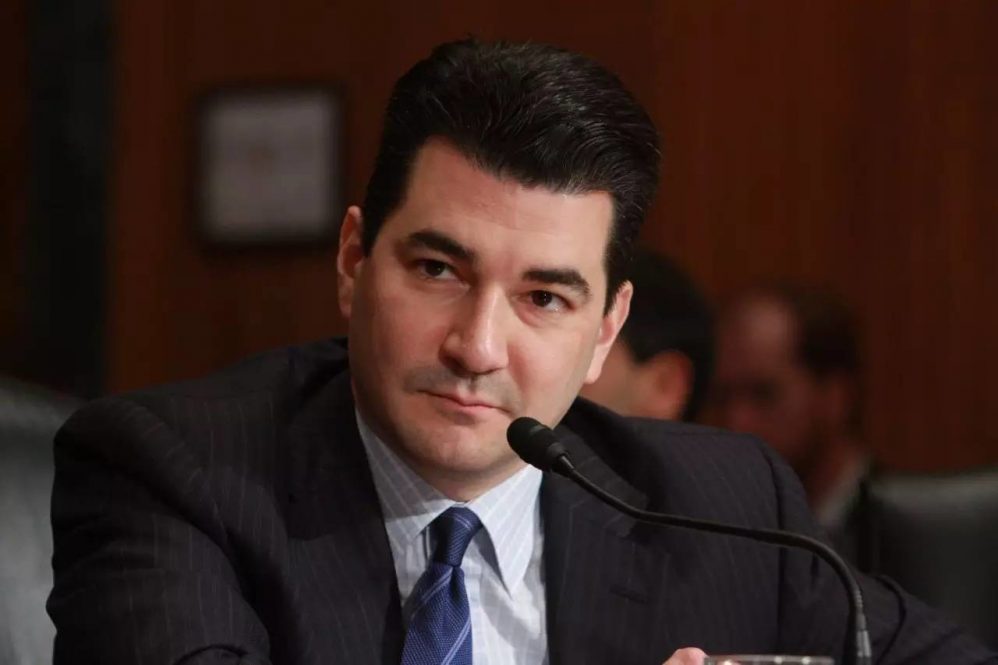 NMPF took additional steps last month to prompt the U.S. Food and Drug Administration (FDA) to take enforcement action against misbranded dairy imitators, signaling to the agency that NMPF will continue its ongoing fight for accurate food labeling.
On Oct. 26, NMPF asked FDA Commissioner Scott Gottlieb (pictured right) to prioritize the regulation of accurate food labeling after he made several comments to the media about the need for strong federal oversight of food labels. In its letter, NMPF implored Gottlieb and the agency to devote resources to prevent nutritionally inferior products from using the names of real, standardized dairy foods.
The letter reiterated NMPF’s concern that the use of dairy terms on non-dairy foods misleads consumers because none of the imitations contains the same consistent amounts of protein, vitamins and minerals. NMPF cited a 2015 Mintel survey that found that 49 percent of the responses identified nutrition as the No. 1 reason for consuming non-dairy beverages labeled as “milk.” However, an NMPF survey of 244 plant-based beverages in the Washington, D.C., area in 2017 found that none of them is nutritionally equivalent to real milk.
At NMPF’s annual meeting last month, President and CEO Jim Mulhern told attendees that the U.S. regulatory system for food labeling is failing consumers, as it fails to adjust to the proliferation of foods mimicking real dairy products. In the absence of a strong federal role in food labeling, he said, nutritionally inferior imitators will continue to pass themselves off as suitable substitutes for real milk. National Milk will continue to seek opportunities to pass the DAIRY PRIDE Act, Mulhern said, in order to force action by FDA.
Vegan organizations have organized to oppose the DPA “because they recognize that the attention we’ve brought to this issue through the introduction of the DAIRY PRIDE Act shines a spotlight on the nutritional inferiority of fake dairy products, in comparison to real milk and dairy products,” he said. “Once Congress enacts this legislation, FDA will no longer be able ignore their own existing regulations.”
In early November, NMPF sent a letter to FDA and state regulators, this time calling out the plant-based food company Kite Hill for ignoring federal labeling regulations on its products. Regulators should take enforcement action against the company’s vanilla “almond milk yogurt,” the letter said, for continuing to use dairy terminology when FDA instructs against it and when it fails to offer the same levels of nutrition as real vanilla yogurt.
MPP Forecast: November 2017
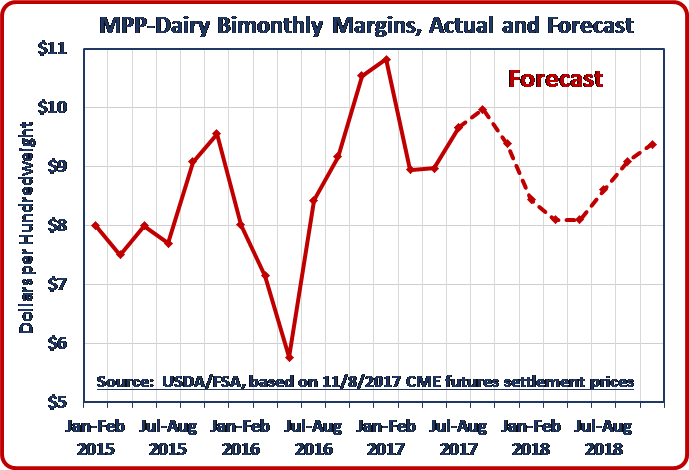 The U.S. Department of Agriculture’s (USDA) Farm Service Agency (FSA) reported that the monthly Margin Protection Program (MPP) feed cost for September was $7.81/cwt. Compared to last month’s prices, the September corn price was unchanged, soybean meal rose by $7/ton, and alfalfa hay was $2/ton higher. These changes increased the September MPP feed cost calculation from August by $0.08/cwt. NASS also reported that the U.S. average all-milk price was $17.80/cwt in September, $0.20/cwt lower than the August all-milk price. The monthly MPP margin for September was $0.28/cwt lower than the prior month, at $9.99/cwt.
The CME grain futures currently indicate that the monthly MPP feed cost will rise slowly from its current level through the end of next year, but remain below $8.80/cwt throughout that time. The CME dairy futures currently indicate that the all-milk price will remain below $17/cwt during at least the first half of 2018. Combined, the futures indicate that the MPP margin will hover close to $8/cwt during the second, third and fourth bimonthly periods next year, and may drop below that level during May-June 2018. The USDA MPP decision tool margin forecast for most of next year has fallen considerably lower over the past month.
USDA’s MPP margin forecasts are updated daily online. NMPF’s Future for Dairy website offers a variety of educational resources to help farmers make better use of the program.
CWT Member Co-ops Capture 3.9 Million Pounds of Cheese and Butter Export Sales
 With help from Cooperatives Working Together, member cooperatives secured 25 contracts to sell 3.45 million pounds of American-type cheeses and 416,674 pounds of butter in October. The product will be shipped during the months of October through January 2017 to customers in Asia, the Middle East, North Africa and Oceania.
These transactions raise the total CWT-assisted, year-to-date product sales to 57.94 million pounds of cheese and 4.75 million pounds of butter. The products are going to customers in 21 countries in five regions, and will move overseas the equivalent of 641.67 million pounds of milk on a milkfat basis.
Helping CWT member cooperatives to gain and maintain world market share through the Export Assistance program in the long term expands the demand for U.S. dairy products and the U.S. farm milk that produces them. This, in turn, positively impacts all U.S. dairy farmers by strengthening and maintaining the value of dairy products that directly impact their milk price.
The amounts of dairy products and related milk volumes reflect current contracts for delivery, not completed export volumes. CWT will pay export assistance to the bidders only when export and delivery of the product is verified by the submission of the required documentation.
All cooperatives and dairy farmers are encouraged to add their support to this important program. Membership forms are available on the CWT website.
House Committee Reviews NMPF-Backed Legislation on Nutrient Management Practices
 On Nov. 9, the House Energy and Commerce Subcommittee on Environment held a hearing on bipartisan legislation backed by NMPF that would protect dairy farmers and other agricultural operators from citizen suits under the Resource Conversation and Recovery Act (RCRA) if they are undergoing efforts to comply with federal requirements.
Reps. Dan Newhouse (R-WA) and Jim Costa (D-CA) testified at the hearing in support of their bipartisan Farm Regulatory Certainty Act, which would protect dairy farmers from RCRA citizen suits if they are engaged in complying with regulatory efforts addressing existing environmental laws and regulations. Dan Wood, executive director of the Washington State Dairy Federation – an associate member of NMPF – also testified in support of the bill.
The RCRA regulation was enacted more than 40 years ago to manage the safe disposal of solid wastes in landfills, but the law has recently been used inappropriately to target agricultural sources of farm nutrients, particularly dairy farms in the Northwest, even when producers are working with federal or state regulators to address the identified problems.
“Dairy farmers need certainty regarding the application of environmental policies and regulations to their operations,” said Jim Mulhern, president and CEO of NMPF. “Farmers who are working with regulators to correct environmental problems under one law should not be sued under another law for the same issue, and we are working with Congress on advancing this legislation to make that point clear.”
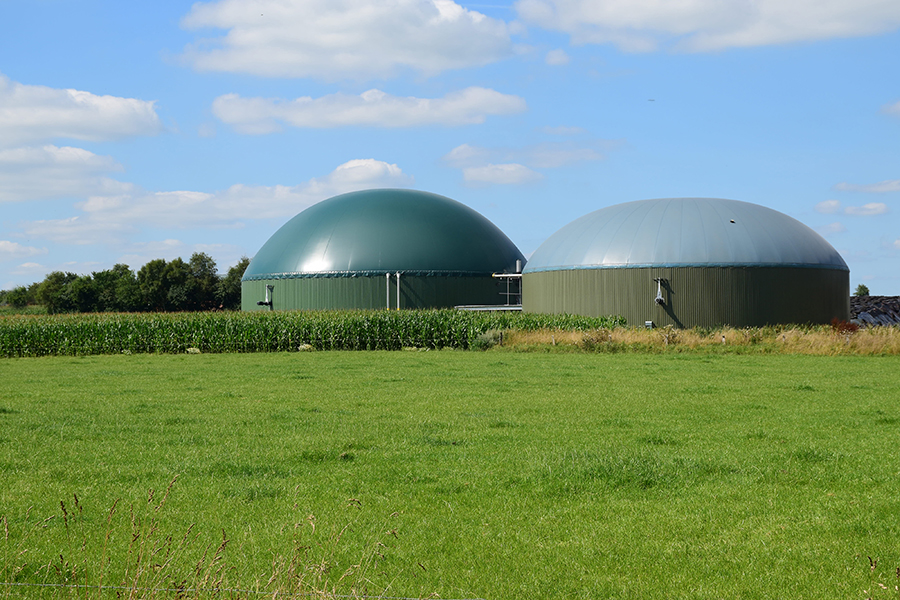
Mulhern noted that NMPF supports the use of safe and efficient environmental practices – such as anaerobic digesters and nutrient recovery – to help dairy operations remain stewards of a healthy ecosystem.