
Uncategorized
NMPF’s Detlefsen, Leader of Food-Chain Coordination Effort, Says Grocery Shortages Will Ease
Clay Detlefsen, senior vice president of regulatory and environmental affairs for the National Milk Producers Federation, says that based on information he’s received while serving in another role — as the private-sector chair of the Food and Agricultural Sector Coordinating Council – shortages of consumer staples in grocery stores strained by responses to coronavirus-related restrictions should begin easing, as soon as within a week.
“There is plenty of food in this country. There is no food shortage,” said Detlefsen in an NMPF podcast. “We have a bit of a distribution problem caused largely by consumers, in essence, over-consuming.”
Still, coronavirus-related challenges to food supply chains go well beyond store shelves, he said. The good news, Detlefsen said, is that private-sector and government coordination is “light-years” better than in past crises such as Hurricane Katrina. The Food and Agriculture Sector Coordinating Council, set up after the Sept. 2001 terror attacks to share information between government agencies and private businesses, now has years of experience dealing with food-chain crises and has been dealing with coronavirus concerns for weeks.
To listen to the full podcast, click here. You can also find the podcast on Apple Podcasts, Spotify, SoundCloud and Google Play. Broadcast outlets may use the MP3 file. Please attribute information to NMPF.
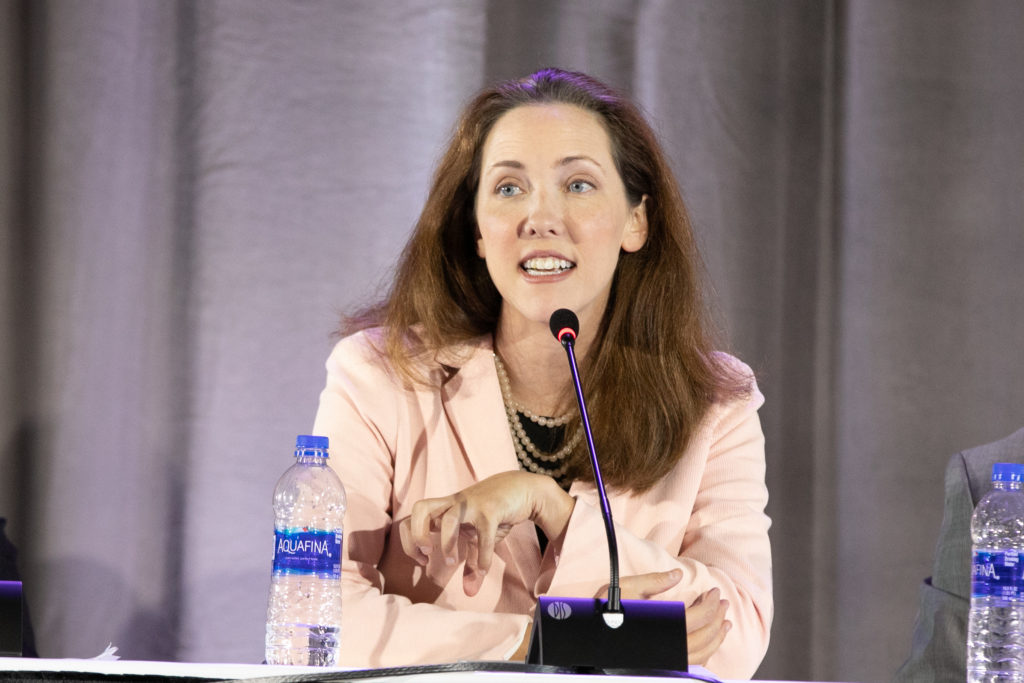
NMPF’s Jonker Discusses Safety of U.S. Milk and Details Dairy Precautions in Podcast
The National Milk Producers Federation’s Vice President for Sustainability and Scientific Affairs, Dr. Jamie Jonker, discusses why U.S. milk supplies are safe and details the precautions dairy farmers are taking to protect their workers and facilities in light of the coronavirus pandemic in a podcast released today.
Jonker, an internationally recognized expert in animal health, explains topics ranging from why pasteurization is an effective safeguard against coronavirus to how dairies are working to keep milk production going 24/7 while looking out for their own workers. To listen to the full podcast, click here. You can also find the podcast on Apple Podcasts, Spotify, SoundCloud and Google Play. Broadcast outlets may use the MP3 file Please attribute information to NMPF.
NMPF President and CEO Jim Mulhern Discusses the Coronavirus and Dairy
National Milk Producers Federation President and CEO Jim Mulhern discusses challenges facing the dairy supply chain, NMPF’s role as a resource in federal decision-making and how dairy farmers will do their part to weather the coronavirus crisis and continue serving consumers on the “Adams on Agriculture” podcast.
NMPF Reassures Consumers as Safe, Steady Dairy Production Continues
ARLINGTON, Va. – In light of consumer concern over food-supply disruptions, Jim Mulhern, president and CEO of the National Milk Producers Federation, the largest U.S. organization of dairy farmers, offered the following statement:
“U.S. dairy farmers are stewards of a product that’s harvested around the clock, 365 days a year, and they understand the importance of steady production as well as steady consumption. The U.S. food-supply chain is more than capable of meeting demand, and consumers should be reassured that milk and dairy products will continue to be produced and available in the coming weeks and months.
“Dairy supplies aren’t experiencing production interruptions at this time, and dairy farmers and processors will continue to do what they do best: produce safe, quality products every day for consumers in the U.S. and worldwide. We will vigilantly work with all aspects of the dairy supply chain to ensure these products get to everyone who needs them and that — as has always been true — dairy will remain something consumers can count on.”
Coronavirus Update
As cases of the coronavirus disease (also known as COVID-19) continue to be found in the United States, food-industry professionals are monitoring public health while preparing for any market effects. The spread of the virus has raised concerns about how it may affect public health as well as our economy, including dairy production. This page offers general resources about the virus, its spread, the disease it causes, and how people can protect themselves, as well as NMPF resources focused on dairy’s response to the pandemic.
Pasteurized milk and dairy products are safe.
The FDA has confirmed that heat treatment kills other coronaviruses, so pasteurization is expected to also inactivate this virus. In addition, there is no evidence that this strain of coronavirus is present in domestic livestock such as cattle. The virus is spread through aerosol transmission and close human contact, not through food products.
CORONAVIRUS RESOURCES
NMPF in the News:
- NMPF Reassures Consumers as Safe, Steady Dairy Production Continues
- NMPF March 13 statement on coronavirus response
- NMPF on RFD-TV discussion of coronavirus and dairy impact (March 12)
Additional Coronavirus Information:
- This fact sheet on coronavirus
- The USDA’s coronavirus response and information page: https://www.usda.gov/coronavirus
- The FDA’s coronavirus page: https://www.fda.gov/emergency-preparedness-and-response/mcm-issues/coronavirus-disease-2019-covid-19-frequently-asked-questions
- The CDC’s coronavirus page: https://www.cdc.gov/coronavirus/2019-ncov/index.html
- Case tracker, courtesy of Johns Hopkins: https://www.arcgis.com/apps/opsdashboard/index.html#/bda7594740fd40299423467b48e9ecf6
NMPF’s Bjerga on Dairy and Coronavirus
2019 Annual Report
NMPF Ready to Help Dairy Farmers Meet Coronavirus Challenges
In response to the continued spread of COVID-19 (the coronavirus) in the United States and the virus’s potential impact on domestic and international markets, National Milk Producers Federation President and CEO Jim Mulhern said the following:
“As the organization representing U.S. dairy farmers and the cooperatives they own, the National Milk Producers Federation stands ready to assist its members in addressing coronavirus challenges. From possible damages to domestic and world markets, to supply chain labor disruptions on the farm, at the processing plant or in transporting milk, the potential ramifications for dairy are wide-ranging. We will devote our resources to the best of our ability to helping dairy farmers and cooperatives respond to whatever challenges they may face.
“The good news is that the U.S. dairy supply is safe, and production of high-quality products continues unimpeded. The FDA has confirmed that heat treatment kills other coronaviruses, so pasteurization is expected to also inactivate this virus. In addition, there is no evidence that this strain of coronavirus is present in domestic livestock such as cattle.
“Still, all producers will remain vigilant as what has now been labeled a pandemic continues its path. We will continue to answer questions and offer information to help our members. Policy solutions also may be needed for producers whose operations have been affected by the virus. In keeping with our mission of serving our members, regardless of the challenge, we will work with lawmakers and regulators to ensure a safe and adequate supply of milk and to mitigate potential economic harm to dairy farmers.”
NMPF’s Bleiberg on Senate Ag-Labor Efforts
NMPF’s vice president for government relations, Paul Bleiberg, discusses the potential for a Senate agricultural labor bill this year — and NMPF’s member fly-in to discuss the issue with individual Senators — on the Adams on Agriculture podcast.
Dairy Farmers Descend on Senate to Demand Agriculture Labor Reform
Dairy farmers from National Milk Producers Federation member cooperatives and state dairy associations are visiting U.S. Senate offices today and tomorrow as part of a fly-in calling for an agricultural labor bill that could be reconciled with a plan the House approved last year, providing the stable, secure labor force U.S. dairy producers need.
U.S. dairy producers face labor shortages that are more intense than those felt in agriculture as a whole because they cannot use the H-2A farmworker program, which only provides for seasonal labor rather than the year-round workers dairy needs. With domestic workers in short supply and foreign labor difficult to employ under current policies, dairy farmers are urging lawmakers to find real solutions.
“The situation is dire,” said Jim Mulhern, president and CEO of NMPF, the biggest U.S. dairy-farmer organization. “Dairy farmers face labor shortages while they are forced to navigate the deeply uncertain and volatile realities undergirding agriculture labor in the U.S. Meanwhile, uncertainty on the farm harms individuals and rural communities that rely on those farms to generate jobs.”
The House of Representatives in December passed bipartisan legislation allowing for year-round visas in dairy as part of the first ag-labor bill to pass that chamber since 1986. NMPF supported the bill, noting that, although imperfect, its passage was a necessary step in moving toward a legislative solution addressing the ag labor crisis, with further work to be done in the Senate to improve upon the House measure.
The fly-in is taking place after the conclusion of NMPF’s March Board of Directors meeting held in Arlington, Virginia. During the board meeting, NMPF officially expanded its membership with the addition of Cayuga Marketing, LLC based in Auburn, NY, adding an important upstate New York voice to NMPF’s work on behalf of all dairy producers. NMPF also endorsed dairy-sector sustainability efforts during its meeting, lauding industrywide plans to reduce carbon emissions to net zero.
Dairy Farmer Testifies Before House Subcommittee on Importance of Expanding Exports Opportunities and Fair Rules
Connecticut dairy farmer, James “Cricket” Jacquier, testified today before the House Committee on Agriculture’s Subcommittee on Livestock and Foreign Agriculture in order to provide a dairy stakeholder perspective on agricultural trade. Jacquier is Chairman of the Board for Agri-Mark, a dairy cooperative comprised of 850 farm families across New England and New York. Agri-Mark is a member of the National Milk Producers Federation and the U.S. Dairy Export Council, which work together to advance dairy trade policy for the industry.
In his testimony, Jacquier urged Congress to work with the Administration to use negotiating resources wisely to target important agricultural markets and create greater access for U.S. dairy products with key trading partners. He noted that careful and proactive attention to the implementation and enforcement of negotiated trade agreements, such as USMCA, will be critical in the coming year, emphasizing in particular the importance of ironing out details pertaining to new export access and Class 7 related dairy policy reforms with Canada, and common cheese name safeguards with Mexico as USMCA progresses.
Regarding GIs, Jacquier also raised concerns with the European Union’s (EU) efforts to misuse geographical indication to instead confiscate common food names, such as parmesan, feta and asiago, as well as wine and meat terms.
“America’s dairy farmers applaud the certainty that lowered tariffs and fairly negotiated trade agreements bring to our industry. However, if we cannot combat outrageous nontariff barriers, such as those the EU is manufacturing to block the export of American-made cheeses, these trade wins can ring hollow. The EU’s stance on common food names is a protectionist and anti-trade policy and it must be firmly rejected by Congress and by U.S. trade officials at every turn,” Jacquier said.
Dairy farmers, manufacturers and rural communities rely on the economic benefits provided by dairy exports. In 2019, America’s dairy industry exported more than $6 billion in dairy products ranging from cheese to ice cream to milk powders. Trade disputes and a lack of market access comparable to our competitors has significantly harmed the dairy industry, contributing to a 15% decline in dairy farms over the past two years, according to U.S. Department of Agriculture data.
You can find Jacquier’s submitted testimony here.


