The U.S. Department of Agriculture (USDA) published its proposed National Bioengineered Food Disclosure Standard (NFBDS) on May 4, which aims to provide clarity on when and how to label foods that contain bioengineered ingredients. NMPF was pleased that USDA made clear that meat and milk that are produced by animals fed bioengineered grain are not bioengineered, and therefore not subject to the rule. NMPF fought hard during the legislative process to establish that determination.
However, other provisions of the proposal remain unresolved as the agency seeks additional feedback from the public. Among those are whether to require the disclosure of highly-refined ingredients such as beet sugar, corn syrup and soybean oil that do not contain any bioengineered DNA, even though the definition of a bioengineered food requires that it “contain genetic material.” Also at issue is the threshold level of bioengineered ingredients that will trigger disclosure. The alternatives proposed include setting the threshold at either 0.9 percent or 5 percent.
NMPF said the final USDA rule will need to make clear that bioengineered enzymes – typically used in the making of cheese – are exempt from disclosure, especially since every country with a bioengineered food disclosure standard already provides such an exemption.
Vitamins added to foods also need to be exempt under USDA’s disclosure proposal, NMPF said. Unless the rule makes this clear, many fluid milk products, which contain Vitamins A and D, could need to be labeled as bioengineered if they use bioengineered vitamins. NMPF is working with the Coalition for Safe and Affordable Food and will file comments identifying this issue as a huge oversight that must be remedied.
NMPF was pleased that the design of the symbol to be used on bioengineered foods conveys a neutral to positive image, as bioengineering is frequently portrayed in a negative light. NMPF will encourage USDA to send a clear message that bioengineered disclosures – present or not – must not be false and misleading.
NMPF will work through these and other issues as it prepares to submit comments by to the July 3 deadline.
 To help promote the U.S. dairy industry as a job-creating and exports machine, National Milk has joined the U.S. Dairy Export Council (USDEC) and the International Dairy Foods Association (IDFA) to launch a year-long campaign titled “Got Jobs? Dairy Creates Jobs, Exports Create More.”
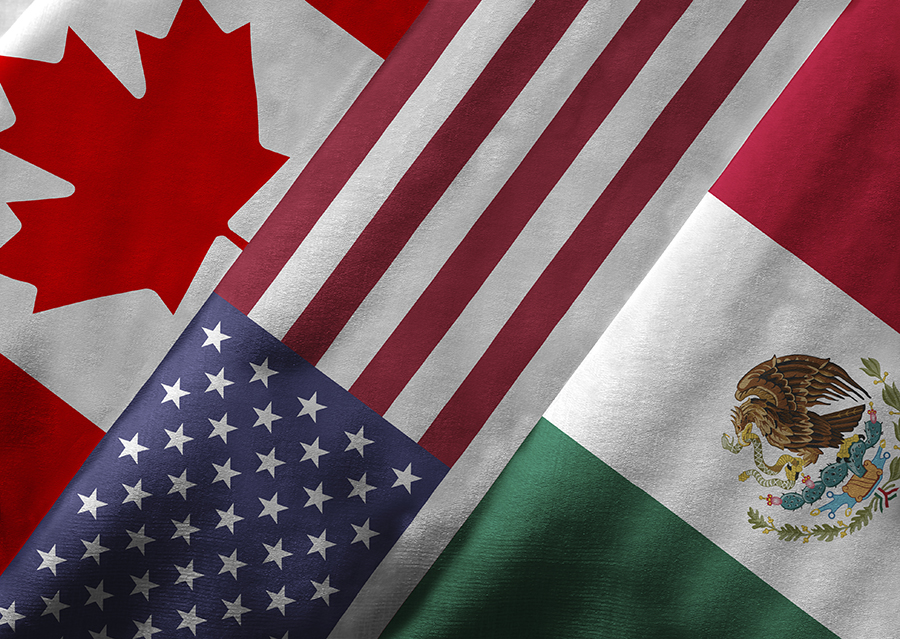 President Donald Trump has indicated he may be willing to wait until next year to reach a revised North American Free Trade Agreement (NAFTA) if it means getting a better deal from Canada and Mexico. NMPF continues to believe that the NAFTA talks are critically important and must be concluded, but not if that comes without the improvements the U.S. dairy industry needs.
 The U.S. Department of Agriculture (USDA) announced on June 7 that California dairy producers approved a Federal Milk Marketing Order (FMMO) for the entire state of California.
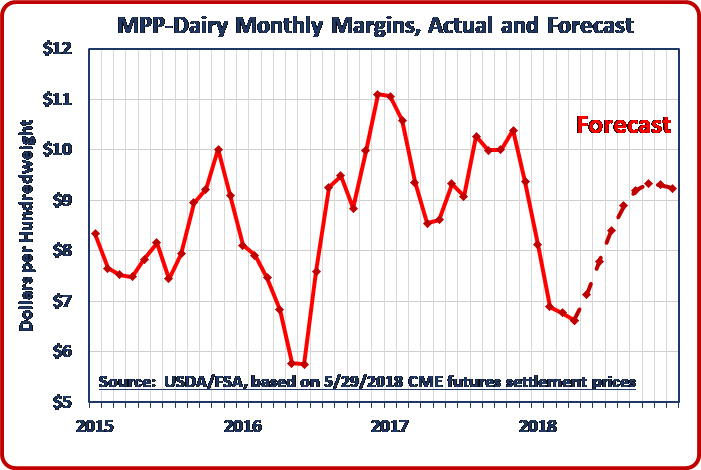 Under the dairy Margin Protection Program (MPP), the monthly margin for April 2018 decreased an additional $0.15 per hundredweight from March, to $6.62/cwt. This was the fifth consecutive drop in the MPP monthly margin. The April all-milk price increased by $0.20/cwt. from March, to $15.80/cwt. The April feed cost formula was up by $0.35/cwt. from March, with most of the increase – on a per-hundredweight-of-milk basis – due to an increase in the cost of alfalfa hay. The prices of corn and soybean meal also contributed smaller increases to the MPP feed cost formula calculation.
 An amendment to the 2018 House Farm Bill that would have allowed the interstate sale of unpasteurized milk was soundly defeated thanks to strong opposition from National Milk, its member cooperatives, several other key industry stakeholders, as well as consumer and public health advocates.
 NMPF continues to work with its congressional allies to ensure the enactment of a bipartisan, bicameral Farm Bill before the current one expires on Sept. 30. Both the House and Senate are making progress on their respective versions of the Farm Bill, with action likely in both chambers in June.
 The NMPF Board of Directors voted in early June to continue the Cooperatives Working Together (CWT) program, the historic dairy farmer self-help export assistance effort.