Dairy Defined:
Real Milk Extends its Comeback
February 24, 2026
In the long run, reality wins.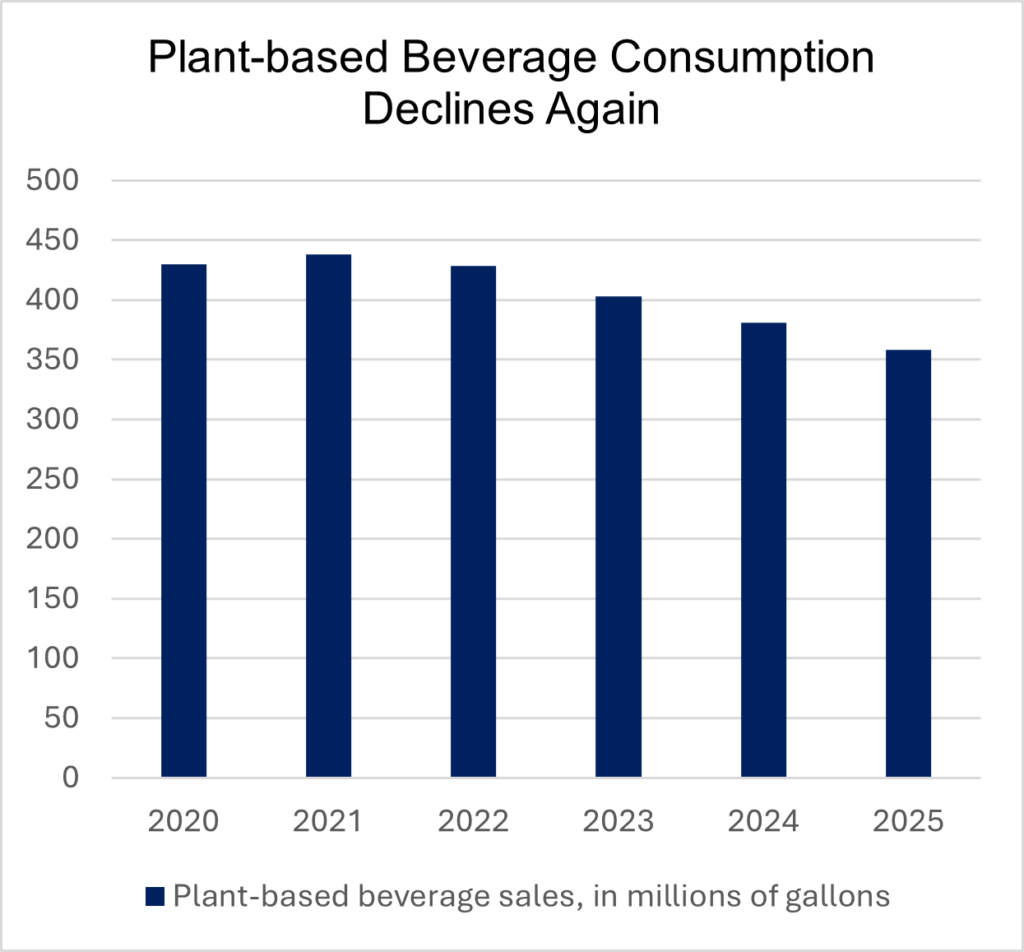
In the decades-old saga of Real Milk vs. The Plant-based Imposters, Team Real had another good year in 2025. While retail sales of fluid milk stayed steady, sales of imitators made from almonds, oats and other items fell 6 percent to 358.4 million gallons last year, according to Circana data of retail sales. Since its peak in 2021, plant-based sales have declined by nearly one-fifth; last year’s drop of 6 percent was the steepest of all four.
As a result, for the fourth straight year, good-old-fashioned fluid milk’s market share rose compared to plant-based beverages, holding 90.7 percent of the combined dairy-and-alternative-beverage market in 2025. That’s the fourth straight annual increase in milk’s market share, and it’s up from 89.4 percent in 2021.
Slowly, but surely, consumers are choosing the better value — in nutrition, in price, and in trustworthiness. In a rational world, real milk and plant-based beverages wouldn’t even be in the same category — their nutritional profiles are radically different, and their ingredients bear no similarity. Decades of plant-based marketing as dairy alternatives have made their mark; but despite that, dairy remains dominant. That’s a tribute to milk’s irreplaceable nutritional package — and to consumers who dig past the hype and make the choices that best fit their nutritional needs.
Not that plant-based beverages are ever going away — far from it. Going back to the data: Even though beverages made from almonds, which is 63 percent of the plant-based market, fell by 8.6 percent last year, and soy fell 8.3 percent, oat-based beverages rose 1.8 percent, as it’s become a solid-though-distant second place to almonds.
People have their reasons to choose ultra-processed beverages of inferior nutritional value. But the decline of plant-based beverages fits within several trends of the 2020s, from the embrace of real food to renewed appreciation of dairy’s nutritional benefits, especially at fuller-fat levels, to consumers who are more critical of what they consume.
Confusion remains in the marketplace over the inferior nutrition of plant-based versus true dairy beverages; that’s shown by surveys and studies. Enforcing federal standards of identity that define milk as an animal product and reserving dairy terms on labels only for true dairy beverages would further these positive marketplace trends. Nutrition science has spoken, and consumer behavior is changing too. Slowly but surely, milk’s integrity is carrying the day, and real dairy is winning. Often, it just takes time.