ARLINGTON, VA – The National Milk Producers Federation thanked Senate members for approving a cloture motion today that will set up a final vote on legislation that would create a federal, uniform labeling system for foods produced using biotechnology. The final vote is expected to take place by Friday afternoon.
The legislation, negotiated by Sens. Pat Roberts (R-KS) and Debbie Stabenow (D-MI) of the Senate Agriculture Committee, would preempt Vermont’s state GMO labeling law that took effect July 1, and instead establish national guidelines for how companies disclose the presence of ingredients and foods made with biotechnology. Cloture was invoked Wednesday afternoon with the bipartisan support of 65 Senators. Members now have 30 hours to debate the measure before it moves to a final vote.
“We are now a major step closer to ending the confusion that has already arisen because of the Vermont law,” said NMPF President and CEO Jim Mulhern. “With final passage by the Senate, approval by the House, and with President Obama’s signature, we can establish a national framework to provide information to consumers without stigmatizing agricultural biotechnology and complicating how companies market foods in interstate commerce.”
NMPF expressed its appreciation for the commitment that Sens. Roberts and Stabenow gave to reach a solution on this issue that reaffirms the federal government’s role in food labeling policy.
Mulhern noted that nearly 3,000 products have been pulled from Vermont supermarket shelves in the past week, as a result of companies making decisions not to sell certain products there, now that the state’s own mandatory labeling law is in effect.
“The understandable decision by companies to avoid the Vermont market because of the new state law hurts consumers and is evidence that an issue of this importance must be resolved at the federal level, not on a state-by-state basis,” Mulhern said.
NMPF continues to urge its members to contact their Senators to encourage passage of the Robert-Stabenow agreement, using the organization’s online Dairy GREAT website email tool. The organization recently joined nearly 1,100 food companies in signing a letter pushing for the bill’s passage.
Food ingredients made using biotechnology have been proven safe by more than 2,000 studies from leading scientific bodies worldwide. The U.S. Department of Agriculture, the U.S. Food and Drug Administration, and the U.S. Environmental Protection Agency have all reaffirmed their long-standing recognition of the safety of the technology.
###
The National Milk Producers Federation (NMPF), based in Arlington, VA, develops and carries out policies that advance the well-being of dairy producers and the cooperatives they own. The members of NMPF’s cooperatives produce the majority of the U.S. milk supply, making NMPF the voice of dairy producers on Capitol Hill and with government agencies. For more on NMPF’s activities, visit our website at www.nmpf.org.

 ARLINGTON, VA – The National Milk Producers Federation (NMPF) expressed its support for new bipartisan legislation introduced in the House of Representatives that would clarify the exemption of dairy farms and other livestock producers from being subject to the Resource Conservation and Recovery Act (RCRA), which governs the safe disposal of solid waste.
 ARLINGTON, VA – The National Milk Producers Federation’s Farmers Assuring Responsible Management (FARM) Program will host a full day of programming during the 49th annual conference of the American Association of Bovine Practitioners (AABP) in Charlotte, N.C.
 NMPF sponsored the Consortium for Common Food Names seminar on protecting the right of food companies to continue using their products’ names, held June 21 in Chicago, Ill. The meeting sharped the focus across the food industry of the threats posed by European efforts to restrict the use of food names important to U.S. food producers.
 The National Dairy FARM Program continues to release new materials to help cooperatives and farmers prepare for the FARM Program Version 3.0 which will begin to be evaluated on in 2017. Among these resources are documents on tail docking and antibiotic use.
 The National Dairy FARM Program is hosting its first-ever, two-day evaluator’s conference from November 2-3, 2016, in Nashville, Tenn., following the conclusion of the joint annual meeting. The event will provide ample professional development opportunities for all FARM Program evaluators to network, hear from engaging speakers and interact with each other. Conference sessions will include discussions on the latest animal well-being research, crisis management and communications training, as well as round table discussions about FARM Program challenges and opportunities.
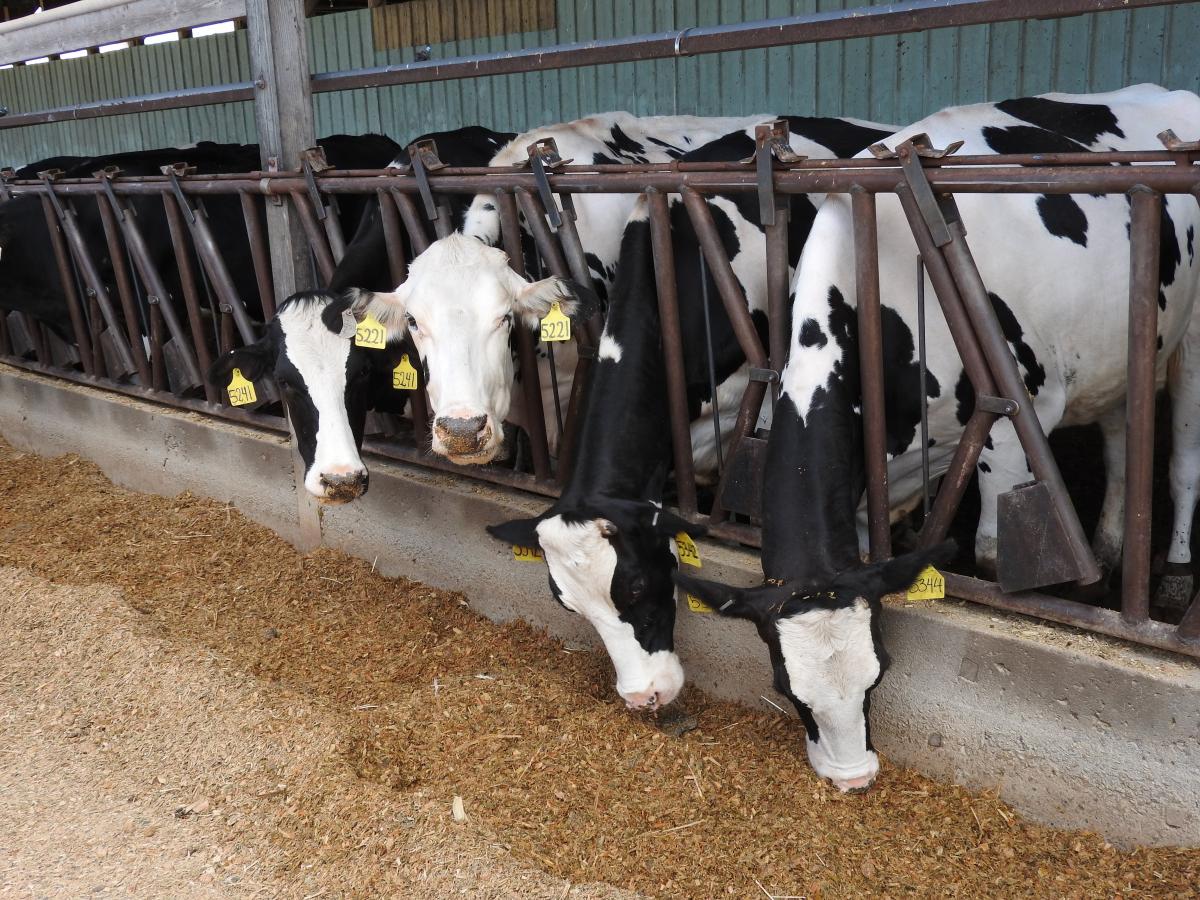 As the federal government continues its focus on the health impacts of antibiotics use in people and animals, NMPF has provided the Presidential Advisory Council on Combatting Antibiotic-Resistant Bacteria with input on how drugs are used on dairy farms, and how the government should consider updating its data collection process.
 Cooperatives Working Together member cooperatives captured 17 contracts to sell 4.868 million pounds of American-type cheese, 458,562 of butter and 2.119 million pounds of whole milk powder in June. These products will go to customers in Asia, Central America, the Middle East, North Africa, Oceania and South America. The product will be shipped from June through December 2016.