WASHINGTON, D.C. – As Congress begins its deliberations on the next farm bill, improvements to the dairy Margin Protection Program must be a top priority for lawmakers, said Jim Mulhern, president and CEO of the National Milk Producers Federation, who spoke today before the House Agriculture Committee.
During the farm bill hearing on Capitol Hill, Mulhern told committee members that the dairy Margin Protection Program (MPP) is failing to live up to its intended role as a viable economic safety net for farmers, and that a series of changes is needed to restore dairy producers’ confidence in the program. Mulhern’s full testimony can be found here.
“While MPP was, and is, the right approach for the future of federal dairy policy, the program in its current form does not provide meaningful safety net support to the nation’s dairy farmers,” Mulhern said.
The MPP is designed to allow farmers to insure the gap between milk prices and the cost of purchasing feed for dairy cattle. Farmers can choose to pay higher premiums for additional levels of margin coverage, although a decreasing number have elected that approach as they saw the program underperforming. The MPP will continue to falter “without action by this Congress to move it closer to the program it was originally proposed to be,” Mulhern said.
Since its creation in the 2014 farm bill, the MPP has offered little effective support to dairy farmers, resulting in dwindling participation in the program. To rectify that problem, Mulhern shared with the committee members the recommendations to improve the MPP that NMPF’s Board of Directors unanimously approved earlier this month.
NMPF’s proposal includes a series of adjustments that will affect the way both feed prices (including corn, alfalfa and soybean meal) and milk prices are calculated. The most needed improvement is restoring the feed cost formula to the one originally developed by NMPF, he said. During Congress’s deliberations in 2014, lawmakers implemented a 10-percent cut to the weightings of all three feedstuff components of the MPP feed cost formula, due to what turned out to be an inaccurate budget score from the Congressional Budget Office. The resulting feed formula “understates the price to farmers of producing 100 pounds of milk, thereby overstating the actual margins farmers are experiencing,” Mulhern said, adding that the Agriculture Committee “got the calculation right the first time,” and thus needs to restore the MPP feed formula to its original level. Margins using the current formula are approximately $1 per hundredweight higher than they would be if the original feed formula were in place.
NMPF is also asking that Congress direct the Agriculture Department to obtain more precise data for the prices dairy farmers are paying for corn, soybean meal and hay, while also collecting better data for the price farmers receive for milk. These changes will more accurately reflect the true margin dairy producers are experiencing, Mulhern said.
The other NMPF recommendations include: Improving the affordability of the program’s premiums; changing the timing of payments and annual enrollment to be more farmer friendly; and expanding the use of additional risk management tools, such as the Livestock Gross Margin Program, to complement the risk management offered by the MPP safety net.
“We look forward to working with this committee to enact these changes in the next farm bill,” Mulhern said.
His testimony also addressed an issue of great concern to many in the dairy community: the need for immigration reform. The importance of immigrant workers to the U.S. dairy industry cannot be overstated, Mulhern said. At least 50 percent of the U.S. dairy farm workforce is comprised of foreign-born labor. Because the seasonal H-2A visa program does not apply to dairy farms with a year-round demand for labor, Congress must provide the agriculture industry with an effective guest worker program to meet its future needs, while also providing a way to address current workers with improper documentation.
“Without access to a steady and reliable workforce, our industry will not be able to survive, let alone thrive, in the future,” Mulhern said.
Mulhern also touched on trade’s impact on dairy, which has expanded considerably in the last decade. The United States has gone from exporting less than $1 billion of dairy products in 2000 to a record $7.1 billion in 2014 – an increase of 625 percent. Because of this, Mulhern said, the United States must preserve and enhance successful elements of its free trade agreements, such as its partnership with Mexico, America’s No. 1 dairy export market. The federal government should also work to rectify problematic trade issues, such as Canada’s protectionist attempt to undermine its trade commitments to the United States, and the European Union’s attempts to co-opt the use of common food names like parmesan and feta.
“If we aren’t in the game actively negotiating on these issues, we are ceding ground to our competitors and those looking to make it tougher for us to do business in their markets,” said Mulhern.
Mulhern’s testimony also stressed the need for congressional support for the DAIRY PRIDE Act, introduced by Reps. Peter Welch, Mike Simpson and Sean Duffy in the House, and Sen. Tammy Baldwin in the Senate. The legislation would force the U.S. Food and Drug Administration to enforce its long-standing rules defining the composition of products that use the term “milk.”
Mulhern said that plant-based alternatives lack real milk’s consistent level of nutrition, and that in the absence of proper labeling enforcement, increasing numbers of nutritionally inferior dairy imitators will lead to confusion in the marketplace.
###
The National Milk Producers Federation (NMPF), based in Arlington, VA, develops and carries out policies that advance the well-being of dairy producers and the cooperatives they own. The members of NMPF’s cooperatives produce the majority of the U.S. milk supply, making NMPF the voice of dairy producers on Capitol Hill and with government agencies. For more on NMPF’s activities, visit our website at www.nmpf.org.

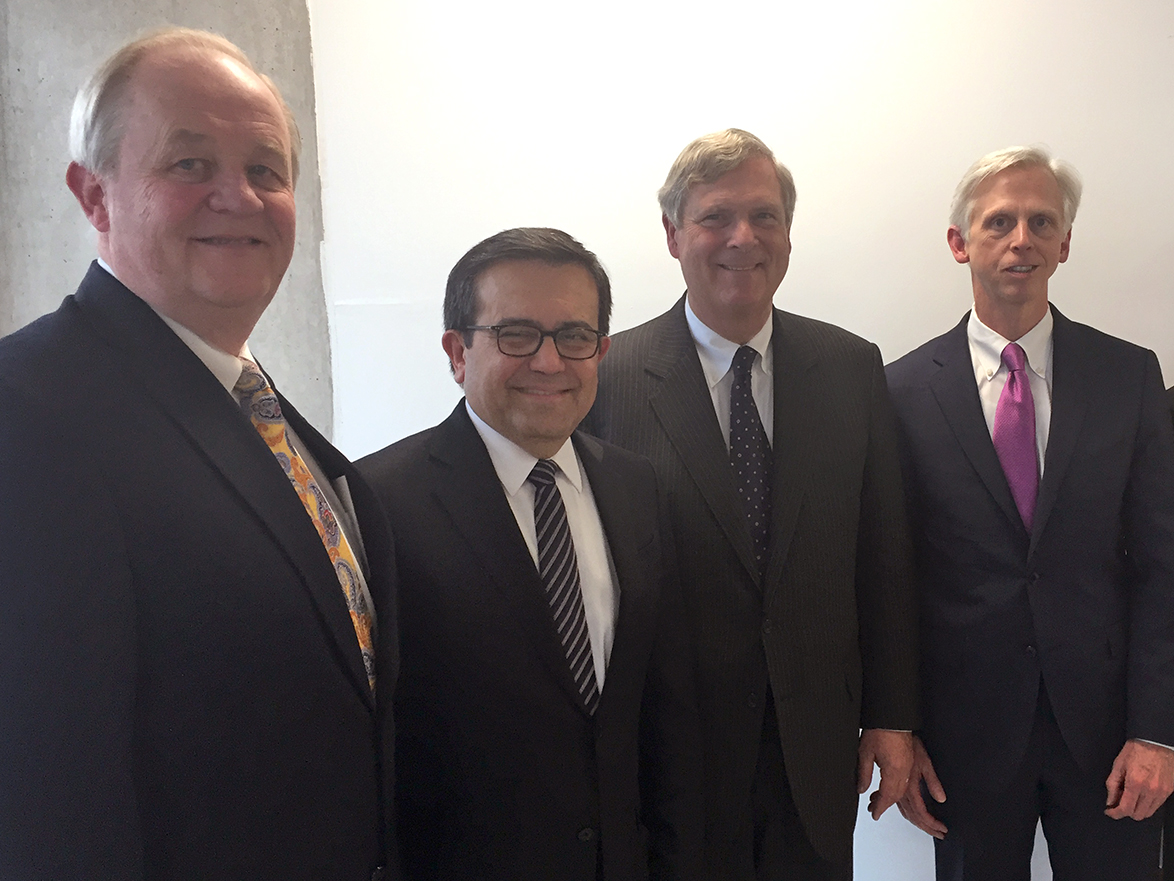 NMPF President and CEO Jim Mulhern, along with his counterparts at the U.S. Dairy Export Council (USDEC) and the International Dairy Foods Association (IDFA), pledged a continued commitment to dairy trade with Mexico during discussions last month with Mexican government, dairy farmers and industry officials.
 NMPF, together with the U.S. Dairy Export Council and the International Dairy Foods Association, are urging the Trump Administration and the governors of northern border states to fight back against protectionist Canadian trade policies that are increasingly shutting out American dairy exports, and thereby violating existing trade commitments between the two nations.
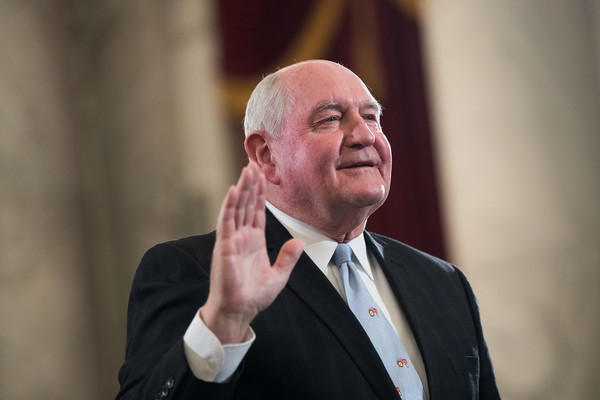 During a Senate Agriculture Committee confirmation hearing March 23, Agriculture Secretary-elect Sonny Perdue indicated he supports improvements to the dairy safety net, and as head of USDA would also advocate for policies that expand the availability of farm labor in dairy production.
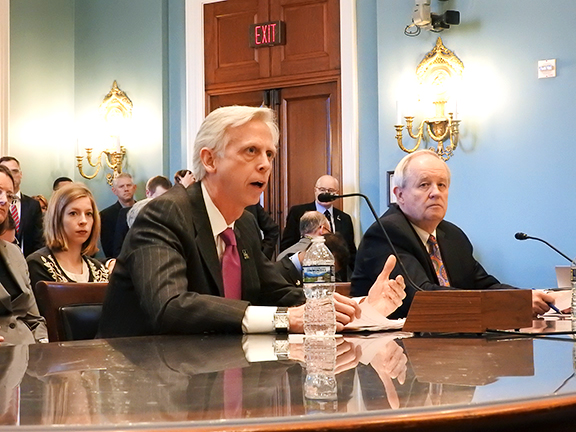 Congress must make it a priority to adopt badly needed improvements to the dairy safety net as soon as possible, said NMPF President and CEO Jim Mulhern at a House hearing last month on dairy policy and the upcoming farm bill.

 MEXICO CITY –The leaders of three major U.S. dairy organizations Wednesday promised to continue a strong commitment to their time-tested partnership with Mexico’s dairy industry and consumers.