ARLINGTON, VA – As the U.S. Department of Agriculture (USDA) prepares to develop a regulatory standard for the labeling of bioengineered food ingredients, it must ensure that consumers receive clear, accurate information about the foods they eat, according to the National Milk Producers Federation (NMPF).
In comments filed today with USDA’s Agriculture Marketing Service, NMPF said it supports a strict, science-based approach in determining how foods made using bioengineering should be regulated. Since bioengineered foods have repeatedly been found to be completely safe by both domestic and international science and research organizations, NMPF said the new standard under review by USDA should focus on providing consumers accurate information, while discouraging misleading marketing tactics or meaningless absence claims.
NMPF’s comments were among many submitted to USDA today by a variety of farm and food organizations that worked together last year through a broad coalition to help pass the National Bioengineered Food Disclosure Standard, which was signed into law by President Barack Obama in July 2016.
There is “irrefutable scientific evidence that such foods are safe and not materially different from their conventional counterparts,” said NMPF President and CEO Jim Mulhern. However, he said, too many food companies utilize “fear-mongering” to vilify food biotechnology, as they seek to profit from the consumer confusion surrounding its use.
“We’ve long stood unequivocally behind the science that foods made through approved biotechnology techniques are completely safe, and have been since the first government approvals more than 20 years ago,” Mulhern said.
In its comments, NMPF emphasized that Congress clearly recognized in the new law that giving farm animals grains developed through biotechnology has no effect on the meat and milk derived from those livestock. Thus, Mulhern noted, “dairy foods are not genetically modified products and therefore there is nothing to label.” More than 60 other nations around the world have biotech disclosure requirements, and none have labeling requirements on milk or meats from animals that may have consumed bioengineered grains.
National Milk stressed that the bioengineered food disclosure standard is really a measure to regulate food marketing, not food safety. Therefore, in determining the level of a substance needed for a product to be considered bioengineered, NMPF suggested that USDA use the same 5-percent threshold employed by the National Organic Program (NOP), another marketing program administered by the department. Under this approach, the minimum disclosure level for bioengineered ingredients would be 5 percent, below which mandatory label disclosure would not be required.
“USDA should consider a threshold that supports continued use of bioengineered ingredients or substances and is consistent with other recognized standards,” according to NMPF’s comments.
To avoid consumer confusion and the use of ambiguous labels, NMPF suggested that only two designations be used to disclose bioengineered foods: “contains bioengineered ingredients” and “may contain bioengineered ingredients.” It also insisted that any disclosure be “non-disparaging” to bioengineering technology.
“A food label should not be designed to scare consumers into purchasing certain products, especially when such labels suggest a distinction in which there is no real difference. It’s not fair to try to manipulate consumers through unfounded fears, nor is it fair to the other food companies that don’t engage in such dishonest marketing,” said Mulhern. “We support honest labeling practices in the marketplace, and hope USDA will heed our comments to accomplish this goal.”
###
The National Milk Producers Federation (NMPF), based in Arlington, VA, develops and carries out policies that advance the well-being of dairy producers and the cooperatives they own. The members of NMPF’s cooperatives produce the majority of the U.S. milk supply, making NMPF the voice of dairy producers on Capitol Hill and with government agencies. For more on NMPF’s activities, visit our website at www.nmpf.org.
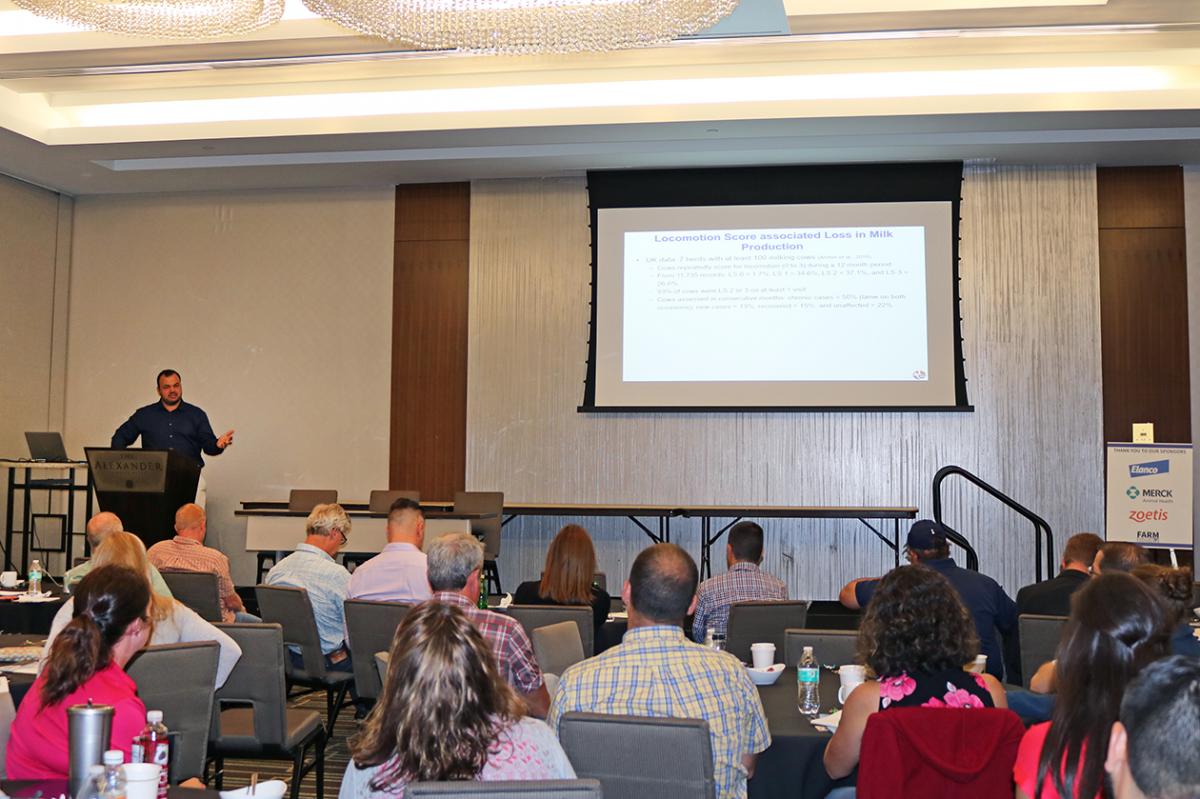 NMPF’s second annual FARM Program Evaluator Conference held last month hosted more than 70 dairy industry experts to share, network and learn about the latest in animal care, environmental sustainability and antibiotic stewardship efforts. Elanco, Zoetis and Merck Animal Health sponsored the event, held July 18-20 in Indianapolis.
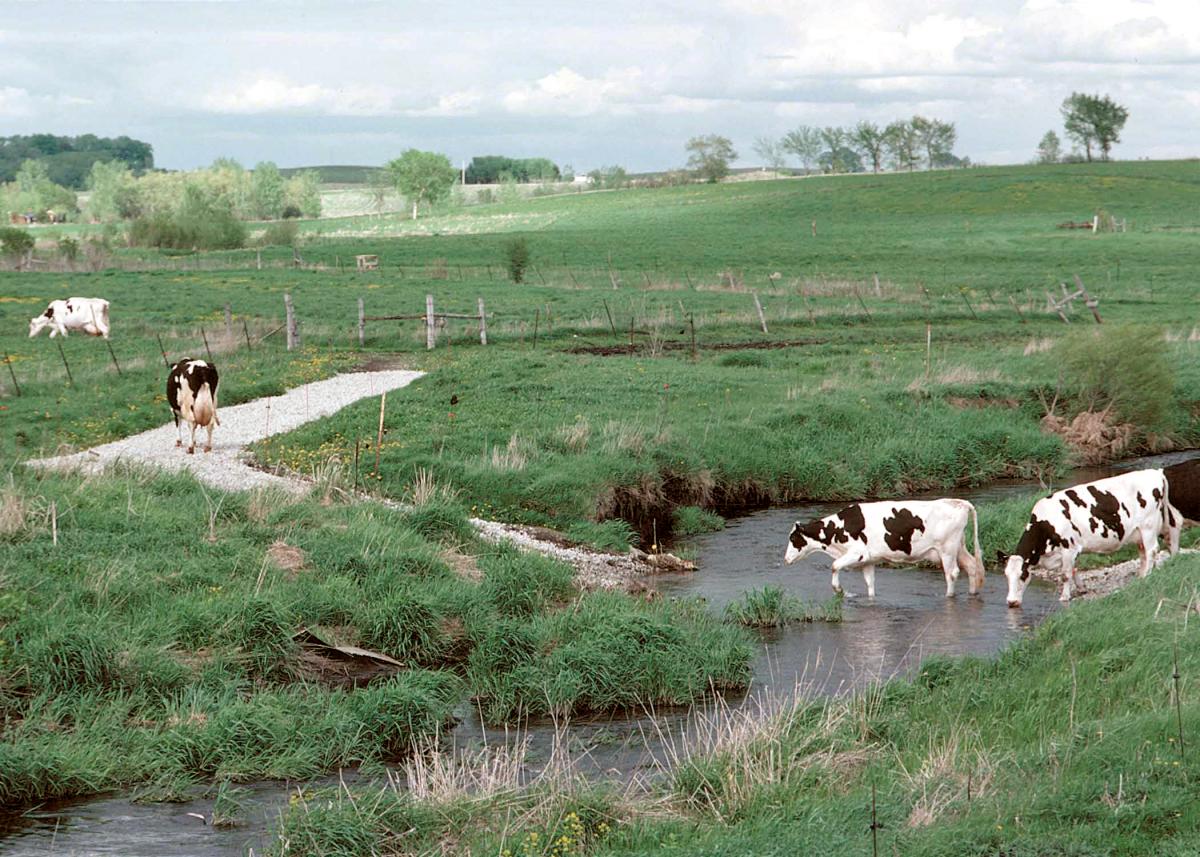 In a welcome development for NMPF and other farm groups concerned with the flawed Waters of the U.S. (WOTUS) regulation, the U.S. Environmental Protection Agency (EPA) and the Army Corp of Engineers last week formally began the process of withdrawing the controversial 2015 regulation. NMPF intends to file comments in support of EPA’s plan to rescind the rule, and will continue to engage with EPA as a second, revised regulation is issued later this year.
 Thanks to assistance from CWT, member cooperatives secured 22 contracts to sell 4.58 million pounds of cheese to customers in Asia, Central America, the Middle East and Oceania in July 2017. The product will be shipped during the months of July through October 2017.
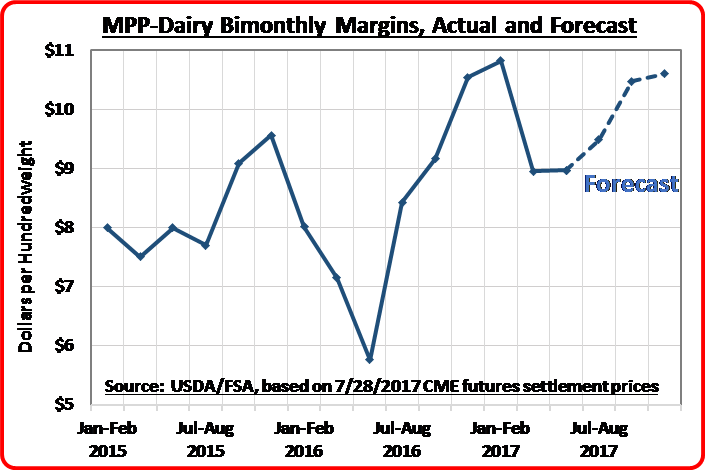 The monthly Margin Protection Program (MPP) feed cost for June was $7.97/cwt, based on corn and alfalfa hay prices reported last week by USDA’s National Agricultural Statistics Service (NASS) and soybean meal prices reported by the department’s Agricultural Marketing Service. NASS also reported that the U.S. average all-milk price rose $0.60/cwt. from May to $17.30/cwt in June. The monthly MPP margin for June was $9.33/cwt, bringing the bimonthly margin for May-June to $8.97/cwt.