USDA Decision on Large Producer-Handler Milk Bottlers Victory for Dairy Farmers


USDA Decision on Large Producer-Handler Milk Bottlers Victory for Dairy Farmers

NMPF’s long-term objective of limiting the pricing advantage enjoyed by the largest farms that bottle their own milk was realized with an October 21 decision by the U.S. Department of Agriculture (USDA) to close the loophole for the largest such bottlers.

In a decision published in the Federal Register, the USDA recommended that the producer-handler definitions in all Federal Milk Marketing Orders be amended so that only farms with bottled milk sales of three million pounds or less per month remain exempt from the pooling and pricing provisions. Producer-handlers with sales more than that will be treated the same as other bottling operations not owned by farmers, and will have to share their Class I proceeds with other farmers in their respective Federal Order Regions. The recommended decision will be open to public comment for 60 days.

“Once it is finalized, this ruling will accomplish what NMPF sought in its initial petition: to stop about a half-dozen large producer-handlers from cherry-picking Class I milk sales at the expense of other producers in Federal Order pools, and to discourage other handlers from growing through the use of this unfair exemption,” said Jerry Kozak, President and CEO of NMPF. “These largest operations should no longer enjoy a regulatory loophole intended for smaller players. Once you’re bottling three million pounds of milk monthly, you’re a large plant, and should contribute to the marketing pools just like any other large Class I handler.”

Under present rules, a milk bottler of any size can avoid paying into the Federal Order pools in its market if it produces all of its own milk. This regulatory exemption provides a large pricing advantage, and reduces average pay prices for other producers who lose out on shared Class I revenue.

In addition to ending the exemption for farm-owned bottlers, the decision would also tighten the requirements in the Arizona and Pacific Northwest Federal Order markets, which previously had limited producer-handlers to three million pounds of sales in each market. The USDA website has extensive information on the issue. USDA’s decision supports NMPF’s position and frequently cites NMPF’s testimony in its conclusions.


NMPF Board Member Tells Senate Ag Committee about Realities of Dairy Economic Crisis


NMPF Board Member Tells Senate Ag Committee about Realities of Dairy Economic Crisis

At a Senate Agriculture Committee hearing last week examining possible responses to the current dairy economic situation, Nebraska dairy farmer and NMPF board member Doug Nuttelman told lawmakers that NMPF is working on a series of approaches to help address milk pricing in the longer term.

Nuttelman, a farmer from Stromsburg, Neb., who also serves as a board member for Dairy Farmers of America (DFA), described to the committee the unprecedented financial stress on farmers caused by historically high input costs and low milk prices. While prices at the farm level are beginning to recover, they are still not projected to reach break-even levels until early next year. Nuttelman said that the existing federal safety nets for dairy farmers, the dairy product price support program and the Milk Income Loss Contract program, have not made up for the billions in lost revenue so far in 2009. In addition, the Federal Milk Marketing Order program has not effectively helped stabilize prices.

Even though Congress, USDA, and the Cooperatives Working Together (CWT) program have individually taken steps to help the industry recover, Nuttelman explained that the underlying problems that caused the dairy crisis still must be addressed.

He went on to outline NMPF's "Foundation for the Future," a long-term strategic plan put together by NMPF’s member dairy producer cooperatives. The plan is designed to positively impact the various factors influencing dairy supply and demand, and is intended to foster a climate of growth for the industry, while protecting dairy farmers. It involves the following elements:

  1. New Risk Management Tools, in the form of a dairy producer income protection program, operating similar to a revenue insurance program. The purpose is to help dairy farmers survive financially difficult times by paying them an insurance indemnity (payout) when losses occur in their dairy operations.
  2. Revamping the Federal Price Support Program, by reallocating government resources away from existing safety nets and revising them to direct resources more effectively.
  3. Federal Milk Marketing Order (FMMO) Reform, examining the best way to mend the present system, taking into consideration the various concerns by different regions of the country, as well as the different roles that the cooperatives play in balancing supply and demand in the United States. Specifically, Nuttelman pointed to the need to rectify the present system’s “make allowance” provisions, which creates a winners and losers scenario.
  4. A New Beginning for the CWT Program, looking at how to build on the proven track record of this dairy producer self-help program. In particular, CWT needs to involve more of the industry in funding it, and it must consider other means of reducing supply in the future.

Nuttelman urged the committee to thoughtfully consider recommendations to reform or reshape dairy policy in the future. The text for Nuttelman’s testimony is available here.


NMPF Teams with Feeding America to Encourage Cheese Purchases


NMPF Teams with Feeding America to Encourage Cheese Purchases

In a joint letter to USDA's Tom Vilsack, NMPF and Feeding America asked last month for the Secretary's support for using the $60 million appropriated in FY 2010 Agriculture Appropriations by January 2010 to fund programs for purchases of processed cheeses, including American, cheddar, and mozzarella, among others, that can in turn be used to provide emergency food assistance to feed American families experiencing economic hardship.

In addition to helping food-insecure households, the purchases of cheese would help dairy producers currently struggling through the economic crisis as well.

NMPF and Feeding America recommended that the product purchases from the market be done at a price level necessary to pay for processing, packaging, and delivery to the emergency food network. The plan would include targeted assistance, which would maximize the cost-effectiveness of emergency feeding programs and limit disruptions in the commercial market.

The USDA is expected to announce soon how that $60 million figure will be spent, along with the $290 million in direct payments to producers.


CWT Accepts 154 Bids, 26,000 Cows in Third Round of 2009


CWT Accepts 154 Bids, 26,000 Cows in Third Round of 2009

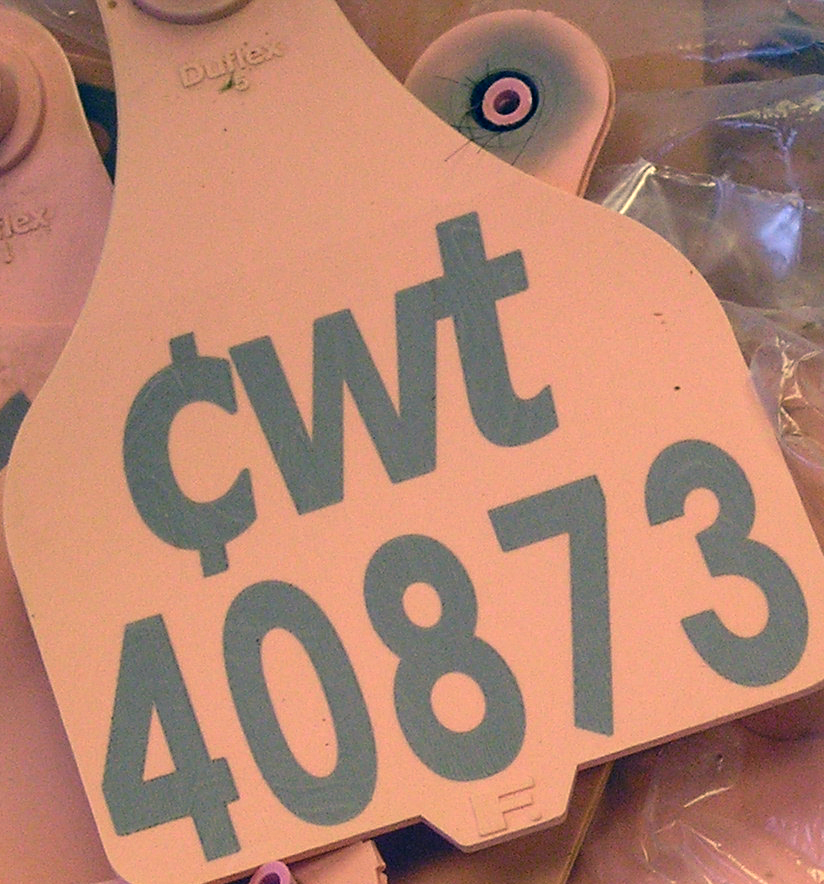
Cooperatives Working Together (CWT) announced last week that it has tentatively accepted 154 bids in the fourth herd retirement it has conducted in the last 12 months. The 26,412 cows and 517 million pounds of milk accepted in this round, combined with CWT’s three previous herd retirements since December 2008, equal a total reduction of milk production capacity of five billion pounds.

“Coming into 2009, CWT’s economists estimated that we would need to remove between five and six billion pounds of milk, the production of approximately 250,000 cows, through herd retirements,” said Jerry Kozak, President and CEO of the National Milk Producers Federation, which administers CWT. “We are pleased that the participation in this third herd retirement of 2009 has brought us to our goal of aligning supply with demand, and hastening the recovery of farm-level milk prices that plunged because of the global recession.”

CWT member farmers in 33 states submitted a total of 168 herd retirement bids during the two-week bidding period which ended October 15th. This is the ninth herd retirement in the past six years of CWT’s existence, and featured a maximum acceptable bid threshold of $5.25 per cwt., the same price ceiling as in the retirement conducted in August.

“We felt it was important to help milk prices continue to strengthen by conducting another herd retirement as soon as we completed farms audits for the previous round one in the summer,” noted Kozak. He said in addition to the 26,000 cows, 465 bred heifers were also accepted this week.

This week, CWT field auditors began visiting the 154 farms whose bids were accepted, checking their milk production records, inspecting their herds, and tagging each cow for processing. All farmers will be notified no later than November 16, as to whether their bid was among those accepted.

For more on CWT’s activities, visit www.cwt.coop.


NMPF Comments on Conservation Stewardship Program Interim Final Rule


NMPF Comments on Conservation Stewardship Program Interim Final Rule

In comments to USDA’s Natural Resources Conservation Service, NMPF stated that many dairy farming systems in use today in various parts of the U.S. are well suited to participation in the Conservation Stewardship Program (CSP).


NMPF is a founding member of the Innovation Center for US Dairy, a collaborative effort to develop a roadmap for reducing greenhouse gas emissions by 20% by year 2020 within the dairy industry. The council is comprised of producers, processors, manufacturers, retailers, and other dairy industry stakeholders. The Innovation Center is working to implement and obtain funding for the 12 approved project plans that were endorsed in January, along with several other projects that are undergoing further analysis and refinement.

NMPF stressed that the fundamental goal in the final rulemaking must be to make it simple and easy for CSP to be of real, concrete, and practical assistance to farmers struggling to deal with their real and immediate conservation and environment needs and challenges. NMPF also encouraged NRCS, under the flexibility granted to the Secretary in the statute, to ensure that everything has been done to support this objective.


MILC Projections Updated Through FY 2011


MILC Projections Updated Through FY 2011

Based on current futures market prices, Milk Income Loss Contract (MILC) payments are winding down, with only a small payment projected for December milk, and none after that through the 2011 fiscal year. A combination of high feed prices and low milk prices led to record-high MILC payment rates in 2009.

NMPF posts updated projections weekly at www.nmpf.org/milk_pricing/milc_payments.


NMPF Successfully Completes Website Upgrade


NMPF Successfully Completes Website Upgrade

NMPF's website, www.nmpf.org, underwent a much-needed upgrade last month to improve its efficiency and performance. While most of the site looks the same, there are a few new capabilities on select pages, such as RSS feeds for press releases, CEO's Corner, and News for Dairy Co-Ops. There is also a new video function, which will allow viewers better access to NMPF's videos. Some of the website's URLs have changed to enhance search engine optimization.

If you have any questions about the NMPF website, please contact Sarah Olson.


NMPF Annual Meeting Starts Next Monday


NMPF Annual Meeting Starts Next Monday

The 93rd annual meeting of the National Milk Producers Federation will start on Monday, Nov. 9, at the Gaylord Texan Hotel in Grapevine, TX.

The meeting will start Monday with the semi-annual business meeting of the Cooperatives Working Together committee. Tuesday, NMPF’s Board of Directors, and its Delegates body, will meet. Wednesday will feature a Town Hall meeting to review the activities of NMPF in 2009. Wednesday’s opening luncheon will feature a presentation from former Dallas Cowboy running back and FOX sports analyst Daryl Johnston. The general session Wednesday afternoon will feature a presentation on the future of the global dairy business from Clinton Anderson of Bain Consulting. Thursday, USDA Under Secretary Jim Miller will talk about dairy policies, while Domino’s Pizza CEO Dave Brandon will discuss the state of the pizza business.

A complete list of events and programming can be found on the NMPF website.


NYC Sodium Initiative Targets School Lunch Pizzas


NYC Sodium Initiative Targets School Lunch Pizzas

NMPF continues to provide substantive comments to the New York City (NYC) Department of Health and Mental Hygiene on its National Sodium Reduction Initiative. As the city’s health department examines alternatives to reduce sodium intake, cheese has become a primary target. The Initiative is recommending a 30% reduction of sodium in pizza served at schools.

In a letter to the New York City Department of Health and Mental Hygiene, NMPF stressed the technical challenges associated with reducing sodium in cheese in terms of taste, functional, and safety attributes. Such challenges are even more pronounced in lower fat cheese varieties. The primary points of the letter included:

  • Sodium is important in terms of safety, functionality, and quality of cheese. Salt helps control the fermentation process, and it maintains characteristics such as flavor, texture, and shelf life. It helps minimize spoilage and prevent the growth of pathogenic organisms.
  • These roles are more pronounced as related to the production of lower fat cheeses. In response to public health recommendations, the industry has placed a high priority on work to increase the availability of good tasting, lower fat cheeses.
  • Consumer acceptance of low sodium cheeses currently available has not been promising. This is of particular concern from a nutritional perspective given that cheese is a significant source of essential nutrients in the diets of growing children and teens. For example, a single serving of Cheddar cheese provides nearly one‐fourth (23%) of the recommended calcium intake of 1300 mg/day for 9‐18 year‐olds.


NMPF Member Coops Celebrate Milestone Anniversaries


NMPF Member Coops Celebrate Milestone Anniversaries

For two dairy cooperatives, 2009 and 2010 have been and will be big years for them and their members.

Tillamook County Creamery Association (TCCA), headquartered in Tillamook, OR, is wrapping up its 100th anniversary this year. Formed as a farmer-owned cooperative in 1909, TCCA has earned a reputation as one of the nation’s premier makers of cheese. TCCA markets an extensive line of dairy products, including naturally aged cheddar and a variety of other cheeses, butter, premium ice cream, sour cream, and yogurt. Learn more about TCCA by visiting their website at www.tillamookcheese.com.

Another NMPF member coop, United Dairymen of Arizona (UDA), will be celebrating its 50th anniversary in 2010. Located in Tempe, AZ, UDA is an agricultural milk marketing cooperative that was incorporated in 1960. UDA produces high, medium, and low heat nonfat dry milk (including vitamin fortified products), MPC, cream, butter, skim milk, condensed skim milk, and lactose powder. The cooperative is among the few remaining full service dairy coops in the country. Find out more about UDA at their website at www.uda.coop.


Preparations in Full Swing for NMPF Annual Meeting


Preparations in Full Swing for NMPF Annual Meeting

NMPF is headed to Grapevine, TX next month for its joint annual meeting with the National Dairy Promotion and Research Board (NDB) and the United Dairy Industry Association (UDIA). The meeting will be held November 10-12 at the Gaylord Texan Hotel & Convention Center and will focus on "Building Partnerships, Building Opportunities: Now More Than Ever."

Time is running out for participants to register for the meeting and book their hotel rooms. The deadline for both is next week on Friday, October 16.

Online registration for individuals and groups is encouraged and can be accomplished by visiting www.dairyevents.com. The Dairy Events website offers a direct link to the Gaylord Texan Hotel reservations website, since hotel reservations must be made separately from meeting registration.

Please check out www.nmpf.org/annual_meeting for more information about the Annual Meeting.