New Intern Welcomed onto NMPF Staff

Williamson.jpg

Last week, Ben Williamson joined the NMPF staff as an intern. Williamson was selected in a national search by the American Society of Animal Scientists for this competitive award. He will be with NMPF for the month of June and then will spend a month interning in a congressional office.

Williamson is currently pursuing his Master’s degree in Beef Cattle Reproductive Physiology at the University of Arkansas.

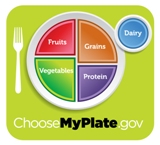
USDA’s New MyPlate Symbol Emphasizes Dairy’s Contribution to Healthy Eating

MyPlateU.S. Dairy Industry Leaders Welcome Revised Approach to Dietary Guidance

WASHINGTON, DC – The shape may have shifted from pyramid to plate, but the message remains the same: dairy is an important part of the daily diet, for adults and children alike.

For that reason, the National Milk Producers Federation (NMPF) and other dairy organizations today praised the USDA’s new MyPlate education tool, which provides a clear and visual message that a healthy diet is comprised of a variety of nutrient-rich foods, including low-fat and fat-free milk, cheese, and yogurt.

America’s dairy farmers and processors commended the USDA for including a light blue circle depicting a serving of “Dairy” – milk, cheese, or yogurt – next to the dinner plate to illustrate how to build a healthy eating plan, including a serving of dairy at every meal.

“Dairy foods are rightfully being recognized — from the school house to the White House — as an important part of everyone’s diet,” noted NMPF President and CEO Jerry Kozak. “USDA’s new MyPlate, the simple visual metaphor of a serving of dairy products alongside a plate, says it’s vital to consume three servings of low-fat and fat-free dairy foods every day.”

Other dairy industry leaders similarly applauded the new graphic. “Knowing what we do about dairy’s ability to reduce the risk of conditions like osteoporosis, hypertension, and type 2 diabetes, we think it’s exciting that dairy is highlighted individually,” said Jean Ragalie, R.D., president of National Dairy Council. “The location of dairy on the graphic really helps it stand out as an essential part of a healthy eating plan,” she added.

“Milk provides a unique package of nine essential nutrients and dairy foods are a substantial contributor of many nutrients that are important for good health,” offered Vivien Godfrey, CEO of the Milk Processor Education Program. “We are firm believers in the importance of ‘pouring one more’ serving of dairy, and this tool will be a fresh reminder to all Americans as they sit down at their tables with their families.”

Dairy contributes beyond the glass, as well. A serving of nutrient-rich, low-fat or fat-free milk, cheese, or yogurt has, on average, at least as much protein as an egg. In fact, dairy foods contribute 18 percent of the protein to the American diet. Simple steps, like adding lower fat cheese to a veggie sandwich or topping a baked potato with fat-free plain yogurt can give any meal a nutrient boost.

Americans currently average about 2 daily servings of dairy foods, while USDA’s dietary guidelines encourage 3 daily servings of low-fat or fat-free milk and milk products for adults and children nine years and older. This underscores the importance of a direct, visual metaphor like the MyPlate tool in relaying this guidance to a population being urged to get more nutrients per calorie at every meal.

“We’re delighted that this new education tool makes it clear that milk and other dairy products are important for a nutritious diet,” said Connie Tipton, president and CEO of the International Dairy Foods Association. “It highlights how beneficial a serving of dairy at every meal can be and helps to educate people about dairy’s role on the table and in the American diet.”

The new MyPlate will encourage a variety of dietary patterns that support a healthy lifestyle, and it will make clear that dairy foods are a nutritional fit for most everyone. Whether it’s flavored or lactose-free milk, Greek yogurt or frozen yogurt, or one of the many reduced-fat cheese options available, the dairy industry is committed to providing tasty, healthy and affordable options to help Americans consume essential nutrients that can be hard to get from other foods.

The National Milk Producers Federation, based in Arlington, VA, develops and carries out policies that advance the well being of dairy producers and the cooperatives they own. The members of NMPF’s 31 cooperatives produce the majority of the U.S. milk supply, making NMPF the voice of more than 40,000 dairy producers on Capitol Hill and with government agencies.

National Dairy Council® (NDC) is the nutrition research, education and communications arm of Dairy Management Inc™. On behalf of U.S. dairy farmers, NDC provides science-based nutrition information to, and in collaboration with, a variety of stakeholders committed to fostering a healthier society, including health professionals, educators, school nutrition directors, academia, industry, consumers and media. For more information, visit www.nationaldairycouncil.org.

The Milk Processor Education Program (MilkPEP), Washington, D.C., is funded by the nation’s milk processors, who are committed to increasing fluid milk consumption. The National Fluid Milk Processor Promotion Board, through MilkPEP, runs the National Milk Mustache “got milk?”® Campaign, a multi-faceted campaign designed to educate consumers about the health benefits of milk. For more information, go to http://www.whymilk.com. Deutsch, A Lowe and Partners Company, is the creative agency for the National Milk Mustache “got milk?”® Campaign.

The International Dairy Foods Association (IDFA), Washington, D.C., represents the nation’s dairy manufacturing and marketing industries and their suppliers, with a membership of 550 companies representing a $110-billion a year industry. IDFA is composed of three constituent organizations: the Milk Industry Foundation (MIF), the National Cheese Institute (NCI), and the International Ice Cream Association (IICA). IDFA’s 220 dairy processing members run more than 600 plant operations, and range from large multi-national organizations to single-plant companies. Together they represent more than 85 percent of the milk, cultured products, cheese, and frozen desserts produced and marketed in the United States. For more information, visit www.idfa.org.

1 U.S. Department of Agriculture Center for Nutrition Policy and Promotion. http://www.choosemyplate.gov/
2 U.S. Department of Agriculture, Agricultural Research Service. 2010. USDA National Nutrient Database for Standard Reference, Release 23. Nutrient Data Laboratory Home Page,
http://www.ars.usda.gov/ba/bhnrc/ndl
3 Dairy Research InstituteTM, NHANES (2003-2006). Ages 2+ years. Data Source: Centers for Disease Control and Prevention, National Center for Health Statistics, National Health and Nutrition Examination Survey. Hyattsville, MD: U.S. Department of Health and Human Services, Centers for Disease Control and Prevention, [2003-2004; 2005-2006]. [http://www.cdc.gov/nchs/nhanes.htm]
4 U.S. Department of Health and Human Services and U.S. Department of Agriculture. Dietary Guidelines for Americans, 2010. 7th Edition, Washington, DC: U.S Government Printing Office, January 2011.


NMPF to Host Summer Foundation for the Future Meetings

Meeting Details and Registration on Updated Foundation for the Future Website

ARLINGTON, VA – The National Milk Producers Federation (NMPF) today announced its Summer Grassroots Tour: 12 meetings in July and August that will bring together dairy producers and other key industry representatives to discuss the dairy policy reform programs proposed in NMPF’s Foundation for the Future.

“The U.S. dairy industry has called for dramatic changes in dairy policy, and Foundation for the Future answers that call,” says Jerry Kozak, NMPF President and CEO. “Our summer meetings will explain how Foundation for the Future’s dairy policy reforms will safeguard dairy producers’ equity, ensure the future of their operations, and stabilize dairy markets.”

The meetings are slated to take place throughout the United States between July 12 and August 22. Each three-hour meeting will feature an in-depth presentation, and question and answer session led by NMPF’s Kozak, along with other staff. Meeting locations include:

  • Olympia, Wash., Red Lion Hotel – July 12
  • Visalia, Calif., Holiday Inn – July 13
  • Lubbock, Texas, Overton Hotel & Conference Center – July 18
  • Alexandria, Minn., Holiday Inn – July 20
  • Dubuque, Iowa, Grand River Center – July 21
  • Lansing, Mich., Ramada Lansing Hotel & Conference Center – July 26
  • Green Bay, Wis., Comfort Suites – July 27
  • Stevens Point, Wis., Ramada Hotel – July 28
  • Harrisburg, Pa., Holiday Inn Harrisburg – East – August 8
  • Syracuse, N.Y., Holiday Inn Syracuse/Liverpool Airport Hotel – August 10
  • Ocala, Fla., Hilton – August 12
  • Nashville, Tenn., Embassy Suites Nashville Airport – August 22

Dairy producers, milk processors, and other key industry stakeholders are encouraged to attend. Visit www.futurefordairy.com, email summermeetings@nmpf.org, or call NMPF at (703) 243-6111 for additional meeting and registration information. There are no fees to attend; however, space is limited, so register early.


Foundation for the Future Website Updates

NMPF recently updated the Foundation for the Future website to accommodate details about the Summer Grassroots Tour, and enhance visitors’ exploration of FFTF dairy policy reform programs. Updates at www.futurefordairy.com include improved accessibility of individual Foundation for the Future reform program details, the addition of producer testimonials, and the option to sign up as an official Foundation for the Future supporter.

The website also offers dairy producers and industry stakeholders interactive tools and resources, including a margin protection calculator that helps producers determine an appropriate coverage level for supplemental margin insurance under Foundation for the Future’s Dairy Producer Margin Protection Program. Producers can input their annual milk production and select the percentage of base milk production the program will cover – along with any optional additional coverage – to generate scenarios of how the Dairy Producer Margin Protection Program will benefit their individual operations.

In addition, www.futurefordairy.com features a news and resources section with the latest dairy policy articles and downloadable materials about Foundation for the Future, including frequently asked questions. “The website plays a crucial role in providing dairy producers and other important industry representatives the information they need to understand Foundation for the Future,” Kozak explains.

The mission of Foundation for the Future, as envisioned by NMPF, is to provide the dairy industry with policy programs that dramatically improve the historical approach embodied by current programs, and foster a more economically viable and secure future for dairy producers, milk processors, and other industry stakeholders.

The National Milk Producers Federation, based in Arlington, VA, develops and carries out policies that advance the well being of dairy producers and the cooperatives they own. The members of NMPF’s 31 cooperatives produce the majority of the U.S. milk supply, making NMPF the voice of more than 40,000 dairy producers on Capitol Hill and with government agencies.


Next Steps in the Journey

Yes, we’ve all heard the axiom that every great journey starts with a single step. Regarding the journey toward implementing a major overhaul of America’s dairy policy, we’ve taken a whole series of steps in the past 24 months. More lie ahead of us. Here are some of the next ones:

As this column is being written, a far more challenging writing project is underway: key leaders of the House Agriculture committee are taking the concepts of NMPF’s Foundation for the Future (FFTF) program, and turning those concepts into legislative language suitable for consideration by Congress. We’ve been as clear as possible about how the key elements of FFTF will work, but NMPF doesn’t create and pass laws – Congress does – and it’s ultimately Congress’s role to craft the legislative package embodying the goals of FFTF.

Part of that effort will include assigning a price tag to the bill. The Congressional Budget Office will review the legislation, and assign it a score, or estimated cost. If you’ve paid any attention to what’s been happening in Washington, DC, in the past year, you know that budgets are tight now, and expected to get even tighter in the future. Farm programs are always at the top of the list of places to cut spending. In order for any farm policy to be taken seriously – including Foundation for the Future – we need it to cost no more than, and frankly, less than, the status quo programs.

There is a “baseline” of spending for dairy in the current Farm Bill; any new ideas can’t exceed the baseline. Anything that costs less than the current baseline will have appeal far beyond just the Agriculture Committee, because budget savings there will reflect well on the overall financial picture of the entire federal government. The timing of this congressional process is still a question mark, but we remain committed to working with the leadership of both the House, and the Senate, Agriculture committees, to make certain that revamping dairy policy is a priority.

One of the best ways for the dairy producer community to prompt Congress into action is by putting our collective weight behind one approach. We’ve done a lot of spadework in that regard in the past year plus, by reaching out to other farm groups, and by helping NMPF’s member cooperatives explain the benefits of FFTF to their producer-owners. But that process must continue.

Thus, another key next step for us, starting next month, is what we’re calling the Foundation for the Future Summer Grassroots Tour. I, along with other senior staff from NMPF, will embark on a cross-country tour to 12 cities (some large, mostly small) during a six week period to meet with farmers to discuss FFTF, explain its benefits, and answer their questions.

Consistently, what I’ve found is that face-to-face question and answer sessions help allay virtually all confusion or concern people have with the elements of FFTF. This program is a major leap forward, and certainly a dramatic change, from the status quo. It’s natural there will be hesitancy or uncertainty. Our Grassroots tour will help address that situation.

Here are the dates and locations for the tour (in the coming weeks, we’ll post information on the specific sites and times within each city on the www.futurefordairy.com website): Olympia, WA, July 12; Visalia, CA, July 13; Lubbock, TX, July 18; Alexandria, MN, July 20; Dubuque, IA, July 21; Lansing, MI, July 26; Green Bay, WI, July 27; Stevens Point, WI, July 28; Harrisburg, PA, August 8; Syracuse, NY, August 10; Ocala, FL, August 12; and Nashville, TN, August 22.

The budget dynamic is going to make changing any federal policy, including dairy programs, a real challenge. These are tough steps to climb, but not impossible. What will make it much easier to stride ahead is by working together. Farmers united are a force that Congress must reckon with, one that can’t be ignored. We have to make it happen, and that is both our opportunity, and our obligation, in the coming months.

CWT-Assisted Export Sales Top Seven Million Pounds

April was an active month for the Cooperatives Working Together (CWT) Export Assistance program. A total of 23 bids were accepted totaling 3,314 metric tons (7.306 million pounds) of cheese sold to ten different countries.

For the first four months of 2011, CWT assisted member cooperatives in making export sales totaling 12,328 metric tons (27.2 million pounds) to 17 countries on three continents.

CWT continues to solicit both cooperatives and individual producers for membership in CWT for 2011 and 2012. The modest two cent assessment will not begin until 75% of the eligible milk supply is signed up to participate. For a list of cooperatives currently committed to CWT, visit www.cwt.coop.

EPA Finalizes Dairy Exemption Sought by NMPF for Oil Spill Regulation of Milk Tanks

Last month, the U.S. Environmental Protection Agency (EPA) issued a final exemption clarifying that dairy farms don’t have to treat milk the same as petroleum products under the Spill, Prevention, Control, and Countermeasure (SPCC) regulation.

NMPF has been working with Congress and the EPA for two years to win the exemption for dairy farmers, so that their bulk milk storage equipment doesn’t get regulated under the SPCC rules, since milk storage is already regulated as part of the current Grade A Pasteurized Milk Ordinance (PMO).

“We appreciate that the EPA is taking a common-sense approach with this decision, recognizing that arbitrarily lumping milk and oil together isn’t the appropriate thing to do,” said Jerry Kozak, President and CEO of NMPF. “’Got Milk?’ and ‘Got Oil?’ aren’t the same question, and they shouldn’t need the same answer.”

The goal of the SPCC program is to prevent oil spills into waters of the United States and adjoining shorelines. A key element of the program calls for farmers and other facilities to have an oil spill prevention plan, called an SPCC plan. NMPF expressed concern to federal authorities that the EPA was unnecessarily grouping together fuel oil and milk, and asked the EPA to exempt milk. In June 2010, the EPA committed to finalizing the SPCC exemption for bulk milk storage “as expeditiously as possible…to have that process completed by early 2011.” Today’s announcement is the culmination of that effort.

Even with the exemption of milk handling equipment, many farmers still need to have an SPCC plan. Such plans are required for farms which have an aggregate storage capacity of oil products of 1320 gallons, or more, for every storage container larger than 55 gallons.

A farm with less than 10,000 gallons of total storage capacity and no single storage greater than 5,000 gallons can self-certify their SPCC plan. Farms that do not meet this exemption must have a plan certified by a professional engineer.

NMPF has completed the development of a self-certification template tool to assist dairy producers in developing their SPCC plans that covers all fuel and oil storage on the farm. The template, developed with assistance from the U.S. Department of Agriculture’s Natural Resources Conservation Service (NRCS), is available on the NMPF website.

NMPF and IDFA Criticize New Jersey Raw Milk Bill, Urge Governor to Oppose It

The leading national trade organizations representing dairy producers and processors sent a letter last month to New Jersey Governor Chris Christie, urging him to oppose legislation in the state senate that would allow the direct sale of raw milk to the public.

In the letter from the dairy associations, which was also sent to State Senate Democratic Majority Leader Stephen Sweeney, the National Milk Producers Federation (NMPF) and the International Dairy Foods Association (IDFA) said that the food safety risks inherent in raw milk will increase the incidence of foodborne illness and reverse public heath improvements in New Jersey.

“The link between raw milk and foodborne illness has been well-documented in the scientific literature, with evidence spanning nearly 100 years. Raw milk is a key vehicle in the transmission of human pathogens, including E. coli O157:H7, Campylobacter, Listeria monocytogenes, and Salmonella,” the letter said.

The joint letter pointed out that the U.S. Centers for Disease Control reports that “nearly 90% of raw milk-associated outbreaks have occurred in states where sale of raw milk was legal. Legalizing the sale of raw milk in New Jersey increases the risk to public health, opening up the State’s consumers to the inevitable consequence of falling victim to a foodborne illness.”

Federal law prohibits the interstate sale of raw milk, but allows states individual discretion to regulate raw milk sales within their borders. Several states in recent years have considered expanding the sale of raw milk, even as the product has been repeatedly linked to serious illnesses from coast to coast. The bill in New Jersey’s statehouse is Assembly Bill No. 743.

NMPF’s President and CEO Jerry Kozak, whose professional career started in Trenton when he worked for the State Department of Health, wrote in the letter that “it is disappointing to see that the public health gains we achieved in New Jersey in the 1970s would be compromised today by a conscious effort to allow the sale of potentially pathogenic foods. This is an affront to all those working to protect public health.”

Dairy Groups Seek Swift Resolution of NAFTA Trucking Dispute with Mexico

NMPF and the U.S. Dairy Export Council (USDEC) hailed the recent release by the U.S. Department of Transportation (DOT) of proposed details for the phased implementation of a long-haul, cross-border trucking program between the United States and Mexico, a program that the department says emphasizes safety, while satisfying international obligations of the United States.

In a letter to House Speaker Boehner, House Minority Leader Pelosi, Senate Majority Leader Reid and Senate Minority Leader McConnell, NMPF and USDEC urged all members of Congress to support swift progress towards putting in place an agreed-upon resolution so that the retaliatory tariffs can be lifted and trade can be normalized in Mexico, the number one export market for U.S. dairy products.

The trucking program is crucial to the U.S. dairy sector, since many U.S. cheese exports have been subjected to legally-imposed retaliatory tariffs by Mexico since last August. As a result, shipments of the targeted cheeses fell by 60 percent between August 2010 and February 2011, the latest month of available data.

The DOT announcement represents the first critical step towards resolution laid out by Presidents Obama and Calderon in early March. As DOT reaffirmed today, the plan calls for a 30-day comment period once the Federal Register Notice is published this week, followed by a period of approximately 30 days for DOT to assess comments. Subsequently, DOT will publish a Final Federal Register Notice addressing comments received and describing the implementation process of the project. Once a final agreement is signed—estimated to take place in approximately 60 days—Mexico will suspend its retaliatory tariffs on all products by 50 percent and then will suspend the remaining 50 percent when the first Mexican carrier is approved to cross the border.

Valued at $837 million last year, Mexico is the largest dairy export market for the U.S. Making the most of this market, as well as others around the world, is vital to supporting the dairy producer community.

Dairy Groups Welcome Progress on U.S.-Colombia FTA

NMPF and the U.S. Dairy Export Council (USDEC) applauded an announcement last month that the Obama Administration and Colombia have reached an agreement on an action plan that will help to move forward the long-stalled Free Trade Agreement (FTA) between the U.S. and Colombia.

“NMPF strongly supports all three pending FTAs – including the one with Colombia – and it is exciting to see the White House take a step closer to advancing each of them,” said Jerry Kozak, President and CEO of NMPF. “Dairy producers are looking to expand our export opportunities wherever possible and hope that this signals that we will soon see the Colombia FTA, as well as the vitally important Korea and Panama FTAs, submitted for Congressional approval.”

“Our industry has been eager to see this FTA move forward with an important Latin American ally and growing market for dairy products,” said Tom Suber, president of USDEC. “U.S. dairy exports to Colombia are currently greatly limited by tariffs that exceed 90% for many products of significance to us. We are eager to work with the Administration to help move this FTA to implementation in order to knock down these tariffs blocking greater U.S. dairy sales.”

NMPF estimates that the U.S.-Colombia FTA would deliver, on average, an additional $25 million a year in benefits to U.S. dairy producers during the phase-in period of the agreement. Both organizations urged the Administration to move swiftly to seek Congressional approval of the U.S.-Colombia FTA, as well as the FTAs with South Korea and Panama, given the strong benefits for the U.S. dairy industry in each agreement.

Dairy Producers Pack Bags for NDPC Next Week

The time has arrived for dairy producers and others in the industry to head to Omaha, NE, for the National Dairy Producers Conference, taking place next week from May 15 – 17 at the Embassy Suites Hotel.

Participants signed up for the optional farm tour on Sunday will have the opportunity to visit Butler County Dairy in Surprise and the Archer Daniels Midland Company ethanol plant in Columbus. After a welcome reception and dinner on Sunday, the general program kicks off on Monday morning.

Dairy industry leaders will hear about the current environment on Capitol Hill, the preparations underway for the next Farm Bill, balancing trade, managing high input costs, environmental concerns, and animal care issues.

The NDPC would not have been possible without the support of generous sponsors, who contributed to events and the conference in general.

To learn more about the NDPC, visit www.nmpf.org/NDPC.

Proposal to Reduce Somatic Cells Counts Defeated by National Conference on Interstate Milk Shipments

The National Milk Producers Federation’s proposal to reduce the maximum level of somatic cell counts in milk – a measure of milk quality – was rejected yesterday by the National Conference on Interstate Milk Shipments (NCIMS), which has just concluded its biennial meeting here in Baltimore.

NMPF had asked the NCIMS voting delegates – a group of state regulators overseeing milk safety rules – to reduce the maximum threshold of allowable somatic cells in milk at the farm level from the current 750,000 cells/mL, down to 400,000, starting in 2014. But on a vote of 26-25, the voting delegates rejected the proposal, meaning that the status quo threshold of 750,000 cells will remain.

“Since it’s been nearly 20 years since the current standard was established, we believed it was time to make changes that improve the nation’s milk supply,” said Jamie Jonker, NMPF Vice President of Scientific and Regulatory Affairs. “It’s regrettable that this approach isn’t the one taken by NCIMS. However, we’re confident that the trend towards lower Somatic Cell Counts will continue, regardless of the vote today.”

Jonker said that legislation to reduce the somatic cell count (SCC) level has been introduced in Congress, and that international buyers are also looking at U.S. SCC levels with greater scrutiny. Those pressures “may result in changes to SCC limits being forced by a process outside of the NCIMS, which would be unfortunate if it results in regulations that are not as workable for dairy farmers.”

Validus Selected as Verifier for National Dairy FARM Program Printer-friendly versionPrinter-friendly version Send to friend Release date: May 03, 2011 PDF Version Third-Party Verification to Begin this Summer ARLINGTON, VA – The National Mil

Third-Party Verification to Begin this Summer

ARLINGTON, VA – The National Milk Producers Federation (NMPF) has selected Validus as the third-party verifier for the National Dairy FARM Animal Care program. Validus is an ISO 9001: 2008 certified auditing and verifying company, with over 10 years of experience verifying on-farm animal care.

Validus documents and verifies socially-responsible animal welfare, environmental, on-farm security, and worker care production practices through audits and assessments, environmental planning, and consulting services. All Validus staff and verifiers conducting third-party verification for the National Dairy FARM Program have an extensive background and experience in the dairy industry.

“After an exhaustive request for proposals and review process, NMPF selected Validus for their outstanding capabilities demonstrated through years of experience in completing on-farm verifications for animal care. Third-party verification demonstrates the integrity of our program, and provides assurances to our customers and consumers that dairy producers are committed to the well-being of their animals,” said Jerry Kozak, President and CEO of NMPF.

Third-party verification of the FARM Animal Care Program is expected to begin this summer, and be completed by the end of the year.

The National Dairy FARM Program was created by NMPF to demonstrate and verify that U.S. milk producers are committed to providing the highest levels of quality assurance including animal care, residue prevention, and other on-farm practices.

For more information on the National Dairy FARM Program, contact Betsy Flores at (703) 243-6111 or visit www.nationaldairyfarm.com.

The National Milk Producers Federation, based in Arlington, VA, develops and carries out policies that advance the well being of dairy producers and the cooperatives they own. The members of NMPF’s 31 cooperatives produce the majority of the U.S. milk supply, making NMPF the voice of more than 40,000 dairy producers on Capitol Hill and with government agencies.