Annual Survey of Antibiotic Residues in Milk Finds Continuing Improvement

Dairy farmers continued in 2012 to improve their already stellar track record of keeping antibiotic residues out of the milk supply, with the most recent national survey finding that only 0.017% of all bulk milk tankers, or 1 in 6,000 loads, showed any sign of an animal antibiotic drug residue. On-farm vigilance in following drug withdrawal times has led to a steady decline in antibiotic residue, falling from an already low level of 0.061% in 2002, a decline of nearly 75% in the last decade.

These figures are based on information reported to the Food and Drug Administration’s National Milk Drug Residue Data Base by state regulatory agencies under the National Conference on Interstate Milk Shipments (NCIMS). Data are reported on the extent of the national testing activities, the analytical methods used, the kind and extent of the animal drug residues identified, and the amount of contaminated milk that was removed from the human food supply.

All milk loads are tested for antibiotics, and any tanker which tests positive for a drug residue is rejected before entering a dairy plant and does not enter the market for human consumption. The full report is available online.

New USDA Survey of Pesticide Residues Finds No Problems in Milk

The most recent national government survey looking for pesticide residues in foods found virtually no positive levels in milk, and none that exceeded government tolerance levels.

The U.S. Department of Agriculture (USDA) conducts an annual Pesticide Data Program annual survey to test various food commodities for pesticide residues. Each year, USDA and the Environmental Protection Agency jointly determine which commodities to test. In 2011, the USDA collected 743 whole milk samples in ten of the largest states, mostly at the retail level.

Overall, only five of the milk samples showed any presence of pesticide residue, and all were lower than Environmental Protection Agency-established tolerances for those compounds.

February Marks Another Big Month for CWT Export Assistance

In February, Cooperatives Working Together (CWT) helped member cooperatives make 85 foreign sales of cheese, butter, and whole milk powder totaling 22.8 million pounds of product.

The 43 cheese sales assisted by CWT totaled 10.8 million pounds of cheddar, Gouda, and Monterey Jack cheese. The 40 butter sales amounted to 11.9 million pounds of product, while two sales of whole milk powder totaling 130,073 pounds were made as well.

This brought total CWT-assisted sales in 2013 to 30.1 million pounds of cheese, 21.6 million pounds of butter, and 218,258 pounds of whole milk powder. The milk equivalent of this amount was 749.1 million pounds, or the annual production of 35,600 cows.

CWT is a significant factor in exports of U.S. dairy products, accounting for 83% of American-type cheese exports and 18% of all cheese exports in 2012. CWT export assistance also accounted for 62% of all U.S. butter exports.

Immigration Reform Process Continues on Capitol Hill

NMPF continues to work with other national and state farm groups on reforms to America’s immigration policies that would allow for the future flow of workers on dairy farms and the opportunity for existing workers that may lack legal documentation to continue working on dairy farms.

NMPF, a founding member of the Agriculture Workforce Coalition (AWC), sent a letter to House and Senate leadership last week calling for support of immigration legislation that addresses agriculture’s unique labor needs. The letter was delivered as the House Judiciary Subcommittee on Immigration & Border Security held a hearing last Tuesday focused on the need for a new agricultural guest worker program.

The Senate and House may pursue separate legislative paths to immigration reform, and NMPF is talking with leaders in both chambers to ensure that whatever decisions are made will address the unique needs of dairy farms.

Latest Congressional Estimate of Farm Bill Demonstrates Value of Dairy Security Act

Congress’ failure to pass a farm bill last year is proving costly. New preliminary cost estimates from the Congressional Budget Office (CBO) have revised upward the price tag of the farm bills that moved through the House and Senate last year. The bills still show budget savings over current farm programs – saving billions of dollars over a ten-year period – but the projected savings have been reduced by new economic projections.

CBO estimates that the Dairy Security Act (DSA), which was part of both the Senate-approved and the House Agriculture Committee-approved farm bills, will still provide a cost-effective safety net for America’s dairy farmers, but the new revisions project the program would cost slightly more than last year’s projection. CBO also reduced its “baseline” calculation of what current dairy programs would cost over the next five years if they were extended. Last year, CBO said current dairy law would cost $248 million during the 2013-17 period. Despite their new projection showing lower dairy market prices than in last year’s estimate, CBO’s new preliminary five year estimate of current dairy law fell from $248 to $161 million. Information released by CBO with the new estimates does not explain how current programs could be projected to cost less when the same projections indicate future lower milk prices.

Even with the new preliminary estimate, the dairy plan of margin protection and market stabilization represents less than one-twentieth of one percent of the cost of the overall farm bill. That is by far the lowest cost of any of the major farm commodities covered in the farm bill.

CBO now calculates that enacting the Senate-passed bill would bring total U.S. Department of Agriculture spending from 2014 to 2023 to $963 billion. The House bill would cost $950 billion over the same period. The Supplemental Nutrition Assistance Program, or food stamps, makes up roughly 80 percent of the legislation’s cost.

A Decade of Growth

The U.S. Department of Agriculture recently reported that America’s dairy farmers produced a record 200 billion pounds of milk in 2012. Depending on your perspective, that’s both a problem, and an opportunity.

Increased milk production – and 2012’s total was up 2.1% from the 196 billion pounds produced in 2011 – is in most respects a good thing. It indicates that our industry is growing, not declining. Not all sectors of agriculture can say that. The problem that can arise from added production is reflected in the iron law of supply and demand. If there’s not enough demand for that new milk production, farmers’ milk prices will fall. That’s what happened in the first part of last year, until milk production slowed somewhat and demand caught up. New supplies of any commodity have to match up reasonably well with demand. If there’s an imbalance, prices can crater (or skyrocket, if the issue is supply not keeping up with demand).

The real driver of increased demand in the past decade has been the international market. While demand in the U.S. is growing 1.2% per year, sales of U.S. products to foreign markets are booming, rising from 5.1% of production in 2002, to 13.2% of production last year, on a total solids basis.

But this surge didn’t just happen. And it won’t continue to happen, absent the full and continued deployment of all the tools needed to keep the momentum going.

First of all, our increased export sales are the result of favorable trade policies, particularly the North American Free Trade Agreement (NAFTA). Mexico is our number one market, and continues to grow. Canada, even though it’s a protected market, is still our number two customer. Other free trade agreements in Latin America and the Pacific Rim have helped the cause, as has the overall trend towards more Westernized diets in the developing world. That’s one reason why NMPF is so heavily invested in creating favorable trade deals across the Pacific, and now, potentially, across the Atlantic with the European Union.

Another factor in increased foreign sales is the marketing expertise and intelligence provided by the U.S. Dairy Export Council (USDEC). The creation and sustenance of USDEC was always a long-term play by the U.S. dairy sector as it prepared for a globalized 21st century. Those seeds, planted in the 1990s, are now really bearing fruit, as the U.S. dairy industry capitalizes on opportunities it didn’t have a generation ago.

And one of the biggest factors behind this growth is another investment that farmers are making, in Cooperatives Working Together (CWT). Since its formation 10 years ago this spring, CWT has played a vital role in boosting U.S. dairy sales by helping assist its members in closing export deals. Last year, as a record volume of milk came from U.S. farms, CWT was essential in making certain at least some of that milk found a home in foreign markets.

Last year, CWT assisted in selling nearly 125 million pounds of American–style cheeses, 73 million pounds of butter, plus 128,000 pounds of anhydrous milkfat and 172,000 pounds of whole milk powder. To put those figures into perspective, cheese sold as a result of CWT assistance represented 83% of all American-style cheese exported, and even more importantly, 18% of all cheese exported. Since American–style cheese like cheddar is the product that most influences dairy producer prices in Federal Order calculations, these increased sales benefit all CWT contributors. Similarly, CWT-assisted butter sales were 62% of all the butter exported from the U.S. last year.

Many of America’s dairy farmers are rightly proud that they are participating in the world market like never before. But those sales don’t just happen; they result from a variety of forces, both short- and long-term, to help U.S. vendors capture market share, often wrestled away from competitors who are entrenched and tough businessmen.

As it starts its 11th year of operation, CWT continues to play a key role in minimizing inventories for butter and cheese products, thus fostering a more stable producer milk price. This is especially valuable at a time when no significant federal safety net exists for farmers. The next ten years will offer more opportunity for export sales, and more volatility in global pricing. We need tools like CWT to help take advantage of the first, and protect against the second.

Congress Revives Immigration Reform Debate

With immigration reform moving high up on the list of issues that both political parties will address in the new Congress, NMPF President and CEO Jerry Kozak says he is “more optimistic than I have been in several years that the dairy industry’s call for legislation providing a stable, legal, year-around workforce will be included in a comprehensive immigration package this year.”

NMPF has been working closely for the past year and a half with other key farm groups, including the American Farm Bureau Federation and the National Council of Farmer Cooperatives, on efforts to develop a unified voice for agriculture on the immigration reform issue.” Now that the debate over immigration reform has moved to the fore, it is more important than ever for agriculture to be working together,” Kozak said.

To further that collaboration, NMPF helped to create the Agriculture Workforce Coalition (AWC), a coalition that is representing agriculture’s needs as immigration reform legislation is developed. NMPF has worked to ensure that AWC endorses policy proposals consistent with the needs of NMPF’s dairy farmer members. Specifically, the proposal moves agriculture away from a focus on the failed H2A program – which has never met the needs of dairy farmers – in favor of a new program that encompasses the workforce challenges faced by year-around industries like dairy farming. Additionally, the AWC proposal, if adopted, will ensure that farmers do not lose their current workforce due to changes to the U.S. immigration system.

According to Kozak, NMPF was pleased with the recent Senate proposal released by the “Gang of 8,” a bipartisan group of Senators who have drafted a comprehensive solution to immigration and border security challenges. NMPF and AWC have worked closely with Senator Dianne Feinstein (D-CA) and Senator Marco Rubio (R-FL) to develop legislation that considers the needs of dairy farmers and agriculture in general. These efforts will become the starting point for the Senate’s efforts to pass an immigration measure.

NMPF also has been meeting with members of the House of Representatives and their staffs to discuss agriculture’s priorities. At the first House hearing this week on immigration reform, Judiciary Committee Chairman Bob Goodlatte, (R-VA), noted the specific needs of agriculture in the immigration reform effort, saying that U.S. laws “erect unnecessary hurdles for farmers who put food on America’s tables. Our agriculture guestworker program is simply unworkable and needs to be reformed.”

“It is clear from these efforts that members of both parties and both chambers understand the unique needs of agriculture with regards to immigration reform,” Kozak said. “We are very pleased with the tenor of these discussions and we remain confident that when legislation regarding immigration reform is considered in the House, the needs of dairy will be addressed.”

Dairy Farmer Selected as One of Four Winners in USFRA National Spokesperson Search

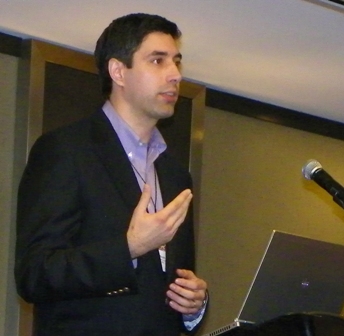
Last month, the U.S. Farmers & Ranchers Alliance (USFRA®), a coalition of which NMPF is a member, announced that dairy farmer Will Gilmer (left) from Sulligent, AL, had been selected as one of four winners in its Faces of Farming & Ranching program, a nationwide search launched in summer 2012 to help put real faces on the American agriculture industry.

Chris Chinn from Clarence, MO, Katie Pratt from Dixon, IL, and Bo Stone from Rowland, NC, were the other three winners. The winners will act as national spokespeople and share stories and experiences on a national stage to help answer consumers’ questions about how food is grown and raised to feed our nation. More than 100 applications had been submitted to the Faces of Farming & Ranching program from passionate, dedicated farmers and ranchers across the country.

Gilmer and his father own/operate a dairy farm in Alabama’s Lamar County. The dairy has been in continuous operation since Will’s grandfather established it on his parents’ farm in the early 1950s. They currently milk 200 Holstein cows and raise their own replacement heifers, while managing 600 acres of land used for pasture and forage production. Those forages include hay, summer silage crops, and small grains/ryegrass for both silage and strip grazing. Gilmer is an active contributor to social media, with a series of videos on his YouTube channel. He is a member of Dairy Farmers of America.

From Nov. 15 – Dec. 15, 2012, thousands of people visited www.fooddialogues.com/ to learn more about the candidates and to vote for whom they believed best represented American agriculture. In addition to the public vote, a panel of judges from throughout the food and agriculture community interviewed and evaluated the finalists to help determine the winners of Faces of Farming & Ranching. Criteria included the ability and commitment to share their stories about continuous improvement; involvement with the community and agricultural organizations; strong speaking capabilities, and a passion for what they do.

NMPF Accepting Applications for National Dairy Leadership Scholarship Program

NMPF is accepting applications for its National Dairy Leadership Scholarship Program for academic year 2013-2014.

NMPF's Board of Directors offers scholarships each year to qualified graduate students (enrolled in Master's or Ph.D. programs) who are actively pursuing dairy-related fields of research that are of immediate interest to NMPF member cooperatives. Graduate students pursuing relevant research are encouraged to submit an application (applicants do not need to be members of NMPF to qualify). The top scholarship applicant will be awarded the Hintz Memorial Scholarship, which was created in 2005 in honor of the late Cass-Clay Creamery Board Chairman Murray Hintz, who was instrumental in establishing NMPF's scholarship program.

Recommended fields of study include but are not limited to Agriculture Communications, Animal Health, Animal and/or Human Nutrition, Bovine Genetics, Dairy Products Processing, Dairy Science, Economics, Environmental Science, Food Science, Food Safety, Herd Management, and Marketing and Price Analysis.

Applications are due no later than Friday, May 3, 2013. For an application or more information, please visit the NMPF website. For questions, please contact Betsy Flores.

CDC Report Links Raw Dairy Foods to Foodborne Illnesses

A comprehensive new government analysis of the sources of foodborne illness found that because of the consumption of raw milk products, dairy foods are the second leading source of viral and bacterial problems.

The report, produced by the Centers for Disease Control and published in the journal Emerging Infectious Diseases, found that during a ten-year period from 1998 to 2008, dairy products caused 14 percent of the illnesses and 10 percent of the deaths. Only leafy greens had a higher incidence of illness. Part of the reason why dairy products were commonly linked to foodborne illness is that their level of consumption is high, with many Americans eating some form of dairy product every day. The other reason is that the consumption of raw fluid milk, and home-made cheeses made from raw milk, continues to grow.

The CDC report is “a compelling illustration of why NMPF has asked federal and state regulators and legislators to more aggressively oppose efforts, many of them at the state level, to expand the sales and availability of raw milk,” said Jerry Kozak, President and CEO of NMPF. “The purported benefits of the products over pasteurized milk have no scientific validity and are impossible to prove, but the health risks are clear, as this report indicates.”

Foodborne illness sends 128,000 Americans to the hospital each year and leads to 3,000 deaths annually. To compile the report, the CDC evaluated more than 4,500 food-borne disease outbreaks from 1998 to 2008.

Registration Open for National Dairy Producers Meeting in Indianapolis

Dairy producers from around the country will pack their bags and head to Indianapolis, Indiana, for the April 7 – 9, 2013 National Dairy Producers Conference (NDPC). Held every other year, the NDPC will provide an in-depth discussion of the issues facing the dairy industry, with educational discussions on many of the key challenges looming in 2013.

"We are excited to be heading to Indianapolis for this year’s meeting," said Jerry Kozak, President and CEO of NMPF, which hosts the conference. "The NDPC is an effective way to analyze the status of the dairy industry now, and discuss possible solutions for the future."

The meeting will include panels on some of the most important topics dairy producers are facing today. Immigration reform will be taking center stage in 2013, and dairy farmers will be fully engaged in that debate in Congress. Financing issues continue to challenge farmers, even though the general farm economy is improving, and there are still several questions and uncertainties about dairy lending.

Some dairy producers don’t realize the impact on the entire market chain that can result when they decide to sell or euthanize a dairy cow. Thus, one panel will address the importance of making informed decisions and ensuring that an animal is appropriate to market, is handled humanely throughout the process, and that the meat that results is a safe, quality product.

Protecting and promoting the integrity of U.S. dairy products has always been a challenge, and there are threats from non-dairy pretenders such as “soy milk” seeking to cash in on the appealing image of traditional dairy foods. In addition, European competitors are trying to prohibit the use of long-standing common names like parmesan and feta by American dairy producers and manufacturers.

A final panel will examine livestock manure and water quality issues, and look at innovative ways to turn manure management from a cost-center to a profit-center.

Individual speakers will also discuss the Dairy Security Act’s margin insurance program, technology and innovation on dairy farms, and the challenge of high and volatile feed prices.

The NDPC sessions will be preceded by an optional farm tour that will take place on Sunday, April 7. Participants will visit Fair Oaks Farms in Fair Oaks, IN.

Although the conference is geared primarily toward dairy producers, anyone with a stake in the dairy industry is invited to attend. This may include dairy cooperative executives and directors, processors, suppliers and consultants to the dairy industry, state and federal regulators, promotion organization executives, and academics.

Participants are encouraged to secure their farm tour spot, meeting registration, and hotel reservation at www.registration123.com/NMPF/2013NDPC. The hotel’s cut-off date for discounted room reservations is Thursday, March 14. After that date, the room rate will be confirmed on a space and rate-available basis.

For complete information about the NDPC, please visit www.nmpf.org/NDPC.

NMPF Praises Successful Conclusion of U.S.-China Dairy Certificate Negotiations

The U.S. has successfully negotiated a resolution with China on an import dairy certificate, a measure that provides certainty to U.S. dairy exporters in order to enhance U.S.-China dairy trade.

U.S. and Chinese government officials had been negotiating a new certificate for nearly three years, since China revised its requirements under the dairy certificate in the first part of 2010. Despite continued access to the Chinese market, the lack of an agreed-upon certificate impeded greater U.S. dairy exports, due to the uncertainty of whether the issue would ultimately be resolved.

“We commend the administration, as well as the Chinese government, for their conscientious and cooperative work on the dairy certificate over the past three years,” said Jerry Kozak, NMPF President and CEO. “The positive announcement of a new certificate lifts the uncertainty that hung over the Chinese market, thereby encouraging greater U.S. dairy sales.”

U.S. dairy sales to China in 2012 were an estimated $400 million. U.S. dairy exports to China have grown by more than 100% since 2010 and are expected to continue to grow to help meet the increasing demand for dairy products in that country.

The U.S. will begin issuing the new certificate immediately for product destined for China. Certificates issued by the U.S. prior to Jan. 18, 2013 will be valid through March 20, 2013 but not accepted by China after that date.